
 A SCHOLARLY BOOK REPOSITORY
11 start with P start with P

Pain in Relation: On Causality, Chronicity, and (Crip) Evidence argues that the dominant stories circulating within contemporary US culture are marked by seemingly contradictory certainties: pain is at once subjective yet universal; that pain makes life unlivable and can be overcome with perseverance. These certainties graft onto pained people into impossible imperatives: the imperatives to live “despite” our pain and to defend the value of lives imagined to be compromised “because of” it. Alyson Patsavas outlines the harm these imperatives cause and draws on feminist, queer, and disability theory to offer alternative frameworks for making sense of and relating to pain.
The study fleshes out “crip autotheory” and experiments with evidencing practices, using anecdotes, journal entries, personal reflections, list-making, and photography to map “cripistemologies of pain,” or critical, disability-informed experiential ways of knowing pain. Equal parts cultural critique, intimate portrait of pained life, and commentary, Pain in Relation invites readers to challenge what they think they know about pain and explore new ways of relating to pain, pained life, and the futures we imagine for pained people.

Panthers, Hulks, and Ironhearts offers the first comprehensive study of how Marvel has reimagined what a superhero might look like in the twenty-first century. It examines how they have revitalized older characters like Black Panther and Luke Cage, while creating new ones like Latina superhero Miss America. Furthermore, it considers the mixed fan responses to Marvel’s recasting of certain “legacy heroes,” including a Pakistani-American Ms. Marvel, a Korean-American Hulk, and a whole rainbow of multiverse Spidermen.
If the superhero comic is a quintessentially American creation, then how might the increasing diversification of Marvel’s superhero lineup reveal a fundamental shift in our understanding of American identity? This timely study answers those questions and considers what Marvel’s comics, TV series, and films might teach us about stereotyping, Orientalism, repatriation, whitewashing, and identification.
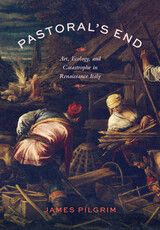
In the sixteenth century, Italian artist Jacopo Bassano painted pictures of herdsmen and animals moving through dark and muddy landscapes. But he also participated in the agricultural development of the region in which he lived, producing topographical maps of local mountains and forests, inventing new methods of drainage and irrigation, and studying the latest techniques of crop rotation and fertilization. The relationship between Bassano’s rustic art and his participation in environmental transformation has, however, never been explored.
One of the first studies of Italian Renaissance art to grapple with the connections between visual culture and the environment, Pastoral’s End explores this crucial, formative relationship. James Pilgrim looks at Bassano’s career holistically, demonstrating how his involvement in a world marked by agricultural expansion, industrialization, resource extraction, environmental degradation, social transformation, and radical philosophical development informed his paintings of country life. Introducing new archival and visual evidence of Bassano’s knowledge of hydrology, agronomy, husbandry, and architecture, Pastoral’s End argues that he transformed the more placid rustic imagery of previous Renaissance artists into visions of dangerous ecological instability.
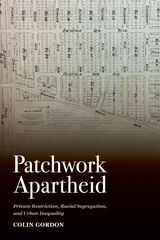
Gordon also explores the role of other policies and practices in sustaining segregation. Enforcement of private racial restrictions was held unconstitutional in 1948, and such agreements were prohibited outright in 1968. But their premises and assumptions, and the segregation they had accomplished, were accommodated by local zoning and federal housing policies. Explicit racial restrictions were replaced by the deceptive business practices of real estate agents and developers, who characterized certain neighborhoods as white and desirable and others as black and undesirable, thereby hiding segregation behind the promotion of sound property investments, safe neighborhoods, and good schools. These practices were in turn replaced by local zoning, which systematically protected white neighborhoods while targeting “blighted” black neighborhoods for commercial and industrial redevelopment, and by a tangle of federal policies that reliably deferred to local and private interests with deep investments in local segregation. Private race restriction was thus a key element in the original segregation of American cities and a source of durable inequalities in housing wealth, housing opportunity, and economic mobility.
Patchwork Apartheid exhaustively documents the history of private restriction in urban settings and demonstrates its crucial role in the ideas and assumptions that have sustained racial segregation in the United States into the twenty-first century.
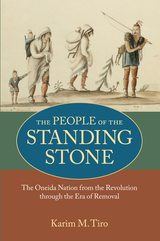
The Oneidas' physical, political, and emotional division persists to this day. Even for those who stayed put, their world changed more in cultural, ecological, and demographic terms than at any time before or since. Oneidas of the post-Revolutionary decades were reluctant pioneers, undertaking more of the adaptations to colonized life than any other generation. Amid such wrenching change, maintaining continuity was itself a creative challenge. The story of that extraordinary endurance lies at the heart of this book.
Practicing Transnationalism explores the challenges of teaching American studies in the Middle East during a time of tension and conflict between the United States and the region.
In the first decade of the twenty-first century, American studies programs began to spread in the Middle East. During a time of rising anti-American sentiment, ten major programs were established in the region. What impulses propelled universities in the Middle East to establish these centers and programs? What motivated students to take courses and pursue degrees in American studies? In part, American studies programs developed as a way to “know the enemy,” to better understand America’s ubiquitous influence in foreign relations, technology, and culture; however, some programs grew because residents admired the ideals set forth as American, including democracy and free speech.
Practicing Transnationalism investigates these issues and others, using the experiences and research of the editors and contributors, who worked either directly in these programs or as adjunct to them. These scholars seek to understand what American power means to people in the Middle East. They examine the challenge of developing American studies programs in a transnational paradigm, striving to build programs that are separate from and critical of American imperialism without simply becoming anti-American. In the essays, the contributors provide context for how the field of American studies has grown and developed, and they offer views of cultural interactions and classroom situations, demonstrating the problems instructors faced and how they worked to address them.
Browne finds that when asked to identify themselves by race, these immigrants either reject racial identities entirely or draw on belief systems from Mexico and the Dominican Republic that emphasize European-indigenous mixed race identities. When branded as typical Latines in the U.S., Mexican middle-class immigrants emphasize their social class or explain that a typical Latine can be middle-class, while Dominicans simply indicate that they are not Mexican. Rather than blame systemic racism, both Mexican and Dominican middle-class immigrants often attribute misperceptions of their identity to non-Latines’ ignorance or to individual Latines’ lack of effort in trying to assimilate.
But these middle-class Latine immigrants do not simply seek to position themselves on par with the U.S.-born white middle class. Instead, they leverage their cosmopolitanism—for example, their multilingualism or their children’s experiences traveling abroad—to engage in what Browne calls “one-up assimilation,” a strategy that aims to position them above the white middle class, who are often monolingual and unaware of the world outside the United States. Middle-class Latines’ cosmopolitanism and valuing of diversity also lead them to have cordial relations with African Americans, but these immigrants do not see themselves as sharing African Americans’ status as oppressed minorities.
Although the stereotype of the typical Latine has made middle-class Latine immigrants susceptible to stigma, they insist that this stigma does not play a significant role in their lives. In many cases, they view the stereotype as a minor issue, feel that opportunities for upward mobility outweigh any negative experiences, or downplay racism by emphasizing their class privilege. Browne observes that while downplaying racism may help middle-class Latine immigrants maintain their dignity, it also perpetuates inequality by reinforcing the lower status of working-class undocumented immigrants. It is thus imperative, Browne argues, to repeal harsh anti-immigration policies, a move that will not only ease the lives of the undocumented but also send a message about who belongs in the country.
Offering a nuanced exploration of how race, social class, and immigration status intersect, Precarious Privilege provides a complex portrait of middle-class Latine immigrants in the United States today.

Margolis provides readings of fiction by Hawthorne and James as well as Susan Warner, Mark Twain, Charles Chesnutt, and Pauline Hopkins. In these writers’ works, she traces a distinctive novelistic tradition that viewed social developments—such as changes in political partisanship and childhood education and the rise of new politico-legal forms like negligence law—as means for understanding how individuals were shaped by their interactions with society. The Public Life of Privacy in Nineteenth-Century American Literature adds a new level of complexity to understandings of nineteenth-century American culture by illuminating a literary tradition full of accidents, mistakes, and unintended consequences—one in which feelings and desires were often overshadowed by all that was external to the self.
READERS
Browse our collection.
PUBLISHERS
See BiblioVault's publisher services.
STUDENT SERVICES
Files for college accessibility offices.
RECENTLY PUBLISHED


UChicago Accessibility Resources
home | accessibility | search | about | contact us
BiblioVault ® 2001 - 2026
The University of Chicago Press