
 A SCHOLARLY BOOK REPOSITORY
25 start with N start with N
In this first English translation of Erika Thurner's National Socialism and Gypsies in Austria, Gilya Gerda Schmidt makes available Thurner’s investigation of Camps Salzburg and Lackenbach, the two central areas of Gypsy persecution in Austria. Two factors made Thurner’s research especially difficult: the Roma and Sinti have more an oral tradition than a written one, and scholarship on the plight of the Gypsies is sparse. Through painstaking research, Thurner has been able to piece together fragments from Nazi documents, recollections of victims, accounts of bystanders and other eyewitnesses, and formal records to present her account. The result is a volume that truly enhances our understanding of the Gypsies’ experiences during this period.
The volume also focuses on broader aspects of the Gypsies’ ordeals: the ideological foundations and legal ordinances regarding Gypsies, the discrimination and persecution in Burgenland as a whole, the transports from Austria to Lodz and Chelmo, and the medical experimentation. The book has also been expanded, with a new study of Camp Salzburg, an updated bibliography, and numerous photographs, which were not included in the German edition.
The recent upsurge of anti-Gypsy violence in Austria illustrates both the horror of the treatment of Gypsy tribes and the timeliness of the subject of this volume.
Examining the intersection of Palestine solidarity movements and antiracist activism in France from the 1970s to the present
For the pasty fifty years, the Palestinian question has served as a rallying cry in the struggle for migrant rights in postcolonial France, from the immigrant labor associations of the 1970s and Beur movements of the 1980s to the militant decolonial groups of the 2000s. In Natives against Nativism, Olivia C. Harrison explores the intersection of anticolonial solidarity and antiracist activism from the 1970s to the present.
Natives against Nativism analyzes a wide range of texts—novels, memoirs, plays, films, and militant archives—that mobilize the twin figures of the Palestinian and the American Indian in a crossed critique of Eurocolonial modernity. Harrison argues that anticolonial solidarity with Palestinians and Indigenous Americans has been instrumental in developing a sophisticated critique of racism across imperial formations—in this case, France, the United States, and Israel.
Serving as the first relational study of antiracism in France, Natives against Nativism observes how claims to indigeneity have been deployed in multiple directions, both in the ongoing struggle for migrant rights and racial justice, and in white nativist claims in France today.
Combining critical race studies with cultural production studies, Navigating White News: Asian American Journalists at Work is the only academic book to examine the ways that racial identification and activation matters in their understanding of news. This adds to the existing literature on race and the sociology of news by examining intra-racial differences in the ways they navigate and understand White newsrooms. Employing in-depth interviews with twenty Asian American journalists who are actively working in large and small newsrooms across the United States, Navigating White News: Asian American Journalists at Work argues that Asian American reporters for whom racial identities are important questioned what counted as news, questioned the implicitly White perspective of objectivity, and actively worked toward providing more complex, substantive coverage of Asian American communities. For Asian American reporters for whom racial identity was not meaningful, they were more invested in existing professional norms. Regardless, all journalists understood that news is a predominantly and culturally White institution.
WINNER OF THE SUSAN COLVER ROSENBERGER AWARD
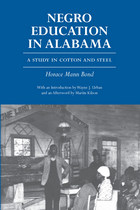
A foundational work of educational history, Horace Mann Bond’s study reveals how race, labor, and power shaped Black schooling in Alabama—and why those lessons still matter today.
Originally published in 1939, Negro Education in Alabama: A Study in Cotton and Steel by Horace Mann Bond is a pioneering work of educational and social history. Drawing on extensive data and firsthand observation, Bond explores how the economic structures of the cotton South and the industrializing North influenced the development of Black education in Alabama. He examines disparities in funding, curriculum, and access, while also highlighting the resilience and agency of African American communities in pursuing educational advancement. This reissued edition preserves Bond’s critical insights and remains a vital resource for scholars of African American history, education policy, and Southern studies.
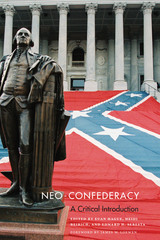
A century and a half after the conclusion of the Civil War, the legacy of the Confederate States of America continues to influence national politics in profound ways. Drawing on magazines such as Southern Partisan and publications from the secessionist organization League of the South, as well as DixieNet and additional newsletters and websites, Neo-Confederacy probes the veneer of this movement to reveal goals far more extensive than a mere celebration of ancestry.
Incorporating groundbreaking essays on the Neo-Confederacy movement, this eye-opening work encompasses such topics as literature and music; the ethnic and cultural claims of white, Anglo-Celtic southerners; gender and sexuality; the origins and development of the movement and its tenets; and ultimately its nationalization into a far-reaching factor in reactionary conservative politics. The first book-length study of this powerful sociological phenomenon, Neo-Confederacy raises crucial questions about the mainstreaming of an ideology that, founded on notions of white supremacy, has made curiously strong inroads throughout the realms of sexist, homophobic, anti-immigrant, and often "orthodox" Christian populations that would otherwise have no affiliation with the regionality or heritage traditionally associated with Confederate history.

Katrina was not just a hurricane. The death, destruction, and misery wreaked on New Orleans cannot be blamed on nature’s fury alone. This volume of essays locates the root causes of the 2005 disaster squarely in neoliberal restructuring and examines how pro-market reforms are reshaping life, politics, economy, and the built environment in New Orleans.
The authors—a diverse group writing from the disciplines of sociology, political science, education, public policy, and media theory—argue that human agency and public policy choices were more at fault for the devastation and mass suffering experienced along the Gulf Coast than were sheer forces of nature. The harrowing images of flattened homes, citizens stranded on rooftops, patients dying in makeshift hospitals, and dead bodies floating in floodwaters exposed the moral and political contradictions of neoliberalism—the ideological rejection of the planner state and the active promotion of a new order of market rule.
Many of these essays offer critical insights on the saga of postdisaster reconstruction. Challenging triumphal narratives of civic resiliency and universal recovery, the authors bring to the fore pitched battles over labor rights, gender and racial justice, gentrification, the development of city master plans, the demolition of public housing, policing, the privatization of public schools, and roiling tensions between tourism-based economic growth and neighborhood interests. The contributors also expand and deepen more conventional critiques of “disaster capitalism” to consider how the corporate mobilization of philanthropy and public good will are remaking New Orleans in profound and pernicious ways.
Contributors: Barbara L. Allen, Virginia Polytechnic U; John Arena, CUNY College of Staten Island; Adrienne Dixson, Ohio State U; Eric Ishiwata, Colorado State U; Avis Jones-Deweever, National Council of Negro Women; Chad Lavin, Virginia Polytechnic U; Paul Passavant, Hobart and William Smith Colleges; Linda Robertson, Hobart and William Smith Colleges; Chris Russill, Carleton U; Kanchana Ruwanpura, U of Southampton; Nicole Trujillo-Pagán, Wayne State U; Geoffrey Whitehall, Acadia U.
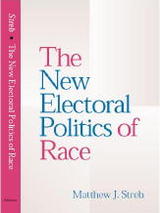
Historically, race has always been at the heart of American politics, and southern politics more specifically. Southern elections revolved almost entirely around racial issues during the 1950s and 1960s as debates raged over integration of schools, voting rights, and busing patterns. The election of George Wallace as governor of Alabama in 1962 underscored the electoral power of ruthless racial rhetoric, not only in Alabama, but throughout the South and the entire country. Almost 40 years later, segregation is no longer legal, tensions between blacks and whites have lessened, and the influx of large numbers of African Americans into the electorate has forced politicians to court black voters.
Matthew Streb finds, however, that although extreme racial rhetoric has disappeared from the modern campaign trail, voters are still polarized along racial lines. By comparing gubernatorial campaigns in four southern and three northern states-Alabama, Georgia, Arkansas, Virginia, Ohio, Iowa, and Massachusetts-the author examines how candidates use, or fail to use, race in their campaign strategies. He demonstrates that race indeed remains a significant factor in American elections, couched in alternative issues, such as affirmative action, profiling, and social welfare.
Streb's analysis of the appeal by politicians for the elite vote and the public vote reveals that class has replaced race as a definitive issue in American politics. This book will, therefore, be important not only to academic libraries and students and scholars of political science, southern history, and civil rights, but also to pollsters, campaign strategists, and state political party officials.
"The authors have done a commendable and impressive job of addressing a topic of long-lasting and increasing significance in U.S. politics."
---F. Chris Garcia, University of New Mexico
"This is a path-breaking book that will be read across disciplines beyond political science."
---James Jennings, Tufts University
Over the past four decades, the United States has experienced the largest influx of immigrants in its history. Not only has the ratio of European to non-European newcomers changed, but the numbers of recent arrivals from the Asian subcontinent, Southeast Asia, South America, and other regions are increasing.
In this timely study, a team of political scientists examines how the arrival of these newcomers has affected the efforts of long-standing U.S. minority groups---Blacks, Latinos, and Asian Pacific Americans---to gain equality through greater political representation and power. The authors predict that, for some time to come, the United States will function as a complex multiracial hierarchy, rather than as a genuine democracy.
Ronald Schmidt, Sr. is Professor of Political Science at California State University, Long Beach.
Yvette M. Alex-Assensoh is Associate Professor of Political Science and Dean of the Office for Women's Affairs (OWA) at Indiana University, Bloomington.
Andrew L. Aoki is Professor of Political Science at Augsburg College.
Rodney E. Hero is Professor of Political Science at the University of California, Berkeley.
"Ambitious, provocative, and wide-ranging, this rich collection of essays from U.S. and South African perspectives reflects the thinking of thoughtful advocates of affirmative action."
---William G. Bowen, President Emeritus, The Andrew W. Mellon Foundation, and President Emeritus, Princeton University
"Thoughtful commentary from outstanding experts on affirmative action’s future in two countries struggling to overcome a legacy of racial injustice."
---Derek Bok, 300th Anniversary University Research Professor, and President Emeritus, Harvard University
"An enormously important comparative study and reflection on affirmative (U.S.) and corrective (South Africa) action with exhaustive and sensitive treatment of a vital topic."
---Kader Asmal, Professor of Law, University of the Western Cape, Cape Town, and former Minister of Education, South Africa
A penetrating exploration of affirmative action's continued place in 21st-century higher education, The Next Twenty-five Years assembles the viewpoints of some of the most influential scholars, educators, university leaders, and public officials. Its comparative essays span the political spectrum and dissect debates in two nations to elucidate the legal, political, social, economic, and moral dimensions of affirmative action in higher education and its role in contributing to a just, equitable, and vital society.
David L. Featherman is Professor of Sociology and Psychology and Founding Director of the Center for Advancing Research and Solutions for Society at the University of Michigan.
Martin Hall is Vice-Chancellor of the University of Salford, Greater Manchester, and previously was Deputy Vice-Chancellor at the University of Cape Town.
Marvin Krislov is President of Oberlin College and previously was Vice President and General Counsel at the University of Michigan.

The Chadian writer Nimrod—philosopher, poet, novelist, and essayist—is one of the most dynamic and vital voices in contemporary African literature and thought. Yet little of Nimrod’s writing has been translated into English until now. Introductory material by Frieda Ekotto provides context for Nimrod’s work and demonstrates the urgency of making it available beyond Francophone Africa to a broader global audience.
At the heart of this volume are Nimrod’s essays on Léopold Sédar Senghor, a key figure in the literary and aesthetic Négritude movement of the 1930s and president of Senegal from 1945 through 1980. Widely dismissed in recent decades as problematically essentialist, Senghorian Negritude articulated notions of “blackness” as a way of transcending deep divisions across a Black Diaspora under French colonial rule. Nimrod offers a nuanced reading of Senghor, drawing out the full complexities of Senghor’s philosophy and reevaluating how race and colonialism function in a French-speaking space.
Also included in this volume are Nimrod’s essays on literature from the 2008 collection, The New French Matter (La nouvelle chose française). Representing his prose fiction is his 2010 work, Rivers’ Gold (L’or des rivières). Also featured are some of Nimrod’s best-loved poems, in both English translation and the original French.
The works selected and translated for this volume showcase Nimrod’s versatility, his intellectual liveliness, and his exploration of questions of aesthetics in African literature, philosophy, and linguistics. Nimrod: Selected Writings marks a significant contribution toward engaging a broader audience with one of the vital voices of our time. This book will be essential reading for Anglophone students and scholars of African philosophy, literature, poetry, and critical theory, and will offer a welcome introduction to Nimrod for general readers of contemporary international writing.

California has long been mythologized as the quintessential land of opportunity and reinvention—a place where anyone, regardless of origin, can forge a new life and realize their aspirations. Yet beneath this gilded narrative lies a starker reality: California ranks among the most unequal states in one of the world's most unequal countries, where the middle class finds itself increasingly squeezed. Economic inequality is not an anomaly but part of a broader global phenomenon, as disparities deepen across the world. While we know a lot about its contours, its evolution over time and its intersections with race and immigration, we understand far less about how ordinary people interpret and internalize it. In Normalizing Inequality, sociologists G. Cristina Mora and Tianna S. Paschel illuminate how middle-class Californians perceive and come to accept the inequalities that surround them.
Drawing on extensive interviews and surveys, Mora and Paschel uncover a profound paradox at the heart of middle-class consciousness. They find that Californians are keenly aware of the systemic causes of inequality—they recognize policies engineered to benefit the wealthy, they acknowledge how structural racism makes it hard for some groups to get ahead—yet they consistently minimize these forces. Instead, they gravitate toward explanations rooted in individualism, moral character, and the idea that things are worse in other places. Racism and racial inequality in California become palatable when framed as "not as bad as the South." Immigrant exploitation, however severe, transforms into evidence of the American Dream fulfilled simply upon arrival. Economic pressures that displace others become surmountable through personal industriousness and forbearance.
These beliefs about inequality grow more troubling still. Middle-class Californians sometimes blame disempowered people for their circumstances—acknowledging structural barriers facing homeless and undocumented populations while simultaneously faulting them for insufficient drive or criminal behavior that compounds their difficulties. When contemplating California's future, interviewees envision economic prosperity propelled by technological innovation, yet remain curiously unconcerned with how present inequalities might shape that tomorrow. Their imagined future is one where White and Asian American populations thrive, while Black, Latino, and economically marginalized Californians either vanish through displacement or fade into irrelevance. As respondents use these interpretive frameworks to make sense of inequality, they lean heavily on California's foundational narratives of opportunity, sanctuary and multiracial promise.
Normalizing Inequality offers an incisive examination of how ordinary citizens make sense of inequality and, through that very process of sense-making, how they tolerate and passively reproduce the conditions they often claim to deplore.

Traversed by thousands of trains and millions of riders, the Northeast Corridor might be America’s most famous railway, but its influence goes far beyond the right-of-way. David Alff welcomes readers aboard to see how nineteenth-century train tracks did more than connect Boston to Washington, DC. They transformed hundreds of miles of Atlantic shoreline into a political capital, a global financial hub, and home to fifty million people. The Northeast Corridor reveals how freight trains, commuter rail, and Amtrak influenced—and in turn were shaped by—centuries of American industrial expansion, metropolitan growth, downtown decline, and revitalization.
Paying as much attention to Canton, Trenton, New Rochelle, and Providence as to New York City, Philadelphia, and Baltimore, Alff provides narrative thrills for history buffs, train enthusiasts, and adventurers alike. What’s more, he offers a glimpse into the future of the corridor. New infrastructural plans—supported by President Joe Biden, famously Amtrak’s biggest fan—envision ever-faster trains zipping along technologically advanced rails. Yet those tracks will literally sit atop a history that links the life of Frederick Douglass, who fled to freedom by boarding a train in Baltimore, to the Frederick Douglass Tunnel, which is expected to be the newest link in the corridor by 2032.
Trains have long made the places that make America, and they still do.
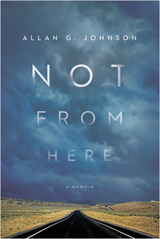
As a white man with Norwegian and English lineage, Johnson explores both America and the question of belonging to a place whose history holds the continuing legacy of the displacement, dispossession, and genocide of Native peoples.
More than a personal narrative, Not from Here illuminates the national silence around unresolved questions of accountability, race, and identity politics, and the dilemma of how to take responsibility for “a past we did not create.” Johnson’s story—about the past living in the present; of redemption, fate, family, tribe, and nation; of love and grief—raises profound questions about belonging, identity, and place.
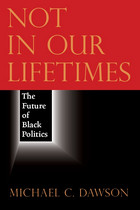
For all the talk about a new postracial America, the fundamental realities of American racism—and the problems facing black political movements—have not changed. Michael C. Dawson lays out a nuanced analysis of the persistence of racial inequality and structural disadvantages, and the ways that whites and blacks continue to see the same problems—the disastrous response to Katrina being a prime example—through completely different, race-inflected lenses. In fact, argues Dawson, the new era heralded by Barack Obama’s election is more racially complicated, as the widening class gap among African Americans and the hot-button issue of immigration have the potential to create new fissures for conservative and race-based exploitation. Through a thoughtful analysis of the rise of the Tea Party and the largely successful “blackening” of President Obama, Dawson ultimately argues that black politics remains weak—and that achieving the dream of racial and economic equality will require the sort of coalition-building and reaching across racial divides that have always marked successful political movements.
Polemical but astute, passionate but pragmatic, Not in Our Lifetimes forces us to rethink easy assumptions about racial progress—and begin the hard work of creating real, lasting change.
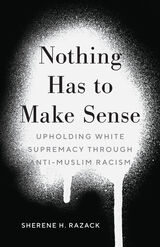
How Western nations have consolidated their whiteness through the figure of the Muslim in the post-9/11 world
While much has been written about post-9/11 anti-Muslim racism (often termed Islamophobia), insufficient attention has been given to how anti-Muslim racism operates through law and is a vital part of law’s protection of whiteness. This book fills this gap while also providing a unique new global perspective on white supremacy. Sherene H. Razack, a leading critical race and feminist scholar, takes an innovative approach by situating law within media discourses and historical and contemporary realities. We may think of law as logical, but, argues Razack, its logic breaks down when the subject is Muslim.
Tracing how white subjects and majority-white nations in the post-9/11 era have consolidated their whiteness through the figure of the Muslim, Razack examines four sites of anti-Muslim racism: efforts by American evangelical Christians to ban Islam in the school curriculum; Canadian and European bans on Muslim women’s clothing; racial science and the sentencing of Muslims as terrorists; and American national memory of the torture of Muslims during wars and occupations. Arguing that nothing has to make sense when the subject is Muslim, she maintains that these legal and cultural sites reveal the dread, phobia, hysteria, and desire that mark the encounter between Muslims and the West.
Through the prism of racism, Nothing Has to Make Sense argues that the figure of the Muslim reveals a world divided between the deserving and the disposable, where people of European origin are the former and all others are confined in various ways to regimes of disposability. Emerging from critical race theory, and bridging with Islamophobia/critical religious studies, it demonstrates that anti-Muslim racism is a revelatory window into the operation of white supremacy as a global force.
READERS
Browse our collection.
PUBLISHERS
See BiblioVault's publisher services.
STUDENT SERVICES
Files for college accessibility offices.
RECENTLY PUBLISHED



UChicago Accessibility Resources
home | accessibility | search | about | contact us
BiblioVault ® 2001 - 2026
The University of Chicago Press