
 A SCHOLARLY BOOK REPOSITORY
9 start with M start with M


With an equal emphasis on every word in the title—and with a distinctly American perspective—Himes and his distinguished associate editors and contributors, have assembled the most thorough and authoritative assessment of modern Roman Catholic social teaching to date, likely to remain the touchstone volume for decades. This culmination of many years of effort by twenty stellar scholars has produced a reference work for anyone interested in understanding or studying the key documents that comprise the central corpus of Catholic social teaching.
In addition to interrogations of the major documents, this volume provides an understanding of the biblical and philosophical foundations of Catholic social teaching, addresses the doctrinal issues that arise in such a context, and explores the social thought leading up to the "modern" era, generally accepted as beginning in 1891 with the publication of Pope Leo XIII's Rerum Novarum. Finally, there is a review of how Catholic social teaching has been received in the United States, and an informed look at the shortcomings and questions that future generations must address.
By any standard, Modern Catholic Social Teaching is a remarkable work—intellectually rigorous and deeply faithful, it provides accessible and thought-provoking insights into the heart of a belief tradition that every Catholic will find invaluable.
Comprehensive in its approach yet written in plain language, The Moral Bond of Community offers a biblically-based concept of Christian justice that can be applied to moral questions in everyday life.
Brady examines four forms of Christian moral discourse—narrative, prophetic, ethical, and policy—and shows how each contributes to a fuller understanding of Christian morality.
In this collection of recent essays (1988-92), all but one previously unavailable in English, noted theologian Josef Fuchs, SJ, examines key issues in normative morality. Identifying two strains, one based on natural law and a more situational one based on the Golden Rule, he explores the need for plurality in both individual and societal ethics, and the problem of universal versus only general validity. Central ideas that Fuchs develops are the concept of innovative morality as the individual's responsible search for God's will in personal situations; and the significance of the conscience in the face of official statements by the church's magisterium. Among the topics he considers are marriage and sexuality; the beginning and end of life; and international solidarity and social justice.
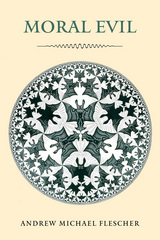
The idea of moral evil has always held a special place in philosophy and theology because the existence of evil has implications for the dignity of the human and the limits of human action. Andrew Michael Flescher proposes four interpretations of evil, drawing on philosophical and theological sources and using them to trace through history the moral traditions that are associated with them.
The first model, evil as the presence of badness, offers a traditional dualistic model represented by Manicheanism. The second, evil leading to goodness through suffering, presents a theological interpretation known as theodicy. Absence of badness—that is, evil as a social construction—is the third model. The fourth, evil as the absence of goodness, describes when evil exists in lieu of the good—the "privation" thesis staked out nearly two millennia ago by Christian theologian St. Augustine. Flescher extends this fourth model—evil as privation—into a fifth, which incorporates a virtue ethic. Drawing original connections between Augustine and Aristotle, Flescher’s fifth model emphasizes the formation of altruistic habits that can lead us to better moral choices throughout our lives.
Flescher eschews the temptation to think of human agents who commit evil as outside the norm of human experience. Instead, through the honing of moral skills and the practice of attending to the needs of others to a greater degree than we currently do, Flescher offers a plausible and hopeful approach to the reality of moral evil.
Pope John Paul II is the second longest serving pope in history and the longest serving pope of the last century. His presence has thrown a long shadow across our time, and his influence on Catholics and non-Catholics throughout the world cannot be denied. Much has been written about this pope, but until now, no one has provided a systematic and thorough analysis of the moral theology that underlies his moral teachings and its astonishing influence. And no one is better positioned to do this than Charles E. Curran, widely recognized as the leading American Catholic moral theologian.
Curran focuses on the authoritative statements, specifically the fourteen papal encyclicals the pope has written over the past twenty-five years, to examine how well the pope has addressed the broad issues and problems in the Church today. Curran begins with a discussion of the theological presuppositions of John Paul II's moral teaching and moral theology. Subsequent chapters address his theological methodology, his ethical methodology, and his fundamental moral theology together with his understanding of human life. Finally, Curran deals with the specific issues of globalization, marriage, conscience, human acts, and the many issues involved in social and sexual ethics.
While finding much to admire, Curran is nonetheless fiercely precise in his analysis and rigorously thoughtful in his criticism of much of the methodological aspects of the pope's moral theology—in his use of scripture, tradition, and previous hierarchical teaching; in theological aspects including Christology, eschatology, and the validity of human sources of moral wisdom and knowledge; and in anthropology, the ethical model and natural law. Brilliantly constructed and fearlessly argued, this will be the definitive measure of Pope John Paul II's moral theology for years to come.
Joseph Cardinal Bernardin of Chicago was for twenty years the most influential U.S. Catholic bishop; he was also a beloved public figure whose views commanded respect from Catholics and non-Catholics alike. This posthumous collection of a number of his major addresses on central moral issues in contemporary American life voices the causes that were closest to his heart: the sanctity and protection of all human life, the reshaping of American society and institutions for the benefit of the poorest, the preservation of peace in the pursuit of justice, and the growth of mutual understanding and harmony within the Church.
Spanning the period from the early 1980s to just weeks before his death in late 1996, these essays demonstrate a remarkably sustained and thoughtful effort to articulate an overall framework for moral decisions — "a consistent ethic of life" — and to affirm an active role for religious convictions in a pluralist democratic society. Cardinal Bernardin applies the Church’s moral and social teachings to complex policy issues in a way that respects religious freedom and invites both reflection from Catholics and dialogue with people of other beliefs.
Written in a clear and accessible style, this volume will be of value to everyone interested in Cardinal Bernardin’s moral vision for political choices. It will also be important for a wide range of readers concerned with in Christian ethics and the role of religion in the public sphere.
Joseph Cardinal Bernardin (1928-1996) served as the archbishop of Chicago from 1982 to 1996 and as archbishop of Cincinnati from 1972 to 1982. He was made a cardinal by Pope John Paul II in 1983 and received the Presidential Medal of Freedom in 1996 for his contribution to American civic life. He wrote The Gift of Peace (Loyola University Press, 1997).
Fr. Servais Pinckaers’s work is well on its way to being accepted as the work on Catholic moral thinking for the coming generation of laymen and students. Pinckaers sharply distinguishes this view of morality from modern “moralities of obligation,” which regard the moral life primarily as obedience to rules that limit human freedom and curb human desires. Pinckaers sees moralities of obligation as the logical outcome of a new understanding of human freedom. Instead of regarding freedom as the capacity to engage in excellent acts of virtue (freedom for excellence), the modern view understands freedom as the radical ability to do good or evil indifferently (freedom of indifference). Pinckaers argues convincingly that this view of freedom and the morality of obligation that flows from it have impoverished the Catholic understanding of the moral life. This work offers the reader a compelling itinerary of moral development, rooted in the theology of St. Paul and the morality of the Gospels.
Now, for a new generation of students, the book is made available in an ebook version.
In addition, under the direction of Fr. Michael Sherwin, a teacher’s edition of the work is to be published, which will greatly aid the teacher in high school or home school to help his or her students to gain the most from this seminal work.
“As Alasdair MacIntyre notes in the preface, the work of Pinckaers attracted strong and fully justified notice in this country with the publication in English of his The Sources of Christian Ethics. As Pinckaers himself notes in the text, excellently translated by Michael Sherwin, the interest should in no way be limited to Roman Catholics. Morality recasts the earlier book in an argument that is both lower and upper case ‘catholic,’ and is accessible to readers and teachers outside the limited circle of moral theologians and academic ethicists. Pinckaers contends that Christian morality is not first of all about obligations but about happiness, understanding that the happiness of union with God is our natural destiny made possible by grace. The Sermon on the Mount is at the center of an approach to morality that turns on the distinction between ‘freedom for excellence’ and ‘freedom of indifference,’ the former understood as human flourishing and the latter as a ‘neutral’ capacity to choose between controversies. The proposal of Morality is thoroughly Christ-centered, humanistic, and faithful to the magisterial teaching of the Church. Warmly recommended.” - First Things
“If you want to have the experience of reflecting on Catholic morality as though you were reading about it for the first time, treat yourself to Father Servais Pinckaers’ Morality: The Catholic View. He has recovered the classical view of the moral life as the quest for happiness and has presented it with disarming simplicity. Bringing us back to the Sermon on the Mount and Romans 12–15, the writings of Augustine and Aquinas, and the theme of natural law, he has freed those texts from the layers of legalism which has hidden their liberating, spiritual powers for moral living. By distinguishing freedom of indifference from freedom for excellence, he has restored a wise vision of freedom. No one has shown better the role of virtues as building blocks for morality. Catechists need to read this book.” Rev. Alfred McBride, O.Praem., Professor of Homilectics and Catechetics at Blessed Pope John XXIII Seminary, Weston, Massachusetts
“Father Pinckaers has given us a masterful exposition of Christian living. The clarity and brevity of his presentation – captured well by the translator – make this book ideal for classroom and parish use. “Readers will find the historical and systematic observations very informative.” Romanus Cessario, St. John’s Seminary, Brighton, Massachusetts
READERS
Browse our collection.
PUBLISHERS
See BiblioVault's publisher services.
STUDENT SERVICES
Files for college accessibility offices.
RECENTLY PUBLISHED






UChicago Accessibility Resources
home | accessibility | search | about | contact us
BiblioVault ® 2001 - 2025
The University of Chicago Press