
 A SCHOLARLY BOOK REPOSITORY
10 start with L start with L
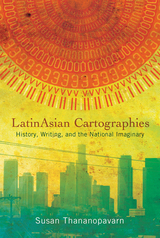
Thananopavarn creates a new “LatinAsian” view of the United States that emphasizes previously suppressed aspects of national history, including imperialism, domestic racism during World War II, Cold War operations in Latin America and Asia, and the politics of borders in an age of globalization. LatinAsian Cartographies ultimately reimagines national narratives in a way that transforms dominant ideas of what it means to be American.

What Brown did was to elevate race from the country's dirty secret to its most urgent topic of conversation. This book stands alone in presenting, in one source, stories of black and white Americans, men and women, from all parts of the nation, who were public school students during the years immediately after Brown. All shared an epiphany. Some became aware of race and the burden of racial separation. Others dared to hope that the yoke of racial oppression would at last be lifted.
The editors surveyed 4750 law professors born between 1936 and 1954, received 1000 responses, and derived these forty essays from those willing to write personal accounts of their childhood experiences in the classroom and in their communities. Their moving stories of how Brown affected them say much about race relations then and now. They also provide a picture of how social change can shape the careers of an entire generation in one profession.
Contributors provide accounts from across the nation. Represented are
-de jure states, those segregated by law at the time of Brown, including Alabama, Florida, Georgia, Louisiana, Maryland, Mississippi, North Carolina, South Carolina, Tennessee, Virginia, as well as the District of Columbia
-de facto states, those where segregation was illegal but a common practice, including California, Illinois, Kansas, Massachusetts, Missouri, New Jersey, New York, Ohio, Washington, and Wisconsin.
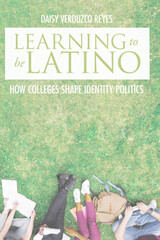
Drawing on extensive ethnographic observations, Reyes shows how college campuses shape much more than students’ academic and occupational trajectories; they mold students’ ideas about inequality and opportunity in America, their identities, and even how they intend to practice politics.
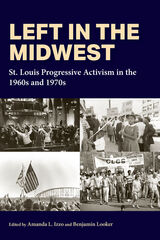
Despite St. Louis’s mid-twentieth-century reputation as a conservative and sleepy midwestern metropolis, the city and its surrounding region have long played host to dynamic forms of social-movement organizing. This was especially the case during the 1960s and 1970s, when a new generation of local activists lent their energies to the ongoing struggles for Black freedom, lesbian and gay liberation, feminist social transformations, environmental protection, an end to the Vietnam War, and more. This volume, the first of its kind, offers fifteen scholarly contributions that together bring into focus the exceptional range of progressive activist projects that took shape in a single midwestern city during these tumultuous decades.
In contrast to scholarship that seeks to interpret the era’s social-movement initiatives in a primarily national context, the works presented in this expansive collection emphasize the importance of locality, neighborhood, community institutions, and rooted social networks. Documenting wrenching forces of metropolitan change as well as grassroots resilience, Left in the Midwest shows us how place powerfully shaped agendas, worldviews, and opportunities for the disparate groups that dedicated themselves to progressive visions for their city. By revising our sense of the region’s past, this volume also expands our sense of the possibilities that the future may hold for activist movements seeking change in St. Louis and beyond.
In anticipation of the fiftieth anniversary of the landmark Brown v. Board of Education decision, Catherine Prendergast draws on a combination of insights from legal studies and literacy studies to interrogate contemporary multicultural literacy initiatives, thus providing a sound historical basis that informs current debates over affirmative action, school vouchers, reparations, and high-stakes standardized testing.
As a result of Brown and subsequent crucial civil rights court cases, literacy and racial justice are firmly enmeshed in the American imagination—so much so that it is difficult to discuss one without referencing the other. Breaking with the accepted wisdom that the Brown decision was an unambiguous victory for the betterment of race relations, Literacy and Racial Justice: The Politics of Learning after Brown v. Board of Education finds that the ruling reinforced traditional conceptions of literacy as primarily white property to be controlled and disseminated by an empowered majority. Prendergast examines civil rights era Supreme Court rulings and immigration cases spanning a century of racial injustice to challenge the myth of assimilation through literacy. Advancing from Ways with Words, Shirley Brice Heath’s landmark study of desegregated communities, Prendergast argues that it is a shared understanding of literacy as white property which continues to impact problematic classroom dynamics and education practices.
To offer a positive model for reimagining literacy instruction that is truly in the service of racial justice, Prendergast presents a naturalistic study of an alternative public secondary school. Outlining new directions and priorities for inclusive literacy scholarship in America, Literacy and Racial Justice concludes that a literate citizen is one who can engage rather than overlook longstanding legacies of racial strife.
While sportswriters rushed into Major League Baseball locker rooms to talk with players, MLB Commissioner Bowie Kuhn barred the lone woman from entering along with them. That reporter, 26-year-old Sports Illustrated reporter Melissa Ludtke, charged Kuhn with gender discrimination, and after the lawyers argued Ludtke v. Kuhn in federal court, she won. Her 1978 groundbreaking case affirmed her equal rights, and the judge’s order opened the doors for several generations of women to be hired in sports media.
Locker Room Talk is Ludtke’s gripping account of being at the core of this globally covered case that churned up ugly prejudices about the place of women in sports. Kuhn claimed that allowing women into locker rooms would violate his players’ “sexual privacy.” Late-night television comedy sketches mocked her, as newspaper cartoonists portrayed her as a sexy, buxom looker who wanted to ogle the naked athletes’ bodies. She weaves these public perspectives throughout her vivid depiction of the court drama overseen by Judge Constance Baker Motley, the first Black woman to serve on the federal bench. She recounts how her lawyer, F.A.O. “Fritz” Schwarz, employed an ingenious legal strategy that persuaded Judge Motley to invoke the Fourteenth Amendment’s Equal Protection Clause in giving Ludtke access identical to that of her male counterparts. Locker Room Talk is both an inspiring story of one woman’s determination to do a job dominated by men and an illuminating portrait of a defining moment for women’s rights.
Look, a White! returns the problem of whiteness to white people. Prompted by Eric Holder's charge, that as Americans, we are cowards when it comes to discussing the issue of race, noted philosopher George Yancy's essays map out a structure of whiteness.
He considers whiteness within the context of racial embodiment, film, pedagogy, colonialism, its "danger," and its position within the work of specific writers. Identifying the embedded and opaque ways white power and privilege operate, Yancy argues that the Black countergaze can function as a "gift" to whites in terms of seeing their own whiteness more effectively.
Throughout Look, a White! Yancy pays special attention to the impact of whiteness on individuals, as well as on how the structures of whiteness limit the capacity of social actors to completely untangle the way whiteness operates, thus preventing the erasure of racism in social life.
An innovative, hybrid work of literary nonfiction, Lowest White Boy takes its title from Lyndon Johnson’s observation during the civil rights era: “If you can convince the lowest white man he’s better than the best colored man, he won’t notice you’re picking his pocket.”
Greg Bottoms writes about growing up white and working class in Tidewater, Virginia, during school desegregation in the 1970s. He offers brief stories that accumulate to reveal the everyday experience of living inside complex, systematic racism that is often invisible to economically and politically disenfranchised white southerners—people who have benefitted from racism in material ways while being damaged by it, he suggests, psychologically and spiritually. Placing personal memories against a backdrop of documentary photography, social history, and cultural critique, Lowest White Boy explores normalized racial animus and reactionary white identity politics, particularly as these are collected and processed in the mind of a child.
READERS
Browse our collection.
PUBLISHERS
See BiblioVault's publisher services.
STUDENT SERVICES
Files for college accessibility offices.
RECENTLY PUBLISHED



UChicago Accessibility Resources
home | accessibility | search | about | contact us
BiblioVault ® 2001 - 2026
The University of Chicago Press