
 A SCHOLARLY BOOK REPOSITORY
8 start with I start with I
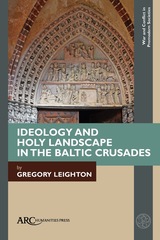
This book examines how the military orders and the ideology of crusading gave rise to a new sacred landscape in the medieval Baltic region, an outpost of Latin Christianity. Drawing on a wide variety of sources and international scholarship, the book discusses the paganism of the landscape in written sources pre-dating the crusades, in addition to the narrative, legal, and visual evidence of the crusade period. It draws out the key sacralizing elements as expressed in those sources, which structure the definition of sacred landscape, particularly martyrdom, the manifestation of the sacred, and use of relics in battle. By analyzing these aspects with Geographical Information Systems (GIS), a map of the Baltic campaigns emerges that provides a fresh approach to studying contemporary views of holy war in a region with no initial links to the loca sancta of Jerusalem or Europe.
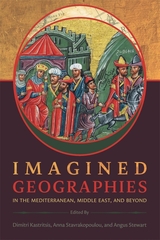
This collaborative volume focuses on imagined geography and the relationships among power, knowledge, and space. A sequel to Imperial Geographies in Byzantine and Ottoman Space, Imagined Geographies in the Mediterranean, Middle East, and Beyond shares with its predecessor a strong focus on the role of empire and ideas of space viewed in inter-regional and interdisciplinary terms.
Both volumes bring together specialists on history, art history, literature, and theater studies, but the present volume covers an even wider geography than the first. In addition to the core provinces of Byzantium and the Ottoman Empire in the eastern Mediterranean and Middle East, it also includes connections between these regions and others further away—notably Iran, Inner Asia, and the Indian Ocean. The essays collected here suggest that the phenomenon of imagined geographies is essentially discursive in nature, since Self and Other may only be defined relative to one another.
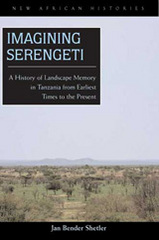
Many students come to African history with a host of stereotypes that are not always easy to dislodge. One of the most common is that of Africa as safari grounds—as the land of expansive, unpopulated game reserves untouched by civilization and preserved in their original pristine state by the tireless efforts of contemporary conservationists. With prose that is elegant in its simplicity and analysis that is forceful and compelling, Jan Bender Shetler brings the landscape memory of the Serengeti to life. She demonstrates how the social identities of western Serengeti peoples are embedded in specific spaces and in their collective memories of those spaces. Using a new methodology to analyze precolonial oral traditions, Shetler identifies core spatial images and reevaluates them in their historical context through the use of archaeological, linguistic, ethnographic, ecological, and archival evidence. Imagining Serengeti is a lively environmental history that will ensure that we never look at images of the African landscape in quite the same way.
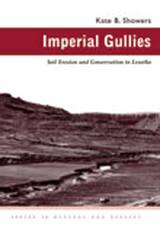
Once the grain basket for South Africa, much of Lesotho has become a scarred and degraded landscape. The nation’s spectacular erosion and gullying have concerned environmentalists and conservationists for more than half a century. In Imperial Gullies: Soil Erosion and Conservation in Lesotho, Kate B. Showers documents the truth behind this devastation.
Showers reconstructs the history of the landscape, beginning with a history of the soil. She concludes that Lesotho’s distinctive erosion chasms, called dongas—often cited as an example of destructive land-use practices by African farmers—actually were caused by colonial and postcolonial interventions. The residents of Lesotho emerge as victims of a failed technology. Their efforts to mitigate or resist implementation of destructive soil conservation engineering works were thwarted, and they were blamed for the consequences of policies promoted by international soil conservationists since the 1930s.
Imperial Gullies calls for an observational, experimental, and, most important, a fully consultative and participatory approach to address Lesotho’s serious contemporary problems of soil erosion. The first book to bring to center stage the historical practice of colonial soil science—and a cautionary tale of western science in unfamiliar terrain—it will interest a broad, interdisciplinary audience in African and environmental studies, social sciences, and history.

Indigenous knowledge has become a catchphrase in global struggles for environmental justice. Yet indigenous knowledges are often viewed, incorrectly, as pure and primordial cultural artifacts. This collection draws from African and North American cases to argue that the forms of knowledge identified as “indigenous” resulted from strategies to control environmental resources during and after colonial encounters.
At times indigenous knowledges represented a “middle ground” of intellectual exchanges between colonizers and colonized; elsewhere, indigenous knowledges were defined through conflict and struggle. The authors demonstrate how people claimed that their hybrid forms of knowledge were communal, religious, and traditional, as opposed to individualist, secular, and scientific, which they associated with European colonialism.
Indigenous Knowledge and the Environment offers comparative and transnational insights that disturb romantic views of unchanging indigenous knowledges in harmony with the environment. The result is a book that informs and complicates how indigenous knowledges can and should relate to environmental policy-making.
Contributors: David Bernstein, Derick Fay, Andrew H. Fisher, Karen Flint, David M. Gordon, Paul Kelton, Shepard Krech III, Joshua Reid, Parker Shipton, Lance van Sittert, Jacob Tropp, James L. A. Webb, Jr., Marsha Weisiger

An empirically rich reconstruction of how informality became an intrinsic part of urban life across three continents.
Over a quarter of the world’s urban population lives in informal settlements. While informality as a concept has been widely debated, we still know very little about the phenomenon’s urban history or how that history has shaped the evolution of world cities. Spotlighting the historical processes that have created and sustained urban informality for more than a century, editors Charlotte Vorms and Brodwyn Fischer and this volume’s contributors reveal informality as an intrinsic feature of urbanity, shaping not only cities across the globe but also deeper processes of state formation, socioeconomic stratification, and political struggle.
The volume brings together case studies spanning more than a hundred years, drawn from Latin America (Brazil, Chile, Venezuela, and Mexico), Northern Africa (Morocco and Algeria), and Latin Europe (France, Spain, and Italy). Together, they show that informality is neither a contemporary crisis nor a predicament unique to the Global South. Topics include the origins of informal settlements and their relationship with law and institutional power; grassroots efforts to legitimize shantytown communities; mass social movements for rights to the city; the role that shantytown removal campaigns played in populist politics, fascism, and colonialism; and the ways that informality perpetuated racial and ethnic inequalities. Informal Cities is an indispensable guide to the complex and fraught terrain of urban informality in its many historical guises.

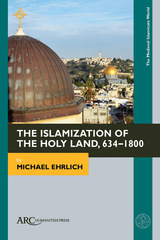
From the seventh century onwards the population of the Near East gradually became Muslim. Nevertheless, other religious communities continued to exist, maintaining an enduring presence in the region, despite being surrounded by Muslims and by people becoming Muslims.
This book argues that the causes that led to the conversion of most of the Holy Land's population, as well as the survival of some religious communities, are essentially social and geographic in nature, rather than theological, and that two parallel processes were the main catalysts of Islamization: de-urbanization and urbanization.
READERS
Browse our collection.
PUBLISHERS
See BiblioVault's publisher services.
STUDENT SERVICES
Files for college accessibility offices.
RECENTLY PUBLISHED




UChicago Accessibility Resources
home | accessibility | search | about | contact us
BiblioVault ® 2001 - 2026
The University of Chicago Press