
 A SCHOLARLY BOOK REPOSITORY
8 start with H start with H


Four years in the making, this entirely revised edition of a classic text provides a lucid and erudite review of the state of psychiatry today. Since the publication of the last edition in 1988, remarkable advances have been made in laboratory and clinical psychiatric research; the fourth edition of the Diagnostic and Statistical Manual of Mental Disorders (DSM-IV) has been published; managed care has radically altered the provision of all medical care; and the profession of psychiatry has come to a sophisticated new understanding of the interplay between psychiatric knowledge and issues in the larger society.
All these changes are reflected in the new text. Of particular interest are the masterful and lucid reviews of current knowledge in the neurobiology of mental disorders, in the section on brain and behavior. The section on psychopathology clarifies newly emerging diagnostic categories and offers new insight into addictions, anxiety disorders, and disorders of cognition.
Like its predecessors, The Harvard Guide To Psychiatry focuses throughout on the relationship between the physician and the patient. Its unspoken motto is that the art of psychiatry is as important as the science. For this recognition of what is relevant clinically as well as technically, this book will be an essential reference and support for both the new and the experienced psychiatrist.
This new edition includes up-to-date discussions of:DSM-IVManaged careImprovements in neuroimagingThe increased use of psychoactive drugsRecent advances in molecular biologyResearch on the biology of schizophrenia, depression, anxiety, and addictive disorders
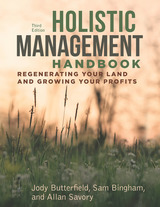
This new edition, thoroughly revised, updated, and streamlined, explains the planning procedures described in Holistic Management, and offers step-by-step instructions for running a ranch or farm using a holistic management approach. Butterfield and her coauthors describe how to use the handbook in conjunction with the textbook to tailor a management plan for your unique combination of land, livestock, and finances. Their mantra is “plan, monitor, control, and replan.” Using a four-part approach, the authors walk readers through basic concepts and techniques, help them put a plan onto paper, monitor the results, and adjust the details as needed. Appendixes provide updated worksheets, checklists, planning and monitoring forms, and detailed examples of typical scenarios a user might encounter. The handbook includes a comprehensive glossary of terms.
Ranchers, farmers, pastoralists, social entrepreneurs, government agencies, and NGOs working to address global environmental degradation will find this comprehensive handbook an indispensable guide to putting the holistic management concept into action with tangible results they can take to the bank.
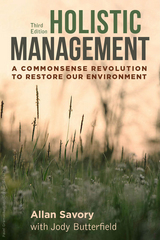
Holistic management is a systems-thinking approach for managing resources developed by Savory decades ago after observing the devastation of desertification in his native Southern Rhodesia (now Zimbabwe). Properly managed livestock are key to restoring the world’s grassland soils, the major sink for atmospheric carbon, and minimizing the most damaging impacts on humans and the natural world. This book updates Savory's paradigm-changing vision for reversing desertification, stemming the loss of biodiversity, eliminating fundamental causes of human impoverishment throughout the world, and climate change. Reorganized chapters make it easier for readers to understand the framework for Holistic Management and the four key insights that underlie it. New color photographs showcase before-and-after examples of land restored by livestock.
This long-anticipated new edition is written for new generations of ranchers, farmers, eco- and social entrepreneurs, and development professionals working to address global environmental and social degradation. It offers new hope that a sustainable future for humankind and the world we depend on is within reach.
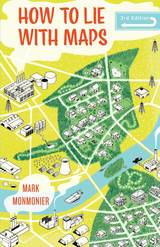
Fully updated for the digital age, this new edition of How to Lie with Maps examines the myriad ways that technology offers new opportunities for cartographic mischief, deception, and propaganda. While retaining the same brevity, range, and humor as its predecessors, this third edition includes significant updates throughout as well as new chapters on image maps, prohibitive cartography, and online maps. It also includes an expanded section of color images and an updated list of sources for further reading.
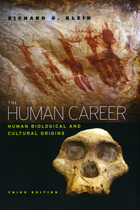
Since its publication in 1989, The Human Career has proved to be an indispensable tool in teaching human origins. This substantially revised third edition retains Richard G. Klein’s innovative approach while showing how cumulative discoveries and analyses over the past ten years have significantly refined our knowledge of human evolution.
Klein chronicles the evolution of people from the earliest primates through the emergence of fully modern humans within the past 200,000 years. His comprehensive treatment stresses recent advances in knowledge, including, for example, ever more abundant evidence that fully modern humans originated in Africa and spread from there, replacing the Neanderthals in Europe and equally archaic people in Asia. With its coverage of both the fossil record and the archaeological record over the 2.5 million years for which both are available, The Human Career demonstrates that human morphology and behavior evolved together. Throughout the book, Klein presents evidence for alternative points of view, but does not hesitate to make his own position clear.
In addition to outlining the broad pattern of human evolution, The Human Career details the kinds of data that support it. For the third edition, Klein has added numerous tables and a fresh citation system designed to enhance readability, especially for students. He has also included more than fifty new illustrations to help lay readers grasp the fossils, artifacts, and other discoveries on which specialists rely. With abundant references and hundreds of images, charts, and diagrams, this new edition is unparalleled in its usefulness for teaching human evolution.
READERS
Browse our collection.
PUBLISHERS
See BiblioVault's publisher services.
STUDENT SERVICES
Files for college accessibility offices.
RECENTLY PUBLISHED





UChicago Accessibility Resources
home | accessibility | search | about | contact us
BiblioVault ® 2001 - 2026
The University of Chicago Press