
 A SCHOLARLY BOOK REPOSITORY
7 start with H start with H
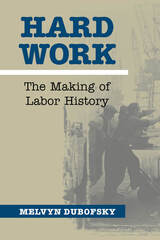
A career-spanning collection of writings by the legendary labor historian
One of American labor history's most prominent scholars, Melvyn Dubofsky curated an accessible style and historical reach that have long marked his work as required reading for students and scholars.
This collection juxtaposes Dubofsky's early writings with scholarship from the 1990s. Selections include work on western working-class radicalism, U.S. labor history in transnational and comparative settings, and the impact of technological change on American worker’s movements. Throughout, the writings provide an invaluable eyewitness perspective on the academic and political climate of the 1960s and 1970s while tracing the development of labor history as a discipline.
An exploration of important themes in labor history, Hard Work combines essential scholarship with the story of how past and present interact in the work of historians.
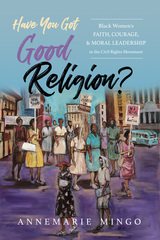
A depiction of moral imagination that resonates today, Have You Got Good Religion? reveals how Black Churchwomen’s understanding of God became action and transformed a nation.
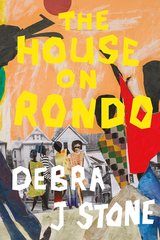
A young girl reckons with the demolition of a Black Saint Paul neighborhood to make way for the Interstate in the early 1960s
When thirteen-year-old Zenobia has to leave her friends and spend the summer at Grandma’s while Mama recovers from a stroke, life seems so unfair. But then the eviction letters start arriving throughout her grandparents’ neighborhood, and white men chalk arrows to mark the gas and water lines, and a new world of unfairness unfolds before her. It’s 1963, and Zenobia’s grandparents’ house on Rondo Avenue in Saint Paul—like all the homes in this thriving Black community—is targeted for demolition to make way for the new Interstate Highway 94.
As Zenobia gradually learns about what’s planned for the Rondo neighborhood and what this means for everyone who lives there, she discovers how her story is intertwined with the history of her family, all the way back to Great Grandma Zenobia and the secrets Grandma Essie held close about the reason for her light skin. With the destruction of the neighborhood looming, Zenobia takes a stand on behalf of her community, joining her no-nonsense neighbor, onetime cowgirl Mrs. Ruby Pearl, in a protest and ultimately getting arrested. Though Zenobia is grounded for a month, her punishment seems of little consequence in comparison to what is happening all around her. Even though the demolition continues, she is proud to discover the power and connection in protesting injustice.
The House on Rondo captures the heartbreak, resistance, and resilience that marks a community sacrificed in the name of progress—a “progress” that never seems to favor Black families and neighborhoods and that haunts cities like Saint Paul to this day. As Zenobia learns what can be destroyed and what cannot, her story teaches us that joy, community, and love persist, even amid violence and loss.
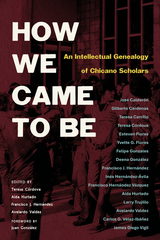
This work chronicles the lives and legacies of Chicana and Chicano scholars whose formative experiences in the Chicano Movement shaped the development of Chicano studies and transformed higher education. Originating from the Reuniones de Colegas Chicanas—gatherings of veteran scholars reflecting on their shared histories—the volume features sixteen essays organized into five thematic sections that explore the intersections of activism, scholarship, and institutional change.
The contributors document how grassroots organizing evolved into academic inquiry, leading to the creation of departments, student support systems, and policy reforms that advanced equity and representation in universities. Essays address how community-engaged research influenced urban planning, health advocacy, and cultural production, while also highlighting Indigenous and transnational epistemologies that redefined theoretical frameworks in Chicano studies. The volume concludes with reflections on academic leadership and the breaking of barriers by Chicana scholars in higher education administration.
Together, these essays offer a powerful intellectual history and a testament to a generation’s enduring commitment to social justice. How We Came to Be is both a scholarly archive and a call to action, preserving the legacy of those who built Chicano studies and inspiring future generations to continue the work of transformation within and beyond the academy.
Contributors
José Calderón
Gilberto Cárdenas
Teresa Carillo
Teresa Córdova
Estevan Flores
Yvette G. Flores
Felipe Gonzales
Deena Gonzalez
Francisco J. Hernández
Inés Hernández-Ávila
Francisco Hernández Vázquez
Aída Hurtado
Larry Trujillo
Avelardo Valdez
Carlos G. Vélez-Ibáñez
James Diego Vigil

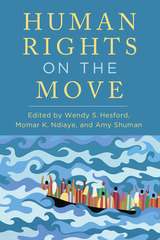
Contributing artists, activists, and scholars expose the fundamental paradox of human rights (namely that nation-states are violators and guarantors of rights) while also showing how people facing violence and persecution move with the hope of more livable and equitable futures. The assembled scholarly essays, interviews, and creative pieces demonstrate the importance of a more relational and contextual understanding of human rights—one that can destabilize current definitions and open space for new formulations.
READERS
Browse our collection.
PUBLISHERS
See BiblioVault's publisher services.
STUDENT SERVICES
Files for college accessibility offices.
RECENTLY PUBLISHED


UChicago Accessibility Resources
home | accessibility | search | about | contact us
BiblioVault ® 2001 - 2026
The University of Chicago Press