
 A SCHOLARLY BOOK REPOSITORY
4 start with G start with G
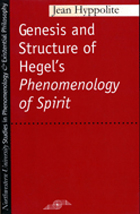

Exploring the rich phenomenological and psychological insights of Gerda Walther
This is the first major study of Gerda Walther (1897–1977), an important but underappreciated figure in the early phenomenological movement and one of the founding members of the coeducational Freiburg Phenomenological Society. Walther saw herself, along with Hedwig Conrad Martius and Edith Stein, as a student of the phenomenological movement charged with the preservation of its philosophical legacy and the extension of its practice. As Antonio Calcagno elucidates in this learned but accessible biographical account, she served as an important bridge between the Freiburg school of phenomenology, marked by Edmund Husserl’s idealism, and the realist branch that emerged in Munich, where she completed her studies with Alexander Pfänder. Her work has remained little known, however, especially to English-language readers.
Calcagno provides a comprehensive picture of Walther’s philosophical corpus and ideas, from her early investigations to her later writings, while highlighting the originality of her own phenomenological work. He shows how she challenged certain key claims of phenomenology and provided unique solutions to the problems she encountered. The phenomenology that Walther leaves us with is deeply marked by her emphasis on the importance of psyche, spirit, and personhood for achieving a phenomenological methodology and understanding. We find in her work a rich phenomenological psychology that explores not only the limit phenomena of the discipline but also the deep structure of inner psychic life framed in personalist terms.

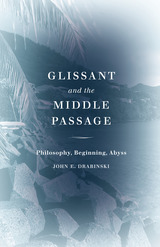
A reevaluation of Édouard Glissant that centers on the catastrophe of the Middle Passage and creates deep, original theories of trauma and Caribbeanness
While philosophy has undertaken the work of accounting for Europe’s traumatic history, the field has not shown the same attention to the catastrophe known as the Middle Passage. It is a history that requires its own ideas that emerge organically from the societies that experienced the Middle Passage and its consequences firsthand. Glissant and the Middle Passage offers a new, important approach to this neglected calamity by examining the thought of Édouard Glissant, particularly his development of Caribbeanness as a critical concept rooted in the experience of the slave trade and its aftermath in colonialism.
In dialogue with key theorists of catastrophe and trauma—including Aimé Césaire, Frantz Fanon, George Lamming, Gilles Deleuze, Félix Guattari, Derek Walcott, as well as key figures in Holocaust studies—Glissant and the Middle Passage hones a sharp sense of the specifically Caribbean varieties of loss, developing them into a transformative philosophical idea. Using the Plantation as a critical concept, John E. Drabinski creolizes notions of rhizome and nomad, examining what kinds of aesthetics grow from these roots and offering reconsiderations of what constitutes intellectual work and cultural production.
Glissant and the Middle Passage establishes Glissant’s proper place as a key theorist of ruin, catastrophe, abyss, and memory. Identifying his insistence on memories and histories tied to place as the crucial geography at the heart of his work, this book imparts an innovative new response to the specific historical experiences of the Middle Passage.
READERS
Browse our collection.
PUBLISHERS
See BiblioVault's publisher services.
STUDENT SERVICES
Files for college accessibility offices.
RECENTLY PUBLISHED






UChicago Accessibility Resources
home | accessibility | search | about | contact us
BiblioVault ® 2001 - 2026
The University of Chicago Press