
 A SCHOLARLY BOOK REPOSITORY
11 start with G start with G
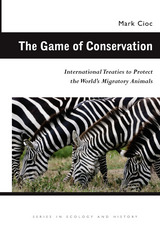
The Game of Conservation is a brilliantly crafted and highly readable examination of nature protection around the world.
Twentieth-century nature conservation treaties often originated as attempts to regulate the pace of killing rather than as attempts to protect animal habitat. Some were prompted by major breakthroughs in firearm techniques, such as the invention of the elephant gun and grenade harpoons, but agricultural development was at least as important as hunting regulations in determining the fate of migratory species. The treaties had many defects, yet they also served the goal of conservation to good effect, often saving key species from complete extermination and sometimes keeping the population numbers at viable levels. It is because of these treaties that Africa is dotted with large national parks, that North America has an extensive network of bird refuges, and that there are any whales left in the oceans. All of these treaties are still in effect today, and all continue to influence nature-protection efforts around the globe.
Drawing on a wide variety of primary and secondary sources, Mark Cioc shows that a handful of treaties—all designed to protect the world’s most commercially important migratory species—have largely shaped the contours of global nature conservation over the past century. The scope of the book ranges from the African savannahs and the skies of North America to the frigid waters of the Antarctic.
The ecumene in prose.
Strabo (ca. 64 BC to ca. AD 25), an Asiatic Greek of Amasia in Pontus, studied at Nysa and after 44 BC at Rome. He became a keen traveler who saw a large part of Italy, various near eastern regions including the Black Sea, various parts of Asia Minor, Egypt as far as Ethiopia, and parts of Greece. He was a long time in Alexandria where he no doubt studied mathematics, astronomy, and history.
Strabo’s historical work is lost, but his most important Geography in seventeen books has survived. After two introductory books, numbers 3 and 4 deal with Spain and Gaul, 5 and 6 with Italy and Sicily, 7 with north and east Europe, 8–10 with Greek lands, 11–14 with the main regions of Asia and with Asia Minor, 15 with India and Iran, 16 with Assyria, Babylonia, Syria, and Arabia, 17 with Egypt and Africa. In outline he follows the great mathematical geographer Eratosthenes, but adds general descriptions of separate countries including physical, political, and historical details. A sequel to his historical memoirs, Geography is planned apparently for public servants rather than students—hence the accounts of physical features and of natural products. On the mathematical side it is an invaluable source of information about Eratosthenes, Hipparchus, and Posidonius.
The Loeb Classical Library edition of Strabo is in eight volumes.

The ecumene in prose.
Strabo (ca. 64 BC to ca. AD 25), an Asiatic Greek of Amasia in Pontus, studied at Nysa and after 44 BC at Rome. He became a keen traveler who saw a large part of Italy, various near eastern regions including the Black Sea, various parts of Asia Minor, Egypt as far as Ethiopia, and parts of Greece. He was a long time in Alexandria where he no doubt studied mathematics, astronomy, and history.
Strabo’s historical work is lost, but his most important Geography in seventeen books has survived. After two introductory books, numbers 3 and 4 deal with Spain and Gaul, 5 and 6 with Italy and Sicily, 7 with north and east Europe, 8–10 with Greek lands, 11–14 with the main regions of Asia and with Asia Minor, 15 with India and Iran, 16 with Assyria, Babylonia, Syria, and Arabia, 17 with Egypt and Africa. In outline he follows the great mathematical geographer Eratosthenes, but adds general descriptions of separate countries including physical, political, and historical details. A sequel to his historical memoirs, Geography is planned apparently for public servants rather than students—hence the accounts of physical features and of natural products. On the mathematical side it is an invaluable source of information about Eratosthenes, Hipparchus, and Posidonius.
The Loeb Classical Library edition of Strabo is in eight volumes.
The ecumene in prose.
Strabo (ca. 64 BC to ca. AD 25), an Asiatic Greek of Amasia in Pontus, studied at Nysa and after 44 BC at Rome. He became a keen traveler who saw a large part of Italy, various near eastern regions including the Black Sea, various parts of Asia Minor, Egypt as far as Ethiopia, and parts of Greece. He was a long time in Alexandria where he no doubt studied mathematics, astronomy, and history.
Strabo’s historical work is lost, but his most important Geography in seventeen books has survived. After two introductory books, numbers 3 and 4 deal with Spain and Gaul, 5 and 6 with Italy and Sicily, 7 with north and east Europe, 8–10 with Greek lands, 11–14 with the main regions of Asia and with Asia Minor, 15 with India and Iran, 16 with Assyria, Babylonia, Syria, and Arabia, 17 with Egypt and Africa. In outline he follows the great mathematical geographer Eratosthenes, but adds general descriptions of separate countries including physical, political, and historical details. A sequel to his historical memoirs, Geography is planned apparently for public servants rather than students—hence the accounts of physical features and of natural products. On the mathematical side it is an invaluable source of information about Eratosthenes, Hipparchus, and Posidonius.
The Loeb Classical Library edition of Strabo is in eight volumes.
The ecumene in prose.
Strabo (ca. 64 BC to ca. AD 25), an Asiatic Greek of Amasia in Pontus, studied at Nysa and after 44 BC at Rome. He became a keen traveler who saw a large part of Italy, various near eastern regions including the Black Sea, various parts of Asia Minor, Egypt as far as Ethiopia, and parts of Greece. He was a long time in Alexandria where he no doubt studied mathematics, astronomy, and history.
Strabo’s historical work is lost, but his most important Geography in seventeen books has survived. After two introductory books, numbers 3 and 4 deal with Spain and Gaul, 5 and 6 with Italy and Sicily, 7 with north and east Europe, 8–10 with Greek lands, 11–14 with the main regions of Asia and with Asia Minor, 15 with India and Iran, 16 with Assyria, Babylonia, Syria, and Arabia, 17 with Egypt and Africa. In outline he follows the great mathematical geographer Eratosthenes, but adds general descriptions of separate countries including physical, political, and historical details. A sequel to his historical memoirs, Geography is planned apparently for public servants rather than students—hence the accounts of physical features and of natural products. On the mathematical side it is an invaluable source of information about Eratosthenes, Hipparchus, and Posidonius.
The Loeb Classical Library edition of Strabo is in eight volumes.
The ecumene in prose.
Strabo (ca. 64 BC to ca. AD 25), an Asiatic Greek of Amasia in Pontus, studied at Nysa and after 44 BC at Rome. He became a keen traveler who saw a large part of Italy, various near eastern regions including the Black Sea, various parts of Asia Minor, Egypt as far as Ethiopia, and parts of Greece. He was a long time in Alexandria where he no doubt studied mathematics, astronomy, and history.
Strabo’s historical work is lost, but his most important Geography in seventeen books has survived. After two introductory books, numbers 3 and 4 deal with Spain and Gaul, 5 and 6 with Italy and Sicily, 7 with north and east Europe, 8–10 with Greek lands, 11–14 with the main regions of Asia and with Asia Minor, 15 with India and Iran, 16 with Assyria, Babylonia, Syria, and Arabia, 17 with Egypt and Africa. In outline he follows the great mathematical geographer Eratosthenes, but adds general descriptions of separate countries including physical, political, and historical details. A sequel to his historical memoirs, Geography is planned apparently for public servants rather than students—hence the accounts of physical features and of natural products. On the mathematical side it is an invaluable source of information about Eratosthenes, Hipparchus, and Posidonius.
The Loeb Classical Library edition of Strabo is in eight volumes.
The ecumene in prose.
Strabo (ca. 64 BC to ca. AD 25), an Asiatic Greek of Amasia in Pontus, studied at Nysa and after 44 BC at Rome. He became a keen traveler who saw a large part of Italy, various near eastern regions including the Black Sea, various parts of Asia Minor, Egypt as far as Ethiopia, and parts of Greece. He was a long time in Alexandria where he no doubt studied mathematics, astronomy, and history.
Strabo’s historical work is lost, but his most important Geography in seventeen books has survived. After two introductory books, numbers 3 and 4 deal with Spain and Gaul, 5 and 6 with Italy and Sicily, 7 with north and east Europe, 8–10 with Greek lands, 11–14 with the main regions of Asia and with Asia Minor, 15 with India and Iran, 16 with Assyria, Babylonia, Syria, and Arabia, 17 with Egypt and Africa. In outline he follows the great mathematical geographer Eratosthenes, but adds general descriptions of separate countries including physical, political, and historical details. A sequel to his historical memoirs, Geography is planned apparently for public servants rather than students—hence the accounts of physical features and of natural products. On the mathematical side it is an invaluable source of information about Eratosthenes, Hipparchus, and Posidonius.
The Loeb Classical Library edition of Strabo is in eight volumes.
The ecumene in prose.
Strabo (ca. 64 BC to ca. AD 25), an Asiatic Greek of Amasia in Pontus, studied at Nysa and after 44 BC at Rome. He became a keen traveler who saw a large part of Italy, various near eastern regions including the Black Sea, various parts of Asia Minor, Egypt as far as Ethiopia, and parts of Greece. He was a long time in Alexandria where he no doubt studied mathematics, astronomy, and history.
Strabo’s historical work is lost, but his most important Geography in seventeen books has survived. After two introductory books, numbers 3 and 4 deal with Spain and Gaul, 5 and 6 with Italy and Sicily, 7 with north and east Europe, 8–10 with Greek lands, 11–14 with the main regions of Asia and with Asia Minor, 15 with India and Iran, 16 with Assyria, Babylonia, Syria, and Arabia, 17 with Egypt and Africa. In outline he follows the great mathematical geographer Eratosthenes, but adds general descriptions of separate countries including physical, political, and historical details. A sequel to his historical memoirs, Geography is planned apparently for public servants rather than students—hence the accounts of physical features and of natural products. On the mathematical side it is an invaluable source of information about Eratosthenes, Hipparchus, and Posidonius.
The Loeb Classical Library edition of Strabo is in eight volumes.
The ecumene in prose.
Strabo (ca. 64 BC to ca. AD 25), an Asiatic Greek of Amasia in Pontus, studied at Nysa and after 44 BC at Rome. He became a keen traveler who saw a large part of Italy, various near eastern regions including the Black Sea, various parts of Asia Minor, Egypt as far as Ethiopia, and parts of Greece. He was a long time in Alexandria where he no doubt studied mathematics, astronomy, and history.
Strabo’s historical work is lost, but his most important Geography in seventeen books has survived. After two introductory books, numbers 3 and 4 deal with Spain and Gaul, 5 and 6 with Italy and Sicily, 7 with north and east Europe, 8–10 with Greek lands, 11–14 with the main regions of Asia and with Asia Minor, 15 with India and Iran, 16 with Assyria, Babylonia, Syria, and Arabia, 17 with Egypt and Africa. In outline he follows the great mathematical geographer Eratosthenes, but adds general descriptions of separate countries including physical, political, and historical details. A sequel to his historical memoirs, Geography is planned apparently for public servants rather than students—hence the accounts of physical features and of natural products. On the mathematical side it is an invaluable source of information about Eratosthenes, Hipparchus, and Posidonius.
The Loeb Classical Library edition of Strabo is in eight volumes.
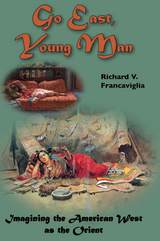
Transference of orientalist images and identities to the American landscape and its inhabitants, especially in the West—in other words, portrayal of the West as the “Orient”—has been a common aspect of American cultural history. Place names, such as the Jordan River or Pyramid Lake, offer notable examples, but the imagery and its varied meanings are more widespread and significant. Understanding that range and significance, especially to the western part of the continent, means coming to terms with the complicated, nuanced ideas of the Orient and of the North American continent that European Americans brought to the West. Such complexity is what historical geographer Richard Francaviglia unravels in this book.
Since the publication of Edward Said’s book, Orientalism, the term has come to signify something one-dimensionally negative. In essence, the orientalist vision was an ethnocentric characterization of the peoples of Asia (and Africa and the “Near East”) as exotic, primitive “others” subject to conquest by the nations of Europe. That now well-established point, which expresses a postcolonial perspective, is critical, but Francaviglia suggest that it overlooks much variation and complexity in the views of historical actors and writers, many of whom thought of western places in terms of an idealized and romanticized Orient. It likewise neglects positive images and interpretations to focus on those of a decadent and ostensibly inferior East.
We cannot understand well or fully what the pervasive orientalism found in western cultural history meant, says Francaviglia, if we focus only on its role as an intellectual engine for European imperialism. It did play that role as well in the American West. One only need think about characterizations of American Indians as Bedouins of the Plains destined for displacement by a settled frontier. Other roles for orientalism, though, from romantic to commercial ones, were also widely in play. In Go East, Young Man, Francaviglia explores a broad range of orientalist images deployed in the context of European settlement of the American West, and he unfolds their multiple significances.

This inaugural volume in the Ohio University Press Series in Ecology and History is the paperback edition of Conrad Totman’s widely acclaimed study of Japan’s environmental policies over the centuries.
Professor Totman raises the critical question of how Japan’s steeply mountainous woodland has remained biologically healthy despite centuries of intensive exploitation by a dense human population that has always been dependent on wood and other forest products. Mindful that in global terms this has been a rare outcome, and one that bears directly on Japan’s recent experience as an affluent, industrial society, Totman examines the causes, forms, and effects of forest use and management in Japan during the millennium to 1870. He focuses mainly on the centuries after 1600 when the Japanese found themselves driven by their own excesses into programs of woodland protection and regenerative forestry.
READERS
Browse our collection.
PUBLISHERS
See BiblioVault's publisher services.
STUDENT SERVICES
Files for college accessibility offices.
RECENTLY PUBLISHED




UChicago Accessibility Resources
home | accessibility | search | about | contact us
BiblioVault ® 2001 - 2026
The University of Chicago Press