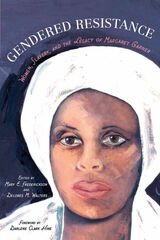
front cover of Gendered Resistance
Gendered Resistance
Women, Slavery, and the Legacy of Margaret Garner
Edited by Mary E. Frederickson and Delores M. Walters
University of Illinois Press, 2013
Inspired by the searing story of Margaret Garner, the escaped slave who in 1856 slit her daughter's throat rather than have her forced back into slavery, the essays in this collection focus on historical and contemporary examples of slavery and women's resistance to oppression from the nineteenth century to the twenty-first. Each chapter uses Garner's example--the real-life narrative behind Toni Morrison's Beloved andthe opera Margaret Garner--as a thematic foundation for an interdisciplinary conversation about gendered resistance in locations including Brazil, Yemen, India, and the United States. 
 
Contributors are Nailah Randall Bellinger, Olivia Cousins, Mary E. Frederickson, Cheryl Janifer LaRoche, Carolyn Mazloomi, Cathy McDaniels-Wilson, Catherine Roma, Huda Seif, S. Pearl Sharp, Raquel Luciana de Souza, Jolene Smith, Veta Tucker, Delores M. Walters, Diana Williams, and Kristine Yohe.


[more]

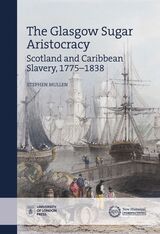
front cover of The Glasgow Sugar Aristocracy
The Glasgow Sugar Aristocracy
Scotland and Caribbean Slavery, 1775–1838
Stephen Mullen
University of London Press, 2020
The first book to outline Scotland’s colonial past and Glasgow’s direct links with the slave trade through sugar plantations.

This important book assesses the size and nature of Caribbean slavery’s economic impact on British society. The Glasgow Sugar Aristocracy, a grouping of West India merchants and planters, became active before the emancipation of chattel slavery in the British West Indies in 1834. Many acquired nationally significant fortunes, and their investments percolated into the Scottish economy and wider society. At its core, the book traces the development of merchant capital and poses several interrelated questions during an era of rapid transformation, namely, what impact the private investments of West India merchants and colonial adventurers had on metropolitan society and the economy, as well as the wider effects of such commerce on industrial and agricultural development.
 
The book also examines the fortunes of temporary Scottish economic migrants who traveled to some of the wealthiest of the Caribbean islands, presenting the first large-scale survey of repatriated slavery fortunes via case studies of Scots in Jamaica, Grenada, and Trinidad before emancipation in 1834. It, therefore, takes a new approach to illuminate the world of individuals who acquired West Indian fortunes and ultimately explores, in an Atlantic frame, the interconnections between the colonies and metropole in the late eighteenth and early nineteenth centuries.
[more]

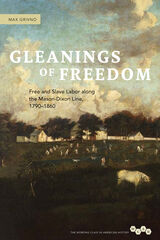
front cover of Gleanings of Freedom
Gleanings of Freedom
Free and Slave Labor along the Mason-Dixon Line, 1790-1860
Max Grivno
University of Illinois Press, 2014
Late eighteenth- and early nineteenth-century landowners in the hinterlands of Baltimore, Maryland, cobbled together workforces from a diverse labor population of black and white apprentices, indentured servants, slaves, and hired workers. This book examines the intertwined lives of the poor whites, slaves, and free blacks who lived and worked in this wheat-producing region along the Mason–Dixon Line. Drawing from court records, the diaries, letters, and ledgers of farmers and small planters, and other archival sources, Max Grivno reconstructs how these poorest of southerners eked out their livings and struggled to maintain their families and their freedom in the often unforgiving rural economy.
[more]


Send via email Share on Facebook Share on Twitter