
 A SCHOLARLY BOOK REPOSITORY
7 start with C start with C
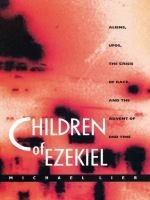
Beginning with the merkabah chariot literature of Hebrew and Gnostic mysticism, Lieb shows how religiously inspired people concerned with annihilating their heretical enemies seized on Ezekiel’s vision as revealing the technologically superior instrument of God’s righteous anger. He describes how many who seek to know the unknowable that is the power of God conceive it in technological terms—and how that power is associated with political aims and a heralding of the end of time. For Milton, Ezekiel’s chariot becomes the vehicle in which the Son of God does battle with the rebellious angels. In the modern age, it may take the form of a locomotive, tank, airplane, missile, or UFO. Technology itself is seen as a divine gift and an embodiment of God in the temporal world. As Lieb demonstrates, the impetus to produce modern technology arises not merely from the desire for profit or military might but also from religious-spiritual motives.
Including discussions of conservative evangelical Christian movements, Reagan’s ballistic shooting gallery in the sky, and the Nation of Islam’s vision of the “mother plane” as the vehicle of retribution in the war against racial oppression, Children of Ezekiel will enthrall readers who have been captivated, either through religious belief or intellectual interests, by a common thread uniting millennial religious beliefs, racial conflict, and political and militaristic aspirations.
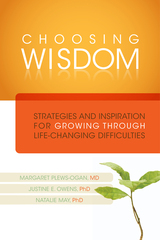
We all know the saying, “That which does not kill us makes us stronger,” but is that really true? After all, for some people, traumatic experiences ultimately lead to genuinely debilitating outcomes. For others, though, adversity does seem to lead to “post-traumatic growth,” where individuals move through suffering and find their lives changed in positive ways. Why does this growth happen for some people and not others? How exactly does it happen? Can the positive results be purposefully replicated?
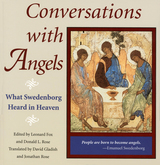
"...an engaging, fascinating contribution to angelic studies."
---Reviewer's Bookwatch
This fresh translation brings together the most remarkable selections from Swedish visionary Emanuel Swedenborg's works about the wisdom imparted to him by angels. These stories reveal the angels' natures, their spiritual loves, their heavenly education, and the true source of wisdom and beauty. These spirits share their knowledge for the good of those on earth, who are themselves created to become angels.
Look for this book's companion piece, Debates with Devils.
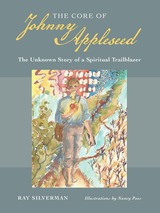
Recent biographies of John Chapman, better known as Johnny Appleseed, have portrayed him as anything from a schizophrenic wandering ascetic to a hedonistic pleasure-seeker. But who was the real man behind the misconceptions?
In this spiritual biography, Ray Silverman explores the stories and the popular misconceptions about Johnny Appleseed as well as the truths behind the legends. As a businessman, Chapman owned nineteen nurseries and twenty other land holdings throughout Pennsylvania, Ohio, and Indiana, brokering deals that belie the popular image of him as a wandering nomad with a tin pot on his head. But it is only once we talk about Chapman’s spiritual convictions that we come to the core of who he was: a thoughtful and also joyful Christian who was deeply moved by the writings of Emanuel Swedenborg.
The picture that emerges is of a lighthearted person whose convictions led him to seek harmony not only in nature but in the spiritual realms also—and to share his bounty with as many people as he could.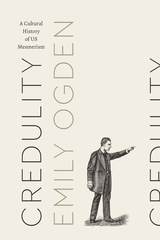
Credulity tells the fascinating story of mesmerism’s spread from the plantations of the French Antilles to the textile factory cities of 1830s New England. As it proliferated along the Eastern seaboard, this occult movement attracted attention from Ralph Waldo Emerson’s circle and ignited the nineteenth-century equivalent of flame wars in the major newspapers. But mesmerism was not simply the last gasp of magic in modern times. Far from being magicians themselves, mesmerists claimed to provide the first rational means of manipulating the credulous human tendencies that had underwritten past superstitions. Now, rather than propping up the powers of oracles and false gods, these tendencies served modern ends such as labor supervision, education, and mediated communication. Neither an atavistic throwback nor a radical alternative, mesmerism was part and parcel of the modern. Credulity offers us a new way of understanding the place of enchantment in secularizing America.


Curandereando: Sacred Decolonial Healing reclaims curanderismo as a living and revolutionary practice of ancestral wisdom, resilience, and renewal. Blending poetry, Spanglish storytelling, oral histories, and testimonios, this hybrid work illuminates healing as both a sacred tradition and a decolonial act of resistance.
The book traces curanderismo’s survival under colonial oppression, its adaptations across diasporas, and its vital role in addressing contemporary struggles for ecological balance, cultural survival, and social justice. By centering diverse healers and community voices, it resists folkloric portrayals and instead presents curanderismo as an evolving practice deeply relevant to today’s crises.
Accessible yet scholarly, Curandereando bridges sacred traditions with academic discourse, challenging Western medical dominance while offering holistic frameworks grounded in ancestral knowledge. This book is an essential resource for Chicana/o and Latina/o studies, ethnic studies, Indigenous studies, gender and sexuality studies, and environmental justice. It will also resonate with community healers, educators, and readers seeking decolonial approaches to wellness, spirituality, and cultural renewal.
READERS
Browse our collection.
PUBLISHERS
See BiblioVault's publisher services.
STUDENT SERVICES
Files for college accessibility offices.
RECENTLY PUBLISHED



UChicago Accessibility Resources
home | accessibility | search | about | contact us
BiblioVault ® 2001 - 2026
The University of Chicago Press