
 A SCHOLARLY BOOK REPOSITORY
19 start with C start with C

A Call to Fidelity seeks to thoughtfully examine and critically evaluate the contributions that Charles E. Curran has made to the field of Catholic moral theology over the past forty years. It also seeks to assess the development of specific topics in contemporary moral theology to which Curran has made his unique mark, particularly in fundamental ethics, sexual and medical ethics, social and political ethics, and topics related to dialogue with other traditions and approaches to Catholic ethics.
Reviewing the many years of his influential writings, thought, and scholarship, fourteen distinguished scholars examine his contributions and the current state of the topics under discussion-which are as far ranging as academic freedom, birth control, gay and lesbian relationships, and feminism. Each contributor also provides a critical evaluation of Curran's work and outlines how these areas will hold or undergo transformation as the church looks toward its relationship with society and culture in the coming decades.
Since the 1970s health care costs in the United States have doubled, insurance premiums have far outpaced inflation, and the numbers of the uninsured and underinsured are increasing at an alarming rate. At the same time the public expects better health care and access to the latest treatment technologies. Governments, desperate to contain ballooning costs, often see a market-based approach to health care as the solution; critics of market systems argue that government regulation is necessary to secure accessible care for all.
The Catholic Church generally questions the market's ability to satisfy the many human needs intrinsic to any care delivery system yet, although the Church views health care as a basic human right, it has yet to offer strategies for how such a right can be guaranteed. Mary J. McDonough, a former Legal Aid lawyer for medical cases, understands the advantages and disadvantages of market-based care and offers insight and solutions in Can a Health Care Market Be Moral?
Drawing on Catholic social teachings from St. Augustine to Pope John Paul II, McDonough reviews health system successes and failures from around the world and assesses market approaches to health care as proposed by leading economists such as Milton Friedman, Regina Herzlinger, Mark Pauly, and Alain Enthoven. Balancing aspects of these proposals with Daniel Callahan's value-dimension approach, McDonough offers a Catholic vision of health care in the United States that allows for some market mechanisms while promoting justice and concern for the least advantaged.
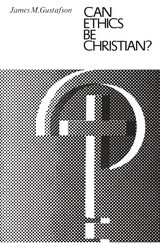
Professor Gustafson grounds his discussion in a concrete example of moral conduct which deeply impressed him. The incident—narrated in detail at the start and referred to throughout—concerns a nonreligious colleague who came to the aid of an intoxicated soldier. Although seemingly trivial, this incident, in the author's view, approximates the normal sorts of experiences in which individuals have to make moral decisions every day; it becomes a touchstone to investigate the logical, social, and religious elements in moral decision making.
Starting where Max Weber's The Protestant Ethic and the Spirit of Capitalism left off, John E. Tropman develops the idea that there is another religious-based ethic permeating society, a Catholic ethic. Where Weber proposed that a Protestant ethic supported the development of capitalism, Tropman argues that there is a Catholic ethic as well, and that it is more caring and community-oriented.
Weber's notion of the Protestant ethic has become widely accepted, but until Tropman's work, beginning in the mid-1980s, there had been no discussion of another, religious-based ethic. He suggests that if the Protestant ethic is an "achievement" ethic, the Catholic ethic is a "helping" one. Tropman outlines a Catholic ethic that is distinctive in its sympathy and outreach toward the poor, and in its emphasis on family and community over economic success. This book fully explores the Catholic ethic and its differing focus by using both historical and survey research. It also points to the existence of other religious-based ethics.
This clearly written book, employing the tools of both sociology and religious thought, will appeal to a wide audience, including students and scholars in disciplines informed by the influence of religion on politics and on social and economic behavior.
In this magisterial volume Charles E. Curran surveys the historical development of Catholic moral theology in the United States from its 19th century roots to the present day. He begins by tracing the development of pre-Vatican II moral theology that, with the exception of social ethics, had the limited purpose of training future confessors to know what actions are sinful and the degree of sinfulness.
Curran then explores and illuminates the post-Vatican II era with chapters on the effect of the Council on the scope and substance of moral theology, the impact of Humanae vitae, Pope Paul VI's encyclical condemning artificial contraception, fundamental moral theology, sexuality and marriage, bioethics, and social ethics.
Curran's perspective is unique: For nearly 50 years, he has been a major influence on the development of the field and has witnessed first-hand the dramatic increase in the number and diversity of moral theologians in the academy and the Church. No one is more qualified to write this first and only comprehensive history of Catholic moral theology in the United States.
The Catholic tradition has always tried to explain its theology in a coherent and systematic way, but the great changes and tensions existing within Catholic moral theology today have made it difficult to develop systematic approaches to what was once called fundamental moral theology. Now a leading scholar active in this field for forty years offers a synthesis of Catholic moral theology set in the context of the broader Catholic tradition and the significant developments that have occurred since the Second Vatican Council.
Charles E. Curran’s succinct, coherent account of his wide-ranging work in Catholic moral theology points out agreements, disagreements, and changes in significant aspects of the Catholic moral tradition. His systematic approach explores major topics in a logical development: the ecclesiological foundation and stance of moral theology; the person as moral subject and agent; virtues, principles and norms; conscience and decision making; and the role of the church as a teacher of morality.
Curran’s work condenses and organizes a large amount of material to show that the Catholic theological tradition is in dialogue with contemporary life and thought while remaining conscious of its rich history. Of great interest to theologians for its broad synthetic scope, this book is also a thorough introduction to the Catholic moral tradition for students and interested readers, including non-Catholics.
Charles E. Curran offers the first comprehensive analysis and criticism of the development of modern Catholic social teaching from the perspective of theology, ethics, and church history. Curran studies the methodology and content of the documents of Catholic social teaching, generally understood as comprising twelve papal letters beginning with Leo XIII's 1891 encyclical Rerum novarum, two documents from Vatican II, and two pastoral letters of the U.S. bishops.
He contends that the fundamental basis for this body of teaching comes from an anthropological perspective that recognizes both the inherent dignity and the social nature of the human person—thus do the church's teachings on political and economic matters chart a middle course between the two extremes of individualism and collectivism. The documents themselves tend to downplay any discontinuities with previous documents, but Curran's systematic analysis reveals the significant historical developments that have occurred over the course of more than a century. Although greatly appreciative of the many strengths of this teaching, Curran also points out the weaknesses and continuing tensions in Catholic social teaching today.
Intended for scholars and students of Catholic social ethics, as well as those involved in Catholic social ministry, this volume will also appeal to non-Catholic readers interested in an understanding and evaluation of Catholic social teaching.

A timely new edition of the acclaimed work, Christian America and the Kingdom of God spotlights how the centuries-long pursuit of a Christian America has bred an aggressive white Christian nationalism that twists faith, unleashes unchristian behavior, and threatens the nation.
Despite the growing interest among philosophers and theologians in virtue ethics, its proponents have done little to suggest why Christians in particular find virtue ethics attractive. Joseph J. Kotva, Jr., addresses this question in The Christian Case for Virtue Ethics, showing that virtue theory offers an ethical framework that is highly compatible with Christian morality.
Kotva defines virtue ethics and demonstrates its ability to voice Christian convictions about how to live the moral life. He evaluates virtue theory in light of systematic theology and Scripture, arguing that Christian ethics could be profitably linked with neo-Aristotelian virtue ethics.
Ecumenical in tone, this book provides a thorough but accessible introduction to recent philosophical accounts of virtue and offers an original, explicitly Christian adaptation of these ideas. It will be of value to students and scholars of philosophy, theology, and religion, as well as to those interested in the debates surrounding virtue ethics.
Bernard Brady has given us a rare, delightful, and thought-provoking book—a volume that belongs on the desk or the bed-stand of anyone in search of the rich and varied dimensions of Christian love. Christians are taught that God is love and are commanded to love, their neighbors and their enemies. These truths are not controversial. What is controversial and, indeed, has been controversial throughout the history of Christianity is the meaning of this love. This book explores the tradition of Christian reflection on the meaning, and experience of love, loving, and being loved.
Many books have been written about Christian love, but no book has gathered together this kind of primary source material and covered such a wide range of perspectives, allowing the reader to engage directly with the thought and experience of some of the greatest Christian minds on the topic of love. Bernard Brady covers with remarkable clarity the breadth and depth of discussions on Christian love from the Bible to contemporary experience to create this-a survey of how Christians through the ages have understood love.
Beginning of course with the Bible, Brady examines the key writings and thinkers on the nature of Christian love: St. Augustine; mystics such as Bernard of Clairvaux, Hadewich, and Julian of Norwich; the great tradition and literature of courtly love, Thomas Aquinas, Martin Luther, Sören Kierkegaard, and others. In addition, Brady devotes chapters to several 20th century figures whose lives seemingly embodied Christian love: Mother Theresa, Martin Luther King, Jr., and Pope John Paul II. Finally, Christian Love addresses contemporary deliberations over the meaning of love with an analysis of the modern writings of Martin D'Arcy, Reinhold Niebuhr, Jules Toner, Gustavo Gutiérrez, Gene Outka, Margaret Farley, Edward Vacek, and Don Browning. In a synthesizing concluding chapter, Brady offers his own insightful and introspective understanding of the substance of Christian love, suggesting that it is an affective affirmation of another, that it is both responsive and unitive, and that it is steadfast and enduring.
As a beautiful contemplative companion to one's own spiritual understanding, or as a thoughtful and meaningful gift, Christian Love is in every sense a treasure to behold, read, and share with those you love.
In this third collection of his essays on Christian ethics, Josef Fuchs takes up a number of pressing questions both in fundamental and applied ethics.
Several essays explore the biblical basis for establishing Christian norms and principles for ethical decision-making. These deal in detail with th enature of human conscience and the effect on it fo religious values in a pluralistic culture. The author also deals with current and pressing issues of a Christian moral life: continuity and change in moral teaching as exemplified by the debate over religious freedom; pluralism in the understanding of Christian marriage as early as the twelfth century; bioethical problems dealing with the beginning and end of human life; and the general question, is there a "Catholic" ethical moral theology?
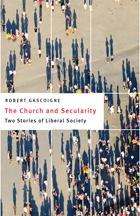
Western liberal societies are characterized by two stories: a positive story of freedom of conscience and the recognition of community and human rights, and a negative story of unrestrained freedom that leads to self-centeredness, vacuity, and the destructive compromise of human values. Can the Catholic Church play a more meaningful role in assisting liberal societies in telling their better story?
Australian ethicist Robert Gascoigne thinks it can. In The Church and Secularity he considers the meaning of secularity as a shared space for all citizens and asks how the Church can contribute to a sensitivity to—and respect for—human dignity and human rights. Drawing on Augustine’s City of God and Vatican II’s Gaudium et spes, Gascoigne interprets the meaning of freedom in liberal societies through the lens of Augustine’s “two loves,” the love of God and neighbor and the love of self, and reveals how the two are connected to our contemporary experience.
The Church and Secularity argues that the Church can serve liberal societies in a positive way and that its own social identity, rooted in Eucharistic communities, must be bound up with the struggle for human rights and resistance to the commodification of the human in all its forms.

When Richard A. McCormick's The Critical Calling was first published, Andrew M. Greeley commented that "in years to come scholars will look back on Father McCormick's work and say, 'This was a man who knew what he was talking about!'" In this reissue, with a new foreword by Lisa Sowle Cahill, both first-time readers and those opening the pages for a return visit with an honored friend will find Greeley's characterization remains valid.
Father McCormick begins The Critical Calling with his personal affirmation of the work of Vatican II: "I believe the Council was a work of the Spirit—desperately needed, divinely inspired, devotedly and doggedly carried through." Yet, he stresses this was no uncritical endorsement of everything the Council did and said. Part One includes a discussion of fundamental moral theology that looks at the relationship between the church hierarchy and individual moral decision making and several chapters addressing issues precipitated by actions involving Cardinal Josef Ratzinger, now Pope Benedict XVI. Part Two focuses on practical and pastoral questions that touch on contemporary concerns ranging from abortion to AIDS, divorce, homosexuality, and teenage sexuality.
Cahill suggests that "those who lived through the tumultuous 1960s and '70s" as well as "those who came to maturity after the Council" will find this book to be an accurate and evocative reflection of the passions that imbued all those early debates and a helpful explanation why those passions ran so high. All readers will benefit from the wise insights into the controversies of that era and the more recent struggles, challenges, and debates that confront today's church.
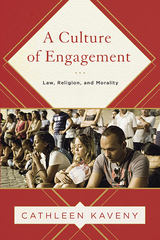
Religious traditions in the United States are characterized by ongoing tension between assimilation to the broader culture, as typified by mainline Protestant churches, and defiant rejection of cultural incursions, as witnessed by more sectarian movements such as Mormonism and Hassidism. However, legal theorist and Catholic theologian Cathleen Kaveny contends there is a third possibility—a culture of engagement—that accommodates and respects tradition. It also recognizes the need to interact with culture to remain relevant and to offer critiques of social, political, legal, and economic practices.
Kaveny suggests that rather than avoid the crisscross of the religious and secular spheres of life, we should use this conflict as an opportunity to come together and to encounter, challenge, contribute to, and correct one another. Focusing on five broad areas of interest—Law as a Teacher, Religious Liberty and Its Limits, Conversations about Culture, Conversations about Belief, and Cases and Controversies—Kaveny demonstrates how thoughtful and purposeful engagement can contribute to rich, constructive, and difficult discussions between moral and cultural traditions.
This provocative collection of Kaveny's articles from Commonweal magazine, substantially revised and updated from their initial publication, provides astonishing insight into a range of hot-button issues like abortion, assisted suicide, government-sponsored torture, contraception, the Ashley Treatment, capital punishment, and the role of religious faith in a pluralistic society. At turns masterful and inspirational, A Culture of Engagement is a welcome reminder of what can be gained when a diversity of experiences and beliefs is brought to bear on American public life.
READERS
Browse our collection.
PUBLISHERS
See BiblioVault's publisher services.
STUDENT SERVICES
Files for college accessibility offices.
RECENTLY PUBLISHED



UChicago Accessibility Resources
home | accessibility | search | about | contact us
BiblioVault ® 2001 - 2025
The University of Chicago Press