
 A SCHOLARLY BOOK REPOSITORY
14 start with B start with B
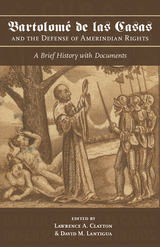
With the exception of Christopher Columbus, Bartolomé de las Casas is arguably the most notable figure of the Encounter Age. He is remembered principally as the creator of the Black Legend, as well as the protector of American Indians. He was one of the pioneers of the human rights movement, and a Christian activist who invoked law and Biblical scripture to challenge European colonialism in the great age of the Encounter. He was also one of the first and most thorough chroniclers of the conquest, and a biographer who saved the diary of Columbus’s first voyage for posterity by transcribing it in his History of the Indies before the diary was lost.
Bartolomé de las Casas and the Defense of Amerindian Rights: A Brief History with Documents provides the most wide-ranging and concise anthology of Las Casas’s writings, in translation, ever made available. It contains not only excerpts from his most well-known texts, but also his largely unavailable writings on political philosophy and law, and addresses the underappreciated aspects of his thought. Fifteen of the twenty-six documents are entirely new translations of Las Casas’s writings, a number of them appearing in English for the first time.
This volume focuses on his historical, political, and legal writings that address the deeply conflicted and violent sixteenth-century encounter between Europeans and indigenous peoples of the Americas. It also presents Las Casas as a more comprehensive and systematic philosophical and legal thinker than he is typically given credit for. The introduction by Lawrence A. Clayton and David M. Lantigua places these writings into a synthetic whole, tracing his advocacy for indigenous peoples throughout his career. By considering Las Casas’s ideas, actions, and even regrets in tandem, readers will understand the historical dynamics of Spanish imperialism more acutely within the social-political context of the times.
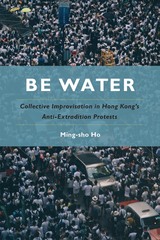
In Be Water, Ming-sho Ho examines the dynamics of the city-wide uprising from the perspective of agency power. He seeks to understand how numerous and anonymous Hongkongers contributed to this epoch-making campaign as well as how they responded to the full-scale state repression that enveloped them. Ho praises and questions the durability of the inventive Be Water Revolution and how the activists encouraged protests spontaneously, through interpersonal networks and by voluntarily collaborating with strangers at great personal risk.
Ho posits a new concept of “collective improvisation” to make sense of such a decentralized yet creative way of protesting. Be Water seeks to understand the rise and long afterlife of this movement and illustrate its efficacy. As Ho shows, these dynamics of collective improvisation have implications for contemporary protest movements around the world.

Betrayal U intervenes in this context with a diverse, rich collection of essays, art, poetry, and research that explores these inequities through the lens of institutional betrayal, theorized by psychologist Jennifer Freyd. Edited by Rebecca G. Martínez and Monica J. Casper, this collection brings together thirty-six contributors who share personal experiences covering a range of topics in higher education. The work spans five thematic sections that examine the complexities of belonging and exclusion in academic settings.
The contributors share their lived experiences of academic life from diverse vantage points, showing the ways minoritized groups are made to feel unwelcome, further marginalized, and often positioned as the problem. Exhibiting courage, compassion, and a commitment to better futures, the voices in this collection offer both a searing indictment of higher education and pathways to alternative practices and structures. They shine a spotlight on academia today, including the promise of inclusion and the perils of exclusion.
Contributors
Celeste Atkins
Jasmine Banks
Krista L. Benson
Jessica Bishop-Royse
Samit Dipon Bordoloi
Monica J. Casper
Aparajita De
Kathy Diehl
Taylor Marie Doherty
Reshmi Dutt-Ballerstadt
Alma Flores
Alanna Gillis
C. Goldberg
Jennifer M. Gómez
Kristina Gupta
Jasmine L. Harris
Susan Hillock
Doreen Hsu
Jennifer Lai
Amy Andrea Martinez
Rebecca G. Martínez
Shantel Martinez
Sara A. Mata
Rachael McCollum
Wang Ping
Emily Rosser
Angélica Ruvalcaba
Brandy L. Simula
Rashna Batliwala Singh
Cierra Raine Sorin
Connor Spencer
Chantelle Spicer
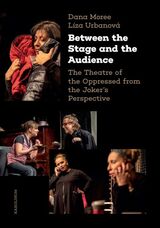
What is the theater of the oppressed—the theatrical forms arising in the 1970s that blur the line between performer and spectator? What is its method? How is the performance created and who are its non-actors and non-audiences? These and other questions are answered in Between the Stage and the Audience from the perspective of a “joker,” a guide of theater groups and a presenter of theater performances. This role works both with the group that prepares the theater performance and with the audience itself.
This book is structured according to the joker's dual roles. Descriptions of the various stages of the creation of a performance are interspersed with interviews with theater practitioners as well as specific examples from realized performances. In the second part of the book, six jokers who actively use the method of theater of the oppressed share their experiences and unique adaptations of these theatrical innovations in the Czech context.
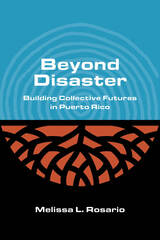
An alternative view of Puerto Rico’s past, present, and future
How do we map the pathways to liberation where we have been taught to see only trauma, suffering, and lack? Melissa L. Rosario offers an alternative view of Puerto Rico, America’s oldest colony, removing readers from the framework of crisis to consider the deeper legacies of its current impasse. Beyond Disaster: Building Collective Futures in Puerto Rico is an intimate portrait, weaving insights from the author’s own life, research, and organizing work as a scholar in the diaspora who rematriated. Rosario bridges the genres of social history and memoir to unsettle the meaning of resistance and freedom, underscoring the deep wounds of colonialism while still uplifting the profound possibilities of embodied alternatives.
Beyond Disaster critiques the framework of debt and crisis by examining the psychological, emotional, and spiritual effects of colonialism. Rosario highlights key examples of organizing efforts to defend land and education against total enclosure, protecting life amid loss. This book offers a series of microhistories, vignettes, and prose poetry to foreground the daily practices necessary to anchor the ecological and political landscapes of our collective future.
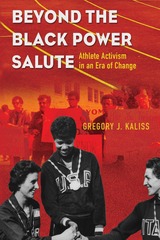
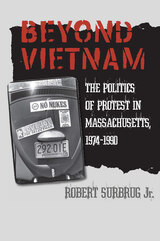
Narratives of the 1960s typically describe an ascending arc of political activism that peaked in 1968, then began a precipitous descent as the revolutionary dreams of the New Left failed to come to fruition. The May 1970 killings at Kent State often stand as an epitaph to a decade of protest, after which the principal story becomes the resurgence of the right.
In Beyond Vietnam: The Politics of Protest in Massachusetts, 1974–1990, Robert Surbrug challenges this prevailing paradigm by examining three protest movements that were direct descendants of Vietnam-era activism: the movement against nuclear energy; the nuclear weapons freeze movement; and the Central American solidarity movement. Drawing lessons from the successes and failures of the preceding era, these movements had a significant impact on the liberal wing of the Democratic Party, which itself had been undergoing major transformations in the wake of the 1960s.
By focusing on one state—Massachusetts—Surbrug is able to illuminate the interaction between the activist left and mainstream liberalism, showing how each influenced the other and how together they helped shape the politics of the 1970s and 1980s. During these years, Massachusetts emerged as a center of opposition to nuclear power, the continuing Cold War arms race, and Ronald Reagan's interventionist policies in Central America. The state's role in national policy was greatly enhanced by prominent political figures such as Senator Edward Kennedy, Speaker of the House Thomas “Tip” O'Neill, presidential candidate Governor Michael Dukakis, Vietnam veteran Senator John Kerry, and moderate Republican Silvio Conte.
What Beyond Vietnam shows is that the rise of the right in the aftermath of the 1960s was by no means a unilateral ascendancy. Instead it involved a bifurcation of American politics in which an increasingly strong conservative movement was vigorously contested by an activist left and a reinvigorated mainstream liberalism.
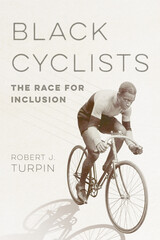
Eye-opening and long overdue, Black Cyclists uses race, technology, and mobility to explore a forgotten chapter in cycling history.
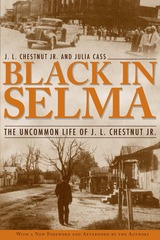
One man’s fight for justice. One town’s reckoning with history.
Born in Selma in 1930, J. L. Chestnut left home to study law at Howard University in Washington, DC. Returning to Selma, Chestnut was the town’s first and only African American attorney in the late 1950s. As the turbulent struggle for civil rights spread across the South, Chestnut became an active and ardent promoter of social and legal equality in his hometown. A key player on the local and state fronts, Chestnut accrued deep insights into the racial tensions in his community and deftly opened paths toward a more equitable future.
Though intimately involved in many events that took place in Selma, Chestnut was nevertheless often identified in history books simply as “a local attorney.” Black in Selma reveals his powerful yet little-known story.
In the 2014 film Selma, director Ava DuVernay takes audiences to the climactic confrontation between civil rights advocates and the state’s security forces of March 1965. Readers looking for a deeper understanding of the events that preceded that epic moment, as well as how racial integration unfolded in Selma in the decades that followed, will find Chestnut’s story and memories both a vital primary source and an inspiration.
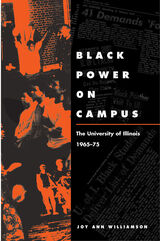
Drawing on student publications of the late 1960s and early 1970s, as well as interviews with student activists, former administrators, and faculty, Williamson discusses the emergence of Black Power ideology, what constituted "blackness," and notions of self-advancement versus racial solidarity. Promoting an understanding of the role of black youth in protest movements, Black Power on Campus is an important contribution to the literature on African American liberation movements and the reform of American higher education.

Black Power Praxis shows how four groups of activist-intellectuals—James and Grace Lee Boggs, Richard and Milton Henry, Reverend Albert Cleage, and a group of college students called Uhuru—shifted the consciousness and political perspectives of Black Detroiters in the 1960s and 1970s. By developing theories that they could unite with community-organizing practices, these activist-intellectuals turned the focus of the grassroots movement for racial equality from Civil Rights to Black Power. Following the 1967 Detroit Rebellion, these Black Power activist-intellectuals were already positioned to harness the energy that emerged from the uprising and directed it into the city’s first citywide Black Power organization, the Citywide Citizens Action Committee.
Even as Black Power theories became dominant over Detroit’s grassroots movement, their influence faltered when they failed to develop community organizing practices corresponding to the lived experiences of Black Detroiters. Black Power Praxis reveals how the relationships between ideas, practices, leadership, material reality, and consciousness drove the historical development of Black Power. Ideal for readers curious about social movements, Detroit history, African American history, and African American Studies, the book sheds light on how, why, and when Detroit’s activist-intellectual leaders successfully showed everyday people how their power might be used in transformative ways.
A vital guide to centering community knowledge to generate effective solutions to inequality
When organizations take on social problems, from school reform to conservation to healthcare disparities, community members are sometimes “invited to the table” to share their insights. But if the table has already been set with institutional assumptions about the issue at hand, the solutions that emerge often have little to do with the people and places they are meant to help. When this is the case, inclusion can only go so far: as Dr. Brittany Lewis argues, it’s time to build a new table.
Drawing on her work as a community researcher and nonprofit consultant, Dr. Lewis developed the Equity in Action (EIA) model as a framework for closing the gaps between communities, researchers, and institutions. By centering the knowledge of the community members who ostensibly benefit from the work of various organizations, EIA makes research questions more relevant and the research process more targeted, getting at the roots of social inequality to find sustainable, impactful solutions. In Building a New Table, Dr. Lewis guides readers through the steps of EIA: assessing the landscape, building the community action council, co-developing a research approach, data collection, community review, and identifying solutions. Along the way, she highlights the values imbued in each step and the skills needed for success as well as how the model can be adapted for different organizations.
Practical and hands-on, Building a New Table explores each phase of the Equity in Action model through case studies featuring commentary from organizational leaders and staff who have used it to reshape their engagement with the communities they serve. Demonstrating how to ground solutions in lessons from lived experience, this book teaches how authentic community engagement and community-driven research creates reciprocal, generative relationships that can enact real, systemic change.
Retail e-book files for this title are screen-reader friendly with images accompanied by short alt text and/or extended descriptions.

With deft individual portraits, Fels reveals the social dynamics of the group and explores the ongoing difficulties faced by a commune that was founded in idealism and sought to operate on the model of a leaderless democracy. He draws on a large body of farm-family and 1960s-related writing and the notes of community members to present a variety of points of view. The result is an absorbing narrative that chronicles the positive aspects of Montague Farm while documenting the many challenges and disruptions that marked its history.
READERS
Browse our collection.
PUBLISHERS
See BiblioVault's publisher services.
STUDENT SERVICES
Files for college accessibility offices.
RECENTLY PUBLISHED



UChicago Accessibility Resources
home | accessibility | search | about | contact us
BiblioVault ® 2001 - 2026
The University of Chicago Press