
 A SCHOLARLY BOOK REPOSITORY
6 start with A start with A
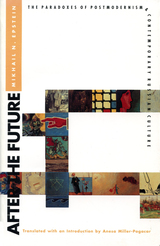
This book brings together for the first time in English the major writings of Mikhail Epstein, one of post-Soviet Russia's most prominent theoreticians of cultural studies and postmodernism. Written from a non-Western point of view yet informed by a familiarity with Western literary theory, it offers a fresh, lucid perspective on the post-communist literary scene as well as a practical and theoretical introduction to the new discipline of Russian “culturology.”

Recounts Kojève’s key role in the pivotal exchange of ideas between Eastern and Western European intellectuals in the early twentieth century
This book shines critical new light on the story of Alexandre Kojève’s intellectual origins and his role in the emigration of Russian philosophy into the West in the early twentieth century. Trevor Wilson illustrates how Kojève, at once adversarial to the insular communities of émigré philosophy and yet dependent on their networks and ideas for professional success, navigated the specters of the Russian tradition in pursuit of an autonomous self-definition as a philosopher and intellectual.
Alexandre Kojève and the Specters of Russian Philosophy analyzes the philosopher’s complicated relationship to the interwar diaspora and the complex role played by the Russian tradition in his intellectual formation. Wilson examines Kojève’s early writings in the émigré press on Russian religious philosophy, Soviet politics, and Eurasianism and argues for their enduring relevance for understanding Kojève in his mature period. Crucially, he contextualizes Kojève’s famed seminars on Hegel and examines how Kojève’s thought became embedded in the politics of the Cold War. Based on newly transcribed and translated archival material, he highlights a previously unacknowledged, transnational exchange of ideas between Eastern and Western European intellectuals and shows how it played a pivotal role in twentieth-century intellectual history—and its legacy in the twenty-first.

The network as a mode of being
The Arachnean and Other Texts by Fernand Deligny (1913–1996) is a collection of writings from the second half of the 1970s. In 1968 Deligny established a “network” for informally taking care of children with autism that was more than a mere site of living: it was a milieu created out of a reflection on the mode of being autistic. What is a space perceived outside of language? What is the form of a movement without perspective or goal? How do we engage with a world that is not our own, a world turned upside down yet truly common, where acting cohabitates with our actions and the unknown with our forms of knowledge? Such is the mythical web of the “Arachnean,” made of lines, holes, traces, enigmas, and questions without answers that demand to see that which cannot be seen. Long before the digital age of social networks, meshworks, and digital webs, Fernand Deligny speaks to us in his own autobiographical and aphoristic manner. For Deligny, his life was always experienced in the form of “the network as a mode of being.”

A nuanced extrapolation of Hannah Arendt’s theory of judgment through her highly provocative reading of Immanuel Kant
More than a half century after it was first published, Hannah Arendt’s Origins of Totalitarianism rose to the top of best-seller lists as readers grappled with the triumph of Trumpism. Arendt, Kant, and the Enigma of Judgment directs our attention to her later thought, the posthumously published and highly provocative Lectures on Kant’s Political Philosophy. Martin Blumenthal-Barby puts this work in dialogue with Arendt’s other writings, including her notes on Kant’s Critique of Judgment, to outline her own theory of judgment for the twentieth century. In an era of post-truths and artificial intelligence, the idea that authentic judgment—for example, the ability to distinguish right from wrong—is incommensurable with abstract, automated processes lies at the center of Arendt’s late work and at the fore of our collective reckoning.
Rather than presenting us with a fixed account, Blumenthal-Barby suggests, Arendt’s drawing and redrawing of conceptual distinctions is itself an enactment of judgment, a process that challenges and complicates what she says at every turn. In so doing, Arendt, in thoroughly Kantian fashion, establishes judgment as a performative category that can never be taught but only demonstrated. As sharp as it is timely, this incisive book reminds us why a shared reality matters in a time of intense political polarization and why the democratic project, vulnerable as it may appear today, crucially depends on it.
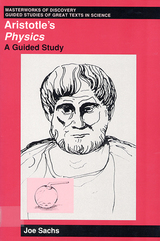
This is a new translation, with introduction, commentary, and an explanatory glossary.
"Sachs's translation and commentary rescue Aristotle's text from the rigid, pedantic, and misleading versions that have until now obscured his thought. Thanks to Sachs's superb guidance, the Physics comes alive as a profound dialectical inquiry whose insights into the enduring questions about nature, cause, change, time, and the 'infinite' are still pertinent today. Using such guided studies in class has been exhilarating both for myself and my students." ––Leon R. Kass, The Committee on Social Thought, University of Chicago
Aristotle’s Physics is the only complete and coherent book we have from the ancient world in which a thinker of the first rank seeks to say something about nature as a whole. For centuries, Aristotle’s inquiry into the causes and conditions of motion and rest dominated science and philosophy. To understand the intellectual assumptions of a powerful world view—and the roots of the Scientific Revolution—reading Aristotle is critical. Yet existing translations of Aristotle’s Physics have made it difficult to understand either Aristotle’s originality or the lasting value of his work.
In this volume in the Masterworks of Discovery series, Joe Sachs provides a new plain-spoken English translation of all of Aristotle’s classic treatise and accompanies it with a long interpretive introduction, a running explication of the text, and a helpful glossary. He succeeds brilliantly in fulfilling the aim of this innovative series: to give the general reader the tools to read and understand a masterwork of scientific discovery.

Arthur Schopenhauer (1788–1860) almost wasn’t one of the greatest philosophers of the nineteenth century. Born in the Free City of Danzig to a family of shipping merchants, he was destined for a life of imports and exports until his father died in a suspected suicide. After much deliberation, the young Schopenhauer invested his inheritance in himself and his philosophical vocation. But the long road to recognition was a difficult one, with Schopenhauer spending all but the last decade of his life in total obscurity. Yet his ideas and style went on to influence great thinkers, including Friedrich Nietzsche, Ludwig Wittgenstein, and Sigmund Freud, as well as artists such as the composer Richard Wagner and writers Marcel Proust, Thomas Mann, Samuel Beckett, and many more.
A singular and remarkably influential thinker, Schopenhauer is usually described as an extreme pessimist. He questioned the purpose of existence in a world where pain and suffering are inescapable and happiness is all too brief. In this engaging philosophical biography, David Bather Woods reevaluates Schopenhauer’s pessimism in the context of his life experiences, revealing the philosopher’s relentless fascination with the world and making a case for his contemporary relevance. Bather Woods weaves together Schopenhauer’s ideas with the story of how he came to be, including such topics as love, loneliness, morality, politics, gender, sexuality, death, suicide, fame, and madness. In doing so, this book answers some of life’s most challenging questions about how to deal with pain and loss, and how to live with ourselves and each other.
Despite his pessimistic outlook on human existence, Schopenhauer didn’t give up on life. Rather, he recognized that the question of how to live becomes even more pressing, and he worked to provide an answer. Bather Woods shows how Schopenhauer’s life informed his ideas and how they still resonate today.
READERS
Browse our collection.
PUBLISHERS
See BiblioVault's publisher services.
STUDENT SERVICES
Files for college accessibility offices.
RECENTLY PUBLISHED







UChicago Accessibility Resources
home | accessibility | search | about | contact us
BiblioVault ® 2001 - 2026
The University of Chicago Press