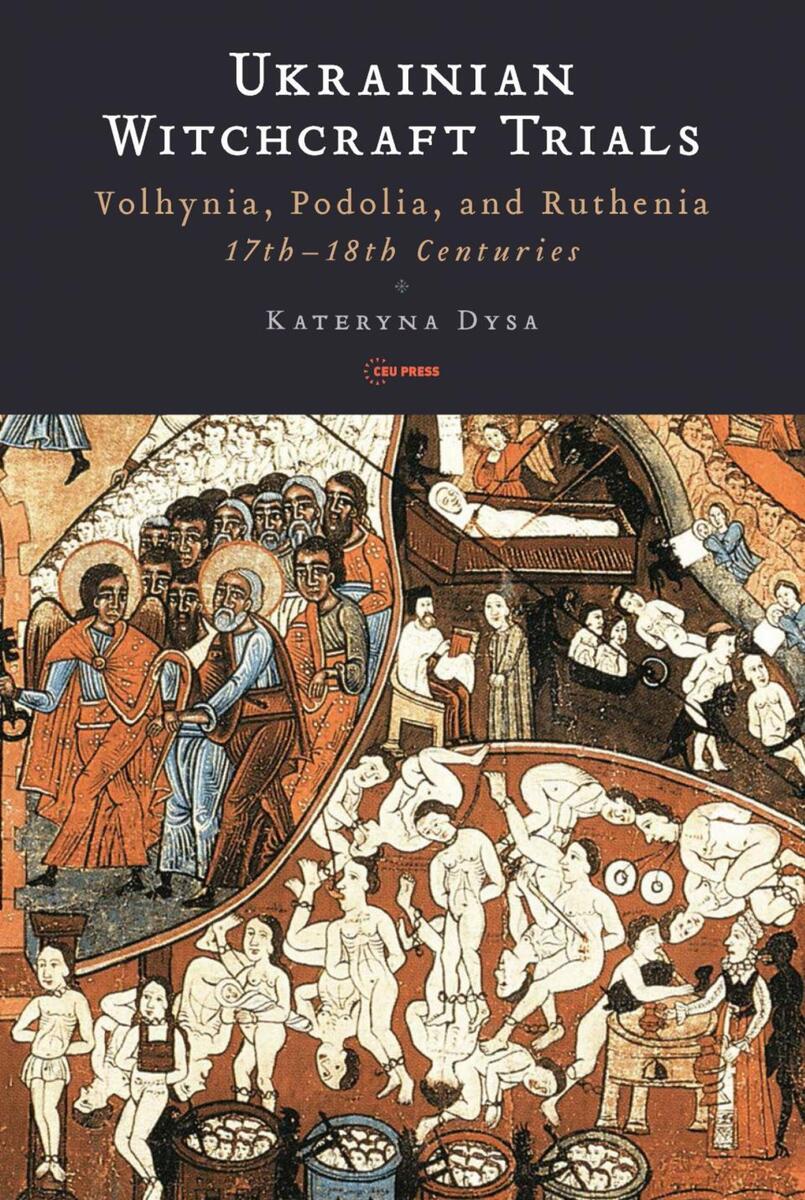
"Dysa’s book is a well-constructed and very inspirational elaboration on the Ukrainian witch trials. The number of discovered and examined sources is impressive (almost 120 as yet unpublished and mostly unknown manuscripts, not to mention the published sources), as are her close examinations of the discussed trials. Given that the Ukrainian Witchcraft Trials is the first vast elaboration of the issue published in English, it will certainly serve for a long time as the main reference to witch trials in the Orthodox world."
-- Łukasz Hajdrych Acta Poloniae Historica
"Some areas of the Slav world get little attention in English-language witchcraft studies, although publications in Slav languages have increased in quantity and quality since the end of the Communist regimes. We are fortunate then that two new books were published in 2020 which are valuable additions to the existing literature, at least for Russia and Ukraine, and especially for those who have no competence in Slavic languages. Kateryna Dysa’s thoughtful and detailed, narrowly focused book deals with witchcraft trials in the western part of Ukraine in the seventeenth and eighteenth centuries."
-- W.F. Ryan Slavonic and East European Review
"Dysa has produced an important book that deserves to receive wider attention than it has to date. She not only expands our understanding of witchcraft and witch beliefs, she also paints a complex and nuanced picture of Ukrainian life in the seventeenth- and eighteenth centuries. And she does this mostly using archived court cases. This is a tour-de-force that offers a fascinating picture of a neglected part of the world."https://journals.openedition.org/monderusse/12737
-- Natalie Kononenko Cahiers du monde russe
"Dysa persuasively argues that witchcraft prosecution was comparatively mild in the Ruthenian lands. In fact, magistrates were reluctant to prosecute witchcraft. When they discovered instances of witchcraft, they preferred lenient sentences of fines and flogging, warning individuals of heavier sentences should they become recidivists. A mere seven of the trials involved torture. Executions were even rarer. So ubiquitous was the practice of magic, Dysa concludes that in these reputation cases, some of the accused might actually have indulged in it without losing their relatives’ and neighbors’ trust."
-- Christine D. Worobec The Russian Review
"Kateryna Dysa has produced a richly detailed, carefully researched, and well written study of witchcraft and witchcraft trials in early modern Ukraine, one that is a pleasure to read. It constitutes a very lucid examination of archival records from three distinct regions of Ukraine that the author walks us through systematically. It is admirably well versed in the overall scholarship on witchcraft in Europe and elsewhere, which the author engages intensively and productively throughout the text."https://www.cambridge.org/core/journals/slavic-review/article/ukrainian-witchcraft-trials-volhynia-podolia-and-ruthenia-17th18th-centuries-by-kateryna-dysa-budapest-new-york-central-european-university-press-2020-x-254-pp-notes-bibliography-index-7500-hardbound/5D24F02DE9A61945534BB0C5A70DE4C3
-- Gary Marker Slavic Review
"Die ruthenischen Hexenprozesse zeichnen ein moderates Bild vom Umgang mit dem Hexenphänomen, das aufzeigt, durch welche Einflüsse – sei es in rechtlicher, christlichtheoretischer, aber auch in sozialer Hinsicht – ein Ausufern der Hexereivorwürfe verhindert wurde. Wo waren die Barrieren, die einer skeptischen Haltung gegenüber dem Hexenthema Raum gaben, und wann wurden diese Grenzen überwunden? Die in einem verständlichen Englisch verfasste Arbeit gewährt zu diesen Fragen tiefer gehende Einsichten und ist daher lesenswert."https://www.zfo-online.de/portal/zfo/article/view/11542
-- Sarah Masiak Zeitschrift für Ostmitteleuropa-Forschung