Cloth: 978-0-8214-2703-3 | Paper: 978-0-8214-2704-0 | eISBN: 978-0-8214-2705-7
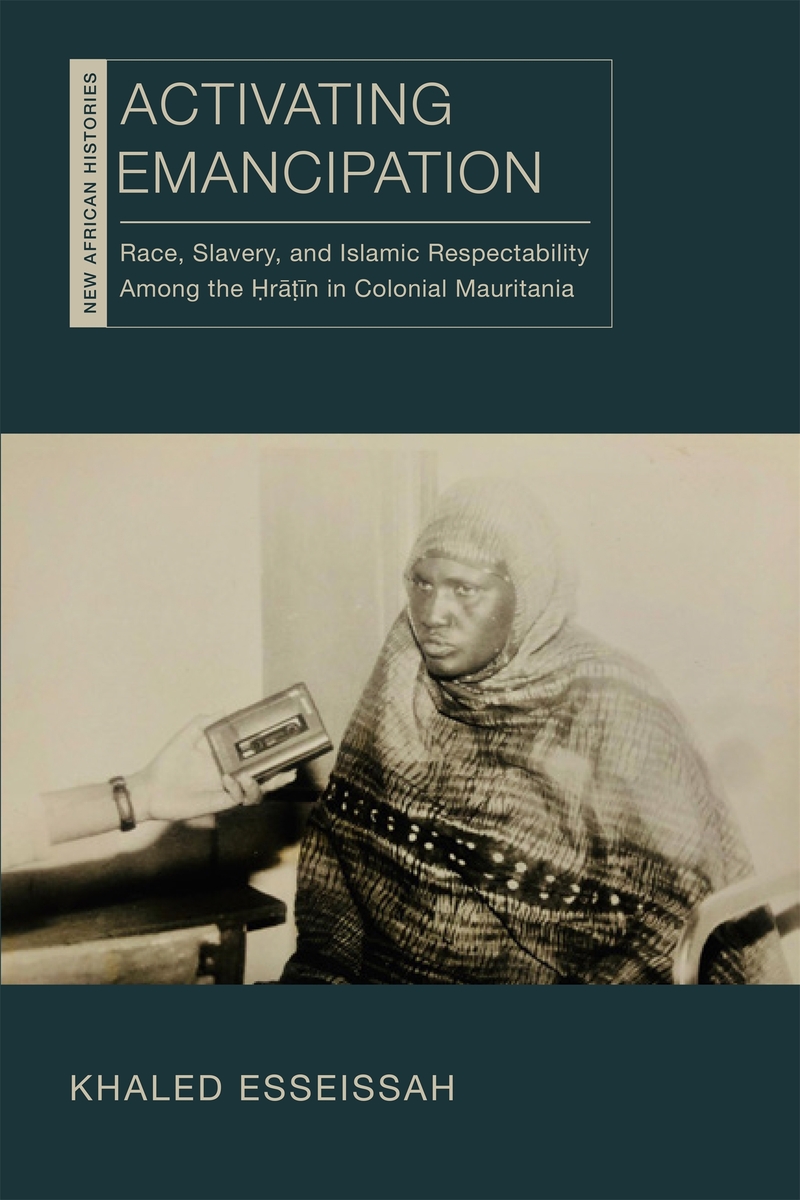
Activating Emancipation boldly interrogates our knowledge of the history of slavery, emancipation, race, and Islam in Mauritania, where slavery was abolished only in 1981 and criminalized in 2007. It centers on the voices and stories of Ḥrāṭīn peoples, a complex and ambiguous social category encompassing people with mixed free and servile ancestral backgrounds. The stigma of enslavement, along with their racialized status as Black, has placed them at the bottom of a social hierarchy dominated by Arab and Amazigh elites, racialized as “White.”
In this groundbreaking study, Ḥrāṭīn historian Khaled Esseissah mobilizes oral and written sources to confront a long tradition in which Ḥrāṭīn are rendered invisible or shown as passive victims of oppression and narrates a new history of Ḥrāṭīn contributions to the building of modern Mauritania. Despite being emancipated or born free, Ḥrāṭīn men and women continued to face “White” threats to reenslave them or subject them to economic, religious, and sexual exploitation. Esseissah demonstrates that only by “activating their emancipation” have the Ḥrāṭīn challenged Arab dominance. He unravels complex and varied Ḥrāṭīn strategies, including engaging with French colonizers through collaboration and revolt, appealing to the Qur’an and Ḥadith, acquiring wealth, building political power, engaging in nationalist struggle, and exercising communal agency to support others, garner respectability, and assert their autonomy during the colonial period. He also illuminates Ḥrāṭīn adwaba, or villages of emancipation, as critical sites of slave liberation and freedom. In so doing, Activating Emancipation reframes the story of abolition in colonial Mauritania that is often either ignored or told from the French colonial perspective, which sees abolition merely as a legal event. The Ḥrāṭīn experience of emancipation is long and complex, challenging simple binaries between bondage and free labor, between colonial and anticolonial.
Activating Emancipation reorients academic studies and international media coverage of Ḥrāṭīn communities, demonstrating the broad range of Ḥrāṭīn historical experiences that are not understood, or even visible, to many in Mauritania, Africa, and beyond. It provides a grounded historical analysis that moves us beyond both the orientalist and apologetic Muslim discourses that have long characterized journalistic, popular, and even scholarly debates about slavery, Islam, and Ḥrāṭīn experience in Mauritania.
See other books on: African Studies | Colonialism & Post-Colonialism | Enslavement | Race | Slavery
See other titles from Ohio University Press