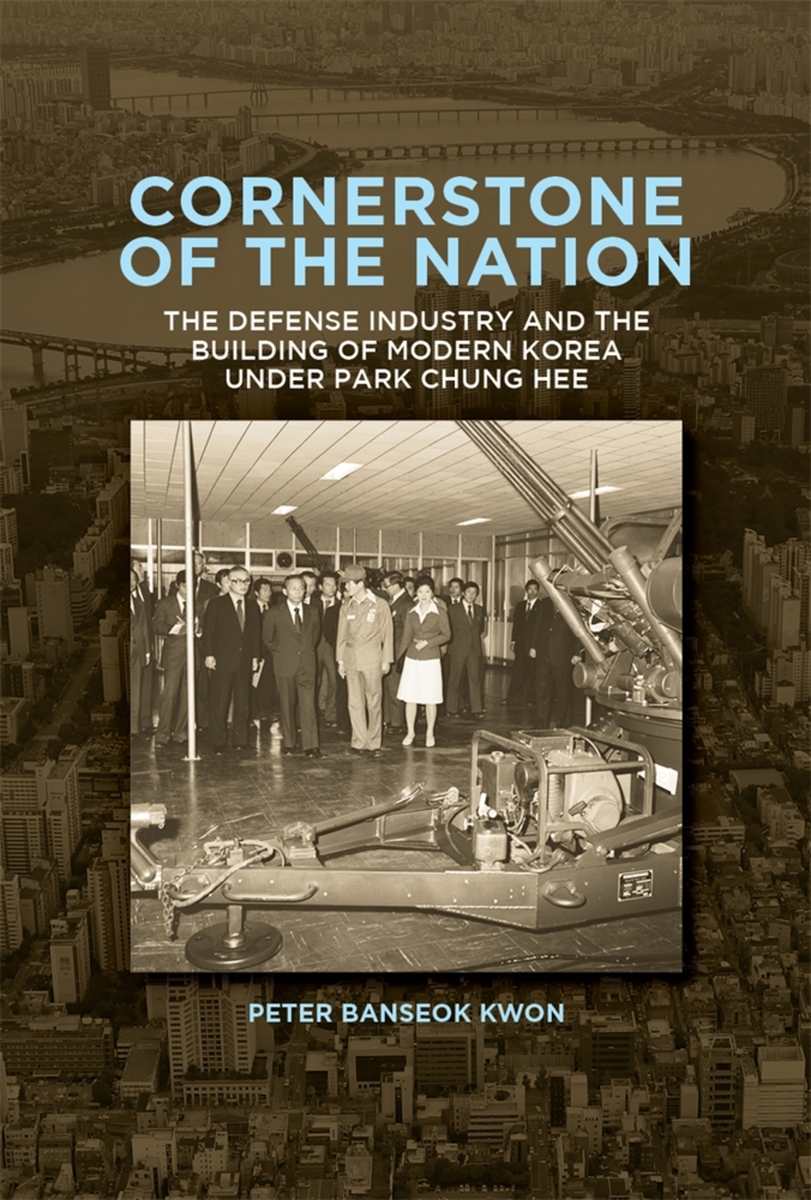
Cornerstone of the Nation: The Defense Industry and the Building of Modern Korea under Park Chung Hee
Harvard University Press, 2024
eISBN: 978-0-674-30028-6
See other books on: Building Modern Korea under Park Chung Hee | Cornerstone | Korea | Military Policy | Nation
See other titles from Harvard University Press
eISBN: 978-0-674-30028-6
ABOUT THIS BOOK | AUTHOR BIOGRAPHY
ABOUT THIS BOOK
Cornerstone of the Nation is the first historical account of the complex alliance of military and civilian forces that catapulted South Korea’s conjoined militarization and industrialization under Park Chung Hee (1961–1979). Kwon reveals how Park’s secret program to build an independent defense industry spurred a total mobilization of business, science, labor, and citizenry, all of which converged in military-civilian forces that propelled an unprecedented model of modernization in Korea.
Drawing on largely untapped declassified materials from Korea and personal interviews with contemporaneous participants in the nascent defense industry, as well as declassified US documents and other external sources, Kwon weaves together oral histories and documentary evidence in an empirically rich narrative that details how militarization shaped the nation’s rapid economic, technological, political, and social transformation. Cornerstone of the Nation makes the case that South Korea’s arms development under Park may be the most durable and yet least acknowledged factor behind the country’s rise to economic prominence in the late twentieth century. Through an analysis that simultaneously engages some of the most contested issues in Korean historiography, development literature, contemporary politics, and military affairs, this book traces Korea’s distinct pathway to becoming a global economic force.
Drawing on largely untapped declassified materials from Korea and personal interviews with contemporaneous participants in the nascent defense industry, as well as declassified US documents and other external sources, Kwon weaves together oral histories and documentary evidence in an empirically rich narrative that details how militarization shaped the nation’s rapid economic, technological, political, and social transformation. Cornerstone of the Nation makes the case that South Korea’s arms development under Park may be the most durable and yet least acknowledged factor behind the country’s rise to economic prominence in the late twentieth century. Through an analysis that simultaneously engages some of the most contested issues in Korean historiography, development literature, contemporary politics, and military affairs, this book traces Korea’s distinct pathway to becoming a global economic force.
See other books on: Building Modern Korea under Park Chung Hee | Cornerstone | Korea | Military Policy | Nation
See other titles from Harvard University Press