
 A SCHOLARLY BOOK REPOSITORY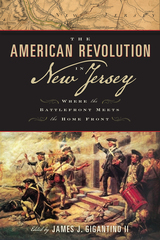
Battles were fought in many colonies during the American Revolution, but New Jersey was home to more sustained and intense fighting over a longer period of time. The nine essays in The American Revolution in New Jersey, depict the many challenges New Jersey residents faced at the intersection of the front lines and the home front.
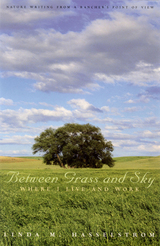
An important collection of personal essays from one of the most widely published American environmental writers addresses the effects of ranching on the environment. Acclaimed nature writer Linda M. Hasselstrom sees herself as a rancher who writes—a definition that shapes the tone and content of her writing. Now owner of the South Dakota cattle ranch where she grew up, Hasselstrom lives in intimate contact with the natural world. "Nature is to me both home and office. Nature is my boss, manager of the branch office—or ranch office—where I toil to convert native grass into meat. . . . If I want to keep my job as well as my home, I pay attention not only to Nature's orders, but to her moods and whims." She writes knowingly of the rancher's toil and of the intelligence and dignity of the wild and domesticated creatures that share the prairie grassland she calls home. As one who knows and loves the land, Hasselstrom appreciates the concerns of environmental activists and understands that responsible ranchers can play a role in nurturing a healthy rural ecosystem. Rich in detail, humor, and pathos, these essays offer wry commentary on the scope of human folly and the even greater human potential for community and empathy. "Only people who live in the country," she writes, "could form a relationship with nature so intimate that they feel concern for one lonely duck. People who live in cities . . . only glimpse nature from high windows or speeding vehicles. Even wilderness lovers who probe deeply are only passing through. We who live on the land truly live within the land, each of our lives only one among the other inhabitants of the place." These are essays to read with wonder and delight, to relish and ponder. Available in hardcover and paperback.
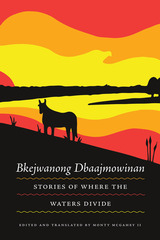

As Boston approaches its four-hundredth anniversary, it is remarkable that it still maintains its historic character despite constant development. The fifty buildings featured in this book all pre-date 1800 and illustrate Boston’s early history. This is the first book to survey Boston’s fifty oldest buildings and does so through an approachable narrative which will appeal to nonarchitects and those new to historic preservation. Beginning with a map of the buildings’ locations and an overview of the historic preservation movement in Boston, the book looks at the fifty buildings in order from oldest to most recent. Geographically, the majority of the buildings are located within the downtown area of Boston along the Freedom Trail and within easy walking distance from the core of the city. This makes the book an ideal guide for tourists, and residents of the city will also find it interesting as it includes numerous properties in the surrounding neighborhoods. The buildings span multiple uses from homes to churches and warehouses to restaurants. Each chapter features a building, a narrative focusing on its historical significance, and the efforts made to preserve it over time. Full color photos and historical drawings illustrate each building and area. Boston’s Oldest Buildings and Where to Find Them presents the ideals of historic preservation in an approachable and easy-to-read manner appropriate for the broadest audience. Perfect for history lovers, architectural enthusiasts, and tourists alike.

In College Choices, Caroline Hoxby and a distinguished group of economists show how students and their families really make college decisions—how they respond to financial aid options, how peer relationships figure in the decision-making process, and even whether they need mentoring to get through the admissions process. Students of all sorts are considered—from poor students, who may struggle with applications and whether to continue on to college, to high aptitude students who are offered "free rides" at elite schools. College Choices utilizes the best methods and latest data to analyze the college decision-making process, while explaining how changes in aid and admissions practices inform those decisions as well.

Unlike other theories, actualism differentiates among the three sides of consciousness—consciousness that is seeing, consciousness that is thinking, and consciousness that is wanting. Consciousness in seeing is not an image or picture in your head, but the existence out there of a real but subjective thing, dependent on both the objective physical world out there and on you as a person. In its attention to the concrete, actualism is becoming increasingly popular among philosophers, psychologists, and neuroscientists who had previously declared an urgent need for a new theory.
Honderich’s readable, understandable, and unpretentious writing lays out these bold concepts and complex thoughts with clarity and verve. He reinvents our understanding of ourselves, our consciousness, and our mind.

Winner of the eighth annual Arkansas Poetry Award, Martin Lammon writes poems that deal fearlessly and directly with their subjects. Tenderness, complexity, compassion, reverence, and condemnation are all within his range.
Writing of love, he can speak broadly and universally of the heart, yet in the same poem, he can intricately describe a woman’s hand, a fire on a beach, or the hollows around a lover’s eye. Even when he works in the voice of a suicide, his precision can be devastating, as in these lines: “When you lie beside me under stars, each needlepoint / of light pricks my bare arms.”
With equal ease, Lammon travels across miles, cultures, and time, writing of kilns and potters in Japan, long-dead Eskimos in Alaska, or Blue Hole Cave in Pennsylvania.
Full of grace and candor, these poems pursue the stories that shimmer behind the day’s headlines, seeking the spirit at stake in the “lives beside [our] own whose secrets are worth loving.”
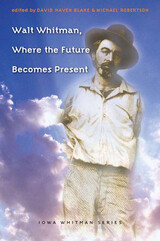
Walt Whitman, Where the Future Becomes Present invigorates Whitman studies by garnering insights from a diverse group of writers and intellectuals. Writing from the perspectives of art history, political theory, creative writing, and literary criticism, the contributors place Whitman in the center of both world literature and American public life. The volume is especially notable for being the best example yet published of what the editors call the New Textuality in Whitman studies, an emergent mode of criticism that focuses on the different editions of Whitman’s poems as independent works of art.
Written one hundred fifty years after the book’s publication, these timely, innovative responses to Leaves of Grass confirm that the future of Whitman’s poems is vital to our present.
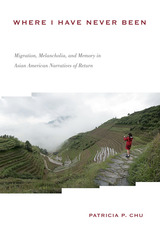
In researching accounts of diasporic Chinese offspring who returned to their parents’ ancestral country, author Patricia Chu learned that she was not alone in the experience of growing up in America with an abstract affinity to an ancestral homeland and community. The bittersweet emotions she had are shared in Asian American literature that depicts migration-related melancholia, contests official histories, and portrays Asian American families as flexible and transpacific.
Where I Have Never Been explores the tropes of return, tracing both literal return visits by Asian emigrants and symbolic “returns”: first visits by diasporic offspring. Chu argues that these Asian American narratives seek to remedy widely held anxieties about cultural loss and the erasure of personal and family histories from public memory. In fiction, memoirs, and personal essays, the writers of return narratives—including novelists Lisa See, May-lee Chai, Lydia Minatoya, and Ruth Ozeki, and best-selling author Denise Chong, diplomat Yung Wing, scholar Winberg Chai, essayist Josephine Khu, and many others—register and respond to personal and family losses through acts of remembrance and countermemory.

Lyrical, penetrating, and highly charged, this novel displays a delicately tuned sense of difference and belonging. Poet Angela Jackson brings her superb sense of language and of human possibility to the story of young Magdalena Grace, whose narration takes readers through both privilege and privation at the time of the American civil rights movement.
The novel moves from the privileged yet racially exclusive atmosphere of the fictional Eden University to the black neighborhoods of a Midwestern city and to ancestral Mississippi. Magdalena’s story includes a wide range of characters—black and white, male and female, favored with opportunity or denied it, the young in love and elders wise with hope. With and through each other, they struggle to understand the history they are living and making. With dazzling perceptiveness, Jackson’s narrator Magdalena tells of the complex interactions of people around her who embody the personal and the political at a crucial moment in their own lives and in the making of America.

When Lieutenant Uhura took her place on the bridge of the Starship Enterprise on Star Trek, the actress Nichelle Nichols went where no African American woman had ever gone before. Yet several decades passed before many other black women began playing significant roles in speculative (i.e., science fiction, fantasy, and horror) film and television—a troubling omission, given that these genres offer significant opportunities for reinventing social constructs such as race, gender, and class. Challenging cinema’s history of stereotyping or erasing black women on-screen, Where No Black Woman Has Gone Before showcases twenty-first-century examples that portray them as central figures of action and agency.
Writing for fans as well as scholars, Diana Adesola Mafe looks at representations of black womanhood and girlhood in American and British speculative film and television, including 28 Days Later, AVP: Alien vs. Predator, Children of Men, Beasts of the Southern Wild, Firefly, and Doctor Who: Series 3. Each of these has a subversive black female character in its main cast, and Mafe draws on critical race, postcolonial, and gender theories to explore each film and show, placing the black female characters at the center of the analysis and demonstrating their agency. The first full study of black female characters in speculative film and television, Where No Black Woman Has Gone Before shows why heroines such as Lex in AVP and Zoë in Firefly are inspiring a generation of fans, just as Uhura did.
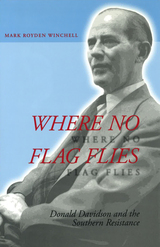
Donald Davidson (1893-1968) may well be the most unjustifiably neglected figure in twentieth-century southern literature. One of the most important poets of the Fugitive movement, he also produced a substantial body of literary criticism, the libretto for an American folk opera, a widely used composition textbook, and the recently discovered novel The Big Ballad Jamboree. As a social and political activist, Davidson had significant impact on conservative thought in this century, imfluencing important scholars from Cleanth Brooks to M. E. Bradford.
Despite these accomplishments, Donald Davidson has received little critical attention from either the literary or the southern scholarly community. Where No Flag Flies is Mark Royden Winchell's redress of this critical disservice. A comprehensive intellectual biography of Davidson, this seminal work offers a complete narrative of Davidson's life with all of its triumphs and losses, frustrations and fulfillments.
Winchell provides the reader with more than a simple study of a man and his achievements; he paints a complete portrait of the times in which Davidson published, from the 1930s to the early 1960s. Davidson was more directly involved in political and social activities than most writers of his generation, and Winchell provides the context, both literary and historical, in which Davidson's opinions and works developed. At the same time, Winchell offers detailed evaluations of Davidson's poetry, fiction, historical writings, and essays.
Drawing upon a wealth of previously unpublished archival material, including Davidson's letters and diary, Where No Flag Flies provides unique access to one of the most original minds of the twentieth-century South. Donald Davidson may not have achieved the recognition he deserved, but this remarkable biography finally makes it possible for a considerable literary audience to discover his true achievement.
"Written with precision and perception, this is a highly recommended work from a writer to watch."
---Library Journal
"O'Connor . . . remains a consummate artist, true to her vision of a work that is bleak, truthful, and lacking any overt sentimental overtures. Her eye, a poet's eye, misses nothing."
---three candles
". . . a touching odyssey of a girl poised between the emotional abyss and the reader's heart."
---Minneapolis Star-Tribune
"A sensitive, often disquieting book that rings true throughout. . . . It's the skill of an accomplished writer that we see Faina's extraordinary spirit, while simultaneously experiencing her pain and despair. The end result is an uplifting, even inspiring book without any of the sugarcoating often found in stories like this."
---California Literary Review
Where No Gods Came is author Sheila O'Connor's compelling story of Faina McCoy, a young girl caught in a perilous scheme of elaborate lies created for her own harrowing system of survival. Enmeshed in a tangled family web, Faina is abruptly uprooted against her will from her father and finds herself half a continent away on the doorstep of a mother who abandoned her years before-but who can't live without Faina now. Alone, persecuted, and exploited, Faina must fend for herself as she searches for love and answers, navigating the streets of a strange city and forging bonds of feeling with liars and outlaws.

Dr. Alex Reddish, a faculty member at the residency, enjoys Maya’s company every week. He longs to know her better but also knows she is involved with a prominent cardiologist. A former shy chess champion, Alex has worked to remake himself into a more socially engaged person, though he cannot completely shed his reclusive past. His professional life is complicated by two resident physician advisees: a depressed and poorly performing man, and a seductive woman. And now someone seems determined to harm him.
Maya and Alex turn accomplices when they try to unravel a spate of unusual illnesses afflicting residency staff, and discover disturbing trends. As Maya and Alex become closer, they must also tackle their personal pasts and individual demons, and find the courage to move forward.
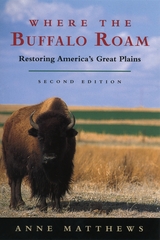
This edition includes a new foreword by environmental historian Donald Worster. Matthews's new afterword describes how with growing support from Native Americans and private groups like the Nature Conservancy, the Poppers' dream of a Buffalo Commons is becoming a reality.
"An admirably crafted book, as poignant and entertaining as it is informative."—Seattle Times
"A priceless piece of Americana."—The Boston Globe
"Matthew's delightful account of the Poppers, their proposal and the controversy surrounding it does focus new attention on the region and its problems."—The Philadelphia Inquirer
"Bright, active, effective journalism. . . . An extremely savvy overlook of the dilemmas of the Great Plains."—Wallace Stegner
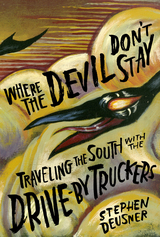
In 1996, Patterson Hood recruited friends and fellow musicians in Athens, Georgia, to form his dream band: a group with no set lineup that specialized in rowdy rock and roll. The Drive-By Truckers, as they named themselves, grew into one of the best and most consequential rock bands of the twenty-first century, a great live act whose songs deliver the truth and nuance rarely bestowed on Southerners, so often reduced to stereotypes.
Where the Devil Don’t Stay tells the band’s unlikely story not chronologically but geographically. Seeing the Truckers’ albums as roadmaps through a landscape that is half-real, half-imagined, their fellow Southerner Stephen Deusner travels to the places the band’s members have lived in and written about. Tracking the band from Muscle Shoals, Alabama, to Richmond, Virginia, to the author’s hometown in McNairy County, Tennessee, Deusner explores the Truckers’ complex relationship to the South and the issues of class, race, history, and religion that run through their music. Drawing on new interviews with past and present band members, including Jason Isbell, Where the Devil Don’t Stay is more than the story of a great American band; it’s a reflection on the power of music and how it can frame and shape a larger culture.
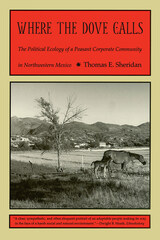
Sheridan has written an ethnography of resource control, one that weds the approaches of political economy and cultural ecology in order to focus upon both the external linkages and internal adaptations that shape three peasant corporate communities. He examines the ecological and economic constraints which scarce and necessary resources place upon households in Cucurpe, and then investigates why many such households have formed corporate communities to insure their access to resources beyond their control. Finally, he identifies the class differences that exist within the corporate communities as well as between members of those organizations and the private ranchers who surround them.
Where the Dove Calls (the meaning of "Cucurpe" in the language of the Opata Indians), an important contribution to peasant studies, reveals the household as the basic unit of Cucurpe society. By viewing Cucurpe's corporate communities as organizations of fiercely independent domestic units rather than as expressions of communal solidarity, Sheridan shows that peasants are among the exploiters as well as the exploited. Cucurpe¤os struggle to maintain the autonomy of their households even as they join together to protect corporate grazing lands and irrigation water. Any attempt to weaken or destroy that independence is met with opposition that ranges from passive resistance to violence.
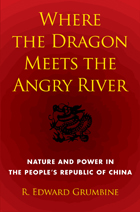
Ed Grumbine traveled to the far corners of China’s Yunnan province to find out. He was driven by a single question: could this last fragment of wild nature withstand China’s unrelenting development? But as he hiked through deep-cut emerald mountains, backcountry villages, and burgeoning tourist towns, talking with trekking guides, schoolchildren, and rural farmers, he discovered that the problem wasn’t as simple as growth versus conservation.
In its struggle to "build a well-off society in an all-round way," Beijing juggles a host of competing priorities: health care for impoverished villagers; habitat for threatened tigers; cars for a growing middle class; clean air for all citizens; energy to power new cities; rubber for the global marketplace.
Where the Dragon Meets the Angry River is an incisive look at the possible fates of China and the planet. Will the Angry River continue to flow? Will Tibetan girls from subsistence farming families learn to read and write? Can China and the United States come together to lead action on climate change? Far-reaching in its history and scope, this unique book shows us the real-world consequences of conservation and development decisions now being made in Beijing and beyond.
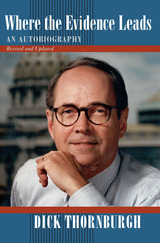
Set in any era, Dick Thornburgh’s brilliant career would merit study and retelling. He was the first Republican elected to two successive terms as governor of Pennsylvania. He served in the Department of Justice under five presidents, including three years as attorney general for Presidents Reagan and Bush. As undersecretary-
general of the United Nations, he was the highest-ranking American in the organization and a strong voice for reform.
Nationally, Thornburgh is best remembered for his three years as attorney general, when he managed some of the most vexing legal matters of the modern age: the Savings and Loan and BCCI scandals; controversy over the “Iraqgate” and INSLAW investigations and the Wichita abortion clinic protests; and prosecutions of Michael Milken, Manuel Noriega, and Marion Barry, as well as those involved in the Pan Am Flight 103 bombing, the Exxon Valdez oil spill, and the Rodney King beating.
As governor of Pennsylvania, he faced the nation’s worst nuclear accident, weeks after his inauguration in 1979. Thornburgh's cool-headed response to the Three Mile Island disaster is often studied as a textbook example of emergency management. His historic 1992 battle against Harris Wofford for the late John Heinz III’s Senate seat is one of several political campaigns, vividly recalled, that reveal the inner workings of the commonwealth’s political machinery.
Thornburgh reveals painful details of his personal life, including the automobile accident that claimed the life of his first wife and permanently disabled his infant son. He presents a frank analysis of the challenges of raising a family as a public figure, and tells the moving story of his personal and political crusade that culminated in the Americans with Disabilities Act of 1990.
This revised and updated edition includes a new chapter devoted to the highlights of Thornburgh’s continuing career. He offers fascinating insights into his experiences as Bankruptcy Court Examiner for the WorldCom proceedings, leading the investigation into the CBS News report on President George W. Bush’s military service record, representing Allegheny County coroner Cyril Wecht in a trial over alleged misuse of public office, and as part of the K&L Gates team consulted by Chiquita Brands during a federal investigation over payments made to Colombian guerillas and paramilitaries to protect banana growers.
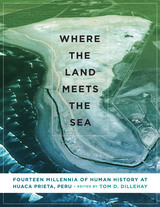
Huaca Prieta—one the world’s best-known, yet least understood, early maritime mound sites—and other Preceramic sites on the north coast of Peru bear witness to the beginnings of civilization in the Americas. Across more than fourteen millennia of human occupation, the coalescence of maritime, agricultural, and pastoral economies in the north coast settlements set in motion long-term biological and cultural transformations that led to increased social complexity and food production, and later the emergence of preindustrial states and urbanism. These developments make Huaca Prieta a site of global importance in world archaeology.
This landmark volume presents the findings of a major archaeological investigation carried out at Huaca Prieta, the nearby mound Paredones, and several Preceramic domestic sites in the lower Chicama Valley between 2006 and 2013 by an interdisciplinary team of more than fifty international specialists. The book’s contributors report on and analyze the extensive material records from the sites, including data on the architecture and spatial patterns; floral, faunal, and lithic remains; textiles; basketry; and more. Using this rich data, they build new models of the social, economic, and ontological practices of these early peoples, who appear to have favored cooperation and living in harmony with the environment over the accumulation of power and the development of ruling elites. This discovery adds a crucial new dimension to our understanding of emergent social complexity, cosmology, and religion in the Neolithic period.
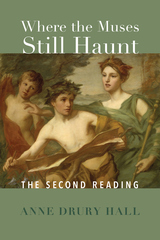
After leaving school and becoming lost in adulthood, can one return to these books and revive the quest to be great? For this is why we call such books "great". Yet as Hall says, "few people use the phrase 'great books' any more except ironically, because there is an odd view in the current intellectual fog that there is no such thing as 'greatness'". She is compelled, then, to reexamine the so-called great books and make the case for their eternal importance. It is a task that requires not only swimming against the disenchanted march of the post-modern reader into adulthood, but also asserting the unthinkable––namely, that great books were written by great men who achieved this status through their own labor and endurance.
Hall reintroduces the reader to Plato, Homer, Chaucer, Shakespeare, Milton and Melville and hopes this will expose the fraud of most of contemporary literature, and encourage taste and stamina for the works that promise to exhilarate. And Hall argues well that the thrill of these books draws from one shared feature: "The heart of these books is the drama of choice." If Roger Scruton is famous for showing us that ideas have consequences, Hall provides the reader the vision of himself as standing on the brink and the urgency of taking life seriously again. For many this means taking books seriously again.
This book is an important companion to the works treated therein, for teachers and students alike. Both need encouragement in the laboring of instruction or reading the impressive classics. Particularly apt is Hall's treatment of the difficulty of teaching Shakespeare. For the not-so-recent university graduate, perhaps this book will bring him once again to wander where the Muses still haunt. Indeed, even the well-read will enjoy Hall's keen interpretation of the glory of these stories. This is a book written by a true teacher.
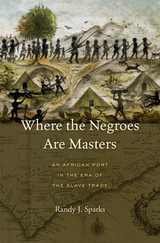
Annamaboe was the largest slave trading port on the eighteenth-century Gold Coast, and it was home to successful, wily African merchants whose unusual partnerships with their European counterparts made the town and its people an integral part of the Atlantic’s webs of exchange. Where the Negroes Are Masters brings to life the outpost’s feverish commercial bustle and continual brutality, recovering the experiences of the entrepreneurial black and white men who thrived on the lucrative traffic in human beings.
Located in present-day Ghana, the port of Annamaboe brought the town’s Fante merchants into daily contact with diverse peoples: Englishmen of the Royal African Company, Rhode Island Rum Men, European slave traders, and captured Africans from neighboring nations. Operating on their own turf, Annamaboe’s African leaders could bend negotiations with Europeans to their own advantage, as they funneled imported goods from across the Atlantic deep into the African interior and shipped vast cargoes of enslaved Africans to labor in the Americas.
Far from mere pawns in the hands of the colonial powers, African men and women were major players in the complex networks of the slave trade. Randy Sparks captures their collective experience in vivid detail, uncovering how the slave trade arose, how it functioned from day to day, and how it transformed life in Annamaboe and made the port itself a hub of Atlantic commerce. From the personal, commercial, and cultural encounters that unfolded along Annamaboe’s shore emerges a dynamic new vision of the early modern Atlantic world.
A few years later, 180 miles away from Keim’s grave, a bulldozer operator uncovered a pine coffin in an old beaver swamp down the road from Allen C. Shelton’s farm. He quickly reburied it, but Shelton, a friend of Keim’s who had a suitcase of his unfinished projects, became convinced that his friend wasn’t dead and fixed in the ground, but moving between this world and the next in a traveling coffin in search of his incomplete work.
In Where the North Sea Touches Alabama, Shelton ushers us into realms of fantasy, revelation, and reflection, paced with a slow unfurling of magical correspondences. Though he is trained as a sociologist, this is a genre-crossing work of literature, a two-sided ethnography: one from the world of the living and the other from the world of the dead.
What follows isn’t a ghost story but an exciting and extraordinary kind of narrative. The psycho-sociological landscape that Shelton constructs for his reader is as evocative of Kafka, Bataille, and Benjamin as it is of Weber, Foucault, and Marx. Where the North Sea Touches Alabama is a work of sociological fictocriticism that explores not only the author’s relationship to the artist but his physical, historical, and social relationship to northeastern Alabama, in rare style.
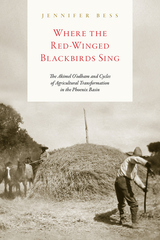
Author Jennifer Bess examines the Akimel O’odham’s worldview, which links their origins with a responsibility to farm the Gila River Valley and to honor their history of adaptation and obligations as “world-builders”—co-creators of an evermore life-sustaining environment and participants in flexible networks of economic exchange. Bess considers this worldview in context of the Huhugam–Akimel O’odham agricultural economy over more than a thousand years. Drawing directly on Akimel O’odham traditional ecological knowledge, innovations, and interpretive strategies in archives and interviews, Bess shows how the Akimel O’odham engaged in agricultural economy for the sake of their lifeways, collective identity, enduring future, and actualization of the values modeled in their sacred stories.
Where the Red-Winged Blackbirds Sing highlights the values of adaptation, innovation, and co-creation fundamental to Akimel O’odham lifeways and chronicles the contributions the Akimel O’odham have made to American history and to the history of agriculture. The book will be of interest to scholars of Indigenous, American Southwestern, and agricultural history.
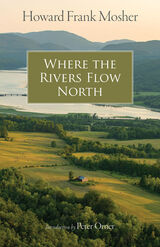
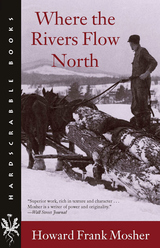
The stories of Where the Rivers Flow North are “superior work, rich in texture and character,” says the Wall Street Journal, and “the novella is brilliantly done.” That novella, the title story of the collection, was also made into a feature film starring Rip Torn and Michael J. Fox. These six stories, available again in this new edition, continue Howard Frank Mosher’s career-long exploration of Kingdom County, Vermont. “Within the borders of his fictional kingdom,” the Providence Journal has noted, “Mosher has created mountains and rivers, timber forests and crossroads villages, history and language. And he has peopled the landscape with some of the truest, most memorable characters in contemporary literature.” This new edition features a new introduction by novelist Peter Orner.
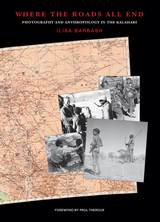
Winner of the John Collier Jr. Award for Still Photography
Where the Roads All End tells the remarkable story of an American family’s eight anthropological expeditions to the remote Kalahari Desert in South-West Africa (Namibia) during the 1950s. Raytheon co-founder Laurence Marshall, his wife Lorna, and children John and Elizabeth recorded the lives of some of the last remaining hunter-gatherers, the so-called Bushmen, in what is now recognized as one of the most important ventures in the anthropology of Africa. Largely self-taught as ethnographers, the family supplemented their research with motion picture film and still photography to create an unparalleled archive that documents the Ju/’hoansi and the /Gwi just as they were being settled by the government onto a “Bushman Preserve.” The Marshalls’ films and publications popularized a strong counternarrative to existing negative stereotypes of the “Bushman” and revitalized academic studies of these southern African hunter-gatherers.
This vivid and multilayered account of a unique family enterprise focuses on 25,000 still photographs in the archives of Harvard’s Peabody Museum of Archaeology and Ethnology. Illustrated with over 300 images, Where the Roads All End reflects on the enduring ethnographic record established by the Marshalls and the influential pathways they charted in anthropological fieldwork, visual anthropology, ethnographic film, and documentary photography.
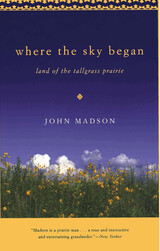
Originally published in 1982, Where the Sky Began, John Madson’s landmark publication, introduced readers across the nation to the wonders of the tallgrass prairie, sparking the current interest in prairie restoration. Now back in print, this classic tome will serve as inspiration to those just learning about the heartland’s native landscape and rekindle the passion of long-time prairie enthusiasts.
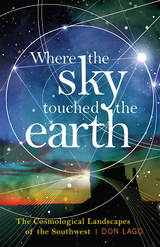
Nowhere else in the world is the link between earth and sky so powerful. Lago witnesses a solar eclipse over the Grand Canyon, climbs primeval volcanos, and sees the universe in tree rings. Through ageless Native American ceremonies, modern telescopes, and even dreams of flying saucers, Lago, who is not only a poet but a true philosopher of science, strives to find order and meaning in the world and brings out the Southwest’s beauty and mystery.

This rare find--a journal of a young backwoods woman--provides a unique picture of rural life in southwestern Alabama early in the 20th century.
"I am a little Alabama girl living on the frontier where the wild animals is plentiful," wrote May Jordan in 1912. During the hunting season her father traveled Washington County buying furs, and May--already 23--accompanied him on two of these trips, cooking meals, helping out with the business, and recording their experiences.
May's diary of these trips from December 1912 to March 1914 describes the routine of the fur trade and provides a vivid portrait of wilderness travel and social customs. Through May's eyes, readers can experience the sights and sounds of pine forests and swamps, the difficulty of wading through waist-deep mud, and the neighborliness of the people living in this isolated area. May also shares both the solace of religious faith and her love of laughter as reflected in the jokes she records.
Elisa Moore Baldwin provides an introduction that traces Jordan family history and describes economic, social, and political conditions during the period. Baldwin also includes annotations based on court records, census rolls, and other primary sources and photographs of many of the characters in May's narrative to provide a vivid picture of the times. Because few first-person accounts exist of the life of poor whites, this diary will be invaluable to students of southern and women's history; no comparable work exists for this part of Alabama during this era. May's journal takes us to another world and teaches us about the lively human spirit in the face of hardship and loneliness.
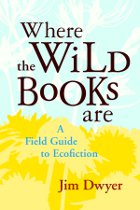
As interest in environmental issues grows, many writers of fiction have embraced themes that explore the connections between humans and the natural world. Ecologically themed fiction ranges from profound philosophical meditations to action-packed entertainments. Where the Wild Books Are offers an overview of nearly 2,000 works of nature-oriented fiction. The author includes a discussion of the precursors and history of the genre, and of its expansion since the 1970s. He also considers its forms and themes, as well as the subgenres into which it has evolved, such as speculative fiction, ecodefense, animal stories, mysteries, ecofeminist novels, cautionary tales, and others. A brief summary and critical commentary of each title is included. Dwyer’s scope is broad and covers fiction by Native American writers as well as ecofiction from writers around the world. Far more than a mere listing of books, Where the Wild Books Are is a lively introduction to a vast universe of engaging, provocative writing. It can be used to develop book collections or curricula. It also serves as an introduction to one of the most fertile areas of contemporary fiction, presenting books that will offer enjoyable reading and new insights into the vexing environmental questions of our time.
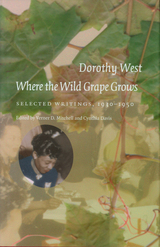
During these years, West and Johnson knew virtually everyone in New York's artistic, intellectual, and political circles. Their friends included Langston Hughes, Zora Neale Hurston, Carl Van Vechten, Richard Wright, Arna Bontemps, Claude McKay, and many others. West moved easily between the bohemian milieu of her artistic soul mates and the bourgeois, respectable soirees of prominent social and political figures.
In this book, Professors Mitchell and Davis provide a carefully researched profile of West and her circle that serves as an introduction to a well-edited, representative collection of her out-of-print, little-known, or unpublished writings, supplemented by many family photographs. The editors document West's "womanist" upbringing and her relationships with her mother, Rachel Benson West, and other strong-minded women, including her longtime companion Marian Minus.
The volume includes examples of West's probing social criticism in the form of WPA essays and stories, as well as her interviews with Southern migrants. A centerpiece of the book is her unpublished novella, Where the Wild Grape Grows, which explores with grace and gentle irony the complex relationship of three retired women living on Martha's Vineyard. Several of West's exquisitely observed nature pieces, published over a span of twenty years in the Vineyard Gazette, are also reprinted.
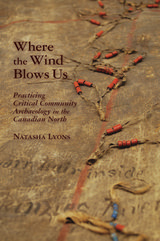
Lyons offers an extended case study of her work with the Inuvialuit community of the Canadian Western Arctic. She documents the development of this longstanding research relationship and presents both the theoretical and practical products of the work to date. Integrating knowledge drawn from archaeology, ethnography, oral history, and community interviews, Lyons utilizes a multivocal approach that actively listens to Inuvialuit speak about their rich and textured history.
The overall significance of this volume lies in outlining a method of practicing archaeology that embraces local ways of knowing with a critically constructed and evolving methodology that is responsive to community needs. It will serve as a handbook to mine for elements of critical practice, a model of community-based archaeology, and a useful set of concepts and examples for classroom study.
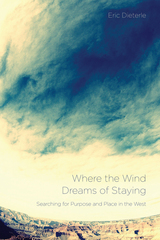
Dieterle’s journey leads from the plateau of eastern Washington through the landscapes of seven states, ending in the shadow of the San Francisco peaks in northern Arizona. Readers will find rich, detailed explorations of western landscapes balanced with stories of personal reflection, determination, doubt, and fulfillment.
READERS
Browse our collection.
PUBLISHERS
See BiblioVault's publisher services.
STUDENT SERVICES
Files for college accessibility offices.
RECENTLY PUBLISHED


UChicago Accessibility Resources
home | accessibility | search | about | contact us
BiblioVault ® 2001 - 2024
The University of Chicago Press