
 A SCHOLARLY BOOK REPOSITORY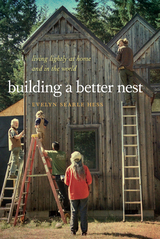
What does it mean to build a better nest? Better for whom? Is it better for the individual or family? The planet? Green building and sustainable design are popular buzzwords, but to Hess, sustainable building is not a simple matter of buying and installing the latest recycled flooring products. It is also about cooperative work: working together in employment, in research, in activism, and in life. Hess is concerned with her local watershed, but also with the widening income gap, disappearing species, and peak resources. She actively works to reduce overconsumption and waste. For Hess, these problems are both philosophical and practical.
As Hess and her husband age, the questions of how to live responsibly arise with greater frequency and urgency. With unfailing wit and humor, she looks for answers in such places as neuroscience, Buddhism, and her ancestral legacy. Building a Better Nest will appeal to anyone with an interest in sustainable building, off-grid living, or alternative communities. The questions it asks about the way we live are earnest and important, from an author whose voice is steeped in wisdom and gratitude.

Schelly portrays a wide range of residential living alternatives utilizing renewable, small-scale, de-centralized technologies. These technologies considerably change how individuals and communities interact with the material world, their natural environment, and one another. Using in depth interviews and compelling ethnographic observations, the book offers an insightful look at different communities’ practices and principles and their successful endeavors in sustainability and self-sufficiency.
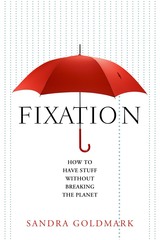
Since founding Fixup, a pop-up repair shop that brought her coverage in The New York Times, Salon, New York Public Radio, and more, Sandra Goldmark has become a leader in the movement to demand better “stuff.” She doesn’t just want to help us clear clutter—she aims to move us away from throwaway culture, to teach us to reuse and repurpose more thoughtfully, and to urge companies to produce better stuff. Although her goal is ambitious, the solution to getting there is surprisingly simple and involves all of us: have good stuff, not too much, mostly reclaimed, care for it, and pass it on.
Fixation charts the path to the next frontier in the health, wellness, and environmental movements—learning how to value stewardship over waste. We can choose quality items designed for a long lifecycle, commit to repairing them when they break, and shift our perspective on reuse and “preowned” goods. Together, we can demand that companies get on board. Goldmark shares examples of forward-thinking companies that are thriving by conducting their businesses sustainably and responsibly.
Passionate, wise, and practical, Fixation offers us a new understanding of stuff by building a value chain where good design, reuse, and repair are the status quo.
Inspired by a classic walking guidebook of the area, Foodloose in Washtenaw County takes readers on tours to discover food-related treasures throughout the county. What better way to get to know this place—or experience something new—than to bike, bus, carpool, walk, even kayak your way through food-filled Washtenaw County?
From centennial farms to trendy upscale restaurants, the self-guided tours of Foodloose offer an opportunity to explore where our food is grown, produced, distributed, and enjoyed in Washtenaw County. Within these pages lies a chance to celebrate the local food community, learn more about our unique food system, and maybe even find a new favorite place to dine.
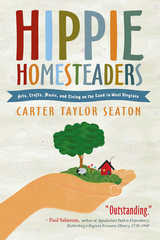
It’s the 1960s. The Vietnam War is raging and protests are erupting across the United States. In many quarters, young people are dropping out of society, leaving their urban homes behind in an attempt to find a safe place to live on their own terms, to grow their own food, and to avoid a war they passionately decry. During this time, West Virginia becomes a haven for thousands of these homesteaders—or back-to-the-landers, as they are termed by some. Others call them hippies.
When the going got rough, many left. But a significant number remain to this day. Some were artisans when they arrived, while others adopted a craft that provided them with the cash necessary to survive. Hippie Homesteaders tells the story of this movement from the viewpoint of forty artisans and musicians who came to the state, lived on the land, and created successful careers with their craft. There’s the couple that made baskets coveted by the Smithsonian Institution’s Renwick Gallery. There’s the draft-dodger that fled to Canada and then became a premier furniture maker. There’s the Boston-born VISTA worker who started a quilting cooperative. And, there’s the immigrant Chinese potter who lived on a commune.
Along with these stories, Hippie Homesteaders examines the serendipitous timing of this influx and the community and economic support these crafters received from residents and state agencies in West Virginia. Without these young transplants, it’s possible there would be no Tamarack: The Best of West Virginia, the first statewide collection of fine arts and handcrafts in the nation, and no Mountain Stage, the weekly live musical program broadcast worldwide on National Public Radio since 1983. Forget what you know about West Virginia.
Hippie Homesteaders isn’t about coal or hillbillies or moonshine or poverty. It is the story of why West Virginia was—and still is—a kind of heaven to so many.
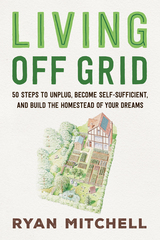
If you’ve ever dreamed of this lifestyle, Living Off Grid will help you navigate the most important decisions you’ll need to make to create the reality that’s right for you. Whether you’re an urbanite who just wants to save some money (and carbon) with small solar arrays or you’re ready to purchase land or you’ve already taken the plunge and want a better way to deal with your wastewater, Ryan has done the hard work to set you up for success. He will also help you steer clear of common pitfalls, including purchasing land in a flood zone, underestimating your water needs, trying to rely solely on wind power, or simply biting off more than you can chew—or afford. Finally, he will explore little-discussed topics such as living off grid when you have a “regular” job and aging in place.
As someone who has done it himself and guided countless others on their journeys to unplug, Ryan knows that going off the beaten path can be daunting. But with the right knowledge, you can choose the road less traveled – and it could make all the difference.
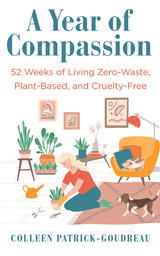
Colleen lives by the motto: Don’t do nothing because you can’t do everything. Do something. Anything. She knows we’ll never be perfect in this imperfect world, but with small, incremental changes, we can each contribute to big change. One week you might declutter your fridge to cut down on food waste, while the next you could store some basic supplies in your car to help an injured animal. Another week you might explore eating by color to boost your nutrient intake, while the next you can take steps to stop junk mail in its tracks.
Feel free to skip around, choosing your own sustainable adventure. Whether you read A Year of Compassion cover to cover or take it week by week, Colleen is there to encourage, inspire, and motivate, helping you become the change you want to see in the world.
READERS
Browse our collection.
PUBLISHERS
See BiblioVault's publisher services.
STUDENT SERVICES
Files for college accessibility offices.
RECENTLY PUBLISHED




UChicago Accessibility Resources
home | accessibility | search | about | contact us
BiblioVault ® 2001 - 2025
The University of Chicago Press