
 A SCHOLARLY BOOK REPOSITORY
33 start with A start with A
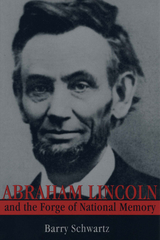
Schwartz draws on a wide array of materials—painting and sculpture, popular magazines and school textbooks, newspapers and oratory—to examine the role that Lincoln's memory has played in American life. He explains, for example, how dramatic funeral rites elevated Lincoln's reputation even while funeral eulogists questioned his presidential actions, and how his reputation diminished and grew over the next four decades. Schwartz links transformations of Lincoln's image to changes in the society. Commemorating Lincoln helped Americans to think about their country's development from a rural republic to an industrial democracy and to articulate the way economic and political reform, military power, ethnic and race relations, and nationalism enhanced their conception of themselves as one people.
Lincoln's memory assumed a double aspect of "mirror" and "lamp," acting at once as a reflection of the nation's concerns and an illumination of its ideals, and Schwartz offers a fascinating view of these two functions as they were realized in the commemorative symbols of an ever-widening circle of ethnic, religious, political, and regional communities. The first part of a study that will continue through the present, Abraham Lincoln and the Forge of National Memory is the story of how America has shaped its past selectively and imaginatively around images rooted in a real person whose character and achievements helped shape his country's future.
In recent years, different family types have begun demanding recognition to an unprecedented extent. Despite notable changes to our cultural and academic landscapes, however, adoptive families remain overlooked. According to census data, about two and a half percent of children in the United States are adopted. But mere numbers do not begin to indicate the profound impact that these families have on cultural definitions of kinship.
Adoptive Families in a Diverse Society brings together twenty-one prominent scholars to explore the experience, practice, and policy of adoption in North America. While much existing literature tends to stress the potential problems inherent in non-biological kinship, the essays in this volume consider adoptive family life in a broad and balanced context.
Essays explore our current fascination with genetics, showing how our intense belief that we are produced, shaped, and controlled by our genes has affected the authenticity and value that we credit to adoptive parent/child relations. Other essays look at identity development, community attitudes toward adoption, gay adoptive fathers’ experiences, the ways in which single mother adoptive families create kinship, and the ways in which cultural assumptions about race and class operate in the system.
Bringing new perspectives to the topics of kinship, identity, and belonging, this path-breaking book expands more than our understandings of adoptive family life; it urges us to rethink the limits and possibilities of diversity and assimilation in American society.

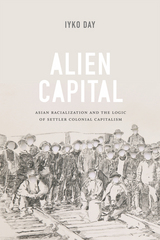

Between the early 1900s and the late 1950s, the attitudes of white Californians toward their Asian American neighbors evolved from outright hostility to relative acceptance. Charlotte Brooks examines this transformation through the lens of California’s urban housing markets, arguing that the perceived foreignness of Asian Americans, which initially stranded them in segregated areas, eventually facilitated their integration into neighborhoods that rejected other minorities.
Against the backdrop of cold war efforts to win Asian hearts and minds, whites who saw little difference between Asians and Asian Americans increasingly advocated the latter group’s access to middle-class life and the residential areas that went with it. But as they transformed Asian Americans into a “model minority,” whites purposefully ignored the long backstory of Chinese and Japanese Americans’ early and largely failed attempts to participate in public and private housing programs. As Brooks tells this multifaceted story, she draws on a broad range of sources in multiple languages, giving voice to an array of community leaders, journalists, activists, and homeowners—and insightfully conveying the complexity of racialized housing in a multiracial society.
Michael S. Goldstein's Alternative Health Care is the first comprehensive account of the growing presence of alternative medicine in American society. Beginning with the basic premises of alternative medicine, Goldstein's book examines the clinical, economic, and political realities of the broad range of alternative care options and practices in the United States and explains why alternative medicine has become a viable choice for so many people who are ill or who seek to remain healthy.
Bringing history, policy, practice, personal experience, and in-depth sociological analysis together into one comprehensive volume, Goldstein -- one of the first recipients of funding from the National Institute of Health for research on alternative medicine -- also studies the complexities of the relationship between spirituality and alternative medicine and the changing role of alternative medicine in the larger context of American health care. Probing such issues as the corporatization of medicine, the role of alternative medicine in health care, and the dynamic relationship between conventional and alternative treatments, Goldstein's Alternative Health Care is more than the long-awaited introduction to the many forms of alternative medicine. It is also the measure of the implications of such care for practitioners, businesses, policymakers, and patients alike.
Alternative Health Care is the definitive guide for the millions of Americans interested in alternative medicine and treatment, American health care, the sociology of medicine, and American social issues.
Compelling narratives are integral to successful foreign policy, military strategy, and international relations. Yet often narrative is conceived so broadly it can be hard to identify. The formation of strategic narratives is informed by the stories governments think their people tell, rather than those they actually tell. This book examines the stories told by a broad cross-section of British society about their country’s past, present, and future role in war, using in-depth interviews with 67 diverse citizens. It brings to the fore the voices of ordinary people in ways typically absent in public opinion research.
Always at War complements a significant body of quantitative research into British attitudes to war, and presents an alternative case in a field dominated by US public opinion research. Rather than perceiving distinct periods between war and peace, British citizens see their nation as so frequently involved in conflict that they consider the country to be continuously at war. At present, public opinion appears to be a stronger constraint on Western defense policy than ever.
Wedeen shows how such flagrantly fictitious claims were able to produce a politics of public dissimulation in which citizens acted as if they revered the leader. By inundating daily life with tired symbolism, the regime exercised a subtle, yet effective form of power. The cult worked to enforce obedience, induce complicity, isolate Syrians from one another, and set guidelines for public speech and behavior. Wedeen‘s ethnographic research demonstrates how Syrians recognized the disciplinary aspects of the cult and sought to undermine them. In a new preface, Wedeen discusses the uprising against the Syrian regime that began in 2011 and questions the usefulness of the concept of legitimacy in trying to analyze and understand authoritarian regimes.
Wedeen concludes that Asad's cult acts as a disciplinary device, generating a politics of public dissimulation in which citizens act as if they revered their leader. By inundating daily life with tired symbolism, the regime exercises a subtle, yet effective form of power. The cult works to enforce obedience, induce complicity, isolate Syrians from one another, and set guidelines for public speech and behavior. Wedeen's ethnographic research demonstrates how Syrians recognize the disciplinary aspects of the cult and seek to undermine them. Provocative and original, Ambiguities of Domination is a significant contribution to comparative politics, political theory, and cultural studies.
Rather than succumbing to corporate America, Smith argues, representatives paradoxically become more responsive to their constituents when facing a united corporate front. Corporations gain the most influence over legislation when they work with organizations such as think tanks to shape Americans' beliefs about what government should and should not do.
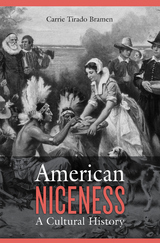
The cliché of the Ugly American—loud, vulgar, materialistic, chauvinistic—still expresses what people around the world dislike about their Yankee counterparts. Carrie Tirado Bramen recovers the history of a very different national archetype—the nice American—which has been central to ideas of U.S. identity since the nineteenth century.
Niceness is often assumed to be a superficial concept unworthy of serious analysis. Yet the distinctiveness of Americans has been shaped by values of sociality and likability for which the adjective “nice” became a catchall. In America’s fledgling democracy, niceness was understood to be the indispensable trait of a people who were refreshingly free of Old World snobbery. Bramen elucidates the role niceness plays in a particular fantasy of American exceptionalism, one based not on military and economic might but on friendliness and openness. Niceness defined the attitudes of a plucky (and white) settler nation, commonly expressed through an affect that Bramen calls “manifest cheerfulness.”
To reveal its contested inflections, Bramen shows how American niceness intersects with ideas of femininity, Native American hospitality, and black amiability. Who claimed niceness and why? Despite evidence to the contrary, Americans have largely considered themselves to be a fundamentally nice and decent people, from the supposedly amicable meeting of Puritans and Native Americans at Plymouth Rock to the early days of American imperialism when the mythology of Plymouth Rock became a portable emblem of goodwill for U.S. occupation forces in the Philippines.

In eighteenth-century America, the East was, paradoxically, a means of reinforcing the enlightenment values of the West: Franklin, Jefferson, and other American writers found in Confucius a complement to their own political and philosophical beliefs. In the nineteenth century, with the shift from an agrarian to an industrial economy, the Hindu Orient emerged as a mystical alternative to American reality. During this period, Emerson, Thoreau, and other Transcendentalists viewed the "Oriental" not as an exotic other but as an image of what Americans could be, if stripped of all the commercialism and materialism that set them apart from their ideal. A similar sense of Oriental otherness informed the aesthetic discoveries of the early twentieth century, as Pound, Eliot, and other poets found in Chinese and Japanese literature an artistic purity and intensity absent from Western tradition. For all of these figures the Orient became a complex fantasy that allowed them to overcome something objectionable, either in themselves or in the culture of which they were a part, in order to attain some freer, more genuine form of philosophical, religious, or artistic expression.
"A substantial contribution to understanding the role of public opinion and the news media during the Iraq War. Equally impressive, it effectively puts the domestic context of U.S. policy in historical perspective, making the book useful to historians as well as to political scientists."
---Ralph B. Levering, Davidson College
"American Public Opinion on the Iraq War sets out to chart against a detailed account of the war a nuanced assessment of how public opinion on the conflict evolved, the partisan differences that emerged, how the issue affected other areas of foreign policy opinion, and the limits of public opinion on policy. It succeeds at all of this, and it does so in a manner that is at once informative, inherently interesting, and exceptionally easy to read."
---Randolph M. Siverson, University of California, Davis
Ole R. Holsti explores the extent to which changes in public opinion reflected the vigorous public relations efforts of the Bush administration to gain support for the war and the partisanship marking debates over policies toward Iraq. Holsti investigates the ways in which the Iraq experience has led substantial numbers of Americans to reconsider their nation's proper international role, and he assesses the impact that public opinion has had on policymakers. Significantly, Holsti places his findings in a broader context to address the role of public opinion and of the media in democratic governance.
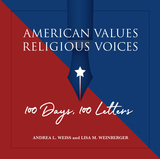
American Values, Religious Voices: 100 Days, 100 Letters is a collection of letters written by some of America’s most accomplished and thoughtful scholars of religion during the first 100 days of the Trump presidency. While the letters are addressed to the president, vice president, and members of the 115th Congress and Trump administration, they speak to a broad audience of Americans looking for wisdom and encouragement at this tumultuous time in our nation’s history.
This unique volume assembles the 100 letters, plus four new supplemental essays and many of the graphic illustrations that enhanced the campaign.
Published near the midway point of the Trump presidency, this book showcases a wide range of ancient sacred texts that pertain to our most pressing contemporary issues. At a time of great division in our country, this post-election project models how people of different backgrounds can listen to and learn from one another. The letters offer insight and inspiration, reminding us of the enduring values that make our nation great.
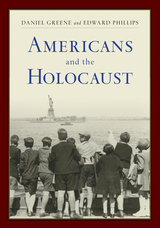
Americans and the Holocaust explores these enduring questions by gathering together more than one hundred primary sources that reveal how Americans debated their responsibility to respond to Nazism. Drawing on groundbreaking research conducted for the United States Holocaust Memorial Museum’s Americans and the Holocaust exhibition, these carefully chosen sources help readers understand how Americans’ responses to Nazism were shaped by the challenging circumstances in the United States during the 1920s, 1930s, and 1940s, including profound economic crisis, fear of communism, pervasive antisemitism and racism, and widespread isolationism.
Collecting newspaper and magazine articles, popular culture materials, and government records, Americans and the Holocaust is a valuable resource for students and historians seeking to shed light on this dark era in world history.
To explore further, visit the United States Holocaust Memorial Museum's digital exhibit, available here: https://exhibitions.ushmm.org/americans-and-the-holocaust
Published in association with the United States Holocaust Memorial Museum.
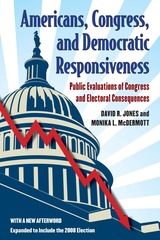
rampant in the political science literature, Jones and McDermott show that the people are in control, determining not only the direction of policy in Congress, but also who stays, who retires, and who faces difficult reelection efforts. This book makes an important correction to our understanding of how Congress operates."
---Sean M. Theriault, University of Texas at Austin
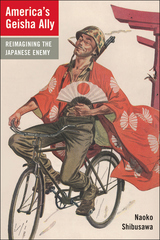
During World War II, Japan was vilified by America as our hated enemy in the East. Though we distinguished "good Germans" from the Nazis, we condemned all Japanese indiscriminately as fanatics and savages. As the Cold War heated up, however, the U.S. government decided to make Japan its bulwark against communism in Asia.
But how was the American public made to accept an alliance with Japan so soon after the "Japs" had been demonized as subhuman, bucktoothed apes with Coke-bottle glasses? In this revelatory work, Naoko Shibusawa charts the remarkable reversal from hated enemy to valuable ally that occurred in the two decades after the war. While General MacArthur's Occupation Forces pursued our nation's strategic goals in Japan, liberal American politicians, journalists, and filmmakers pursued an equally essential, though long-unrecognized, goal: the dissemination of a new and palatable image of the Japanese among the American public.
With extensive research, from Occupation memoirs to military records, from court documents to Hollywood films, and from charity initiatives to newspaper and magazine articles, Shibusawa demonstrates how the evil enemy was rendered as a feminized, submissive nation, as an immature youth that needed America's benevolent hand to guide it toward democracy. Interestingly, Shibusawa reveals how this obsession with race, gender, and maturity reflected America's own anxieties about race relations and equity between the sexes in the postwar world. America's Geisha Ally is an exploration of how belligerents reconcile themselves in the wake of war, but also offers insight into how a new superpower adjusts to its role as the world's preeminent force.
Building upon recent work in communication, social psychology, social cognition, and political science, Jacob Shamir and Michal Shamir approach public opinion as a multidimensional concept with a multitude of expressions. Public opinion is not comprised merely of a distribution of attitudes obtained in the polls. It also expresses and is expressed by a climate of opinion, expectations, public speeches and political actions, including aggregate distributions of individual values, beliefs, and attitudes. Often these different facets coincide, but they may also diverge. Public opinion can evolve along different dynamic paths; the nature of the information environment is a major factor in determining which dynamic path will be set in motion.
While social information and social construction are important in public opinion processes, major information events play a central role in moving public opinion and in constraining processes of social construction. In this book these postulates are explored on the micro and macro levels, but the focus is on public opinion dynamics at the system level: how the facets of public opinion respond to the variability in information technology. This is approached from different directions and with different parameters. The authors use as their case study Israeli public opinion on issues of peace and terrorism during the Intifada.
The Anatomy of Public Opinion will form an important part in the body of study on the role of information in public opinion processes. It will be of interest to students and scholars of political science, communication, public opinion, and political psychology.
Jacob Shamir is Lecturer of Communication and Journalism, The Hebrew University, Jerusalem. Michal Shamir is Associate Professor of Political Science, Tel Aviv University.
Winner of the Eugene M. Emme Astronautical Literature Award
A Bloomberg View Must-Read Book of the Year
A Choice Outstanding Academic Title of the Year
“A substance-rich, original on every page exploration of how the space program interacted with the environmental movement, and also with the peace and ‘Whole Earth’ movements of the 1960s.”
—Tyler Cowen, Marginal Revolution
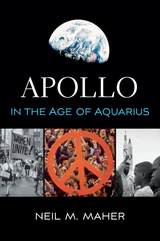
The summer of 1969 saw astronauts land on the moon for the first time and hippie hordes descend on Woodstock. This lively and original account of the space race makes the case that the conjunction of these two era-defining events was not entirely coincidental.
With its lavishly funded mandate to put a man on the moon, the Apollo mission promised to reinvigorate a country that had lost its way. But a new breed of activists denounced it as a colossal waste of resources needed to solve pressing problems at home. Neil Maher reveals that there were actually unexpected synergies between the space program and the budding environmental, feminist and civil rights movements as photos from space galvanized environmentalists, women challenged the astronauts’ boys club and NASA’s engineers helped tackle inner city housing problems. Against a backdrop of Saturn V moonshots and Neil Armstrong’s giant leap for mankind, Apollo in the Age of Aquarius brings the cultural politics of the space race back down to planet Earth.
“As a child in the 1960s, I was aware of both NASA’s achievements and social unrest, but unaware of the clashes between those two historical currents. Maher [captures] the maelstrom of the 1960s and 1970s as it collided with NASA’s program for human spaceflight.”
—George Zamka, Colonel USMC (Ret.) and former NASA astronaut
“NASA and Woodstock may now seem polarized, but this illuminating, original chronicle…traces multiple crosscurrents between them.”
—Nature

Winner, 2011 Ragsdale Award

When art hits the headlines, it is usually because it has caused offence or is perceived by the media to have shock-value. Over the last fifty years many artists have been censored, vilified, accused of blasphemy and obscenity, threatened with violence, prosecuted and even imprisoned. Their work has been trashed by the media and physically attacked by the public.
In Art & Outrage, John A. Walker covers the period from the late 1940s to the 1990s to provide the first detailed survey of the most prominent cases of art that has scandalised. The work of some of Britain’s leading, and less well known, painters and sculptors of the postwar period is considered, such as Richard Hamilton, Bryan Organ, Rachel Whiteread, Reg Butler, Damien Hirst, Jamie Wagg, Barry Flanagan and Antony Gormley. Included are works made famous by the media, such as Carl Andre’s Tate Gallery installation of 120 bricks, Rick Gibson’s foetus earrings, Anthony-Noel Kelly’s cast body-parts sculptures and Marcus Harvey’s portrait of Myra Hindley. Walker describes how each incident emerged, considers the arguments for and against, and examines how each was concluded. While broadly sympathetic to radical contemporary art, Walker has some residual sympathy for the layperson’s bafflement and antagonism. This is a scholarly yet accessible study of the interface between art, society and mass media which offers an alternative history of postwar British art and attitudes.
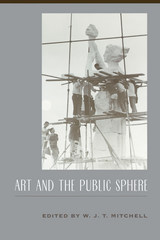
With contributions from the arts, philosophy, criticism, and the law, the thirteen essays in this volume explore the aesthetic, social, and political dynamics that make contemporary public art so controversial, and that that have placed recent art work at the center of public debates.
Contributors include Vito Acconci, "Public Space in a Private Time"; Agnes Denes, "The Dream"; W. J. T. Mitchell, "The Violence of Public Art: Do the Right Thing"; Ben Nicholson, "Urban Poises"; Michael North, "The Public as Sculpture: From Heavenly City to Mass Ornament"; Barbara Kruger, in an interview with W. J. T. Mitchell; Barbara Hoffman, "Law for Art's Sake in the Public Realm"; Richard Serra, "Art and Censorship"; James E. Young, "The Counter-Monument: Memory Against Itself in Germany Today": Charles Griswold, "The Vietnam Veterans Memorial and the Washington Mall: Philosophical Thoughts on Political Iconography"; John Hallmark Neff, "Daring to Dream"; and David Antin and Virginia Maksymowicz.
Presenting a balance of theoretical and performative essays by both critics and artists, this book will provide deep and discordant analyses of contemporary public art for general readers, as well as students and scholars of art, architecture, and public policy related to the arts.
Most of these articles originally appeared in the journal Critical Inquiry.
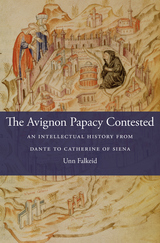
The Avignon papacy (1309–1377) represented the zenith of papal power in Europe. The Roman curia’s move to southern France enlarged its bureaucracy, centralized its authority, and initiated closer contact with secular institutions. The pope’s presence also attracted leading minds to Avignon, transforming a modest city into a cosmopolitan center of learning. But a crisis of legitimacy was brewing among leading thinkers of the day. The Avignon Papacy Contested considers the work of six fourteenth-century writers who waged literary war against the Catholic Church’s increasing claims of supremacy over secular rulers—a conflict that engaged contemporary critics from every corner of Europe.
Unn Falkeid uncovers the dispute’s origins in Dante’s Paradiso and Monarchia, where she identifies a sophisticated argument for the separation of church and state. In Petrarch’s writings she traces growing concern about papal authority, precipitated by the curia’s exile from Rome. Marsilius of Padua’s theory of citizen agency indicates a resistance to the pope’s encroaching power, which finds richer expression in William of Ockham’s philosophy of individual liberty. Both men were branded as heretics. The mystical writings of Birgitta of Sweden and Catherine of Siena, in Falkeid’s reading, contain cloaked confrontations over papal ethics and church governance even though these women were later canonized.
While each of the six writers responded creatively to the implications of the Avignon papacy, they shared a concern for the breakdown of secular order implied by the expansion of papal power and a willingness to speak their minds.
READERS
Browse our collection.
PUBLISHERS
See BiblioVault's publisher services.
STUDENT SERVICES
Files for college accessibility offices.
RECENTLY PUBLISHED



UChicago Accessibility Resources
home | accessibility | search | about | contact us
BiblioVault ® 2001 - 2024
The University of Chicago Press