
 A SCHOLARLY BOOK REPOSITORY
N. Katherine Hayles traces shifts in meaning that chaos has undergone within the Western tradition, suggesting that the science of chaos articulates categories that cannot be assimilated into the traditional dichotomy of order and disorder. She and her contributors take the relation between order and disorder as a theme and develop its implications for understanding texts, metaphors, metafiction, audience response, and the process of interpretation itself. Their innovative and diverse work opens the interdisciplinary field of chaotics to literary inquiry.
Control and Order in French Colonial Louisbourg, 1713-1758 is the culmination of nearly a quarter century of research and writing on 18th-century Louisbourg by A. J. B. Johnston. The author uses a multitude of primary archival sources-official correspondence, court records, parish registries, military records, and hundreds of maps and plans-to put together a detailed analysis of a distinctive colonial society. Located on Cape Breton Island (then known as Île Royale), the seaport and stronghold of Louisbourg emerged as one of the most populous and important settlements in all of New France. Its economy was based on fishing and trade, and the society that developed there had little or nothing to do with the fur trade, or the seigneurial regime that characterized the Canadian interior. Johnston traces the evolution of a broad range of controlling measures that were introduced and adapted to achieve an ordered civil and military society at Louisbourg. Town planning, public celebrations, diversity in the population, use of punishments, excessive alcohol consumption, the criminal justice system, and sexual abuse are some of the windows that reveal attempts to control and regulate society. A. J. B. Johnston's Control and Order in French Colonial Louisbourg offers both a broad overview of the colony's evolution across its half-century of existence, and insightful analyses of the ways in which control was integrated into the mechanisms of everyday life.
Upon publication in the late 1970s this book was the first major historical analysis of twentieth-century Cuba. Focusing on the way Cuba has been governed, and in particular on the way a changing elite has made claims to legitimate rule, it carefully examines each of Cuba’s three main political eras: the first, from Independence in 1902 to the Presidency of Gerardo Machado in 1933; the second, under Batista, from 1934 until 1958; and finally, Castro’s revolution, from 1959 to the present.
Jorge Domínguez discusses the political roles played by interest groups, mass organizations, and the military. He also investigates the impact of international affairs on Cuba and provides the first printed data on many aspects of political, economic, and social change since 1959. He deals in depth with agrarian politics and peasant protest since 1937, and his concluding chapter on Cuba’s present culture is a fascinating insight into a society which—though vitally important—remains mysterious to most readers in the United States.
Cuba’s role in international affairs is vastly greater than its size. The revolution led by Fidel Castro, the Bay of Pigs invasion, the missile crisis in 1962, the underwriting of revolution in Latin America and recently in Africa—all these events have thrust Cuba onto the modern world stage. Anyone hoping to understand this country and its people, and above all its changing systems of government, will find this book essential.

States are inherently and fundamentally geographical. Sovereignty is based on control of territory. This book uses Song China to explain how a pre-industrial regime organized itself spatially in order to exercise authority. On more than a thousand occasions, the Song court founded, abolished, promoted, demoted, and reordered jurisdictions in an attempt to maximize the effectiveness of limited resources in a climate of shifting priorities, to placate competing constituencies, and to address military and economic crises. Spatial transformations in the Song field administration changed the geography of commerce, taxation, revenue accumulation, warfare, foreign relations, and social organization, and even determined the terms of debates about imperial power.
The chronology of tenth-century imperial consolidation, eleventh-century political reform, and twelfth-century localism traced in this book is a familiar one. But by detailing the relationship between the court and local administration, this book complicates the received paradigm of Song centralization and decentralization. Song frontier policies formed a coherent imperial approach to administering peripheral regions with inaccessible resources and limited infrastructure. And the well-known events of the Song—wars and reforms—were often responses to long-term spatial and demographic change.
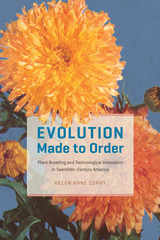
In Evolution Made to Order, Helen Anne Curry traces the history of America’s pursuit of tools that could intervene in evolution. An immersive journey through the scientific and social worlds of midcentury genetics and plant breeding and a compelling exploration of American cultures of innovation, Evolution Made to Order provides vital historical context for current worldwide ethical and policy debates over genetic engineering.
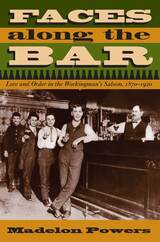
"A free-pouring blend of astonishing facts, folklore and firsthand period observations. . . . It's the rich details that'll inspire the casual reader to drink deep from this tap of knowledge."—Don Waller, USA Today recommended reading
"A surprise on every page."—Publishers Weekly
"Here we get social history that appreciates the bar talk even while dissecting its marvelous rituals."—Library Journal, starred review
"Careful scholarship with an anecdotal flair to please even the most sober of readers."—Nina C. Ayoub, Chronicle of Higher Education
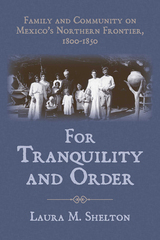
Laura Shelton has plumbed the legal archives of early Sonora to reveal the extent to which both court officials and quarreling relatives imagined connections between gender hierarchies and civilized order. As she describes how the region’s nascent legal system became the institution through which spouses, parents, children, employers, and servants settled disputes over everything from custody to assault to debt, she reveals how these daily encounters between men and women in the local courts contributed to the formation of republican governance on Mexico’s northwestern frontier.
Through an analysis of some 700 civil and criminal trial records—along with census data, military reports, church records, and other sources—Shelton describes how courtroom encounters were conditioned by an Iberian legal legacy; brutal ethnic violence; emerging liberal ideas about trade, citizenship, and property rights; and a growing recognition that honor—buenas costumbres—was dependent more on conduct than on bloodline. For Tranquility and Order offers new insight into a legal system too often characterized as inept as it provides a unique gender analysis of family relations on the frontier.
Winner of a Christianity Today Book Award
An incisive look at how evangelical Christians shaped—and were shaped by—the American criminal justice system.
America incarcerates on a massive scale. Despite recent reforms, the United States locks up large numbers of people—disproportionately poor and nonwhite—for long periods and offers little opportunity for restoration. Aaron Griffith reveals a key component in the origins of American mass incarceration: evangelical Christianity.
Evangelicals in the postwar era made crime concern a major religious issue and found new platforms for shaping public life through punitive politics. Religious leaders like Billy Graham and David Wilkerson mobilized fears of lawbreaking and concern for offenders to sharpen appeals for Christian conversion, setting the stage for evangelicals who began advocating tough-on-crime politics in the 1960s. Building on religious campaigns for public safety earlier in the twentieth century, some preachers and politicians pushed for “law and order,” urging support for harsh sentences and expanded policing. Other evangelicals saw crime as a missionary opportunity, launching innovative ministries that reshaped the practice of religion in prisons. From the 1980s on, evangelicals were instrumental in popularizing criminal justice reform, making it a central cause in the compassionate conservative movement. At every stage in their work, evangelicals framed their efforts as colorblind, which only masked racial inequality in incarceration and delayed real change.
Today evangelicals play an ambiguous role in reform, pressing for reduced imprisonment while backing law-and-order politicians. God’s Law and Order shows that we cannot understand the criminal justice system without accounting for evangelicalism’s impact on its historical development.
In a state assumed to have a constitutionally weak governor, the Speaker of the Texas House wields enormous power, with the ability to almost single-handedly dictate the legislative agenda. The House Will Come to Order charts the evolution of the Speaker's role from a relatively obscure office to one of the most powerful in the state. This fascinating account, drawn from the Briscoe Center's oral history project on the former Speakers, is the story of transition, modernization, and power struggles.
Weaving a compelling story of scandal, service, and opportunity, Patrick Cox and Michael Phillips describe the divisions within the traditional Democratic Party, the ascendance of Republicans, and how Texas business, agriculture, and media shaped perceptions of officeholders. While the governor and lieutenant governor wielded their power, the authors show how the modern Texas House Speaker built an office of equal power as the state became more complex and diverse. The authors also explore how race, class, and gender affected this transition as they explain the importance of the office in Texas and the impact the state's Speakers have had on national politics.
At the apex of its power, the Texas House Speaker's role at last receives the critical consideration it deserves.

This is the first book to challenge the "broken-windows" theory of crime, which argues that permitting minor misdemeanors, such as loitering and vagrancy, to go unpunished only encourages more serious crime. The theory has revolutionized policing in the United States and abroad, with its emphasis on policies that crack down on disorderly conduct and aggressively enforce misdemeanor laws.
The problem, argues Bernard Harcourt, is that although the broken-windows theory has been around for nearly thirty years, it has never been empirically verified. Indeed, existing data suggest that it is false. Conceptually, it rests on unexamined categories of "law abiders" and "disorderly people" and of "order" and "disorder," which have no intrinsic reality, independent of the techniques of punishment that we implement in our society.
How did the new order-maintenance approach to criminal justice--a theory without solid empirical support, a theory that is conceptually flawed and results in aggressive detentions of tens of thousands of our fellow citizens--come to be one of the leading criminal justice theories embraced by progressive reformers, policymakers, and academics throughout the world? This book explores the reasons why. It also presents a new, more thoughtful vision of criminal justice.
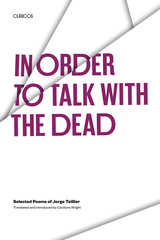
"In order to talk with the dead
you have to know how to wait:
they are fearful
like the first steps of a child.
But if we are patient
one day they will answer us
with a poplar leaf trapped in a broken mirror,
with a flame that suddenly revives in the fireplace,
with a dark return of birds
before the glance of a girl
who waits motionless on the threshold."
—from "In Order to Talk with the Dead"
Reared in the rainy forests of Chile's "La Frontera" region which had nurtured Pablo Neruda a generation earlier, Jorge Teillier has become one of Chile's leading contemporary poets, whose work is widely read in Latin America and Europe along with the poetry of his well-known contemporaries Nicanor Parra and Enrique Lihn. This English-Spanish bilingual anthology now introduces English-speaking readers to Teillier, with a representative selection of his best work from all phases of his career.
Carolyne Wright has translated poems from the volumes Muertes y maravillas (1971), Para un pueblo fantasma (1978), and Cartas para reinas de otras primaveras (1985). Avoiding the bravura effects of some of his contemporaries, Teillier writes from a life lived directly and simply, returning time and again in his poetry to the timeless and mythic South of his boyhood, the "Land of Nevermore."
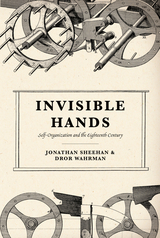
Why is the world orderly, and how does this order come to be? Human beings inhabit a multitude of apparently ordered systems—natural, social, political, economic, cognitive, and others—whose origins and purposes are often obscure. In the eighteenth century, older certainties about such orders, rooted in either divine providence or the mechanical operations of nature, began to fall away. In their place arose a new appreciation for the complexity of things, a new recognition of the world’s disorder and randomness, new doubts about simple relations of cause and effect—but with them also a new ability to imagine the world’s orders, whether natural or manmade, as self-organizing. If large systems are left to their own devices, eighteenth-century Europeans increasingly came to believe, order will emerge on its own without any need for external design or direction.
In Invisible Hands, Jonathan Sheehan and Dror Wahrman trace the many appearances of the language of self-organization in the eighteenth-century West. Across an array of domains, including religion, society, philosophy, science, politics, economy, and law, they show how and why this way of thinking came into the public view, then grew in prominence and arrived at the threshold of the nineteenth century in versatile, multifarious, and often surprising forms. Offering a new synthesis of intellectual and cultural developments, Invisible Hands is a landmark contribution to the history of the Enlightenment and eighteenth-century culture.
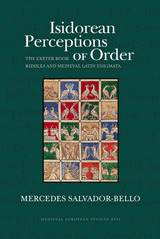
This book discusses the considerable influence exerted by Isidore’s Etymologiae on the compilation of early medieval enigmata. Either in the form of thematic clusters or pairs, Isidorean encyclopedic patterns are observed not only in major Latin riddle collections in verse but can also be detected in the two vernacular assemblages contained in the Exeter Book.
As with encyclopedias, the topic-centered arrangement of riddles was pursued by compilers as a strategy intended to optimize the didactic and instructional possibilities inherent in these texts and favor the readers’ assimilation of their contents. This book thus provides a thoroughgoing investigation of medieval riddling, with special attention to the Exeter Book Riddles, demonstrating that this genre constituted an important part of the school curriculum of the early Middle Ages.
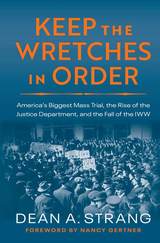
In the first legal history of this federal trial, Dean Strang shows how the case laid the groundwork for a fundamentally different strategy to stifle radical threats, and had a major role in shaping the modern Justice Department. As the trial unfolded, it became an exercise of raw force, raising serious questions about its legitimacy and revealing the fragility of a criminal justice system under great external pressure.
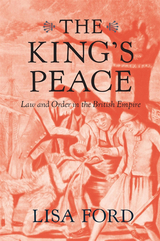
How the imposition of Crown rule across the British Empire during the Age of Revolution corroded the rights of British subjects and laid the foundations of the modern police state.
During the eighteenth and nineteenth centuries, the British Empire responded to numerous crises in its colonies, from North America to Jamaica, Bengal to New South Wales. This was the Age of Revolution, and the Crown, through colonial governors, tested an array of coercive peacekeeping methods in a desperate effort to maintain control. In the process these leaders transformed what it meant to be a British subject.
In the decades after the American Revolution, colonial legal regimes were transformed as the king’s representatives ruled new colonies with an increasingly heavy hand. These new autocratic regimes blurred the lines between the rule of law and the rule of the sword. Safeguards of liberty and justice, developed in the wake of the Glorious Revolution, were eroded while exacting obedience and imposing order became the focus of colonial governance. In the process, many constitutional principles of empire were subordinated to a single, overarching rule: where necessary, colonial law could diverge from metropolitan law. Within decades of the American Revolution, Lisa Ford shows, the rights claimed by American rebels became unthinkable in the British Empire. Some colonial subjects fought back but, in the empire, the real winner of the American Revolution was the king.
In tracing the dramatic growth of colonial executive power and the increasing deployment of arbitrary policing and military violence to maintain order, The King’s Peace provides important lessons on the relationship between peacekeeping, sovereignty, and political subjectivity—lessons that illuminate contemporary debates over the imbalance between liberty and security.
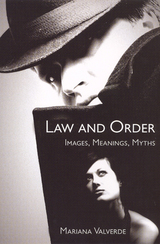
But with television courtrooms appearing more like the studio of The Jerry Springer Show than institutions of justice, and with weekly dramas seamlessly blending cutting-edge forensic science with exaggerated fictions, it calls to question: just what is it about these shows that has the public so captivated? And, what effects do the images of crime and order presented through the media have on society's view of the actual legal and criminal justice systems?
In Law and Order: Images, Meanings, Myths, Mariana Valverde draws on examples from film, television, and newspapers to examine these questions and to demonstrate how popular culture is creating an unrealistic view of crime and crime control. Valverde argues that understanding the impact of media representations of courtrooms, police departments, prisons, and the people who populate them is essential to comprehending the reality of criminal justice.
Introducing a wealth of resources in social and cultural studies along with suggestions for classroom discussions and assignments, this book pushes the field of criminology in new and exciting theoretical directions. It is essential reading for students and scholars of criminal justice and law.
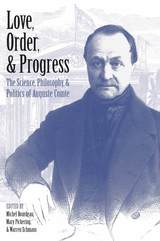
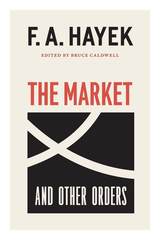
The Market and Other Orders brings together more than twenty works spanning almost forty years that consider this question. Consisting of speeches, essays, and lectures, including Hayek’s 1974 Nobel lecture, “The Pretense of Knowledge,” the works in this volume draw on a broad range of perspectives, including the philosophy of science, the physiology of the brain, legal theory, and political philosophy. Taking readers from Hayek’s early development of the idea of spontaneous order in economics through his integration of this insight into political theory and other disciplines, the book culminates with Hayek’s integration of his work on these topics into an overarching social theory that accounts for spontaneous order in the variety of complex systems that Hayek studied throughout his career.
Edited by renowned Hayek scholar Bruce Caldwell, who also contributes a masterly introduction that provides biographical and historical context, The Market and Other Orders forms the definitive compilation of Hayek’s work on spontaneous order.
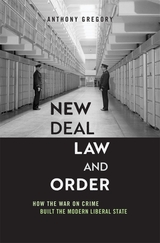
A historian traces the origins of the modern law-and-order state to a surprising source: the liberal policies of the New Deal.
Most Americans remember the New Deal as the crucible of modern liberalism. But while it is most closely associated with Roosevelt’s efforts to end the Depression and provide social security for the elderly, we have failed to acknowledge one of its most enduring legacies: its war on crime. Crime policy, Anthony Gregory argues, was a defining feature of the New Deal. Tough-on-crime policies provided both the philosophical underpinnings and the institutional legitimacy necessary to remake the American state.
New Deal Law and Order follows President Franklin Roosevelt, Attorney General Homer Cummings, and their war on crime coalition, which overcame the institutional and political challenges to the legitimacy of national law enforcement. Promises of law and order helped to manage tensions among key Democratic Party factions—organized labor, Black Americans, and white Southerners. Their anticrime program, featuring a strengthened criminal code, an empowered FBI, and the first federal war on marijuana, was essential to the expansion of national authority previously stymied on constitutional grounds. This nascent carceral liberalism both accommodated a redoubled emphasis on rehabilitation and underwrote a massive wave of prison construction across the country. Alcatraz, an unforgiving punitive model, was designed to be a “symbol of the triumph of law and order.” This emergent security state eventually transformed both liberalism and federalism, and in the process reoriented the terms of US political debate for decades to come.
Eric Voegelin's Israel and Revelation is the opening volume of his monumental Order and History, which traces the history of order in human society. This volume examines the ancient near eastern civilizations as a backdrop to a discussion of the historical locus of order in Israel. The drama of Israel mirrors the problems associated with the tension of existence as Israel attempted to reconcile the claims of transcendent order with those of pragmatic existence and so becomes paradigmatic.
According to Voegelin, what happened in Israel was a decisive step, not only in the history of Israel, but also in the human attempt to achieve order in society. The uniqueness of Israel is the fact that it was the first to create history as a form of existence, that is, the recognition by human beings of their existence under a world-transcendent God, and the evaluation of their actions as conforming to or defecting from the divine will. In the course of its history, Israel learned that redemption comes from a source beyond itself.
Voegelin develops rich insights into the Old Testament by reading the text as part of the universal drama of being. His philosophy of symbolic forms has immense implications for the treatment of the biblical narrative as a symbolism that articulates the experiences of a people's order. The author initiates us into attunement with all the partners in the community of being: God and humans, world and society. This may well be his most significant contribution to political thought: "the experience of divine being as world transcendent is inseparable from an understanding of man as human."
This second volume of Voegelin's magisterial Order and History, The World of the Polis, explores the ancient Greek symbolization of human reality. Taking us from the origins of Greek culture in the Pre-Homeric Cretan civilizations, through the Iliad and Odyssey, Hesiod, and the rise of philosophy with the Pre-Socratics Parmenides and Heraclitus, this masterful work concludes with the historians of the classical period.
In The World of the Polis, Voegelin traces the emergence of the forms of the city-state and of philosophy from the ancient symbolism of myth. He maintains that the limits and ultimate goals of human nature are constant and that the central problem of every society is the same—"to create an order that will endow the fact of its existence with meaning in terms of ends divine and human." Thus, Voegelin shows how "the meaning of existence" achieved concrete expression in the typical political, social, and religious institutions of Greece and in the productions of its poets and thinkers. He deals with more than fifty Greek writers in the course of his analysis of the rise of myth and its representation of the divine order of the cosmos as the first great symbolic form of order, one later supplanted by the leap in being reflected in the emergence of philosophy.
The book is a tour de force, a virtuoso performance by a scholar and philosopher of great power, learning, and imagination that places its subject matter in a new light. The editor's critical introduction places The World of the Polis in the broader context of Voegelin's philosophy of history. Scholars and students of political science, philosophy, and the history of ideas will find this work invaluable.
This third volume of Order and History completes Voegelin's study of Greek culture from its earliest pre- Hellenic origins to its full maturity with the dominance of Athens. As the title suggests, Plato and Aristotle is principally devoted to the work of the two great thinkers who represent the high point of philosophic inquiry among the Greeks.
Through an absorbing analysis of the Platonic and Aristotelian vision of soul, polis, and cosmos, Voegelin demonstrates how the symbolic framework of the older myth was superseded by the more precisely differentiated symbols of philosophy. Although this outmoding and rejection of past symbols of truth might seem to lead to a chaotic and despairing relativism, Voegelin makes it the basis of a profound conception of the historical process: "the attempts to find the symbolic forms that will adequately express the meaning [of a society], while imperfect, do not form a senseless series of failures. For the great societies have created a sequence of orders, intelligibly connected with one another as advances toward, or recessions from, an adequate symbolization of the truth concerning the order of being of which the order of society is a part."
In this view, history has no obvious "meaning," yet each society makes a similar venture after truth. Although every society works out its destiny under different conditions, each nonetheless creates symbols"in its deeds and institutions"which bear the meaning of its own existence. History, then, acquires a unity in the common endeavor toward meaning and order. The rationality and nobility of this view of history has much to say to the present age.
Dante Germino's powerful introduction to this edition of Plato and Aristotle eloquently directs the reader into Voegelin's search through the thought of Plato foremost and Aristotle secondarily and toward a full understanding of their relevance to the "modern" world. This masterpiece, Germino argues, provides a welcome antidote to the spirit of an era Voegelin once called the Gnostic age.
Order and History, Eric Voegelin's five-volume study of how human and divine order are intertwined and manifested in history, has been widely acclaimed as one of the great intellectual achievements of our age.
In the fourth volume, The Ecumenic Age, Voegelin breaks with the course he originally charted for the series, in which human existence in society and the corresponding symbolism of order were to be presented in historical succession. The analyses in the three previous volumes remain valid as far as they go, Voegelin explains, but the original conception proved "untenable because it had not taken proper account of the important lines of meaning in history that did not run along lines of time."
The Ecumenic Age treats history not as a stream of human beings and their actions in time, but as the process of man's participation in a flux of divine presence that has eschatological direction. "The process of history, and such order as can be discerned in it," Voegelin writes, "is not a story to be told from the beginning to its happy, or unhappy, end; it is a mystery in process of revelation."
In the present volume, Voegelin applies his revised conception of historical analysis to the "Ecumenic Age," a pivotal period that extends roughly from the rise of the Persian Empire to the fall of the Roman. The age is marked by the advent of a new type of political unit—the ecumenic empire—achieved at the cost of unprecedented destruction. Yet the pragmatic destructiveness of the age is paralleled by equally unprecedented spiritual creativity, born from the need to make sense of existence in the wake of imperial conquest. These spiritual outbursts gave rise to the great ecumenic religions and raised fundamental questions for human self- understanding that extend into our historical present.
In Search of Order brings to a conclusion Eric Voegelin's masterwork, Order and History. Voegelin conceived Order and History as "a philosophical inquiry concerning the principal types of order of human existence in society and history as well as the corresponding symbolic forms." In previous volumes, Voegelin discussed the imperial organizations of the ancient Near East and their existence in the form of the cosmological myth; the revelatory form of existence in history, developed by Moses and the prophets of the Chosen People; the polis, the Hellenic myth, and the development of philosophy as the symbolism of order; and the evolution of the great religions, especially Christianity.
This final volume of Order and History is devoted to the elucidation of the experience of transcendence that Voegelin discussed in earlier volumes. He aspires to show in a theoretically acute manner the exact nature of transcendental experiences. Voegelin's philosophical inquiry unfolds in the historical context of the great symbolic enterprise of restating man's humanity under the horizon of the modern sciences and in resistance to the manifold forces of our age that deform human existence. His stature as one of the major philosophical forces of the twentieth century clearly emerges from these concluding pages. In Search of Order deepens and clarifies the meditative movement that Voegelin, now in reflective distance to his own work, sees as having been operative throughout his search.
Because of Voegelin's death, on January 19, 1985, In Search of Order is briefer than it otherwise might have been; however, the theoretical presentation that he had set for himself is essentially completed here. Just as this volume serves Voegelin well in his striking analyses of Hegel, Hesiod, and Plato, it will serve as a model for the reader's own efforts in search of order.

“Whoever distrusts the barking of watchdogs, however, does not immediately have to begin howling with the wolves.”—Bernhard Waldenfels
In this seminal work, acclaimed philosopher Bernhard Waldenfels deals with the problem of the nature of order after the “shattering of the world,” and the loss of the idea of a universal or fundamental order.
Order in the Twilight unites phenomenological methodology with recent work on the theory of order, normativity, and dialogue, as well as structuralism and Gestalt theory. Philosophically stringent, it expresses a more optimistic attitude than much modern philosophy, especially deconstruction.
Waldenfels passes the question of order through numerous defining aspects, and concludes that there is not one global order, but rather various conflicting domains of order. Whenever the boundary of a vital or experiential domain is crossed, a discourse speaks at the boundary, not about it, and across a threshold without abolishing it. The rest is rationalization, i.e., an attempt to find a place in the respective order for what is to-be-ordered. But why, the author concludes, should a theory be more unambiguous than reality?
Order in the Twilight is an important book at this time, because it may help lift the humanities out of the skeptical, relativistic disarray in which they have been embroiled in recent decades. Waldenfels does not attempt to dictate what reality should be; rather, he is open to any valid evidences. His book offers a solid footing to the human and social sciences as they seek to escape from deconstructive irrationalism.
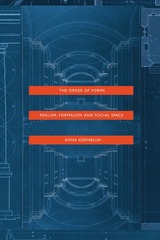
Kornbluh offers a powerful argument that political formalism, by valuing forms of sociability like the city and the state in and of themselves, provides a better understanding of literary form and its political possibilities than approaches that view form as a constraint. To make this argument, she takes up the case of literary realism, showing how novels by Dickens, Brontë, Hardy, and Carroll engage mathematical formalism as part of their political imagining. Realism, she shows, is best understood as an exercise in social modeling—more like formalist mathematics than social documentation. By modeling society, the realist novel focuses on what it considers the most elementary features of social relations and generates unique political insights. Proposing both this new theory of realism and the idea of political formalism, this inspired, eye-opening book will have far-reaching implications in literary studies.
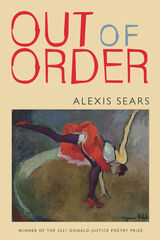
Alexis Sears’s debut collection, Out of Order, is a collage of unapologetic intimacy, risk-taking vulnerability, and unwavering candor. A biracial millennial woman, Sears navigates the challenges of growing out of girlhood and into womanhood with its potential dangers, interrogating the male gaze, beauty standards, and confidence and identity. Pop culture references run through the collection, with rock icons David Bowie and Prince and poets like Kenneth Koch offering windows into desire and adaptation. In these poems, Sears works through heavy topics, such as loneliness, mental illness, chronic pain, the legacies of race and racism, and the aftermath of a father’s suicide. As she writes, “I’m learning something every ravishing day / and none of it is easy.”
This young poet demonstrates an uncommon mastery of craft, writing in forms including the sonnet redoublé, sestina, canzone, and villanelle. With all her linguistic skills, Sears’s work remains approachable, offering readers a striking blend of honesty, humor, anguish, joy, and surprise. Drawing influence from contemporary poets like Mark Jarman, Erica Dawson, and Tiana Clark, Sears cuts a path of her own.
Out of Order was the 2021 winner of the Donald Justice Poetry Prize.

Alexis Sears’s debut collection, Out of Order, is a collage of unapologetic intimacy, risk-taking vulnerability, and unwavering candor. A biracial millennial woman, Sears navigates the challenges of growing out of girlhood and into womanhood with its potential dangers, interrogating the male gaze, beauty standards, and confidence and identity. Pop culture references run through the collection, with rock icons David Bowie and Prince and poets like Kenneth Koch offering windows into desire and adaptation. In these poems, Sears works through heavy topics, such as loneliness, mental illness, chronic pain, the legacies of race and racism, and the aftermath of a father’s suicide. As she writes, “I’m learning something every ravishing day / and none of it is easy.”
This young poet demonstrates an uncommon mastery of craft, writing in forms including the sonnet redoublé, sestina, canzone, and villanelle. With all her linguistic skills, Sears’s work remains approachable, offering readers a striking blend of honesty, humor, anguish, joy, and surprise. Drawing influence from contemporary poets like Mark Jarman, Erica Dawson, and Tiana Clark, Sears cuts a path of her own.
Out of Order was the 2021 winner of the Donald Justice Poetry Prize.
Gregory examines a broad range of Augustine’s texts and their reception in different disciplines and identifies two classical themes which have analogues in secular political theory: love—and related notions of care, solidarity, and sympathy—and sin—as well as related notions of cruelty, evil, and narrow self-interest. From an Augustinian point of view, Gregory argues, love and sin constrain each other in ways that yield a distinctive vision of the limits and possibilities of politics.
In providing a constructive argument for Christian participation in liberal democratic societies, Gregory advances efforts to revive a political theology in which love’s relation to justice is prominent. Politics and the Order of Love will provoke new conversations for those interested in Christian ethics, moral psychology, and the role of religion in a liberal society.
At the end of the twentieth century, many fear that the bonds holding civil society together have come undone. Yet, as the noted scholar Dennis Wrong shows us, our generation is not alone in fearing a breakdown of social ties and a descent into violent conflict. Modern masters such as Hobbes, Rousseau, Freud, Mead, Parsons, Marx, Durkheim, and Weber tried to understand what in human nature provokes social cooperation and solidarity and what arouses conflict and chaos.
To minimize discord and promote civility, society must grasp the psychological and sociological elements of human nature involved in attaining that end. The author affords an illuminating perspective on our own efforts to create a well-functioning system that allows for productive and meaningful lives and remains open to change and growth. This important book reveals the individual and social processes that offer potential for reconciliation in the present and the future.
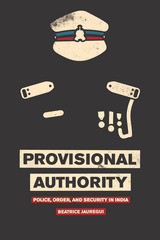
Jauregui explores the paradoxical demands placed on Indian police, who are at once routinely charged with abuses of authority at the same time that they are asked to extend that authority into any number of both official and unofficial tasks. Her ethnography of their everyday life and work demonstrates that police authority is provisional in several senses: shifting across time and space, subject to the availability and movement of resources, and dependent upon shared moral codes and relentless instrumental demands. In the end, she shows that police authority in India is not simply a vulgar manifestation of raw power or the violence of law but, rather, a contingent and volatile social resource relied upon in different ways to help realize human needs and desires in a pluralistic, postcolonial democracy.
Provocative and compelling, Provisional Authority provides a rare and disquieting look inside the world of police in India, and shines critical light on an institution fraught with moral, legal and political contradictions.

In another story, the LDS prophet is drawn to s simpler time when he could wander out unnoticed and buy a candy bar. Church Security won’t let him outside on his own and Public Relations won’t let him wear anything but a suit and tie. Still, the impulse to be a regular guy for an afternoon is compelling. Can’t he make his own decisions? He can, but what are the consequences?
And then there’s Jerry, who passes three men in suits who are talking and laughing at the loading dock behind an LDS temple. One of them looks up, drops a cigarette and crushes it, then slips into a nearby car. Another man—someone who has made Jerry’s life miserable—taunts him, saying: “Jerry, your goodness is your enemy …and tell all your friends.” Who is responsible? Maybe it’s the author’s reverie that’s to blame, but his stories have a way of getting deep inside the psyche and haunting us.
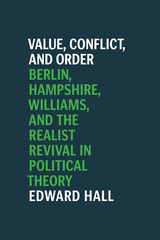
Is the purpose of political philosophy to articulate the moral values that political regimes would realize in a virtually perfect world and show what that implies for the way we should behave toward one another? That model of political philosophy, driven by an effort to draw a picture of an ideal political society, is familiar from the approach of John Rawls and others. Or is political philosophy more useful if it takes the world as it is, acknowledging the existence of various morally non-ideal political realities, and asks how people can live together nonetheless?
The latter approach is advocated by “realist” thinkers in contemporary political philosophy. In Value, Conflict, and Order, Edward Hall builds on the work of Isaiah Berlin, Stuart Hampshire, and Bernard Williams in order to establish a political realist’s theory of politics for the twenty-first century. The realist approach, Hall argues, helps us make sense of the nature of moral and political conflict, the ethics of compromising with adversaries and opponents, and the character of political legitimacy. In an era when democratic political systems all over the world are riven by conflict over values and interests, Hall’s conception is bracing and timely.
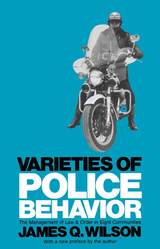
The patrolman has the most difficult, complex, and least understood task in the police department. Much less is known of him than of his better publicized colleague, the detective. In this important and timely book, James Q. Wilson describes the patrolman and the problems he faces that arise out of constraints imposed by law, politics, public opinion, and the expectations of superiors.
The study considers how the uniformed officer in eight communities deals with such common offenses as assault, theft, drunkenness, vice, traffic, and disorderly conduct. Six of the communities are in New York State: Albany, Amsterdam, Brighton, Nassau County, Newburgh, and Syracuse. The others are Highland Park, Illinois, and Oakland, California.
Enforcing laws dealing with common offenses is especially difficult because it raises the question of administrative discretion. Murder, in the eyes of the police, is unambiguously wrong, and murderers are accordingly arrested; but in cases such as street-corner scuffles or speeding motorists, the patrolman must decide whether to intervene (should the scuffle be stopped? should the motorist be pulled over?) and, if he does, just how to intervene (by arrest? a warning? an interrogation?). In most large organizations, the lowest-ranking members perform the more routinized tasks and the means of accomplishing these tasks are decided by superiors, but in a police department the lowest-ranking officer—the patrolman—is almost solely responsible for enforcing those laws which are the least precise, the most ambiguous. Three ways or “styles” of policing—the watchman, the legalistic, and the service styles—are analyzed and their relation to local politics is explored.
In the final chapter, Mr. Wilson discusses if and how the patrolman’s behavior can be changed and examines some current proposals for reorganizing police departments. He observes that the ability of the patrolman to do his job well may determine our success in managing social conflict and our prospects for maintaining a proper balance between liberty and order.

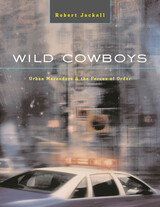
Four bullet-torn bodies in a drug-ridden South Bronx alley. A college boy shot in the head on the West Side Highway. A wild shootout on the streets of Washington Heights, home of New York City's immigrant Dominican community and hub of the eastern seaboard's drug trade. All seemingly separate acts of violence. But investigators discover a pattern to the mayhem, with links to scores of assaults and murders throughout the city.
In this bloody urban saga, Robert Jackall recounts how street cops, detectives, and prosecutors pieced together a puzzle-like story of narcotics trafficking, money laundering, and murders for hire, all centered on a vicious gang of Dominican youths known as the Wild Cowboys. These boyhood friends, operators of a lucrative crack business in the Bronx, routinely pistol-whipped their workers, murdered rivals, shot or slashed witnesses to their crimes, and eventually turned on one another in a deadly civil war. Jackall chronicles the crime-scene investigations, frantic car chases, street arrests at gunpoint, interviews with informants, and knuckle-breaking plea bargaining that culminated in prison terms for more than forty gang members.
But he also tells a cautionary tale--one of a society with irreconcilable differences, fraught with self-doubt and moral ambivalence, where the institutional logics of law and bureaucracy often have perverse outcomes. A society where the forces of order battle not just violent criminals but elites seemingly aligned with forces of disorder: community activists who grab any pretext to further narrow causes; intellectuals who romanticize criminals; judges who refuse to lock up dangerous men; federal prosecutors who relish nailing cops more than crooks; and politicians who pander to the worst of our society behind rhetorics of social justice and moral probity. In such an up-for-grabs world, whose order will prevail?
READERS
Browse our collection.
PUBLISHERS
See BiblioVault's publisher services.
STUDENT SERVICES
Files for college accessibility offices.
RECENTLY PUBLISHED



UChicago Accessibility Resources
home | accessibility | search | about | contact us
BiblioVault ® 2001 - 2024
The University of Chicago Press