
 A SCHOLARLY BOOK REPOSITORY
16 start with A start with A
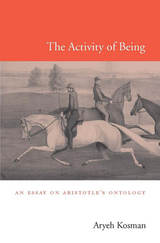
Understanding “what something is” is a project that has long occupied philosophers. Perhaps no thinker in the Western tradition has had more influence on how we approach this question than Aristotle, whose Metaphysics remains the locus classicus of rigorous examinations into the nature of being. Now, in an elegantly argued new study, Aryeh Kosman reinterprets Aristotle’s ontology and compels us to reexamine some of our most basic assumptions about the great philosopher’s thought.
For Aristotle, to ask “what something is” is to inquire into a specific mode of its being, something ordinarily regarded as its “substance.” But to understand substance, we need the concept of energeia—a Greek term usually translated as “actuality.” In a move of far-reaching consequence, Kosman explains that the correct translation of energeia is not “actuality” but “activity.” We have subtly misunderstood the Metaphysics on this crucial point, says Kosman. Aristotle conceives of substance as a kind of dynamic activity, not some inert quality. Substance is something actively being what it is.
Kosman demonstrates how this insight significantly alters our understanding of a number of important concepts in Aristotelian thought, from accounts of motion, consciousness, and essence to explanations of the nature of animal and divine being. Whether it is approached as an in-depth introduction to Aristotle’s metaphysics or as a highly original reassessment sure to spark debate, there can be no argument that The Activity of Being is a major contribution to our understanding of one of philosophy’s most important thinkers.
In After Parmenides, Tom Rockmore takes us all the way back to the beginning of Western philosophy, when Parmenides asserted that thought and being are the same. This idea created a division between what the mind constructs as knowable entities and the idea that there is also a mind-independent real, which we can know or fail to know. Rockmore argues that we need to give up on the idea of knowing the real as it is, and instead focus on the objects of cognition that our mind constructs. Though we cannot know mind-independent objects as they “really” are, we can and do know objects as they appear to us.
After Parmenides charts the continual engagement with these ideas of the real and the knowable throughout philosophical history from Plato and Aristotle to Descartes, Kant, Fichte, Hegel, Schopenhauer, Marx, and others. This ambitious book shows how new connections can be made in the history of philosophy when it is reread through a new lens.
Interest in German Idealism--not just Kant, but Fichte and Hegel as well--has recently developed within analytic philosophy, which traditionally defined itself in opposition to the Idealist tradition. Yet one obstacle remains especially intractable: the Idealists' longstanding claim that philosophy must be systematic. In this work, the first overview of the German Idealism that is both conceptual and methodological, Paul W. Franks offers a philosophical reconstruction that is true to the movement's own times and resources and, at the same time, deeply relevant to contemporary thought.
At the center of the book are some neglected but critical questions about German Idealism: Why do Fichte, Schelling, and Hegel think that philosophy's main task is the construction of a system? Why do they think that every part of this system must derive from a single, immanent and absolute principle? Why, in short, must it be all or nothing? Through close examination of the major Idealists as well as the overlooked figures who influenced their reading of Kant, Franks explores the common ground and divergences between the philosophical problems that motivated Kant and those that, in turn, motivated the Idealists. The result is a characterization of German Idealism that reveals its sources as well as its pertinence--and its challenge--to contemporary philosophical naturalism.
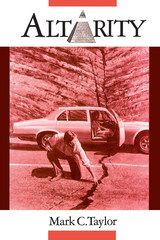
In Altarity, Taylor develops a genealogy of otherness and difference that is based on the principle of creative juxtaposition. Rather than relying on a historical or chronological survey of crucial moments in modern philosophical thinking, he explores the complex question of difference through the strategies of contrast, resonance, and design. Taylor brings together the work of thinkers as diverse as Hegel, Heidegger, Merleau-Ponty, Lacan, Bataille, Kristeva, Levinas, Blanchot, Derrida, and Kierkegaard to fashion a broad intellectual scheme.
Situated in an interdisciplinary discourse, Altarity signifies a harnessing of continental and American habits of intellectual thought and illustrates the singularity that emerges from such a configuration. As such, the book functions as a mirror of our intellectual moment and offers the academy a rigorous way of acknowledging the limitations of its own interpretive practices.

By synthesizing Kayser's and Bakhtin's views of the grotesque and Heidegger's philosophy of Being, American Fiction and the Metaphysics of the Grotesque seeks to demonstrate that American fiction from Poe to Pynchon has tried to convey the existential dimension: the pre-individual totality or flow of life, which defines itself against the mind and its linguistic capacity. Dieter Meindl shows how the grotesque, through its self-contradictory nature, has been instrumental in expressing this reality-conception, an antirationalist stance in basic agreement with existential thought. The historical validity of this new metaphysics, which grants precedence to Being--the context of cognition--over the cognizant subject, must be upheld in the face of deconstructive animadversions upon any metaphysics of presence. The notion of decentering the subject, Meindl argues, did not originate with deconstruction.
The existential grotesque confirms the protomodernist character of classic American fiction. Meindl traces its course through a number of well-known texts by Melville, James, Gilman, Anderson, Faulkner, and O'Connor, among others. To convey life conceived as motion, these writers had to capture--that is, immobilize--it in their art: an essentially distortive and, therefore, grotesque device. Melville's "Bartleby," dealing with a mort vivant, is the seminal text in this mode of indirectness. As opposed to the existential grotesque, which grants access to a preverbal realm, the linguistic grotesque of postmodern fiction works on the assumption that all reality is referable to language in a textual universe.
American Fiction and the Metaphysics of the Grotesque will significantly alter our understanding of certain traditions in American literature.
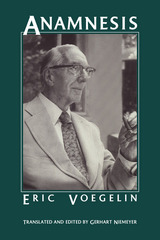
Anamnesis pulls together those materials that focus most sharply upon the development of Eric Voegelin's philosophy of consciousness. Voegelin is considered one of the most influential and profound philosophers of our time and has had an enormous impact on contemporary intellectual life.
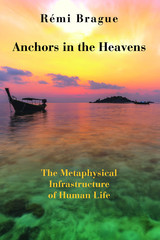
Our own world is more like this scenario than we at first may be inclined to admit, not least in the fact that, mutatis mutandis, we seem to be struggling to come up with a good answer. The problem, says Rémi Brague, is fundamentally a metaphysical one. Now, mention of ‘metaphysics’ in decent society these days is likely to elicit a smile or an unimpressed shrug. If there is a shelf with that label on it in your typical bookstore you are as likely to find guides to crystals, chakras, or hemp care there as you are treatises by Aristotle, Aquinas, or Kant. And, in spite of the ongoing revival of academic interest in metaphysics, it remains a rather specialist domain, a marginal sub-discipline in departments of philosophy, be they analytical or continental in cast. If you should take it too seriously, you’ll lose your bearings in the real world, and you’ll go adrift in some ethereal sea of dreams.
It is, in a word, irrelevant – right?
Wrong, Brague writes. Sustained reflection on the nature of being, undertaken in the hope that something can indeed be said about it, was for millennia considered to be among the most important of intellectual pursuits, and not without reason. With his characteristic combination of erudition and wit, Brague takes us on a sweeping tour of the discipline’s varying fortunes, from its early Athenian practitioners through its Jewish, Muslim, and Christian heirs, to the chorus of critics who in the last few centuries succeeded in putting an end to its dominance.
But the questions that metaphysics was asking, Brague shows, did not disappear with its demise, and so, whether implicitly or explicitly, metaphysics itself has resisted relegation to the history books. For the nature of being, and especially our relationship to it, has continued to haunt its triumphant critics. One quintessentially metaphysical claim above all, as Brague suggests, seems to have horrified them: the doctrine that all that is, insofar as it is, is good. And yet, in rejecting the “convertibility” of the “transcendentals” of being and goodness, critics of the old metaphysics – Voltaire, Kant, Schopenhauer, Nietzsche, Heidegger, Carnap, and Levinas among them – in their own ways offered metaphysical counter-claims, even as they turned increasingly anthropological in their interests.
They also raised the stakes. For, whether the denial of the goodness of being can legitimately be attributed some causal responsibility for a world in which our species could rapidly and deliberately ensure its own extinction, this is the world we live in, and that denial does form the basis of the intellectual background from which we tend to begin our speculations. If we need to be able to articulate reasons for our project not to end, then we also need to rethink the rejection that we have come to take for granted.
What Brague offers us here is not a narrative of decline, not a Jeremiad, not a nostalgic lament for the thought-world of a bygone era, but a sympathetic outline of some of the major tensions in the philosophical underpinnings of the modernity that we all inhabit. As such, it forms a part of his ongoing effort take modernity “more seriously than it takes itself”, to expose its hidden foundations, and to push it to its logical conclusions. In so doing, he hopes to help clarify where it is that we are going as a species, and to ensure that wherever it is, there is room for us humans in it.

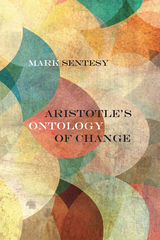
Aristotle may be the only thinker to propose a noncircular definition of change. With his landmark argument that change did, in fact, exist, Aristotle challenged established assumptions about what it is and developed a set of conceptual frameworks that continue to provide insight into the nature of reality. This groundbreaking work on change, however, has long been interpreted through a Platonist view of change as unreal. By offering a comprehensive reexamination of Aristotle’s pivotal arguments, and establishing his positive ontological conception of change, Sentesy makes a significant contribution to scholarship on Aristotle, ancient philosophy, the history and philosophy of science, and metaphysics.
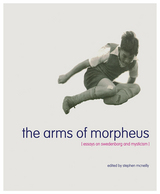
This volume, the fifth in the Journal of the Swedenborg Society series, contains the following seven essays:
• Czeslaw Milosz, “Swedenborg the Mystic”
• Ariel Hessayon, “Jacob Boehme, Swedenborg and Their Readers”
• Gary Lachman, “Swedenborg, Rudolf Steiner and the Hypnagogic State”
• Richard Lines, “The Feminine Mysticism of Madame Guyon”
• Reuben Bell, “Swedenborg and the Kabbalah”
• James Wilson, “Swedenborg and Paracelsus”
• José Antonio Antón-Pacheco, “Ibn ‘Arabi and Swedenborg”
Also included are a preface by Stephen McNeilly, a chronology of Swedenborg, biographies of the subjects of the essays, and an index.
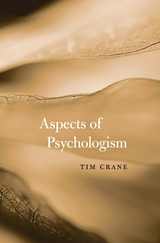
Aspects of Psychologism is a penetrating look into fundamental philosophical questions of consciousness, perception, and the experience we have of our mental lives. Psychologism, in Tim Crane's formulation, presents the mind as a single subject-matter to be investigated not only empirically and conceptually but also phenomenologically: through the systematic examination of consciousness and thought from the subject's point of view.
How should we think about the mind? Analytical philosophy tends to address this question by examining the language we use to talk about our minds, and thus translates our knowledge of mind and consciousness into knowledge of the concepts which this language embodies. Psychologism rejects this approach. The philosophy of mind, Crane believes, has become too narrow in its purely conceptual focus on the logical and linguistic formulas that structure thought. We cannot assume that the categories needed to understand the mind correspond absolutely with such semantic categories. A central claim of Crane's psychologism is that intentionality--the "aboutness" or "directedness" of the mind--is essential to all mental phenomena. In addition, Crane responds to proponents of materialist doctrines about consciousness and defends the claim that perception can represent the world in a non-conceptual, non-propositional way.
Philosophers must take more seriously the findings of psychology and phenomenology, Crane contends. An investigation of mental phenomena from this broader viewpoint opens up philosophy to a more realistic and plausible account of the mind's nature.
READERS
Browse our collection.
PUBLISHERS
See BiblioVault's publisher services.
STUDENT SERVICES
Files for college accessibility offices.
RECENTLY PUBLISHED



UChicago Accessibility Resources
home | accessibility | search | about | contact us
BiblioVault ® 2001 - 2024
The University of Chicago Press