 A SCHOLARLY BOOK REPOSITORY
Winner of the Ray Allen Billington Prize
Winner of the Ellis W. Hawley Prize
Winner of the Sally and Ken Owens Award
Winner of the Vincent P. DeSantis Book Prize
Winner of the Caroline Bancroft History Prize
“A powerful argument about racial violence that could not be more timely.”
—Richard White
“A riveting, beautifully written account…that foregrounds Chinese voices and experiences. A timely and important contribution to our understanding of immigration and the border.”
—Karl Jacoby, author of Shadows at Dawn
In 1885, following the massacre of Chinese miners in Wyoming Territory, communities throughout California and the Pacific Northwest harassed, assaulted, and expelled thousands of Chinese immigrants. The Chinese Must Go shows how American immigration policies incited this violence, and how this gave rise to the concept of the “alien” in America.
Our story begins in the 1850s, before federal border control established strict divisions between citizens and aliens—and long before Congress passed the Chinese Restriction Act, the nation’s first attempt to bar immigration based on race and class. When this unprecedented experiment failed to slow Chinese migration, armed vigilante groups took the matter into their own hands. Fearing the spread of mob violence, policymakers redoubled their efforts to seal the borders, overhauling immigration law and transforming America’s relationship with China in the process. By tracing the idea of the alien back to this violent era, Lew-Williams offers a troubling new origin story of today’s racialized border.
“The Chinese Must Go shows how a country that was moving, in a piecemeal and halting fashion, toward an expansion of citizenship for formerly enslaved people and Native Americans, came to deny other classes of people the right to naturalize altogether…The stories of racist violence and community shunning are brutal to read.”
—Rebecca Onion, Slate

A revelatory history of the laws that conditioned the everyday lives of Chinese people in the American West—and of those who negotiated, circumvented, and resisted discrimination.
Legal discrimination against Chinese people in the United States began in 1852, when California passed a tax on foreign gold miners that was explicitly designed to exploit Chinese labor. Over the next seventy years, officials in California, Oregon, Washington, and other western states instituted more than five thousand laws that marginalized and controlled their Chinese residents. Long before the Chinese Exclusion Act banned Chinese immigration, these laws constrained the activities and opportunities of Chinese people already living in the United States.
In this eye-opening account, Beth Lew-Williams describes a legal architecture redolent of Jim Crow but tailored specifically to people often referred to only as “John Doe Chinaman” or “Mary Chinaman” in official records. Enforced by police and tax collectors, but also by schoolteachers, missionaries, and neighbors, these laws granted the Chinese only limited access to American society, falling far short of equality or belonging. Cementing stereotypes of Chinese residents as criminals, invaders, and predators, they regulated everything from healthcare to education, property ownership, business formation, and kinship customs. Yet in the face of these limitations, Chinese communities reacted resourcefully. Many fought, evaded, and manipulated these laws, finding ways to maintain their prohibited traditions, resist unfair treatment in court, and insist on their political rights.
Drawing on dozens of archives across the US West, John Doe Chinaman reveals the depth of anti-Chinese discrimination beyond federal exclusion and tells the stories of those who refused to accept a conditional place in American life.
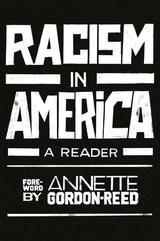
Racism in America has been the subject of serious scholarship for decades. At Harvard University Press, we’ve had the honor of publishing some of the most influential books on the subject. The excerpts in this volume—culled from works of history, law, sociology, medicine, economics, critical theory, philosophy, art, and literature—are an invitation to understand anti-Black racism through the eyes of our most incisive commentators.
Readers will find such classic selections as Toni Morrison’s description of the Africanist presence in the White American literary imagination, Walter Johnson’s depiction of the nation’s largest slave market, and Stuart Hall’s theorization of the relationship between race and nationhood. More recent voices include Khalil Gibran Muhammad on the pernicious myth of Black criminality, Elizabeth Hinton on the link between mass incarceration and 1960s social welfare programs, Anthony Abraham Jack on how elite institutions continue to fail first-generation college students, Mehrsa Baradaran on the racial wealth gap, Nicole Fleetwood on carceral art, and Joshua Bennett on the anti-Black bias implicit in how we talk about animals and the environment.
Because the experiences of non-White people are integral to the history of racism and often bound up in the story of Black Americans, we have included writers who focus on the struggles of Native Americans, Latinos, and Asians as well. Racism in America is for all curious readers, teachers, and students who wish to discover for themselves the complex and rewarding intellectual work that has sustained our national conversation on race and will continue to guide us in future years.
READERS
Browse our collection.
PUBLISHERS
See BiblioVault's publisher services.
STUDENT SERVICES
Files for college accessibility offices.
RECENTLY PUBLISHED



UChicago Accessibility Resources
home | accessibility | search | about | contact us
BiblioVault ® 2001 - 2025
The University of Chicago Press