
 A SCHOLARLY BOOK REPOSITORY
Although legislative studies is thriving, it suffers from one glaring weakness: a lack of truly comparative, cross-institutional research. Instead, research focuses overwhelmingly on the U.S. Congress. This unfortunate fixation limits the way scholars approach the testing of many compelling theories of legislative organization and behavior, and it ignores the invaluable research possibilities that comparison with the 99 American state legislative chambers offers.
State legislatures are easily compared to Congress: They arise out of the same political culture and history. Their members represent the same parties and face the same voters in the same elections using the same rules. And the functions and roles are the same, with each fully capable of initiating, debating, and passing legislation. None of the methodological problems found when comparing presidential system legislatures with parliamentary system legislatures arise when comparing Congress and the state legislatures.
However, while there are great similarities, there are also important differences that provide scholars leverage for rigorously testing theories. The book compares and contrasts Congress and the state legislatures on histories, fundamental structures, institutional and organizational characteristics, and members. By highlighting the vast array of organizational schemes and behavioral patterns evidenced in state legislatures, the authors demonstrate that the potential for the study of American legislatures, as opposed to the separate efforts of Congressional and state legislative scholars, is too great to leave unexplored.
Legislative member organizations (LMOs)—such as caucuses in the U.S. Congress and intergroups in the European Parliament—exist in lawmaking bodies around the world. Unlike parties and committees, LMOs play no obvious, predefined role in the legislative process. They provide legislators with opportunities to establish social networks with colleagues who share common interests. In turn, such networks offer valuable opportunities for the efficient exchange of policy-relevant—and sometimes otherwise unattainable—information between legislative offices. Building on classic insights from the study of social networks, the authors provide a comparative overview of LMOs across advanced, liberal democracies. In two nuanced case studies of LMOs in the European Parliament and the U.S. Congress, the authors rely on a mix of social network analysis, sophisticated statistical methods, and careful qualitative analysis of a large number of in-depth interviews.
Coalition Government, Subnational Style examines parliamentary democracy in subnational legislative assemblies. Comparing three different European democracies—Germany, France, and Belgium—William M. Downs provides a powerful account of the ways politicians and political parties negotiate the composition of new governments following elections in which no single party wins a clear majority.
Downs argues that postelection alliance building is a window onto many of the political processes fundamental to representative democracy: the interpretations of electoral verdicts; the compromises of campaign pledges; the trade-offs between policy and power; the temporary cooperation between long-term adversaries; the collective decision making; and the blurring of lines of accountability through collective responsibility.
The study reports findings from an unprecedented collection of information, including cross-national survey responses, interviews with political elites, and three decades of postelection studies of coalition building in the German state parliaments, the French regional assemblies, and the Belgian provincial councils and regional parliaments. Coalition Government, Subnational Style conclusively demonstrates that the struggles for government status at subnational levels are profoundly important to both parties and voters and that the outcomes of these struggles can result in governments of varying political complexions. Downs's findings question key assumptions of democratic theory and raise important concerns about individual and organizational behavior in changing institutional and electoral environments, ultimately allowing for a deeper understanding of representation, power, and cooperation outside the more familiar arena of national parliamentary politics.
He finds that because party leaders have more control over the legislative agenda, committees have spent more of their time conducting oversight instead. Partisanship alone does not explain this trend; changes in institutional rules and practices that empowered party leaders have created more uncertainty for committees and contributed to a shift in their policy activities. The shift toward oversight at the committee level combined with party leader control over the voting agenda means that many members of Congress are effectively cut out of many of the institution’s policy decisions. At a time when many, including Congress itself, are considering changes to modernize the institution and keep up with a stronger executive branch, the findings here suggest that strengthening Congress will require more than running different candidates or providing additional resources.
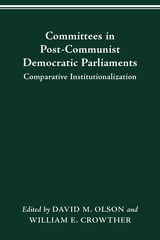
The former Communist countries of Eastern Europe provide a treasure-trove of data on the development of democratic institutions. The contributors to this volume use the recent experiences of these countries to identify how the various committee systems are structured and tie the relative strength of the committee system in each country to the relative strength of its legislature. A uniform theoretical framework connects the work of each essay and ties the parts into an informative whole.
Comparative analysis based on seven indicators of institutionalization suggests that the committee systems of Hungary, Poland, and the Czech Republic are more institutionalized than those found elsewhere. Bulgaria is a middle case, while the parliaments of Moldova, Lithuania, and Estonia are the least. Of the indicators, stability in committee membership and extent of committee activity are among the most important for post-communist parliaments in their first decade.
This examination of legislative committees in their beginning stages suggests that the processes of institutionalization are sequenced: expertise in a policy sector is the basis of both the assertion of jurisdictional autonomy by committees and the motive for party control of their membership and officer positions. Basic to these developments, however, is the emergence of a stable and consistent structure of the committee system as a whole. More broadly, committee attributes are closely linked to the condition and functioning of both parliamentary party groups and the government.

In a unique blend of political, intellectual, and cultural history, Brian Vick explores the world of German nationalism during the first half of the nineteenth century. Vick first presents an original investigation of German conceptions of nationhood in these decades before moving on to analyze the efforts of deputies at the Frankfurt Constituent National Assembly to construct a German national state based on the ethnically diverse German Confederation. He examines debates over fundamental issues that included citizenship qualifications, minority linguistic rights, Jewish emancipation, and territorial disputes, and offers valuable insights into nineteenth-century liberal opinion on the Jewish Question, language policy, and ideas of race.
Contrary to the often invoked dichotomy between cultural and political types of nationalism, in which the German case is usually seen as prototypical of the xenophobic, exclusionary cultural form, this study reveals how German nationalists at Frankfurt interwove cultural and political strands of the national ideal so finely as to sanction equal citizenship status in the proposed state for both the German-Jewish minority and the non-German-speaking nationalities within its boundaries. Yet deputies also contentiously defined Germany's borders so as to incorporate the latter, often unwilling groups, thereby hoping to dominate them both culturally and politically. Conflict was thus as much a part of this "culture of nationhood" as inclusion.
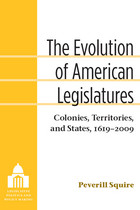
The institutional development of American legislatures, beginning with the first colonial assembly of 1619, has been marked by continuity as well as change. Peverill Squire draws upon a wealth of primary sources to document this institutional history. Beginning with the ways in which colonial assemblies followed the precedents of British institutions, Squire traces the fundamental ways they evolved to become distinct. He next charts the formation of the first state legislatures and the Constitutional Congress, describes the creation of territorial and new state legislatures, and examines the institutionalization of state legislatures in the nineteenth century and their professionalization since 1900.
With his conclusion, Squire discusses the historical trajectory of American legislatures and suggests how they might further develop over the coming decades. While Squire's approach will appeal to historians, his focus on the evolution of rules, procedures, and standing committee systems, as well as member salaries, legislative sessions, staff, and facilities, will be valuable to political scientists and legislative scholars.
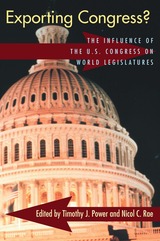
The United States Congress is often viewed as the world's most powerful national legislature. To what extent does it serve as a model for other legislative assemblies around the globe? In Exporting Congress? distinguished scholars of comparative legislatures analyze how Congress has influenced elected assemblies in both advanced and transitional democracies. They reveal the barriers to legislative diffusion, the conditions that favor Congress as a model, and the rival institutional influences on legislative development around the world.
Exporting Congress? examines the conditions for the diffusion, selective imitation, and contingent utility of congressional institutions and practices in Canada, the United Kingdom, Germany, the European Parliament, and the new democracies in Latin America and Eastern Europe. These scholars find that diffusion is highly sensitive to history, geography, and other contextual factors, especially the structure of political institutions and the balance of power between the executive and legislative branches. Editors Timothy Power and Nicol Rae place the volume's empirical findings in theoretical, comparative, and historical perspective, and establish a dialogue between the separate subfields of congressional studies and comparative legislatures through the concept of legislative diffusion.
Lawmaking provides many opportunities for proposals to be altered, amended, tabled, or stopped completely. The ideal legislator should assess evidence, update his or her beliefs with new information, and sometimes be willing to change course. In practice, however, lawmakers face criticism from the media, the public, and their colleagues for “flip-flopping.” Legislators may also only appear to change positions in some cases as a means of voting strategically.
This book presents a systematic examination of legislative indecision in American politics. This might occur via “waffling”—where a legislator cosponsors a bill, then votes against it at roll call. Or it might occur when a legislator votes one way on a bill, then switches her vote to the other side. In Indecision in American Legislatures, Jeffrey J. Harden and Justin H. Kirkland develop a theoretical framework to explain indecision itself, as well as the public’s attitudes toward indecision. They test their expectations with data sources from American state legislatures, the U.S. Congress, and survey questions administered to American citizens. Understanding legislative indecision from both the legislator and citizen perspectives is important for discussions about the quality of representation in American politics.
The answer? They aren’t. With Legislating in the Dark, James M. Curry reveals that the availability of information about legislation is a key tool through which Congressional leadership exercises power. Through a deft mix of legislative analysis, interviews, and participant observation, Curry shows how congresspersons—lacking the time and resources to study bills deeply themselves—are forced to rely on information and cues from their leadership. By controlling their rank-and-file’s access to information, Congressional leaders are able to emphasize or bury particular items, exploiting their information advantage to push the legislative agenda in directions that they and their party prefer.
Offering an unexpected new way of thinking about party power and influence, Legislating in the Dark will spark substantial debate in political science.
Consisting of fourteen essays, this volume incorporates major areas of legislative research, including studies of recruitment of legislators and an overview of their careers, the evolution of legislatures, and the electoral systems by which legislatures are chosen. Each contributor reviews the principal research findings and emphasizes those concepts and methods that facilitate comparative research. The book assesses the state of knowledge in regard to U.S., European, Asian, and Latin American legislatures. The introductory chapter by the editors identifies how to comparatively test research findings while taking into account data availability and questions of conceptual equivalence. Each chapter provides an extensive bibliography, making the book an excellent guide to literature on legislative research. The contributors are David T. Canon, John M. Carey, Gary W. Cox, Frantisek Formanek, John R. Hibbing, Ewa Karpowicz, Junko Kato, Sadafumi Kawato, Michael Laver, Gary F. Moncrief, Chan Wook Park, Werner J. Patzelt, Bjorn Erik Rasch, Kenneth A. Shepsle, Steven S. Smith, and Rick K. Wilson.
This book is designed for faculty and graduate students in political science and will also be of interest to members of legislative research staffs in this country and overseas, and to specialists on legislatures in history and law.
Gerhard Loewenberg is University of Iowa Foundation Distinguished Professor of Political Science. D. Roderick Kiewiet is Dean of Graduate Studies and Professor of Political Science, California Institute of Technology, Pasadena. Peverill Squire is Professor of Political Science, University of Iowa.
Parliamentary democracy is the most common regime type in the contemporary political world, but the quality of governance depends on effective parliamentary oversight and strong political parties. Denmark, Finland, Iceland, Norway, and Sweden have traditionally been strongholds of parliamentary democracy. In recent years, however, critics have suggested that new challenges such as weakened popular attachment, the advent of cartel parties, the judicialization of politics, and European integration have threatened the institutions of parliamentary democracy in the Nordic region.
This volume examines these claims and their implications. The authors find that the Nordic states have moved away from their previous resemblance to a Westminster model toward a form of parliamentary democracy with more separation-of-powers features—a Madisonian model. These features are evident both in vertical power relations (e.g., relations with the European Union) and horizontal ones (e.g., increasingly independent courts and central banks). Yet these developments are far from uniform and demonstrate that there may be different responses to the political challenges faced by contemporary Western democracies.

The editors frame the book in the theoretical questions of how institutionalized bodies accomplish change. They explain the nature of the institutionalizing process and show that as the ability for an organization to fulfill its mission changes (or as the mission itself changes), corresponding adaptation becomes necessary if the institution is to remain viable. The individual case studies amply illustrate how modifications in the governing ideology, the party, the electoral systems, or the character of membership have precipitated change at various times and in various parliaments. Parliaments in the Modern World ultimately demonstrates that it is precisely this ability to change that has kept these organizations vital, responsive, and long-lived.
Parliamentary government is generally taken to mean party government. Party cohesion and discipline are usually seen as central to the maintenance of parliamentary democracy. This overlap, between disciplined parties on the one hand and parliamentary government on the other, is often seen as so complete and so automatic that the question of party discipline is pushed to the sidelines and rarely studied. Yet, if individual legislators remain an undisciplined mob, parliaments could easily become unruly and anarchical.
How and why party discipline arises and is maintained are thus central questions of importance in legislative, and especially parliamentary, studies. Our knowledge of these topics, however, suffers from substantial gaps, especially with regard to the practice of party cohesion outside the relatively familiar Anglo-American setting.
This book marks a step toward filling some of those gaps. The collection of essays presented here provides theoretical background and comparative studies of legislatures in a wide range of settings. Well-developed democracies such as Britain, Finland, Ireland, Italy, The Netherlands, Norway, and Switzerland are covered, as are the more recent democracies of Spain and Hungary, and the unique case of the transnational European Parliament.
Mexico and the United States each have a constitution and a federal system of government. This fact has led many historians to assume that the Mexican system of government, established in the 1820s, is an imitation of the U.S. model. But it is not.
First published in Spanish in 1955 and now translated by the author and amplified with new material, this interpretation of the independence movement tells the true story of Mexico's transition from colonial status to federal state. Benson traces the Mexican government's beginning to events in Spain in 1808–1810, when provincial juntas, or deputations, were established to oppose Napoleon's French rule and govern the provinces of Spain and its New World dominions during the Spanish monarch's imprisonment.
It was the provincial deputation, not the United States federal system, that provided the model for the state legislative bodies that were eventually formed after Mexico won its independence from Spain in 1821. This finding—the result of years of painstaking archival research—strongly confirms the independence of Mexico's political development from U.S. influence. Its importance to a study of Mexican history cannot be overstated.
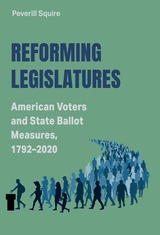
Despite the ubiquity of state legislatures, we know remarkably little about how Americans have viewed them as organizations, in terms of their structures, rules, and procedures. But with the rise of modern public opinion surveys in the twentieth century, we now have extensive data on how Americans have gauged legislative performance throughout the many years. That said, the responses to the questions pollsters typically pose reflect partisanship, policy, and personality. Generally, respondents respond favorably to legislatures controlled by their own political party and those in power during good economic times. Incumbent lawmakers get ratings boosts from having personalities, “home styles” that mesh with those of their constituents. These relationships are important indicators of people’s thoughts regarding the current performance of their legislatures and legislators, but they tell us nothing about attitudes toward the institution and its organizational characteristics.
This study offers a unique perspective on what American voters have historically thought about legislatures as organizations and legislators as representatives. Rather than focusing on responses to surveys that ask respondents how they rate the current performance of lawmakers and legislatures, this study leverages the most significant difference between national and state politics: the existence of ballot propositions in the latter. At the national level Americans have never had any say over Congress’s structure, rules, or procedures. In contrast, at the state level they have had ample opportunities over the course of more than two centuries to shape their state legislatures. The data examined here look at how people have voted on more than 1,500 state ballot propositions targeting a wide array of legislative organizational and parliamentary features. By linking the votes on these measures with the public debates preceding them, this study documents not only how American viewed various aspects of their legislatures, but also whether their opinions held constant or shifted over time. The findings reported paint a more nuanced picture of Americans’ attitudes toward legislatures than the prevailing one derived from survey research. When presented with legislative reform measures on which concrete choices were offered and decisions on them had to be made, the analyses presented here reveal that, counter to the conventional wisdom that people loved their representatives but hated the legislature, voters usually took charitable positions toward the institution while harboring skeptical attitudes about lawmakers’ motives and behaviors.
The rise of an immensely powerful federal government in the twentieth century has tended to obscure the importance of state and local government in American history. Yet government at these lesser levels had the most direct and continuous effect on the lives of ordinary citizens. Through an analysis of late-nineteenth-century state legislatures in Illinois, Iowa, and Wisconsin,Ballard Campbell has written what one expert has called "the best book on legislative politics, past or present." The period he examines was one of rapid change and great challenge. Urbanization, industrialization, and increasing national integration forced innumerable difficult and important decisions on state legislators. Campbell is sensitive to these stresses on law-making, and skillfully analyzes the interplay between personal and constituent factors that affected lawmakers.
The author differentiates clearly between local and general aspects of state policymaking, giving full consideration to its more subjective and idiosyncratic elements. His comparison of partisan, economic, urban, ethnocultural, and regional influences on legislative behavior will serve as a model for all future studies.
By closely examining the substantive dimension of the governmental process and its relation to mass politics, Representative Democracy advances "the new political history." Campbell's discussion of legislative composition and procedure, the content and context of contested issues, and responses to these issues challenges numerous stereotypes about American state legislatures.


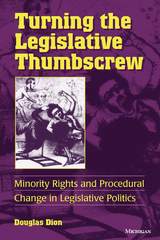
Turning the Legislative Thumbscrew is a work that combines formal analysis with extensive historical evidence to address an important problem in democratic theory. Specialists in legislative politics and American political development, as well as those more broadly interested in the relationship between democratic theory and institutional structure, will find the work of great interest.
Douglas Dion is Assistant Professor of Political Science, University of Michigan.
READERS
Browse our collection.
PUBLISHERS
See BiblioVault's publisher services.
STUDENT SERVICES
Files for college accessibility offices.
RECENTLY PUBLISHED






UChicago Accessibility Resources
home | accessibility | search | about | contact us
BiblioVault ® 2001 - 2024
The University of Chicago Press