
 A SCHOLARLY BOOK REPOSITORY
A rollicking portrait of the paradoxical patriot, whose measured pragmatism helped make American independence a reality.
Americans are surprisingly more familiar with his famous signature than with the man himself. In this spirited account of John Hancock’s life, Brooke Barbier depicts a patriot of fascinating contradictions—a child of enormous privilege who would nevertheless become a voice of the common folk; a pillar of society uncomfortable with radicalism who yet was crucial to independence. About two-fifths of the American population held neutral or ambivalent views about the Revolution, and Hancock spoke for them and to them, bringing them along.
Orphaned young, Hancock was raised by his merchant uncle, whose business and vast wealth he inherited—including household slaves, whom Hancock later freed. By his early thirties, he was one of New England’s most prominent politicians, earning a place on Britain’s most-wanted list and the derisive nickname King Hancock. While he eventually joined the revolution against England, his ever moderate—and moderating—disposition would prove an asset after 1776. Barbier shows Hancock appealing to southerners and northerners, Federalists and Anti-Federalists. He was a famously steadying force as president of the fractious Second Continental Congress. He parlayed with French military officials, strengthening a key alliance with his hospitable diplomacy. As governor of Massachusetts, Hancock convinced its delegates to vote for the federal Constitution and calmed the fallout from the shocking Shays’s Rebellion.
An insightful study of leadership in the revolutionary era, King Hancock traces a moment when passion was on the side of compromise and accommodation proved the basis of profound social and political change.
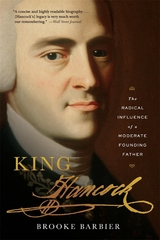
A concise and highly readable biography…[Hancock’s] legacy is very much worth our remembering. —Wall Street Journal
“King Hancock is a vastly enjoyable work of popular history that wears its impressive scholarship lightly. It deftly explains the wider forces that unraveled the colonists’ close bonds with the mother country… The book also features an almost tactile account of what it was like to live in Boston in the eighteenth century.” —New Criterion
“A terrific book. Barbier’s meticulous research sheds light on how one of the wealthiest men of his time made himself into a man of the people—a politician whose genuine capacity for sensing the popular mood commanded fierce loyalty, even as he clashed with both Loyalists and radical Patriots. John Hancock was an important figure, and this biography helps restore him to his proper place.” —Robert J. Allison, author of The American Revolution: A Very Short Introduction
In this spirited account of John Hancock’s life, Brooke Barbier depicts a patriot of fascinating contradictions: a child of privilege who became a voice of the common people, uncomfortable with radicalism yet a promoter of revolution. Hancock spoke for and to Americans ambivalent about independence, bringing them along.
The man behind the famous signature was one of New England’s most prominent politicians, earning a place on Britain’s most-wanted list and the derisive nickname King Hancock. Yet he joined the revolution cautiously, and after 1776 his ever-moderating disposition proved a frequent asset. Barbier shows Hancock appealing to southerners and northerners, Federalists and Anti-Federalists. He steadied the fractious Second Continental Congress and parlayed with the great powers of Europe. As governor of Massachusetts, Hancock convinced its delegates to back the federal Constitution and calmed the fallout from Shays’s Rebellion.
An insightful study of leadership in the revolutionary era, King Hancock traces a moment when passion was on the side of compromise and accommodation was the basis of profound social and political change.
READERS
Browse our collection.
PUBLISHERS
See BiblioVault's publisher services.
STUDENT SERVICES
Files for college accessibility offices.
RECENTLY PUBLISHED





UChicago Accessibility Resources
home | accessibility | search | about | contact us
BiblioVault ® 2001 - 2025
The University of Chicago Press