logo for Rutgers University Press
Abortion at Work
Ideology and Practice in a Feminist Clinic
Simonds, Wendy
Rutgers University Press, 1996
How do feminist identity and abortion politics intersect? Specifically, what does feminism mean to women working to feminist health care and abortion services in the late 1980s and early 1990s? What are the ideological consequences and emotional tolls of doing such work in a hostile socio-cultural environment? Can feminism and bureaucracy coexist productively? How do feminists confront the anti-feminist opposition, from anti-abortion protesters outside to racism within feminist organizations?

These are the questions that drive Wendy Simonds' Abortion at Work. Simonds documents the ways in which workers at a feminist clinic construct compelling feminist visions, and also watch their ideals fall short in practice. Simonds interprets these women's narratives to get at how abortion works on feminism, and to show what feminism can gain by rethinking abortion utilizing these activists' terms. In thoroughly engaging prose, Simonds frames her analysis with a moving account of her own personal understanding of the issues.

[more]

logo for University of Chicago Press
The Analysis of Ideology
Raymond Boudon
University of Chicago Press, 1989
Distinguished French sociologist Raymond Boudon presents here a critical theory history of the concept of ideology. His highly original and lucidly argued study addresses the core question of any account of ideology. How do individuals come to adhere to false or apparently irrational beliefs, and how do such beliefs become collectively accepted as true?

Boudon begins by providing an exhaustive and subtle critique of sociological explanations of ideology from early conceptions to its current usage in the works of Barthes, Foucault, Habermas, Sartre, and others. He then offers his own interpretation of the origins and emergence of ideological beliefs. In opposition to those views which associate ideology with irrationalism, Boudon shows that ideologies are a natural ingredient of social life; he develops a rationalist theory that helps to explain why certain ideas are believed by individuals and thereby effective in the social world. Finally, he examines case studies of two modern-day ideologies—developmentalism and Third Worldism.

Moving easily across disciplinary boundaries, Boudon's provocative contribution to a subject of growing significance will be of great interest to scholars in sociology and social theory, as well as philosophy, political science, and development studies.
[more]

logo for Georgetown University Press
The Arabic Language and National Identity
A Study in Ideology
Yasir Suleiman
Georgetown University Press, 2003

Considering the communicative and symbolic roles of language in articulating national identity, Yasir Suleiman provides a fresh perspective on nationalism in the Middle East. The links between language and nationalism are delineated and he demonstrates how this has been articulated over the past two centuries.

Straddling the domains of cultural and political nationalism, Suleiman examines the Arab past (looking at the interpretation and reinvention of tradition, and myth-making); the clash between Arab and Turkish cultural nationalism in the 19th and early 20th century; readings of canonical treatises on the topic of Arab cultural nationalism, the major ideological trends linking language to territorial nationalism; and provides a research agenda for the study of language and nationalism in the Arab context.

This the first full-scale study of this important topic and will be of interest to students of nationalism, Arab and comparative politics, Arabic Studies, history, cultural studies and sociolinguistics.

[more]

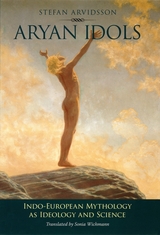
front cover of Aryan Idols
Aryan Idols
Indo-European Mythology as Ideology and Science
Stefan Arvidsson
University of Chicago Press, 2006
Critically examining the discourse of Indo-European scholarship over the past two hundred years, Aryan Idols demonstrates how the interconnected concepts of “Indo-European” and “Aryan” as ethnic categories have been shaped by, and used for, various ideologies.
Stefan Arvidsson traces the evolution of the Aryan idea through the nineteenth century—from its roots in Bible-based classifications and William Jones’s discovery of commonalities among Sanskrit, Latin, and Greek to its use by scholars in fields such as archaeology, anthropology, folklore, comparative religion, and history. Along the way, Arvidsson maps out the changing ways in which Aryans were imagined and relates such shifts to social, historical, and political processes. Considering the developments of the twentieth century, Arvidsson focuses on the adoption of Indo-European scholarship (or pseudoscholarship) by the Nazis and by Fascist Catholics.

A wide-ranging discussion of the intellectual history of the past two centuries,  Aryan Idols links the pervasive idea of the Indo-European people to major scientific, philosophical, and political developments of the times, while raising important questions about the nature of scholarship as well.
[more]

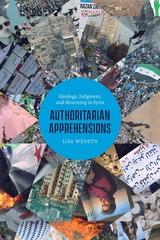
front cover of Authoritarian Apprehensions
Authoritarian Apprehensions
Ideology, Judgment, and Mourning in Syria
Lisa Wedeen
University of Chicago Press, 2019
If the Arab uprisings initially heralded the end of tyrannies and a move toward liberal democratic governments, their defeat not only marked a reversal but was of a piece with emerging forms of authoritarianism worldwide. In Authoritarian Apprehensions, Lisa Wedeen draws on her decades-long engagement with Syria to offer an erudite and compassionate analysis of this extraordinary rush of events—the revolutionary exhilaration of the initial days of unrest and then the devastating violence that shattered hopes of any quick undoing of dictatorship. Developing a fresh, insightful, and theoretically imaginative approach to both authoritarianism and conflict, Wedeen asks, What led a sizable part of the citizenry to stick by the regime through one atrocity after another? What happens to political judgment in a context of pervasive misinformation? And what might the Syrian example suggest about how authoritarian leaders exploit digital media to create uncertainty, political impasses, and fractures among their citizens?
 
Drawing on extensive fieldwork and a variety of Syrian artistic practices, Wedeen lays bare the ideological investments that sustain ambivalent attachments to established organizations of power and contribute to the ongoing challenge of pursuing political change. This masterful book is a testament to Wedeen’s deep engagement with some of the most troubling concerns of our political present and future.
[more]

front cover of Beyond the European Left
Beyond the European Left
Ideology and Political Action in the Belgian Ecology
Herbert Kitschelt and Staf Hellemans
Duke University Press, 1990
Drawing on recent research on the internal politics of the Belgian ecology parties, Agalev and Ecolo, this work demonstrates how political careers in contemporary social movements lead to activism in left-libertarian politics and influence political ideology. Beyond the European Left is the first comprehensive survey of ecology parties in Europe that presents detailed empirical information on the careers, organizational practices, and political beliefs of the activists involved.
The authors employ a new research methodology—surveying party militants—that is better adapted to the study of micropolitics than are expert interviews. Herbert Kitschelt and Staf Hallemans show that European Green party activists express an egalitarian and libertarian vision of a desirable social order that builds on, but radically transforms, ideas of the traditional socialist European left. The authors then examine the debates and disagreements among militants on political objectives and the consequences of conflicting views for party organization and strategy. Their findings illuminate the unique dynamics of left-libertarian politics in a number of Western European countries with obvious relevance to current developments in Eastern Europe.
[more]

front cover of Biology and Ideology from Descartes to Dawkins
Biology and Ideology from Descartes to Dawkins
Edited by Denis R. Alexander and Ronald L. Numbers
University of Chicago Press, 2010

Over the course of human history, the sciences, and biology in particular, have often been manipulated to cause immense human suffering. For example, biology has been used to justify eugenic programs, forced sterilization, human experimentation, and death camps—all in an attempt to support notions of racial superiority. By investigating the past, the contributors to Biology and Ideology from Descartes to Dawkins hope to better prepare us to discern ideological abuse of science when it occurs in the future.  

Denis R. Alexander and Ronald L. Numbers bring together fourteen experts to examine the varied ways science has been used and abused for nonscientific purposes from the fifteenth century to the present day. Featuring an essay on eugenics from Edward J. Larson and an examination of the progress of evolution by Michael J. Ruse, Biology and Ideology examines uses both benign and sinister, ultimately reminding us that ideological extrapolation continues today. An accessible survey, this collection will enlighten historians of science, their students, practicing scientists, and anyone interested in the relationship between science and culture.

[more]

front cover of Black Identity
Black Identity
Rhetoric, Ideology, and Nineteenth-Century Black Nationalism
Dexter B. Gordon
Southern Illinois University Press, 2006

Exploring the role of rhetoric in African American identity and political discourse

Dexter B. Gordon’s Black Identity: Rhetoric, Ideology, and Nineteenth-Century Black Nationalism explores the problem of racial alienation and the importance of rhetoric in the formation of black identity in the United States. Faced with alienation and disenfranchisement as a part of their daily experience, African Americans developed collective practices of empowerment that cohere as a constitutive rhetoric of black ideology. Exploring the origins of that rhetoric, Gordon reveals how the ideology of black nationalism functions in contemporary African American political discourse.

Rooting his study in the words and works of nineteenth-century black abolitionists such as Maria Stewart, David Walker, and Henry Garnet, Gordon explores the rapprochement between rhetorical theory, race, alienation, and the role of public memory in identity formation. He argues that abolitionists used language in their speeches, pamphlets, letters, petitions, and broadsides that established black identity in ways that would foster liberation and empowerment. The arguments presented here constitute the only sustained treatment of nineteenth-century black activists from a rhetorical perspective.

Gordon demonstrates the pivotal role of rhetoric in African American efforts to create a viable public voice. Understanding nineteenth-century black alienation—and its intersection with twentieth-century racism—is crucial to understanding the continued sense of alienation that African Americans express about their American experience. Gordon explains how the ideology of black nationalism disciplines and describes African American life for its own ends, exposing a central piece of the ideological struggle for the soul of America. The book is both a platform for further discussion and an invitation for more voices to join the discourse as we search for ways to comprehend the sense of alienation experienced and expressed by African Americans in contemporary society.

[more]

front cover of Blues, Ideology, and Afro-American Literature
Blues, Ideology, and Afro-American Literature
A Vernacular Theory
Houston A. Baker Jr.
University of Chicago Press, 1987
Relating the blues to American social and literary history and to Afro-American expressive culture, Houston A. Baker, Jr., offers the basis for a broader study of American culture at its "vernacular" level. He shows how the "blues voice" and its economic undertones are both central to the American narrative and characteristic of the Afro-American way of telling it.
[more]

front cover of The Cattell Controversy
The Cattell Controversy
Race, Science, and Ideology
William H. Tucker
University of Illinois Press, 2008
Raymond Cattell, the father of personality trait measurement, was one of the most influential psychologists in the twentieth century, the author of fifty-six books, more than five hundred journal articles and book chapters, and some thirty standardized instruments for assessing personality and intelligence in a professional career that spanned almost seventy years. In August 1997, the American Psychological Association announced that Cattell had been selected the recipient of the American Psychological Foundation Gold Medal Award for Life Achievement in Psychological Science. Then, only two days before the scheduled ceremony, the APF abruptly postponed the presentation of the award due to concerns involving Cattell's views on racial segregation and eugenics.

In addition to his mainstream research, Cattell had also authored a series of publications that posited evolutionary progress as the ultimate goal of human existence and argued that scientifically measurable criteria should be used to distinguish "successful" from "failing" racial groups so that the latter might be gradually "phased out" by non-violent methods such as regulation of birth control. Derived from science, Cattell's evolutionary philosophy was intended to be the basis of a full-blown religion. Although the earliest of these works had been published in the 1930s, near the end of an era in which eugenically based policies for human improvement were much more acceptable, Cattell promoted similar ideas well into the 1980s and '90s.

The Cattell Controversy describes Cattell's socio-religious beliefs in detail and analyzes their relationship to his scientific contributions. William H. Tucker discusses the controversy that arose within the field in response to the award's postponement, after which Cattell withdrew his name from consideration for the award but insisted that his position had been distorted by taking statements out of context. Reflecting on these events, Tucker concludes with a discussion of the complex question of whether and how a scientist's ideological views should ever be a relevant factor in determining the value of his or her contributions to the field.

[more]

front cover of China's Economic Development
China's Economic Development
The Interplay of Scarcity and Ideology
Alexander Eckstein
University of Michigan Press, 1975
China's Economic Development: The Interplay of Scarcity and Ideology by Alexander Eckstein provides a comprehensive analysis of China's economic growth and transformation from a socialist economy. Eckstein examines the unique challenges China faced in addressing its economic backwardness, such as scarcity of resources and ideological constraints, and compares its industrialization to other countries. The book explores how Maoist ideology and policy initiatives impacted the country's economic strategies, leading to a fluctuating development pattern characterized by rapid expansion in the 1950s and stagnation in the 1960s. Key themes include the dichotomy between scarcity and ideology, the influence of historical factors on economic structures, and the adaptation to Soviet models. Eckstein sheds light on how China navigated its unique size, population pressures, and low per capita income, arguing that understanding these dynamics is crucial for both development theory and policy design. This volume, part of the Michigan Studies on China series, compiles essays and research that contribute to a nuanced understanding of China's economic systems, with particular focus on the tensions between ideological aspirations and economic realities.
[more]

front cover of Cold War Rhetoric
Cold War Rhetoric
Strategy, Metaphor, and Ideology
Martin J. Medhurst
Michigan State University Press, 1997

Cold War Rhetoric is the first book in over twenty years to bring a sustained rhetorical critique to bear on central texts of the Cold War. The rhetorical texts that are the subject of this book include speeches by Presidents Eisenhower and Kennedy, the Murrow- McCarthy confrontation on CBS, the speeches and writings of peace advocates, and the recurring theme of unAmericanism as it has been expressed in various media throughout the Cold War years. Each of the authors brings to his texts a particular approach to rhetorical criticism—strategic, metaphorical, or ideological. Each provides an introductory chapter on methodology that explains the assumptions and strengths of their particular approach.

[more]

front cover of Comic Fascism
Comic Fascism
Ideology, Catholicism, and Americanism in Italian Children’s Periodicals
Zane Elward
The Ohio State University Press, 2025
Comics in Italy—produced by Fascists, conservatives, Catholics, and, after World War II, youth groups on the political left—promoted competing yet sometimes convergent visions for Italian society to children in the first half of the twentieth century. In Comic Fascism, Zane Elward dives deep into the archives to reveal how Italian comics reflected transformations within Italian society during Fascist rule (192245) and how conservative and Catholic circles were entangled with Mussolini’s agenda, normalizing and promoting it through their own periodicals. At the same time, he offers new interpretations of American comics, demonstrating that despite Italian suspicion of US culture, these comics often aligned with Fascism and were co-opted by its proponents. Elward also identifies the persistence of Fascist political ideas after the fall of the Fascist state and highlights growing tensions between the right and the left in the lead-up to the Cold War. Ultimately, Elward broadens previous temporal and cultural frames to offer fresh insights into the origins and long tail of Fascist indoctrination and how it remained at the heart of the ongoing quest to redefine Italian society.
[more]

front cover of Commentary and Ideology
Commentary and Ideology
Dante in the Renaissance
Deborah Parker
Duke University Press, 1993
Dante's Divine Comedy played a dual role in its relation to Italian Renaissance culture, actively shaping the fabric of that culture and, at the same time, being shaped by it. This productive relationship is examined in Commentary and Ideology, Deborah Parker's thorough compendium on the reception of Dante's chief work. By studying the social and historical circumstances under which commentaries on Dante were produced, the author clarifies the critical tradition of commentary and explains the ways in which this important body of material can be used in interpreting Dante's poem.
Parker begins by tracing the criticism of Dante commentaries from the nineteenth century to the present and then examines the tradition of commentary from the Middle Ages to the Renaissance. She shows how the civic, institutional, and social commitments of commentators shaped their response to the Comedy, and how commentators tried to use the poem as an authoritative source for various kinds of social legitimation. Parker discusses how different commentators dealt with a deeply political section of the poem: the damnation of Brutus and Cassius.
The scope and importance of Commentary and Ideology will command the attention of a broad group of scholars, including Italian specialists on Dante, late medievalists, students and professionals in early modern European literature, bibliographers, critical theorists, historians of literary criticism and theory, and cultural and intellectual historians.
[more]

front cover of Commoner Ritual and Ideology in Ancient Mesoamerica
Commoner Ritual and Ideology in Ancient Mesoamerica
Nancy Gonlin
University Press of Colorado, 2016
Were most commoners in ancient Mesoamerica poor? In a material sense, yes, probably so. Were they poor in their beliefs and culture? Certainly not, as Commoner Ritual and Ideology in Ancient Mesoamerica demonstrates.

This volume explores the ritual life of Mesoamerica's common citizens, inside and outside of the domestic sphere, from Formative through Postclassic periods. Building from the premise that ritual and ideological expression inhered at all levels of society in Mesoamerica, the contributors demonstrate that ideology did not emanate solely from exalted individuals and that commoner ritual expression was not limited to household contexts. Taking an empirical approach to this under-studied and under-theorized area, contributors use material evidence to discover how commoner status conditioned the expression of ideas and values.

Revealing complex social hierarchies that varied across time and region, this volume offers theoretical approaches to commoner ideology, religious practice, and sociopolitical organization and builds a framework for future study of the correlation of ritual and ideological expression with social position for Mesoamericanists and archaeologists worldwide.
[more]

front cover of The Conflict of Interpretations
The Conflict of Interpretations
Paul Ricoeur
Northwestern University Press, 1974
This collection brings together twenty-two essays by Paul Ricoeur under the topics of structuralism, psychoanalysis, hermeneutics, and religion. In dramatic conciseness, the essays illuminate the work of one of the leading philosophers of the day. Those interested in Ricoeur's development of the philosophy of language will find rich and suggestive reading. But the diversity of essays also speaks beyond the confines of philosophy to linguists, theologians, psychologists, and psychoanalysts.
[more]

front cover of The Conflict of Interpretations
The Conflict of Interpretations
Essays in Hermeneutics
Paul Ricoeur
Northwestern University Press, 2007
This collection brings together twenty-two essays by Paul Ricoeur under the topics of structuralism, psychoanalysis, hermeneutics, and religion. In dramatic conciseness, the essays illuminate the work of one of the leading philosophers of the day. Those interested in Ricoeur's development of the philosophy of language will find rich and suggestive reading. But the diversity of essays also speaks beyond the confines of philosophy to linguists, theologians, psychologists, and psychoanalysts.
[more]

front cover of Constructing Communities in Vergil's Aeneid
Constructing Communities in Vergil's Aeneid
Cultural Memory, Identity, and Ideology
Tedd A. Wimperis
University of Michigan Press, 2024
Constructing Communities in Vergil's Aeneid: Cultural Memory, Identity, and Ideology presents a new examination of memory, ethnic identity, and politics within the fictional world of this Roman epic, drawing previously unexplored connections between Vergil’s characters, settings, and narrative and the political context of the early Roman Empire. This book investigates how the Aeneid’s fictive ethnic communities—the Trojans, Carthaginians, Latins, and Arcadians who populate its poetic world—are shown to have identities, myths, and cultural memories of their own. And much like their real-life Roman counterparts, they engage in the politics of the past in such contexts as royal iconography, diplomacy, public displays, and incitements to war.

Where previous studies of identity and memory in the Aeneid have focused on the poem’s constructions of Roman identity, Constructing Communities turns the spotlight onto the characters themselves to show how the world inside the poem is replicating, as if in miniature, real forms of contemporary political and cultural discourse, reflecting an historical milieu where appeals to Roman identity were vigorously asserted in political rhetoric. The book applies this evidence to a broad literary analysis of the Aeneid, as well as a reevaluation of its engagement with Roman imperial ideology in the Age of Augustus.
[more]

front cover of Criticism in the Borderlands
Criticism in the Borderlands
Studies in Chicano Literature, Culture, and Ideology
Héctor Calderón and José David Saldívar, eds.
Duke University Press, 1991
This pathbreaking anthology of Chicano literary criticism, with essays on a remarkable range of texts—both old and new—draws on diverse perspectives in contemporary literary and cultural studies: from ethnographic to postmodernist, from Marxist to feminist, from cultural materialist to new historicist.
The editors have organized essays around four board themes: the situation of Chicano literary studies within American literary history and debates about the “canon”; representations of the Chicana/o subject; genre, ideology, and history; and the aesthetics of Chicano literature. The volume as a whole aims at generating new ways of understanding what counts as culture and “theory” and who counts as a theorist. A selected and annotated bibliography of contemporary Chicano literary criticism is also included.

By recovering neglected authors and texts and introducing readers to an emergent Chicano canon, by introducing new perspectives on American literary history, ethnicity, gender, culture, and the literary process itself, Criticism in the Borderlands is an agenda-setting collection that moves beyond previous scholarship to open up the field of Chicano literary studies and to define anew what is American literature.

Contributors. Norma Alarcón, Héctor Calderón, Angie Chabram, Barbara Harlow, Rolando Hinojosa, Luis Leal, José E. Limón, Terese McKenna, Elizabeth J. Ordóñez, Genero Padilla, Alvina E. Quintana, Renato Rosaldo, José David Saldívar, Sonia Saldívar-Hull, Rosaura Sánchez, Roberto Trujillo

[more]

front cover of The Culture of Conformism
The Culture of Conformism
Understanding Social Consent
Patrick Colm Hogan
Duke University Press, 2001
“[Hogan’s] goal is not merely to explain but to provide tools of understanding that will be of practical value to those who struggle for justice and freedom. Drawing from an impressive array of sources, his valuable study advances both ends considerably, no mean accomplishment.”—Noam Chomsky

In this wide-ranging and informative work, Patrick Colm Hogan draws on cognitive science, psychoanalysis, and social psychology to explore the cultural and psychological components of social consent. Focusing in particular on Americans’ acquiescence to a system that underpays and underrepresents the vast majority of the population, Hogan moves beyond typical studies of this phenomenon by stressing more than its political and economic dimensions.
With new insights into particularly insideous forms of consent such as those manifest in racism, sexism, and homophobia, The Culture of Conformism considers the role of emotion as it works in conjunction with belief and with the formation of group identity. Arguing that coercion is far more pervasive in democratic societies than is commonly recognized, Hogan discusses the subtle ways in which economic and social pressures operate to complement the more obviously violent forces of the police and military. Addressing issues of narcissism, self-esteem, and empathy, he also explains the concept of “rational” conformity—that is, the degree to which our social consent is based on self-interest—and explores the cognitive factors that produce and sustain social ideology.
Social activists, economic theorists, social psychologists, and political scientists will be intrigued and informed by this book.

[more]

front cover of Death, War, and Sacrifice
Death, War, and Sacrifice
Studies in Ideology & Practice
Bruce Lincoln
University of Chicago Press, 1991
One of the world's leading specialists in Indo-European
religion and society, Bruce Lincoln expresses in these essays
his severe doubts about the existence of a much-hypothesized
prototypical Indo-European religion.

Written over fifteen years, the essays—six of them
previously unpublished—fall into three parts. Part I deals
with matters "Indo-European" in a relatively unproblematized
way, exploring a set of haunting images that recur in
descriptions of the Otherworld from many cultures. While
Lincoln later rejects this methodology, these chapters remain
the best available source of data for the topics they
address.

In Part II, Lincoln takes the data for each essay from a
single culture area and shifts from the topic of dying to
that of killing. Of particular interest are the chapters
connecting sacrifice to physiology, a master discourse of
antiquity that brought the cosmos, the human body, and human
society into an ideologically charged correlation.

Part III presents Lincoln's most controversial case
against a hypothetical Indo-European protoculture.
Reconsidering the work of the prominent Indo-Europeanist
Georges Dumézil, Lincoln argues that Dumézil's writings
were informed and inflected by covert political concerns
characteristic of French fascism. This collection is an
invaluable resource for students of myth, ritual, ancient
societies, anthropology, and the history of religions.

Bruce Lincoln is professor of humanities and religious
studies at the University of Minnesota.
[more]

front cover of The Discourse of Domination
The Discourse of Domination
From the Frankfurt School to Postmodernism
Ben Agger
Northwestern University Press, 1992
The Discourse of Domination tackles nothing less than the challenge of giving critical theory a new grip on current problems, and restoring the left's faith in the possibility of enlightened social change. Agger steers a course between orthodox Marxism and orthodox anti-Marxism, bringing the concepts of ideology, dialectic, and domination out of the academy and making them into "a living medium of political self-expression."
[more]

logo for Duke University Press
Dossier
Étienne Balibar on Althusser's Dramaturgy and the Critique of Ideology
Elizabeth Weed and Ellen Rooney, special issue editors
Duke University Press

Most readers of Louis Althusser first enter his work through his writings on ideology. In an important new essay Étienne Balibar, friend and colleague of Althusser, offers an original reading of Althusser’s idea of ideology, drawing on both recently published posthumous writing and Althusser's work on the Piccolo Teatro di Milano. Balibar’s essay uncovers the intricate workings of interpellation through Althusser’s essays on the theater. If debates on dialectical materialism belong to a distant history, Balibar suggests, the question of ideology remains crucial for thinking the present.

The issue includes commentaries on Balibar’s essay from five influential scholars who engage critically with Althusser’s philosophy: Judith Butler, Banu Bargu, Adi Ophir, Warren Montag, and Bruce Robbins. This issue reanimates Althusser’s concept of ideology as an analytic tool for contemporary cultural and political critique.


[more]

logo for Intellect Books
Experimental Dining
Performance, Experience and Ideology in Contemporary Creative Restaurants
Paul Geary
Intellect Books, 2021
This book explores the creation of the dining experience as a form of multisensory performance.

Experimental Dining examines the construction of the world of restaurants and their creative methods, the experience of dining, and the broader ideological frames within which the work takes place, bringing together ideas around food, philosophy, performance and cultural politics to offer an interdisciplinary understanding of the practice and experience of creative restaurants. The author contends that the work of the experimental restaurant, while operating explicitly within an economy of experiences, is not absolutely determined by that political or economic context. Its practice has the potential to appeal to more than idle curiosity for novelty. It can be unsettling and revealing, provocative and evocative, personal and political, experimental and considered, thoughtful and sensual. Or in other words, that the food event can be art.
[more]

front cover of Fascist Virilities
Fascist Virilities
Rhetoric, Ideology, and Social Fantasy in Italy
Barbara Spackman
University of Minnesota Press, 1996

front cover of Fast Forward
Fast Forward
The Aesthetics and Ideology of Speed in Russian Avant-Garde Culture, 1910–1930
Tim Harte
University of Wisconsin Press, 2009
Life in the modernist era not only moved, it sped. As automobiles, airplanes, and high-speed industrial machinery proliferated at the turn of the twentieth century, a fascination with speed influenced artists—from Moscow to Manhattan—working in a variety of media. Russian avant-garde literary, visual, and cinematic artists were among those striving to elevate the ordinary physical concept of speed into a source of inspiration and generate new possibilities for everyday existence.
    Although modernism arrived somewhat late in Russia, the increased tempo of life at the start of the twentieth century provided Russia’s avant-garde artists with an infusion of creative dynamism and crucial momentum for revolutionary experimentation. In Fast Forward Tim Harte presents a detailed examination of the images and concepts of speed that permeated Russian modernist poetry, visual arts, and cinema. His study illustrates how a wide variety of experimental artistic tendencies of the day—such as “rayism” in poetry and painting, the effort to create a “transrational” language (zaum’) in verse, and movements seemingly as divergent as neo-primitivism and constructivism—all relied on notions of speed or dynamism to create at least part of their effects.     
    Fast Forward reveals how the Russian avant-garde’s race to establish a new artistic and social reality over a twenty-year span reflected an ambitious metaphysical vision that corresponded closely to the nation’s rapidly changing social parameters. The embrace of speed after the 1917 Revolution, however, paradoxically hastened the movement’s demise. By the late 1920s, under a variety of historical pressures, avant-garde artistic forms morphed into those more compatible with the political agenda of the Russian state. Experimentation became politically suspect and abstractionism gave way to orthodox realism, ultimately ushering in the socialist realism and aesthetic conformism of the Stalin years.
[more]

front cover of Faster, Higher, Stronger, Comrades!
Faster, Higher, Stronger, Comrades!
Sports, Art, and Ideology in Late Russian and Early Soviet Culture
Tim Harte
University of Wisconsin Press, 2020
The revival of the Olympic games in 1896 and the subsequent rise of modern athletics prompted a new, energetic movement away from more sedentary habits. In Russia, this ethos soon became a key facet of the Bolsheviks' shared vision for the future. In the aftermath of the revolution, glorification of exercise persevered, pointing the way toward a stronger, healthier populace and a vibrant Socialist society.
With interdisciplinary analysis of literature, painting, and film, Faster, Higher, Stronger, Comrades! traces how physical fitness had an even broader impact on culture and ideology in the Soviet Union than previously realized. From prerevolutionary writers and painters glorifying popular circus wrestlers to Soviet photographers capturing unprecedented athleticism as a means of satisfying their aesthetic ideals, the nation's artists embraced sports in profound, inventive ways. Though athletics were used for doctrinaire purposes, Tim Harte demonstrates that at their core, they remained playful, joyous physical activities capable of stirring imaginations and transforming everyday realities.
[more]

front cover of Feminist Theory
Feminist Theory
A Critique of Ideology
Edited by Nannerl Keohane, Michelle Z. Rosaldo, and Barbara C. Gelpi
University of Chicago Press, 1982
"A crucial task for feminst scholars," wrote Michelle Rosaldo over two years ago in Signs, "emerges, then, not as the relatively limited one of documenting pervasive sexism as a social fact–or showing how we can now hope to change or have in the past been able to survive it. Instead, it seems that we are challenged to provide new ways of linking the particulars of women's lives, activities, and goals to inequalities wherever they exist."

Feminist Theory: A Critique of Ideology meets that challenge. Collected from several issues of Signs–Journal of Women in Culture and Society, these essays explore the relationships between objectivity and masculinity, between psychology and political theory, and between family and state. In pursuing these critical explorations, the contributors–liberal, Marxist, socialist, and radical feminists–examine the foundations of power, of sexuality, of language, and of scientific thought.
[more]

front cover of Flower Worlds
Flower Worlds
Religion, Aesthetics, and Ideology in Mesoamerica and the American Southwest
Edited by Michael D. Mathiowetz and Andrew D. Turner
University of Arizona Press, 2021

The recognition of Flower Worlds is one of the most significant breakthroughs in the study of Indigenous spirituality in the Americas. These worlds are solar and floral spiritual domains that are widely shared among both pre-Hispanic and contemporary Native cultures in Mesoamerica and the American Southwest. Flower Worldsis the first volume to bring together a diverse range of scholars to create a truly multidisciplinary understanding of Flower Worlds. During the last thirty years, archaeologists, art historians, ethnologists, Indigenous scholars, and linguists have emphasized the antiquity and geographical extent of similar Flower World beliefs among ethnic and linguistic groups in the New World.

Flower Worlds are not simply ethereal, otherworldly domains, but rather they are embodied in lived experience, activated, invoked, and materialized through ritual practices, expressed in verbal and visual metaphors, and embedded in the use of material objects and ritual spaces. This comprehensive book illuminates the origins of Flower Worlds as a key aspect of religions and histories among societies in Mesoamerica and the American Southwest. It also explores the role of Flower Worlds in shaping ritual economies, politics, and cross-cultural interaction among Indigenous peoples.

Flower Worlds reaches into multisensory realms that extend back at least 2,500 years, offering many different disciplines, perspectives, and collaborations to understand these domains. Today, Flower Worlds are expressed in everyday work and lived experiences, embedded in sacred geographies, and ritually practiced both individually and in communities. This volume stresses the importance of contemporary perspectives and experiences by opening with living traditions before delving into the historical trajectories of Flower Worlds, creating a book that melds scientific and humanistic research and emphasizes Indigenous voices.

Contributors: Oswaldo Chinchilla Mazariegos, James M. Córdova, Davide Domenici, Ángel González López, Kelley Hays-Gilpin, Michael D. Mathiowetz, Cameron L. McNeil, Felipe S. Molina, Johannes Neurath, John M. D. Pohl, Alan R. Sandstrom, David Delgado Shorter, Karl A. Taube, Andrew D. Turner, Lorena Vázquez Vallín, Dorothy Washburn

[more]

front cover of Frances Burney and Narrative Prior to Ideology
Frances Burney and Narrative Prior to Ideology
Brian McCrea
University of Delaware Press, 2014

Frances Burney and Narrative Prior to Ideology works between Burney’s Journals and Letters and her fiction more thoroughly than any study of her in the past twenty-five years. By doing so, it offers significant reinterpretations of Burney’s four novels: EvelinaCeciliaCamilla, and The Wanderer. It describes Burney’s eluding the major modern–isms through which critics have tried to read her: Feminism (with its “gendering” of beauty and reversal of gender roles); Capitalism and its Marxist critique (here the details of Burney’s housekeeping become important); Professionalism (as a response to status inconsistency and class conflict); and Ian Watt’s “Formal Realism” (Burney perhaps saved the novel from a sharp decline it suffered in the 1770s, even as she tried to distance herself from the genre).

Burney’s most successful writing appeared before the coining of “ideology.” But her standing “prior to ideology” is not a matter of chronological accident. Rather, she quietly but forcefully resisted shared explanations—domesticity as model for household management, debt as basis for family finance, professional status as a means to social confidence, the novel as the dominant literary genre—that became popular during her long and eventful life.

Frederic Jameson has described Paul de Man, “in private conversation,” claiming, “Marxism . . . has no way of understanding the eighteenth century.” Frances Burney and Narrative Prior to Ideology conjoins Burney’s “eighteenth-centuryness” with her modernity.

Published by University of Delaware Press. Distributed worldwide by Rutgers University Press.
 
[more]

front cover of From Text to Action
From Text to Action
Essays in Hermeneutics, II
Paul Ricoeur, Translated from the French by Kathleen Blamey and John B. Thompson, Foreword to the new edition by Richard Kearney
Northwestern University Press, 2007
Incredible originality of thought in areas as vast as phenomenology, religion, hermeneutics, psychoanalysis, intersubjectivity, language, Marxism, and structuralism has made Paul Ricoeur one of the philosophical giants of the twentieth century. The way in which Ricoeur approaches these themes makes his works relevant to the reader today: he writes with honesty and depth of insight into the core of a problem, and his ability to mark for future thought the very path of philosophical inquiry is nearly unmatched. 

From Text to Action is an essential companion to the classic The Conflict of Interpretations. Here, Ricoeur continues and extends his project of constructing a general theory of interpretation, positioning his work in relation to its philosophical background: Hegel, Husserl, Gadamer, and Weber. He also responds to contemporary figures like K. O. Apel and Jürgen Habermas, connecting his own theorization of ideology to their critique of ideology. 

This new edition includes a foreword by Richard Kearney. It and other new editions of Ricoeur's texts published by Northwestern University Press have joined the canon of contemporary continental philosophy and continue to contribute to emergent discussions in the twenty-first century. 
[more]

front cover of From Text to Action
From Text to Action
Essays in Hermeneutics, II
Paul Ricoeur
Northwestern University Press, 1991
With his writings on phenomenology, psychoanalysis, Marxism, ideology, and religion, Paul Ricoeur has single-handedly redefined and revitalized the hermeneutic tradition. From Text to Action is an essential companion to the now classic The Conflict of Interpretations. Here, Ricoeur continues and extends his project of constructing a general theory of interpretation, positioning his work in relation to its own philosophical background: Hegel, Husserl, Gadamer, and Weber. He also responds to contemporary figures like K.O. Apel and Jürgen Habermas, connecting his own theorization of ideology to their version of ideology critique.
[more]

front cover of Genesis of The Brothers Karamazov
Genesis of The Brothers Karamazov
The Aesthetics, Ideology, and Psychology of Making a Text
Robert L. Belknap
Northwestern University Press, 1990
Robert L. Belknap is the author of The Structure of "The Brothers Karamazov," which is generally regarded as one of the best studies on Dostoevsky produced by the present generation of scholars. The Genesis of "The Brothers Karamazov" continues and complements Belknap's earlier work, tracing Dostoevsky's last, great novel to its sources and exploring the works Dostoevsky read and consciously employed in constructing it.
[more]

front cover of German Ideology
German Ideology
From France to Germany and Back
Louis Dumont
University of Chicago Press, 1995
In this comparative anthropological analysis, Louis Dumont illuminates German and French ideology, European culture, and cultural interaction. His analysis of texts by Troeltsch, Thomas Mann, Goethe, and others, against the background of previously gathered evidence and of French common notions, specify the differences—otherwise frequently but vaguely alluded to—between French and German cultures.

Anyone interested in the fate of national ideology and the concept of the individual will benefit from this radical reinterpretation of modern values and the place of modernity in history.

"What François Furet did for French history, Dumont did for anthropology, turning it away from engaged politics and towards the sober study of the modern age." —Mark Lilla, London Review of Books

"There are many fine things in Dumont's study. Beyond any doubt, his cultural anthropology of the modern spirit highlights some of the key energies of the of the last two centuries. . . . [An] impressive . . . detailed analysis." —Martin Swales, Times Higher Education Supplement

"[An] unsettling, rich, demanding, profound study." —Publishers Weekly
[more]

front cover of The Gift of Freedom
The Gift of Freedom
War, Debt, and Other Refugee Passages
Mimi Thi Nguyen
Duke University Press, 2012
In The Gift of Freedom, Mimi Thi Nguyen develops a new understanding of contemporary United States empire and its self-interested claims to provide for others the advantage of human freedom. Bringing together critiques of liberalism with postcolonial approaches to the modern cartography of progress, Nguyen proposes "the gift of freedom" as the name for those forces that avow to reverence aliveness and beauty, and to govern an enlightened humanity, while producing new subjects and actions—such as a grateful refugee, or enduring war—in an age of liberal empire. From the Cold War to the global war on terror, the United States simultaneously promises the gift of freedom through war and violence and administers the debt that follows. Focusing here on the figure of the Vietnamese refugee as the twice-over target of the gift of freedom—first through war, second through refuge—Nguyen suggests that the imposition of debt precludes the subjects of freedom from escaping those colonial histories that deemed them "unfree." To receive the gift of freedom then is to be indebted to empire, perhaps without end.
[more]

front cover of Global Maya
Global Maya
Work and Ideology in Rural Guatemala
Liliana R. Goldín
University of Arizona Press, 2009
In the central highland Maya communities of Guatemala, the demands of the global economy have become a way of life. This book explores how rural peoples experience economic and cultural change as their country joins the global market, focusing on their thoughts about work and sustenance as a way of learning about Guatemala’s changing economy.

For more than a decade, Liliana Goldín observed in highland towns both the intensification of various forms of production and their growing links to wider markets. In this first book to compare economic ideology across a range of production systems, she examines how people make a living and how they think about their options, practices, and constraints. Drawing on interviews and surveys—even retellings of traditional narratives—she reveals how contemporary Maya respond to the increasingly globalized yet locally circumscribed conditions in which they work.

Goldín presents four case studies: cottage industries devoted to garment production, vegetable growing for internal and border markets reached through direct commerce, crops grown for export, and wage labor in garment assembly factories. By comparing generational and gendered differences among workers, she reveals not only complexities of change but also how these complexities arereflected in changing attitudes, understandings, and aspirations that characterize people’s economic ideology. Further, she shows that as rural people take on diverse economic activities, they also reinterpret their views on such matters as accumulation, cooperation, competition, division of labor, and community solidarity.

Global Maya explores global processes in local terms, revealing the interplay of traditional values, household economics, and the inescapable conditions of demographic growth, a shrinking land base, and a global economy always looking for cheap labor. It offers a wealth of new insights not only for Maya scholars but also for anyone concerned with the effects of globalization on the Third World.
[more]

logo for University of Chicago Press
The Heavenly Contract
Ideology and Organization in Pre-Revolutionary Puritanism
David Zaret
University of Chicago Press, 1985
The idea of a heavenly contract, uniting God and humanity in a bargain of salvation, emerged as the keystone of Puritan theology in early modern England. Yet this concept, with its connotations of exchange and reciprocity, runs counter to other tenets of Calvinism, such as predestination, that were also central to Puritan thought. With bold analytic intelligence, David Zaret explores this puzzling conflict between covenant theology and pure Calvinism. In the process he demonstrates that popular beliefs and activities had tremendous influence on Puritan religion.
[more]

front cover of Human Capital versus Basic Income
Human Capital versus Basic Income
Ideology and Models for Anti-Poverty Programs in Latin America
Fabián A. Borges
University of Michigan Press, 2022
Latin America underwent two major transformations during the 2000s: the widespread election of left-leaning presidents (the so-called left turn) and the diffusion of conditional cash transfer programs (CCTs)—innovative social programs that award regular stipends to poor families on the condition that their children attend school. Combining cross-national quantitative research covering the entire region and in-depth case studies based on field research, Human Capital versus Basic Income: Ideology and Models for Anti-Poverty Programs in Latin America challenges the conventional wisdom that these two transformations were unrelated. In this book, author Fabián A. Borges demonstrates that this ideology greatly influenced both the adoption and design of CCTs.
 
There were two distinct models of CCTs: a “human capital” model based on means-tested targeting and strict enforcement of program conditions, exemplified by the program launched by Mexico’s right, and a more universalistic “basic income” model with more permissive enforcement of conditionality, exemplified by Brazil’s program under Lula. These two models then spread across the region. Whereas right and center governments, with assistance from international financial institutions, enacted CCTs based on the human capital model, the left, with assistance from Brazil, enacted CCTs based on the basic income model.
 
The existence of two distinct types of CCTs and their relation to ideology is supported by quantitative analyses covering the entire region and in-depth case studies based on field research in three countries. Left-wing governments operate CCTs that cover more people and spend more on those programs than their center or right-wing counterparts. Beyond coverage, a subsequent analysis of the 10 national programs adopted after Lula’s embrace of CCTs confirms that program design—evaluated in terms of scope of the target population, strictness of conditionality enforcement, and stipend structure—is shaped by government ideology. This finding is then fleshed out through case studies of the political processes that culminated in the adoption of basic income CCTs by left-wing governments in Argentina and Bolivia and a human capital CCT by a centrist president in Costa Rica.
 
[more]

front cover of Ideologies in Archaeology
Ideologies in Archaeology
Edited by Reinhard Bernbeck and Randall McGuire
University of Arizona Press, 2011
Archaeologists have often used the term ideology to vaguely refer to a “realm of ideas.” Scholars from Marx to Zizek have developed a sharper concept, arguing that ideology works by representing—or misrepresenting—power relations through concealment, enhancement, or transformation of real social relations between groups. Ideologies in Archaeology examines the role of ideology in this latter sense as it pertains to both the practice and the content of archaeological studies. While ideas like reflexive archaeology and multivocality have generated some recent interest, this book is the first work to address in any detail the mutual relationship between ideologies of the past and present ideological conditions producing archaeological knowledge.

Contributors to this volume focus on elements of life in past societies that “went without saying” and that concealed different forms of power as obvious and unquestionable. From the use of burial rites as political theater in Iron Age Germany to the intersection of economics and elite power in Mississippian mound building, the contributors uncover complex manipulations of power that have often gone unrecognized. They show that Occam’s razor—the tendency to favor simpler explanations—is sometimes just an excuse to avoid dealing with the historical world in its full complexity.

Jean-Paul Demoule’s concluding chapter echoes this sentiment and moreover brings a continental European perspective to the preceding case studies. In addition to situating this volume in a wider history of archaeological currents, Demoule identifies the institutional and cultural factors that may account for the current direction in North American archaeology. He also offers a defense of archaeology in an era of scientific relativism, which leads him to reflect on the responsibilities of archaeologists.

Includes contributions by: Susan M. Alt, Bettina Arnold, Uzi Baram, Reinhard Bernbeck, Matthew David Cochran, Jean-Paul Demoule, Kurt A. Jordan, Susan Kus, Vicente Lull, Christopher N. Matthews, Randall H. McGuire, Rafael Micó, Cristina Rihuete Herrada, Paul Mullins, Sue Novinger, Susan Pollock, Victor Raharijaona, Roberto Risch, Kathleen Sterling, Ruth M. Van Dyke, and LouAnn Wurst
[more]

logo for Pluto Press
Ideologies in the Age of Extremes
Liberalism, Conservatism, Communism, Fascism 1914-1991
Willie Thompson
Pluto Press, 2010

This is a history of political ideologies during the period famously described by Eric Hobsbawn as ‘The Age of Extremes’ - from the First World War to the collapse of the Soviet Union.

Ideologies in the Age of Extremes introduces the key ideologies of the age; liberalism, conservatism, communism and fascism. Willie Thompson identifies the political influence of mass movements as a key feature. He uses a powerful approach that considers the different ideologies in relation to each other. This allows him to shows that they often emerged from a common root or merged into a common future, stealing each other’s clothes and reinventing themselves as the stark opposite of a competing ideology.

This sophisticated yet accessible analysis will be of great interest to students of 20th century history and political theory.

[more]

front cover of Ideology
Ideology
David Mclellan
University of Minnesota Press, 1995

front cover of Ideology and Power in the Middle East
Ideology and Power in the Middle East
Studies in Honor of George Lenczowski
Peter J. Chelkowski and Robert J. Pranger, eds.
Duke University Press, 1988
Scholars from the United States, Canada, Europe, and the Middle East combine their talents and expertise to honor George Lenczowski, whose studies of the Middle East over two generations have made him a foremost expert on contemporary affairs in this most volatile and complex region.
[more]

logo for Pluto Press
Ideology and Superstructure in Historical Materialism
Franz Jakubowski
Pluto Press, 2002
Ideology and Superstructure was written at a time - in the inter-war years - when Marxism existed almost entirely in its Stalinst form. Franz Jakubowski set out to reintroduce the centrality of the Hegelian dialectic into Marx's method and to elaborate the concept of praxis.

In the same period, only Lukacs and Korsch attempted to deal systemically with these problems, and it is they who are generally recognised as the main inspiration behind what is called Western Marxism, yet Franz Jakubowski is a key figure in the development of Marxist thought. And, unlike the others, Jakubowski was also an activist, and for this reason avoids the unnecessarily dense language of his fellow theoreticians.

Ideology and Superstructure is rare in that it successfully conveys complex problems in a simple and straightforward form. At a time when the literature on Marx has become excessively obscuranist, Jakubowski's work serves as a useful antidote, and is an ideal text for introducing novices to the basics of Marxist theory.
[more]

front cover of Ideology and the Theory of Political Choice
Ideology and the Theory of Political Choice
Melvin Hinich and Michael C. Munger
University of Michigan Press, 1996
There is no unified theory that can explain both voter choice and where choices come from. Hinich and Munger fill that gap with their model of political communication based on ideology.
Rather than beginning with voters and diffuse, atomistic preferences, Hinich and Munger explore why large groups of voters share preference profiles, why they consider themselves "liberals" or "conservatives." The reasons, they argue, lie in the twin problems of communication and commitment that politicians face. Voters, overloaded with information, ignore specific platform positions. Parties and candidates therefore communicate through simple statements of goals, analogies, and by invoking political symbols. But politicians must also commit to pursuing the actions implied by these analogies and symbols. Commitment requires that ideologies be used consistently, particularly when it is not in the party's short-run interest.
The model Hinich and Munger develop accounts for the choices of voters, the goals of politicians, and the interests of contributors. It is an important addition to political science and essential reading for all in that discipline.
"Hinich and Munger's study of ideology and the theory of political choice is a pioneering effort to integrate ideology into formal political theory. It is a major step in directing attention toward the way in which ideology influences the nature of political choices." --Douglass C. North
". . . represents a significant contribution to the literature on elections, voting behavior, and social choice." --Policy Currents
Melvin Hinich is Professor of Government, University of Texas. Michael C. Munger is Associate Professor of Political Science, University of North Carolina.
[more]

front cover of Ideology, Culture and the Process of Schooling
Ideology, Culture and the Process of Schooling
Henry Giroux
Temple University Press, 1984
"Giroux is an articulate, sensitive and balanced spokesperson [who] presents a thoughtful analysis of the relationship between knowledge and power and between social context and the school curriculum." --Norman Henchey, Journal of Educational Thought This book lays bare the ideological and political character of the positivist rationality that has been the primary theoretical underpinning of educational research in the United States. These assumptions have expressed themselves in the form and content of curriculum, classroom social relations, classroom cultural artifacts, and the experiences and beliefs of teachers and students. Have existing radical critiques provided the theoretical building blocks for a new theory of pedagogy? The author attempts to move beyond the abstract, negative characteristics of many radical critiques, which are often based on false dualisms that fail to link structure and intentionally, content and process, ideology and hegemony, etc. He also is critical of the over-determined models of socialization and the abstract celebration of subjectivity that underlies much of the false utopianism of many radical perspectives. Professor Giroux begins to lay the theoretical groundwork for developing a radical pedagogy that connects critical theory with the need for social action in the interest of individual freedom and social reconstruction. "...a useful and important contribution to the area of curriculum theory. Giroux has articulated well some of the major tensions in radical educational theory and practice without abandoning the concern to establish a foundation for emancipatory cage." --Walter Feinberg, Journal of Education "Graduate students, as well as their professors, can learn a great deal from studying Ideology, Culture, and the Process of Schooling; furthermore, the excellent system of notes and references at the end of each chapter will introduce the reader into the world of ideas from which Giroux has taken his lessons." --Educational Studies
[more]

front cover of Ideology, Culture, and Translation
Ideology, Culture, and Translation
Scott S. Elliott
SBL Press, 2012
Translation is a fundamental aspect of biblical scholarship and an ever-present reality in a global context. Scholars interested in more than linguistically oriented translation problems of a traditional nature often struggle to find an interdisciplinary venue in which to share their work. These essays, by means of critical engagement with the translation, translation practices, and translation history of texts relevant to the study of Bible and ancient and modern Christianity, explore theoretical dimensions and contemporary implications of translations and translation practice. The contributors are George Aichele, Roland Boer, Virginia Burrus, Alan Cadwallader, K. Jason Coker, John Eipper, Scott S. Elliott, Raj Nadella, Flemming A. J. Nielsen, Christina Petterson, Naomi Seidman, Jaqueline du Toit, Esteban Voth, and Matt Waggoner.
[more]

front cover of Ideology, Interrupted
Ideology, Interrupted
A Theory of Political Precarity
Robin Truth Goodman
University of Minnesota Press, 2026

A powerful argument that the failure of ideology has created political disconnection and apathy

Political institutions increasingly fail to provide representations where citizens can recognize, identify, and imagine themselves as part of the institutions’ democratic project. Robin Truth Goodman argues that this disconnection is because ideology itself has gotten interrupted. Reversing Louis Althusser’s famous formulation of ideology as “calling” to citizens who, in response, turn toward the call, she argues that citizens now feel that ideology has turned away from them and stopped calling, endangering the most basic processes of modern democracies.

Deconstructing the widespread failure of democratic institutions to connect with individuals, Goodman examines recent works by authors such as Claire Vaye Watkins, Colson Whitehead, Ling Ma, Han Kang, and Ruth Ozeki that interrogate subjective agency within three different sites of social struggle: eco-catastrophe, pandemic, and food insecurity. She shows the themes that emerge from the novels reflecting and extending how the privatization and technologization of political decision-making have effectively cut off politicians and political institutions from the people they are supposed to serve.

Basing her study in the political philosophy of Judith Butler, Hannah Arendt, Julia Kristeva, and other prominent feminists, Goodman draws parallels with gender theory and argues that precarity in democratic societies has prevented citizens from finding points of engagement within politics. Diagnosing this widespread inability to translate private struggles into collective responses, Ideology, Interrupted is a powerful and inspiring call for new forms of societal bonds and political engagement to rejuvenate our democratic systems.

Retail e-book files for this title are screen-reader friendly.

[more]

front cover of Ideology of Adventure
Ideology of Adventure
Studies in Modern Consciousness, 1100-1750
Michael Nerlich
University of Minnesota Press, 1988

logo for University of Minnesota Press
In Place/Out of Place
Geography, Ideology, and Transgression
Tim Cresswell
University of Minnesota Press, 1996

In Place/Out of Place was first published in 1996. Minnesota Archive Editions uses digital technology to make long-unavailable books once again accessible, and are published unaltered from the original University of Minnesota Press editions.

What is the relationship between place and behavior? In this fascinating volume, Tim Cresswell examines this question via "transgressive acts" that are judged as inappropriate not only because they are committed by marginalized groups but also because of where they occur.

In Place/Out of Place seeks to illustrate the ways in which the idea of geographical deviance is used as an ideological tool to maintain an established order. Cresswell looks at graffiti in New York City, the attempts by various "hippie" groups to hold a free festival at Stonehenge during the summer solstices of 1984–86, and the Greenham Common Women's Peace Camp in Berkshire, England. In each of the cases described, the groups involved were designated as out of place both by the media and by politicians, whose descriptions included an array of images such as dirt, disease, madness, and foreignness.

Cresswell argues that space and place are key factors in the definition of deviance and, conversely, that space and place are used to construct notions of order and propriety. In addition, whereas ideological concepts being expressed about what is good, just, and appropriate often are delineated geographically, the transgression of these delineations reveals the normally hidden relationships between place and ideology-in other words, the "out-of-place" serves to highlight and define the "in-place." By looking at the transgressions of the marginalized, Cresswell argues, we can gain a novel perspective on the "normal" and "taken-for-granted" expectations of everyday life. The book concludes with a consideration of the possibility of a "politics of transgression," arguing for a link between the challenging of spatial boundaries and the possibility of social transformation.

Tim Cresswell is currently lecturer in geography at the University of Wales.

[more]

front cover of The Individual in History
The Individual in History
Essays in Honor of Jehuda Reinharz
Edited by ChaeRan Y. Freeze, Sylvia Fuks Fried, and Eugene R. Sheppard
Brandeis University Press, 2015
Jehuda Reinharz, born in Haifa in 1944, spent his childhood in Israel and his adolescence in Germany, and moved with his family to the United States when he was seventeen. These three diverse geographies and the experiences they engendered shaped his formative years and the future of a prolific scholar who devoted his life to the study of the central role of leadership as Jews faced the challenges of emancipation and integration in Germany, the rise of modern antisemitism, the formation of Zionist youth culture and politics, and the transformation of Jewish politics in Palestine and the State of Israel. In this volume, eminent scholars in their respective fields extend the lines of Reinharz’s research interests and personal activism by focusing on the ideological, political, and scholarly contributions of a diverse range of individuals in Jewish history. Essays are clustered around five central themes: ideology and politics; statecraft; intellectual, social and cultural spheres; witnessing history; and in the academy. This volume offers a panoramic view of modern Jewish history through engaging essays that celebrate Reinharz’s rich contribution as a path-breaking and prolific scholar, teacher, and leader in the academy and beyond.
[more]

front cover of Japan's Holy War
Japan's Holy War
The Ideology of Radical Shinto Ultranationalism
Walter A. Skya
Duke University Press, 2009
Japan’s Holy War reveals how a radical religious ideology drove the Japanese to imperial expansion and global war. Bringing to light a wealth of new information, Walter A. Skya demonstrates that whatever other motives the Japanese had for waging war in Asia and the Pacific, for many the war was the fulfillment of a religious mandate. In the early twentieth century, a fervent nationalism developed within State Shintō. This ultranationalism gained widespread military and public support and led to rampant terrorism; between 1921 and 1936 three serving and two former prime ministers were assassinated. Shintō ultranationalist societies fomented a discourse calling for the abolition of parliamentary government and unlimited Japanese expansion.

Skya documents a transformation in the ideology of State Shintō in the late nineteenth century and the early twentieth. He shows that within the religion, support for the German-inspired theory of constitutional monarchy that had underpinned the Meiji Constitution gave way to a theory of absolute monarchy advocated by the constitutional scholar Hozumi Yatsuka in the late 1890s. That, in turn, was superseded by a totalitarian ideology centered on the emperor: an ideology advanced by the political theorists Uesugi Shinkichi and Kakehi Katsuhiko in the 1910s and 1920s. Examining the connections between various forms of Shintō nationalism and the state, Skya demonstrates that where the Meiji oligarchs had constructed a quasi-religious, quasi-secular state, Hozumi Yatsuka desired a traditional theocratic state. Uesugi Shinkichi and Kakehi Katsuhiko went further, encouraging radical, militant forms of extreme religious nationalism. Skya suggests that the creeping democracy and secularization of Japan’s political order in the early twentieth century were the principal causes of the terrorism of the 1930s, which ultimately led to a holy war against Western civilization.

[more]

logo for Ohio University Press
Language, Power, and Ideology in Brunei Darussalam
Mis Sea#99
Geoffrey C. Gunn
Ohio University Press, 1996
Contrary to modern theories of developing nations, Brunei Darussalam, which has a very high rate of literacy, is also one of the few countries where the traditional elite retains absolute political power. Professor Gunn's comprehensive study, which assesses the state's efforts to implement national language policies, explores the aspects of the complex relationship between language and power including the oral tradition, the rise of Islamic literacy, print culture and mass literacy, and the electronic media and its effects.
[more]

front cover of The Lesbian Menace
The Lesbian Menace
Ideology, Identity, and the Representation of Lesbian Life
Sherrie A. Inness
University of Massachusetts Press, 1997

Electroshock. Hysterectomy. Lobotomy. These are only three of the many “cures” to which lesbians have been subjected in this century. How does a society develop such a profound aversion to a particular minority? In what ways do images in the popular media perpetuate cultural stereotypes about lesbians, and to what extent have lesbians been able to subvert and revise those images? This book addresses these and other questions by examining how lesbianism has been represented in American popular culture in the twentieth century and how conflicting ideologies have shaped lesbian experiences and identity.

In the first section, “Inventing the Lesbian,” Sherrie A. Inness explores depictions of lesbians in popular texts aimed primarily at heterosexual consumers. She moves from novels of the 1920s to books about life at women's colleges and boarding schools, to such contemporary women's magazines as Cosmopolitan, Glamour, and Vogue.

In the next section, “Forms of Resistance,” Inness probes the ways in which lesbians have refashioned texts intended for a heterosexual audience or created their own narratives. One chapter shows how lesbian readers have reinterpreted the Nancy Drew mysteries, looking at them from a distinctly “queer” perspective. Another chapter addresses the changing portrayal of lesbians in children's books over the past two decades.

The last section, “Writing in the Margins,” scrutinizes the extent to which lesbians, themselves a marginalized group, have created a society that relegates some of its own members to the outskirts. Topics include the geographic politics of lesbianism, the complex issue of "passing," and the meaning of butch identity in twentieth-century lesbian culture.

[more]

front cover of Live Dead
Live Dead
The Grateful Dead, Live Recordings, and the Ideology of Liveness
John Brackett
Duke University Press, 2023
The Grateful Dead were one of the most successful live acts of the rock era. Performing more than 2,300 shows between 1965 and 1995, the Grateful Dead’s reputation as a “live band” was—and continues to be—sustained by thousands of live concert recordings from every era of the group’s long and colorful career. In Live Dead, musicologist John Brackett examines how live recordings—from the group’s official releases to fan-produced tapes, bootlegs to “Betty Boards,” and Dick’s Picks to From the Vault—have shaped the general history and popular mythology of the Grateful Dead for more than fifty years. Drawing on a diverse array of materials and documents contained in the Grateful Dead Archive, Live Dead details how live recordings became meaningful among the band and their fans not only as sonic souvenirs of past musical performances but also as expressions of assorted ideals, including notions of “liveness,” authenticity, and the power of recorded sound.
[more]

front cover of The Loss and Recovery of Truth
The Loss and Recovery of Truth
Selected Writings of Gerhart Niemeyer
Gerhart Niemeyer
St. Augustine's Press, 2013

logo for University of Minnesota Press
Modernism and Hegemony
A Materialist Critique of Aesthetic Agencies
Neil LarsenForeword by Jaime Concha
University of Minnesota Press, 1990

Modernism and Hegemony was first published in 1990. Minnesota Archive Editions uses digital technology to make long-unavailable books once again accessible, and are published unaltered from the original University of Minnesota Press editions.

In Modernism and Hegemony, Neil Larsen exposes the underlying political narratives of modernist aesthetic theory and practice. Unlike earlier Marxist critics, Larsen insists that modernist ideology be approached as a "displaced politics" and not simply as an aesthetic phenomenon. In this view, modernism is broadly ideological project comprising not only the literary-artist canon but also a wide array of theoretical discourses from aesthetics to philosophy, culture, and politics. Larsen gives postmodernism some credit for the apparent breakup of modernism, and for exposing the philosophical and political nature of its aesthetic stance. But he parts company with its ideological and epistemological notions, proposing to change the terms, and thus the framework, of the debate.

For Larsen, modernism is intimately linked to a crisis of representation that affected all aspects of life in the late nineteenth century - a period when capitalism itself was undergoing transformation from its "classical" free market phase into a more abstract, monopolistic and imperialistic stage. Larsen finds the resultant loosening of ties between individuals and society - the breakdown of social and historical agency - behind the growth of modernism. He employs speculative cross-readings of key texts by Marx and Adorno, an examination of Manet's "The Execution of Maximilian," and an analysis of modernism in a Third World setting to explain why modernism made special claims upon the aesthetic, and how it ultimately ascribed historical agency to "works of art."
[more]

front cover of Money, Power, and Ideology
Money, Power, and Ideology
Political Parties in Post-Authoritarian Indonesia
Marcus Mietzner
National University of Singapore Press, 2013
Are political parties the weak link in Indonesia’s young democracy? More pointedly, do they form a giant cartel to suck patronage resources from the state? Indonesian commentators almost invariably brand the country’s parties as corrupt, self-absorbed, an
[more]

front cover of The Muslim Brotherhood
The Muslim Brotherhood
Ideology, History, Descendants
Joas Wagemakers
Amsterdam University Press, 2022
The Muslim Brotherhood is often represented in mainstream media as a theocratic organisation that preaches Qur’an-based violence and is out to grab power in the West. As this book shows, such representations are wrought with prejudice and oversimplification; the organisation is in reality much more dynamic and diverse. Its goals, ideology and influence have never been static and vary greatly amongst its descendants in both Europe and the Middle East. Joas Wagemakers introduces the reader to this fascinating organisation and the major ideological and historical developments that it has gone through since its emergence in 1928.
[more]

front cover of Narrative Innovation and Incoherence
Narrative Innovation and Incoherence
Ideology in Defoe, Goldsmith, Austen, Eliot, and Hemingway
Michael M. Boardman
Duke University Press, 1992
When the impulse toward innovation arises late in a writer's career, it is often accompanied by a sense of urgency, and the result, as Narrative Innovation and Incoherence demonstrates, raises important questions for literary theory. Michael M. Boardman considers this pressing struggle to find a new form as it appears in the later works of Defoe, Goldsmith, Austen, Eliot, and Hemingway. He analyzes how these authors react to new and compelling beliefs for which a previous way of writing is no longer adequate.
Urgent innovations, in this account, can only be understood as unique, individual responses to crises in belief. Taking as a point of departure French theorist Althusser's conviction that ideology is intelligible only through structure, Boardman searches for an explanation of both form and ideology not in Marxist concepts of base and superstructure but in the particular structure of an individual artist's writing career. Narrative ideology here becomes more complex than is generally assumed.
Theoretically informed yet avoiding essentializing explanations of narrative invention, Narrative Innovation and Incoherence offers unexpected insights into the multifaceted relations between form and belief. It will encourage serious students of the novel to reexamine the importance of poetics as a mediating factor in the means of production.
[more]

front cover of Narratology and Ideology
Narratology and Ideology
Negotiating Context, Form, and Theory in Postcolonial Narratives
Divya Dwivedi
The Ohio State University Press, 2018
Narratology and Ideology: Negotiating Context, Form, and Theory in Postcolonial Narratives, edited by Divya Dwivedi, Henrik Skov Nielsen, and Richard Walsh, brings together many of the most prominent figures in the interface between narratology and postcolonial criticism. While narrative theory has for some time recognized the importance of context in the analysis of fiction, this recognition has not quickly translated into substantial work in fields like postcolonialism, where situated questions of value and ideology have been brought to the fore. Postcolonial criticism, on the other hand, has often neglected the formal qualities of fiction in preference for ideological thematic interpretations, precisely because of the suspect legacy of formalism. The volume, then, stages a meeting between these two fields, negotiating both narratological and postcolonialist concerns by addressing specific features of narrative form and technique in the ideological analysis of key postcolonial texts.
 
The thirteen essays in Narratology and Ideology offer compelling readings of individual novels, with a focus upon South Asian literature, that provide a cumulative case study on the value of postcolonial narratology. The essays show not only how narrative theory can be productively applied in service of postcolonial criticism but also how such attention to postcolonial fictions can challenge and refine our theoretical understanding of narrative.
[more]

front cover of Native American Language Ideologies
Native American Language Ideologies
Beliefs, Practices, and Struggles in Indian Country
Edited by Paul V. Kroskrity and Margaret C. Field
University of Arizona Press, 2009
Beliefs and feelings about language vary dramatically within and across Native American cultural groups and are an acknowledged part of the processes of language shift and language death. This volume samples the language ideologies of a wide range of Native American communities--from the Canadian Yukon to Guatemala--to show their role in sociocultural transformation.

These studies take up such active issues as "insiderness" in Cherokee language ideologies, contradictions of space-time for the Northern Arapaho, language socialization and Paiute identity, and orthography choices and language renewal among the Kiowa. The authors--including members of indigenous speech communities who participate in language renewal efforts--discuss not only Native Americans' conscious language ideologies but also the often-revealing relationship between these beliefs and other more implicit realizations of language use as embedded in community practice.

The chapters discuss the impact of contemporary language issues related to grammar, language use, the relation between language and social identity, and emergent language ideologies themselves in Native American speech communities. And although they portray obvious variation in attitudes toward language across communities, they also reveal commonalities--notably the emergent ideological process of iconization between a language and various national, ethnic, and tribal identities.

As fewer Native Americans continue to speak their own language, this timely volume provides valuable grounded studies of language ideologies in action--those indigenous to Native communities as well as those imposed by outside institutions or language researchers. It considers the emergent interaction of indigenous and imported ideologies and the resulting effect on language beliefs, practices, and struggles in today's Indian Country as it demonstrates the practical implications of recognizing a multiplicity of indigenous language ideologies and their impact on heritage language maintenance and renewal.
[more]

front cover of Natural Aristocracy
Natural Aristocracy
History, Ideology, and the Production of William Faulkner
Kevin Railey
University of Alabama Press, 1999
Kevin Railey uses a materialist critical approach--which envisions literature as a discourse necessarily interactive with other forces in the world--to identify and historicize Faulkner’s authorial identity. Working from the assumption that Faulkner was deeply affected by the sociohistorical forces that surrounded his life, Railey explores the interrelationships between American history and Faulkner’s fiction, between southern history and Faulkner’s subjectivity. Railey argues that Faulkner’s obsession with history and his struggle with specific ideologies affecting southern society and his family guided his development as an artist, influencing and overdetermining characterizations and narrative structures as well as the social vision manifest in his work. By seeing Faulkner the artist and Faulkner the man as one and the same, Railey concludes that the celebrated author wrote himself into history in a way that satisfied the image he had of himself as a natural, artistic aristocrat, based on the notion of natural aristocracy.
 
After examining two prevailing and opposing ideologies in the South of Faulkner’s lifetime--paternalism and liberalism--Railey shows how Faulkner’s working-through of his identifications with these forces helped develop his values and perceptions as an artist and individual. Railey reads Faulkner’s fiction as exploring social concerns about the demise of paternalism, questions of leadership within liberalism, and doubts about both an aristocracy of heritage and one of wealth. This reading of The Sound and the Fury, As I Lay Dying, Sanctuary, Light in August, Absalom, Absalom!, the Snopes trilogy and The Reivers details Faulkner’s explorations of various manifestations of paternalism and liberalism and the intense conflict between them, as well as his attempts to resolve that conflict.
 
Providing new insights into the full range of Faulkner’s fiction, Natural Aristocracy is the first systematic materialist critique of the author and his world.
[more]

front cover of New Social Movements
New Social Movements
From Ideology to Identity
edited by Enrique Laraña, Hank Johnston and Joseph R. Gusfield
Temple University Press, 1994

Cultural changes over the past two decades have led to a proliferation of new social movements in Europe and the United States. New social movements such as ecology, peace, ethnicity, New Age philosophies, alternative medicine, and gender and sexual identity are among those that are emerging to challenge traditional categories in social movement theory. Synthesizing classic and modern perspectives the contributors help to redefine the field of social movements and advance an understanding of them through cross-cultural research, comparison with older movements, and an examination of the dimensions of identity—individual, collective, and melding of the two.

[more]

front cover of Paths to Salvation
Paths to Salvation
The National Socialist Religion
Klaus Vondung
St. Augustine's Press, 2017

logo for Temple University Press
Patriarchy on the Line
Labor, Gender, and Ideology in the Mexican Maquila Industry
Susan Tiano
Temple University Press, 1994

front cover of The Performance Apparatus
The Performance Apparatus
On Ideological Production of Behaviors
Branislav Jakovljevic
University of Michigan Press, 2025
The publication of Louis Althusser’s 1969 article “Ideology and Ideological State Apparatuses,” made a deep impact on cultural studies and was instrumental in the formation of the apparatus theory in film studies. While contemporaneous with the emergence of performance art, this article and the questions of ideology and apparatus it raises barely registered in the field of performance studies, which was then in its formative phase. Jakovljević takes this absence of Althusser’s apparatus theory from performance studies as an indicator of the ideological position of the field at the moment of its emergence, arguing that, while theories of ideology played no major role in early performance studies, performance art itself offered a number of incisive critiques of ideology. Jakovljević looks at permutations of the apparatus by investigating the work of theorists such as Louis Althusser, Michel Foucault, Gilles Deleuze, and Judith Butler, and engagements with the apparatus by a number of artists, such as Amiri Baraka, Philippe Thomas, New York Art & Language, Terry Fox, Every house has a door, Clive Robertson, and Cassils.
 
Jakovljević suggests that the centrality of behavior in early performance theory is important for the understanding of contemporary society, which is dominated by surveillance capitalism. If ideology is lodged in behaviors, and if surveillance capitalism thrives on the monetization of the behavioral surplus, then performance theory can make significant contributions to our understanding of the moment in which we live and the future we are facing. The Performance Apparatus argues for the importance of continuing attention to the question of ideology in contemporary, neoliberal order.
[more]

front cover of The Photographic Fix
The Photographic Fix
Memory, Ideology, and the First World War in the Weimar Republic
Justin Court
University of Michigan Press, 2026
The Photographic Fix explores how photographs from World War I were used in personal photo albums and mass-market picture books to determine the meaning and legacy of the postwar Weimar Republic. Due to their publication success and wide reception, picture books should be considered no small part of this broad struggle of ideas to cement the war’s legacy in the Weimar era. Drawing from a large archive of photographs created during the war by amateur soldier-photographers and professional reporters alike, Justin Court explores how visual depictions of the war were used to construct and distort memory in the highly contested realm of war commemoration in the Weimar. These books of photography reveal an effort to shape how the war was visually remembered in order to influence public opinion on myriad matters following in the war’s wake, including notions of German guilt and responsibility, the legitimacy of the Republic, and the political future of the German nation. By utilizing relatively neglected sources, The Photographic Fix expands scholarship on German war photography to illuminate how images from the war and Weimar period reflected the public’s understanding of the medium at the time.
[more]

logo for University of Michigan Press
The Pliant Public
Ideology and Public Opinion in China
Jason Y. Wu
University of Michigan Press, 2027

The Chinese Communist Party has long depended on ideology to set the agenda, communicate its priorities, and legitimize its rule. The Pliant Public argues that for Chinese citizens, however, ideology is in short supply. Surveys show that public opinion is depolarized. Ordinary people have little sense of what ideological labels like “left” and “right” mean, and most of the people who put themselves on the right have the scale backwards. Since a depolarized public is ill-equipped to check the state, China’s leaders can make massive changes to government policy without triggering much backlash. 

But depolarization does not always strengthen the state. When citizens lack clear ideological commitments, it is easier for them to set aside their differences. If China’s leaders lost their performance legitimacy, then depolarization could facilitate a broader challenge to party rule.

[more]

front cover of Political Standards
Political Standards
Corporate Interest, Ideology, and Leadership in the Shaping of Accounting Rules for the Market Economy
Karthik Ramanna
University of Chicago Press, 2015
Prudent, verifiable, and timely corporate accounting is a bedrock of our modern capitalist system. In recent years, however, the rules that govern corporate accounting have been subtly changed in ways that compromise these core principles, to the detriment of the economy at large. These changes have been driven by the private agendas of certain corporate special interests, aided selectively—and sometimes unwittingly—by arguments from business academia
           
With Political Standards, Karthik Ramanna develops the notion of “thin political markets” to describe a key problem facing technical rule-making in corporate accounting and beyond. When standard-setting boards attempt to regulate the accounting practices of corporations, they must draw on a small pool of qualified experts—but those experts almost always have strong commercial interests in the outcome. Meanwhile, standard setting rarely enjoys much attention from the general public. This absence of accountability, Ramanna argues, allows corporate managers to game the system. In the profit-maximization framework of modern capitalism, the only practicable solution is to reframe managerial norms when participating in thin political markets. Political Standards will be an essential resource for understanding how the rules of the game are set, whom they inevitably favor, and how the process can be changed for a better capitalism.
[more]

front cover of Politics, Ideology, and Literary Discourse in Modern China
Politics, Ideology, and Literary Discourse in Modern China
Theoretical Interventions and Cultural Critique
Kang Liu and Xiaobing Tang, eds.
Duke University Press, 1993
This collection of essays addresses the perception that our understanding of modern China will be enhanced by opening the literature of China to more rigorous theoretical and comparative study. In doing so, the book confronts the problematic and complex subject of China's literary, theoretical, and cultural responses to the experience of the modern.
With chapters by writers, scholars, and critics from mainland China, Hong Kong, and the United States, this volume explores the complexity of representing modernity within the Chinese context. Addressing the problem of finding a proper language for articulating fundamental issues in the historical experience of twentieth-century China, the authors critically re-examine notions of realism, the self/subject, and modernity and draw on perspectives from feminist criticism, ideological analysis, and postmodern theory. Among the many topics explored are subjectivity in Chinese cultural theory, Chinese gender relations, the viability of a Lacanian approach to Chinese identity, the politics of subversion in Chinese reportage, and the ambivalent status of the icon of paternity since Mao.
At the same time this book offers a probing look into the transformation that Chinese culture as well as the study of that culture is currently undergoing, it also reconfirms private discourse as an ideal site for an investigation into a real and imaginary, private and collective encounter with history.

Contributors. Liu Kang, Xiaobing Tang, Liu Zaifu, Stephen Chan, Lydia H. Liu, Wendy Larson, Theodore Huters, David Wang, Tonglin Lu, Yingjin Zhang, Yuejin Wang, Li Tuo, Leo Ou-fan Lee

[more]

front cover of The Politics of Glamour
The Politics of Glamour
Ideology and Democracy in the Screen Actors Guild
David F. Prindle
University of Wisconsin Press, 1988

Rarely are the off-screen lives of actors examined for evidence of deep thinking or good citizenship. Still more rarely do the internal workings of labor unions attract public scrutiny. Nevertheless, as David Prindle shows in his examination of democracy in the Screen Actors Guild, this actors’ union has for over 50 years been an arena for idealistic, yet intense and hardboiled political maneuvering.
    In The Politics of Glamour, readers become aware of the seriousness and political commitment displayed by people whom the general public has generally admired more for their artistic skills. After reading this account of politics among America’s screen royalty, no one could wonder about where Ronald Reagan, a former SAG president, received his political training.
    Besides analyzing the politics of SAG, however, the author follows a good story wherever it leads. The reader can expect to learn something about the political economy of Hollywood and the American labor movement, the value of celebrity within the acting community, the impact of technological change, and even a bit of gossip.

[more]

front cover of Precolumbian Water Management
Precolumbian Water Management
Ideology, Ritual, and Power
Edited by Lisa J. Lucero and Barbara W. Fash
University of Arizona Press, 2006
Among ancient Mesoamerican and Southwestern peoples, water was as essential as maize for sustenance and was a driving force in the development of complex society. Control of water shaped the political, economic, and religious landscape of the ancient Americas, yet it is often overlooked in Precolumbian studies. Now one volume offers the latest thinking on water systems and their place within the ancient physical and mental language of the region.

Precolumbian Water Management examines water management from both economic and symbolic perspectives. Water management facilities, settlement patterns, shrines, and water-related imagery associated with civic-ceremonial and residential architecture provide evidence that water systems pervade all aspects of ancient society. Through analysis of such data, the contributors seek to combine an understanding of imagery and the religious aspects of water with its functional components, thereby presenting a unified perspective of how water was conceived, used, and represented in ancient greater Mesoamerica. The collection boasts broad chronological and geographical coverage—from the irrigation networks of Teotihuacan to the use of ritual water technology at Casas Grandes—that shows how procurement and storage systems were adapted to local conditions.

The articles consider the mechanisms that were used to build upon the sacredness of water to enhance political authority through time and space and show that water was not merely an essential natural resource but an important spiritual one as well, and that its manipulation was socially far more complex than might appear at first glance. As these papers reveal, an understanding of materials associated with water can contribute much to the ways that archaeologists study ancient cultural systems. Precolumbian Water Management underscores the importance of water management research and the need to include it in archaeological projects of all types.
[more]

front cover of Projecting the Nation
Projecting the Nation
History and Ideology on the Israeli Screen
Eran Kaplan
Rutgers University Press, 2020
Projecting the Nation: History and Ideology on the Israeli Screen is a wide-ranging history of over seven decades of Israeli cinema.  The only book in English to offer this type of historical scope was Ella Shohat’s Israeli Cinema: East West and the Politics of Representation from 1989.  Since 1989, however, Israeli cinema and Israeli society have undergone some crucial transformations and, moreover, Shohat’s book offered a single framework through which to judge Israeli cinema: a critique of orientalism. Projecting the Nation contends that Israeli cinema offers much richer historical and ideological perspectives that expose the complexity of the Israeli project.  By analyzing Israeli films which address such issues as the Arab-Israeli conflict, the Ashkenazi-Mizrahi divide, the kibbutz and urban life, the rise of religion in Israeli public life and more, the book explores the way cinema has represented and also shaped our understanding of the history of modern Israel as it evolved from a collectivist society to a society where individualism and adherence to local identities is the dominant ideology. 
 
[more]

front cover of The Proper Lady and the Woman Writer
The Proper Lady and the Woman Writer
Ideology as Style in the Works of Mary Wollstonecraft, Mary Shelley, and Jane Austen
Mary Poovey
University of Chicago Press, 1984
"A brilliant, original, and powerful book. . . . This is the most skillful integration of feminism and Marxist literary criticism that I know of." So writes critic Stephen Greenblatt about The Proper Lady and the Woman Writer, Mary Poovey's study of the struggle of three prominent writers to accommodate the artist's genius to the late eighteenth- and early nineteenth-century ideal of the modest, self-effacing "proper lady." Interpreting novels, letters, journals, and political tracts in the context of cultural strictures, Poovey makes an important contribution to English social and literary history and to feminist theory.

"The proper lady was a handy concept for a developing bourgeois patriarchy, since it deprived women of worldly power, relegating them to a sanctified domestic sphere that, in complex ways, nourished and sustained the harsh 'real' world of men. With care and subtle intelligence, Poovey examines this 'guardian and nemesis of the female self' through the ways it is implicated in the style and strategies of three very different writers."—Rachel M. Brownstein, The Nation

"The Proper Lady and the Woman Writer is a model of . . . creative discovery, providing a well-researched, illuminating history of women writers at the turn of the nineteenth century. [Poovey] creates sociologically and psychologically persuasive accounts of the writers: Wollstonecraft, who could never fully transcend the ideology of propriety she attacked; Shelley, who gradually assumed a mask of feminine propriety in her social and literary styles; and Austen, who was neither as critical of propriety as Wollstonecraft nor as accepting as Shelley ultimately became."—Deborah Kaplan, Novel

[more]

front cover of The Radiant Past
The Radiant Past
Ideology and Reality in Hungary's Road to Capitalism
Michael Burawoy and János Lukács
University of Chicago Press, 1992
Communism, once heralded as the "radiant future" of all humanity, has now become part of Eastern Europe's past. What does the record say about the legacy of communism as an organizational system?

Michael Burawoy and Janos Lukacs consider this question from the standpoint of the Hungarian working class. Between 1983 and 1990 the authors carried out intensive studies in two core Hungarian industries, machine building and steel production, to produce the first extended participant-observation study of work and politics in state socialism.

"A fascinating and engagingly written eyewitness report on proletarian life in the waning years of goulash communism. . . . A richly rewarding book, one that should interest political scientists in a variety of subfields, from area specialists and comparativists to political economists, as well as those interested in Marxist and post-Marxist theory."—Elizabeth Kiss, American Political Science Review

"A very rich book. . . . It does not merely offer another theory of transition, but also presents a clear interpretive scheme, combined with sociological theory and vivid ethnographic description."—Ireneusz Bialecki, Contemporary Sociology

"Its informed skepticism of post-Communist liberal euphoria, its concern for workers, and its fine ethnographic details make this work valuable."—"àkos Róna-Tas, American Journal of Sociology
[more]

logo for Duke University Press
Radical Tragedy
Religion, Ideology and Power in the Drama of Shakespeare and His Contemporaries
Jonathan Dollimore
Duke University Press, 2004
When it was first published, Radical Tragedy was hailed as a groundbreaking reassessment of the drama of Shakespeare and his contemporaries. An engaged reading of the past with compelling contemporary significance, Radical Tragedy remains a landmark study of Renaissance drama. The third edition of this critically acclaimed work includes a new foreword by Terry Eagleton and an extensive new introduction by the author.
[more]

front cover of Rain Without Thunder
Rain Without Thunder
The Ideology of the Animal Rights Movement
Gary L. Francione
Temple University Press, 1996

Are "animal welfare" supporters indistinguishable from the animal exploiters they oppose? Do reformist measures reaffirm the underlying principles that make animal exploitation possible in the first place? In this provocative book, Gary L. Francione argues that the modern animal rights movement has become indistinguishable from a century-old concern with the welfare of animals that in no way prevents them from being exploited.

Francione maintains that advocating humane treatment of animals retains a sense of them as instrumental to human ends. When they are considered dispensable property, he says, they are left fundamentally without "rights." Until the seventies, Francione claims, this was the paradigm within which the Animal Rights Movement operated, as demonstrated by laws such as the Federal Humane Slaughter Act of 1958.

In this wide-ranging book, Francione takes the reader through the philosophical and intellectual debates surrounding animal welfare to make clear the difference between animal rights and animal welfare. Through case studies such as campaigns against animal shelters, animal laboratories, and the wearing of fur, Francione demonstrates the selectiveness and confusion inherent in reformist programs that target fur, for example, but leave wool and leather alone.

The solution to this dilemma, Francione argues, is not in a liberal position that espouses the humane treatment of animals, but in a more radical acceptance of the fundamental inalienability of animal rights.

[more]

front cover of The Return of Ideology
The Return of Ideology
The Search for Regime Identities in Postcommunist Russia and China
Cheng Chen
University of Michigan Press, 2016

As a nation makes the transition from communism to democracy or another form of authoritarianism, its regime must construct not only new political institutions, but also a new political ideology that can guide policy and provide a sense of mission. The new ideology is crucial for legitimacy at home and abroad, as well as the regime’s long-term viability. In The Return of Ideology, Cheng Chen compares post-communist regimes, with a focus on Russia under Putin and post-Deng China, investigating the factors that affect the success of an ideology-building project and identifies the implications for international affairs.

Successful ideology-building requires two necessary—but not sufficient—conditions. The regime must establish a coherent ideological repertoire that takes into account the nation’s ideological heritage and fresh surges of nationalism. Also, the regime must attract and maintain a strong commitment to the emerging ideology among the political elite.

Drawing on rich primary sources, including interviews, surveys, political speeches, writings of political leaders, and a variety of publications, Chen identifies the major obstacles to ideology-building in modern Russia and China and assesses their respective long-term prospects. Whereas creating a new regime ideology has been a protracted and difficult process in China, it has been even more so in Russia. The ability to forge an ideology is not merely a domestic concern for these two nations, but a matter of international import as these two great powers move to assert and extend their influence in the world.

[more]

front cover of A Revolution in Fragments
A Revolution in Fragments
Traversing Scales of Justice, Ideology, and Practice in Bolivia
Mark Goodale
Duke University Press, 2019
The years between 2006 and 2015, during which Evo Morales became Bolivia's first indigenous president, have been described as a time of democratic and cultural revolution, world renewal (Pachakuti), reconstituted neoliberalism, or simply “the process of change.” In A Revolution in Fragments Mark Goodale unpacks these various analytical and ideological frameworks to reveal the fragmentary and contested nature of Bolivia's radical experiments in pluralism, ethnic politics, and socioeconomic planning. Privileging the voices of social movement leaders, students, indigenous intellectuals, women's rights activists, and many others, Goodale uses contemporary Bolivia as an ideal case study with which to theorize the role that political agency, identity, and economic equality play within movements for justice and structural change.
[more]

front cover of Russell Kirk and the Age of Ideology
Russell Kirk and the Age of Ideology
W. Wesley McDonald
University of Missouri Press, 2004
Russell Kirk, author of The Conservative Mind and A Program for Conservatives, has been regarded as one of the foremost figures of the post–World War II revival in conservative thought. While numerous commentators on contemporary political thought have acknowledged his considerable influence on the substance and direction of American conservatism, no analysis of his social and political writing has dealt extensively with the philosophical foundations of his work.
            In this provocative study, W. Wesley McDonald examines those foundations and demonstrates their impact on the conservative intellectual movement that emerged in the 1950s and 1960s. Kirk played a pivotal role in drawing conservatism away from the laissez-faireprinciplesoflibertarianism and toward those of a traditional community grounded in a renewed appreciation of man’s social and spiritual nature and the moral prerequisites of genuine liberty. In a humane social order, a community of spirit is fostered in which generations are bound together. According to Kirk, this link is achieved through moral and social norms that transcend the particularities of time and place and, because they form the basis of genuine civilized existence, can only be neglected at great peril. These norms, reflected in religious dogmas, traditions, humane letters, social habit and custom, and prescriptive institutions, create the sources of the true community that is the final end of politics.
            Although this study does not challenge Kirk’s debts to a predominantly Catholic and Anglo-Catholic tradition of natural law, its focus is on his appeal to historical experience as the test of sound institutions. This aspect of his thought was essential to Kirk’s understanding of moral, cultural, and aesthetic norms and can be seen in his responses to American humanists Paul Elmer More and Irving Babbitt and to English and American romantic literature.
Russell Kirk and the Age of Ideology is particularly relevant because of the growing interest in Kirk’s legacy and the current debate over the meaning of conservatism. McDonald addresses both of those developments in the context of examining Kirk’s thought, attempting to correct some of the inadequacies contained in earlier studies that assess Kirk as a political thinker. This book will serve as a significant contribution to the commentary on this fascinating figure.
[more]

front cover of Science as Power
Science as Power
Discourse and Ideology in Modern Society
Stanley Aronowitz
University of Minnesota Press, 1988

Science as Power was first published in 1988. Minnesota Archive Editions uses digital technology to make long-unavailable books once again accessible, and are published unaltered from the original University of Minnesota Press editions.

Science has established itself as not merely the dominant but the only legitimate form of human knowledge. By tying its truth claims to methodology, science has claimed independence from the influence of social and historical conditions. Here, Aronowitz asserts that the norms of science are by no means self-evident and that science is best seen as a socially constructed discourse that legitimates its power by presenting itself as truth.

Stanley Aronowitz is professor of sociology in the graduate school of City University of New York. His books include Working Class Hero: A New Strategy for Labor and, with Henry Giroux, Education Under Siege.

[more]

front cover of Shows of Force
Shows of Force
Power, Politics, and Ideology in Art Exhibitions
Timothy W. Luke
Duke University Press, 1992
It has long been considered a mark of naïveté to ask of a work of art: What does it say? But as Timothy W. Luke demonstrates in Shows of Force, artwork is capable of saying plenty, and much of the message resides in the way it is exhibited. By critically examining the exhibition of art in contemporary American museums, Luke identifies how art showings are elaborate works of theater that reveal underlying political, social, and economic agendas.
The first section, “Envisioning a Past, Imagining the West,” looks at art exhibitions devoted to artworks about or from the American West. Luke shows how these exhibitions—displaying nineteenth- and early-twentieth century works by artists such as George Caleb Bingham, Frederic Remington, Frederic Edwin Church, and Georgia O’Keefe—express contemporary political agendas in the way the portray “the past” and shape new visions of “the West.”
In “Developing the Present, Defining a World,” Luke considers artists from the post-1945 era, including Ilya Kabokov, Hans Haacke, Sue Coe, Roger Brown, and Robert Longo. Recent art exhibits, his analysis reveals, attempt to develop politically charged conceptions of the present, which in turn struggle to define the changing contemporary world and art’s various roles within it.
Luke brings to light the contradictions encoded in the exhibition of art and, in doing so, illuminates the political realities and cultural ideologies of the present. Shows of Force offers a timely and surely controversial contribution to current discussions of the politics of exhibiting art.
[more]

logo for University of Iowa Press
Skepticism And Ideology
Shelley'S Political Prose
Terence Allan Hoagwood
University of Iowa Press, 1988

front cover of Social Choreography
Social Choreography
Ideology as Performance in Dance and Everyday Movement
Andrew Hewitt
Duke University Press, 2005
Through the concept of “social choreography” Andrew Hewitt demonstrates how choreography has served not only as metaphor for modernity but also as a structuring blueprint for thinking about and shaping modern social organization. Bringing dance history and critical theory together, he shows that ideology needs to be understood as something embodied and practiced, not just as an abstract form of consciousness. Linking dance and the aesthetics of everyday movement—such as walking, stumbling, and laughter—to historical ideals of social order, he provides a powerful exposition of Marxist debates about the relation of ideology and aesthetics.

Hewitt focuses on the period between the mid-nineteenth century and the early twentieth and considers dancers and social theorists in Germany, Britain, France, and the United States. Analyzing the arguments of writers including Friedrich Schiller, Theodor Adorno, Hans Brandenburg, Ernst Bloch, and Siegfried Kracauer, he reveals in their thinking about the movement of bodies a shift from an understanding of play as the condition of human freedom to one prioritizing labor as either the realization or alienation of embodied human potential. Whether considering understandings of the Charleston, Isadora Duncan, Nijinsky, or the famous British chorus line the Tiller Girls, Hewitt foregrounds gender as he uses dance and everyday movement to rethink the relationship of aesthetics and social order.

[more]

front cover of Tarrying with the Negative
Tarrying with the Negative
Kant, Hegel, and the Critique of Ideology
Slavoj Zizek
Duke University Press, 1993
In the space of barely more than five years, with the publication of four pathbreaking books, Slavoj Žižek has earned the reputation of being one of the most arresting, insightful, and scandalous thinkers in recent memory. Perhaps more than any other single author, his writings have constituted the most compelling evidence available for recognizing Jacques Lacan as the preemient philosopher of our time.

In Tarrying with the Negative, Žižek challenges the contemporary critique of ideology, and in doing so opens the way for a new understanding of social conflict, particularly the recent outbursts of nationalism and ethnic struggle. Are we, Žižek asks, confined to a postmodern universe in which truth is reduced to the contingent effect of various discursive practices and where our subjectivity is dispersed through a multitude of ideological positions? No is his answer, and the way out is a return to philosophy. This revisit to German Idealism allows Žižek to recast the critique of ideology as a tool for disclosing the dynamic of our society, a crucial aspect of which is the debate over nationalism, particularly as it has developed in the Balkans—Žižek's home. He brings the debate over nationalism into the sphere of contemporary cultural politics, breaking the impasse centered on nationalisms simultaneously fascistic and anticolonial aspirations. Provocatively, Žižek argues that what drives nationalistic and ethnic antagonism is a collectively driven refusal of our own enjoyment.

Using examples from popular culture and high theory to illuminate each other—opera, film noir, capitalist universalism, religious and ethnic fundamentalism—this work testifies to the fact that, far more radically than the postmodern sophists, Kant and Hegel are our contemporaries.
[more]

front cover of The Temptation of Saint Redon
The Temptation of Saint Redon
Biography, Ideology, and Style in the Noirs of Odilon Redon
Stephen F. Eisenman
University of Chicago Press, 1992
Bristling with demons, grotesques, and bizarre apparitions, the graphic work of Odilon Redon has often seemed to be the product of a mind unhinged. In The Temptation of Saint Redon, Stephen F. Eisenman argues instead that these works are Redon's conscious and considered response to changing social realities—an attempt to find refuge from the forces of modernization in an imaginative world of the macabre and the fantastic. Eisenman's careful attention to the circumstances of Redon's life (1840-1916) allows him to bring into focus the interconnections between Redon's complex style and the culture and society of his time. Born and raised on a sixteenth-century estate near Bordeaux, Redon was immersed as a child in traditional rural culture. "I spent my entire childhood in the Médoc completely free, among peasant children," he recalled in his memoirs. "I heard them tell supernatural tales—witches still exist there."

Indeed, local tales and legends of witches, ghosts, one-eyed monsters, evil eyes, and wood fairies figure prominently in Redon's graphic works, which he called his noirs, or "blacks." After formal training at Bordeaux and Paris in the 1850s and 1860s, Redon began to chart his independent artistic course. Eisenman shows how, rejecting both naturalism and classicism, Redon, a prototypical Symbolist, found in grotesque and epic genres the expression of organic communities and precapitalist societies. He places Redon's desire for this imagined world of superstitious simplicity a desire manifest in his entire mature artistic practice in the context of contemporary avant-garde movements.

Redon's great noirs of the 1870s and 1880s, dreamlike configurations of seemingly irreconcilable elements from portraits, still lifes, and landscapes, show an increasingly subtle control of connotation and a complex indebtedness to caricature, allegory, and puns. Many of the noirs also visually interpret works by like-minded authors, including Baudelaire, Flaubert, Poe, and Mallarmé, one of Redon's close friends. Eisenman's analysis of the noirs underscores Redon's interest in creating an imaginative, even fantastic art, that could act directly on the human spirit. In addition to deepening our understanding of Redon and his art, The Temptation of Saint Redon exposes a link between place, politics, personal history, and the artistic imagination.
[more]

front cover of Theorizing Myth
Theorizing Myth
Narrative, Ideology, and Scholarship
Bruce Lincoln
University of Chicago Press, 2000
In Theorizing Myth, Bruce Lincoln traces the way scholars and others have used the category of "myth" to fetishize or deride certain kinds of stories, usually those told by others.

He begins by showing that mythos yielded to logos not as part of a (mythic) "Greek miracle," but as part of struggles over political, linguistic, and epistemological authority occasioned by expanded use of writing and the practice of Athenian democracy. Lincoln then turns his attention to the period when myth was recuperated as a privileged type of narrative, a process he locates in the political and cultural ferment of the eighteenth and nineteenth centuries. Here, he connects renewed enthusiasm for myth to the nexus of Romanticism, nationalism, and Aryan triumphalism, particularly the quest for a language and set of stories on which nation-states could be founded.

In the final section of this wide-ranging book, Lincoln advocates a fresh approach to the study of myth, providing varied case studies to support his view of myth—and scholarship on myth—as ideology in narrative form.
[more]

logo for University of Chicago Press
Thinking Across the American Grain
Ideology, Intellect, and the New Pragmatism
Giles Gunn
University of Chicago Press, 1992
In Thinking Across the American Grain Giles Gunn makes a
major contribution to the current revival of pragmatism in
America by showing how it provides the most critically
resilient and constructive response to the intellectual
challenges of postmodernism.

Gunn reclaims and refurbishes elements of the pragmatic
tradition that either have been lost or have undergone
important changes and shows how newer critical approaches
have strong roots in the pragmatic tradition. For Gunn,
pragmatism is no longer concerned solely with the nature of
knowledge and the meaning of truth. Because of its
insistence on critical self-awareness, its opposition to
closed systems of thought, and its concern with the ethical,
political, and practical contexts of ideas, pragmatism offers
a blueprint for performing intellectual work in a world
without absolutes. The world Gunn's pragmatism recognizes is
one of multiple truths, unstable interpretations, and
competing interests.

After critically reexamining the nature and scope of the
pragmatic legacy, Gunn explores the way pragmatism
successfully responds to conceptual and methodological
controversies, from the rebirth of ideology, the spread of
interdisciplinarity, and the development of the new
historicism, to the revolt against theory, the erosion of
public discourse, and the problematics of American civil
religion. Drawing throughout on the work of William James,
Henry James, Sr., John Dewey, Kenneth Burke, W. E. B. Du
Bois, Richard Poirier, Stanley Cavell, Clifford Geertz, Frank
Lentricchia, Richard Rorty, Richard J. Bernstein, and
others, Gunn shows that pragmatism, because it offers a way
of thinking across the categories of modern intellectual
specializations, is located at the intersection of these
critical, and often competitive, discourses. The postmodern
challenge for the pragmatist thinker is not only how to
render these different discourses conversible with one
another, but how to turn the salient insights of each into
elements of a new democratic and critical public culture, one
able to counter the twin threats of ideology and solipsism.

Giles Gunn is one of our most acclaimed contemporary critics,
and this broad and ambitious book is certain to become one of
the central works in the current revival of critical
pragmatism and cultural studies.
[more]

front cover of Thought Crime
Thought Crime
Ideology and State Power in Interwar Japan
Max M. Ward
Duke University Press, 2019
In Thought Crime Max M. Ward explores the Japanese state's efforts to suppress political radicalism in the 1920s and 1930s. Ward traces the evolution of an antiradical law called the Peace Preservation Law, from its initial application to suppress communism and anticolonial nationalism—what authorities deemed thought crime—to its expansion into an elaborate system to reform and ideologically convert thousands of thought criminals throughout the Japanese Empire. To enforce the law, the government enlisted a number of nonstate actors, who included monks, family members, and community leaders. Throughout, Ward illuminates the complex processes through which the law articulated imperial ideology and how this ideology was transformed and disseminated through the law's application over its twenty-year history. In so doing, he shows how the Peace Preservation Law provides a window into understanding how modern states develop ideological apparatuses to subject their respective populations.
[more]

front cover of Transatlantic Fascism
Transatlantic Fascism
Ideology, Violence, and the Sacred in Argentina and Italy, 1919-1945
Federico Finchelstein
Duke University Press, 2010
In Transatlantic Fascism, Federico Finchelstein traces the intellectual and cultural connections between Argentine and Italian fascisms, showing how fascism circulates transnationally. From the early 1920s well into the Second World War, Mussolini tried to export Italian fascism to Argentina, the “most Italian” country outside of Italy. (Nearly half the country’s population was of Italian descent.) Drawing on extensive archival research on both sides of the Atlantic, Finchelstein examines Italy’s efforts to promote fascism in Argentina by distributing bribes, sending emissaries, and disseminating propaganda through film, radio, and print. He investigates how Argentina’s political culture was in turn transformed as Italian fascism was appropriated, reinterpreted, and resisted by the state and the mainstream press, as well as by the Left, the Right, and the radical Right.

As Finchelstein explains, nacionalismo, the right-wing ideology that developed in Argentina, was not the wholesale imitation of Italian fascism that Mussolini wished it to be. Argentine nacionalistas conflated Catholicism and fascism, making the bold claim that their movement had a central place in God’s designs for their country. Finchelstein explores the fraught efforts of nationalistas to develop a “sacred” ideological doctrine and political program, and he scrutinizes their debates about Nazism, the Spanish Civil War, imperialism, anti-Semitism, and anticommunism. Transatlantic Fascism shows how right-wing groups constructed a distinctive Argentine fascism by appropriating some elements of the Italian model and rejecting others. It reveals the specifically local ways that a global ideology such as fascism crossed national borders.

[more]

front cover of Transfiguring America
Transfiguring America
Myth, Ideology, and Mourning in Margaret Fuller's Writing
Jeffrey Steele
University of Missouri Press, 2001

Transfiguring America is the product of more than ten years of research and numerous published articles on Margaret Fuller, arguably America's first feminist theorist and one of the most important woman writers in the nineteenth century. Focusing on Fuller's development of a powerful language that paired cultural critique with mythmaking, Steele shows why her writing had such a vital impact on the woman's rights movement and modern conceptions of gender.

This groundbreaking study pays special attention to the ways in which Fuller's feminist consciousness and social theory emerged out of her mourning for herself and others, her dialogue with Emersonian Transcendentalism, and her eclectic reading in occult and mythical sources. Transfiguring America is the first book to provide detailed analyses of all of Fuller's major texts, including her mystical Dial essays, correspondence with Emerson, Summer on the Lakes, 1844 poetry, Woman in the Nineteenth Century, and New York Tribune essays written both in New York and Europe.

Starting from her own profound sense of loss as a marginalized woman, Fuller eventually recognized the ways in which the foundational myths of American society, buttressed by conservative religious ideologies, replicated dysfunctional images of manhood and womanhood. With Woman in the Nineteenth Century, after exploring the roots of oppression in her essays and poetry, Fuller advanced the cause of woman's rights by conceptualizing a more fluid and equitable model of gender founded upon the mythical reconfiguration of human potential. But as her horizons expanded, Fuller demanded not only political equality for women, but also emotional, intellectual, and spiritual freedom for all victims of social oppression.

By the end of her career, Steele shows, Fuller had blended personal experience and cultural critique into the imaginative reconstruction of American society. Beginning with a fervent belief in personal reform, she ended her career with the apocalyptic conviction that the dominant myths both of selfhood and national identity must be transfigured. Out of the ashes of personal turmoil and political revolution, she looked for the phoenix of a revitalized society founded upon the ideal of political justice.

[more]

logo for Pluto Press
Transnational Political Islam
Religion, Ideology and Power
Edited by Azza Karam
Pluto Press, 2003

Political Islam, to be distinguished from Islam as a culture or a religion, and from Islamic Fundamentalism, is an increasingly important feature of the western political scene. The ideologies of Political Islam reflect the fact that some of their adherents live and work within a Western socio-political context.

Although Political Islam has been widely written about in Muslim countries, very little has been published the West, and this book attempts to redress that imbalance.

With a range of outstanding contributors that includes academics and human rights advocates this book tackles the diversity of Islamist thinking and practice in various Western countries and explores their transnational connections in both East and West.

The book analyses developments in Islamist thinking and activities, and their connections to the latest global political and economic trends, and discusses future evolutions of the ideology and its manifestations.

[more]

front cover of Utopian Horizons
Utopian Horizons
Ideology, Politics, Literature
Zsolt Cziganyik
Central European University Press, 2017
The 500th anniversary of Thomas More’s Utopia has directed attention toward the importance of utopianism. This book investigates the possibilities of cooperation between the humanities and the social sciences in the analysis of 20th century and contemporary utopian phenomena. The papers deal with major problems of interpreting utopias, the relationship of utopia and ideology, and the highly problematic issue as to whether utopia necessarily leads to dystopia. Besides reflecting the interdisciplinary nature of contemporary utopian investigations, the eleven essays effectively represent the constructive attitudes of utopian thought, a feature that not only defines late 20th- and 21st-century utopianism, but is one of the primary reasons behind the rising importance of the topic. 
The volume’s originality and value lies not only in the innovative theoretical approaches proposed, but also in the practical application of the concept of utopia to a variety of phenomena which have been neglected in the utopian studies paradigm, especially to the rarely discussed Central European texts and ideologies.
[more]

front cover of War in Syria and the Middle East
War in Syria and the Middle East
A Political and Economic History
Federico Manfredi Firmian
University of Texas Press, 2025

A wide-ranging examination of the causes of war in Syria and the Middle East.

In War in Syria and the Middle East, Federico Manfredi Firmian uses historical, political, and economic lenses to examine how Syria’s civil war is part of a broad pattern of social breakdown increasingly prevalent across the Arab and Islamic worlds. This expansive book argues that many conflicts across the Middle East today are rooted in fundamental ideological divides that originated with European imperialism. In Syria, the iniquities of French rule gave way to the radicalism of the Arab Socialist Baʿth Party, which promised to dismantle imperial legacies and capitalist logics through nationalizations, land redistribution, and central planning.

Baʿthist Syria, however, ultimately failed to provide a viable alternative to capitalism. In fact, its failures, and the failures of other revolutionary regimes of socialist inspiration, provided an opening for armed Islamist movements to challenge both secular authoritarian rule and US foreign policies—ultimately leading to civil war. Combining a multidisciplinary approach with fieldwork, War in Syria and the Middle East argues for a global perspective on a pressing, ongoing conflict.

[more]

front cover of What Is Fascism?
What Is Fascism?
On the Institutionalization of Ideology
George L. Mosse
University of Wisconsin Press, 2026

In 1963, nearly two decades after the end of the most destructive war in human history, George L. Mosse assembled a group of interdisciplinary scholars from diverse backgrounds to answer a seemingly simple question: What is fascism? The landmark seminar that followed, held at Stanford University, came to define the intellectual conversation about European fascism throughout the postwar era. Mosse strove to better understand the legacy of fascism by debating its origins—often contentiously—with the sharpest minds of his generation.

In this volume, which collects Mosse’s lectures as well as his peers’ responses, Mosse and his colleagues wrestle with fascism’s origins and impact. The straightforward question that launched the seminar quickly expands to deeper debates: What are the intellectual foundations of right-wing populist political movements? How had these particular movements risen to power so quickly and then left so much devastation in their wakes? Were charismatic leaders like Hitler and Mussolini driving forces or did the various incarnations of fascism throughout Europe and beyond constitute a broader “revolution”? What was the relationship of religious and cultural institutions to fascism’s rise and cataclysmic fall?

As the word “fascism” takes on new meaning in the twenty-first century, it is more urgent than ever to revisit the work of scholars who witnessed its birth—and its defeat. In the foreword, Stanley G. Payne situates the lively debate in its historical context, and in the critical introduction, James J. Sheehan shares his own memories of the seminar and reflects on how the experience drove Mosse’s later work.

[more]

logo for Duke University Press
Winners and Losers
Social and Political Polarities in America
Irving Louis Horowitz
Duke University Press, 1984
Leading sociologist Irving Louis Horowitz examines the response social science has made to contemporary subjects and issues: the so-called "new class" of the intelligentsia, the ecology movement, social planning, alienation, privatization, anomie, the threat of nuclear war. Horowitz evaluates as a social scientist the question of values—those disclosed through analysis, and those threatened by it—and discusses the overall political and moral impact of knowledge and methodology in social science.
[more]


Send via email Share on Facebook Share on Twitter