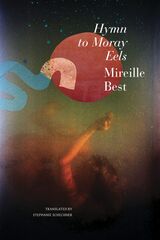
Hymn to Moray Eels
Mireille Best
Seagull Books, 2025
In a rigid postwar institution where friendships burn bright and heartbreak stings sharper than medicine, Mila must decide whether to retreat or risk everything for love.
Within the cloistered world of a 1950s French sanatorium, sixteen-year-old Mila is learning more than just how to recover; she’s learning how to want. Stranded among a cast of unruly girls, she navigates longing and the quiet defiance of being a young lesbian in a world that prefers silence. There’s Marie, full of teasing bravado; the two Nicoles, who always weep; and Josette, who fills the air with accordion melodies. Then there’s Paule, a striking staff member whose attention is intoxicating—until it isn’t. Just as Mila begins to believe in the possibility of something real, Paule turns toward another, leaving Mila caught between jealousy and the aching pull of first love.
Originally published in 1985, Hymn to Moray Eels is a rare and brilliant gem of queer literature, balancing wry humor with aching tenderness. Mireille Best’s unsentimental prose captures the bittersweet contradictions of adolescence, creating a coming-of-age novel that is both deeply personal and strikingly universal.
[more]