
 A SCHOLARLY BOOK REPOSITORY
Body Language examines the complex intersections of British eighteenth-century comic fiction and medical discourse. By engaging medical writings of renowned and widely-read physicians of the Enlightenment such as John Freind, Thomas Sydenham, Albrecht von Haller, John Whytt, and William Cullen, with novels of humor by Henry Fielding, Tobias Smollett, Laurence Sterne, and Charlotte Lennox, Alves explains how medicine shaped comic language by dramatizing female-specific phenomena like menstruation, hysteria, nervous disorders, and pregnancy. In these novels, the medical belief that women are incapable of bodily self-regulation becomes an imperative for policing women’s bodies and highlights the enduring shortcomings of patriarchal systems. Ultimately, these comic representations offer a counternarrative of women’s bodies, agency, and selfhood, exposing masculine anxieties about the effectiveness of marriage to regulate women’s sexuality.
Published by Bucknell University Press. Distributed worldwide by Rutgers University Press.
The humor of Sherlock Holmes, Donald Westlake, Agatha Christie, Michael Innes, and Edmund Crispin are just a few of those discussed. A major point highlighted by this book is simply that wit, slapstick. laughter, and an anything-can-happen motif appear in a significant amount of fiction about crime.

A Midsummer Night's Dream, in its "perfection," is Tave's point of departure. Its characters fall neatly into the three groups of Tave's title and fulfill to perfection their functions of desire, foolishness, and power. From the magical concord of Shakespeare's resolution, Tave moves to works whose character face ever greater difficulties in reaching a happy conclusion. From Jonson and Austen to Chekhov and Beckett, he meets comedies on their own terms, illuminating the complex and individual genius of each. A masterpiece of practical criticism, Lovers, Clowns, and Fairies rediscovers the pleasure of reading comedies.

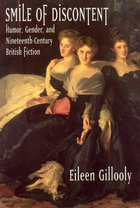
Gillooly shows how such humor became, for mostly female writers at the time, an unobtrusive and prudent means of expressing discontent with a culture that was ideologically committed to restricting female agency and identity. If the aggression and emotional distance of irony and satire mark them as "masculine," then for Gillooly, the passivity, indirection, and sympathy of the humor she discusses render it "feminine." She goes on to disclose how the humorous tactics employed by writers from Burney to Wharton persist in the work of Barbara Pym, Anita Brookner, and Penelope Fitzgerald.
The book won the Barbara Perkins and George Perkins Award given by the Society for the Study of Narrative Literature.
READERS
Browse our collection.
PUBLISHERS
See BiblioVault's publisher services.
STUDENT SERVICES
Files for college accessibility offices.
RECENTLY PUBLISHED


UChicago Accessibility Resources
home | accessibility | search | about | contact us
BiblioVault ® 2001 - 2025
The University of Chicago Press