
 A SCHOLARLY BOOK REPOSITORY
23 start with A start with A
Vasquez-Tokos finds that their experiences in childhood, adolescence, and young adulthood shape their perceptions of race, which in turn influence their romantic expectations. Most Latinos marry other Latinos, but those who intermarry tend to marry whites. She finds that some Latina women who had domineering fathers assumed that most Latino men shared this trait and gravitated toward white men who differed from their fathers. Other Latina respondents who married white men fused ideas of race and class and perceived whites as higher status and considered themselves to be “marrying up.” Latinos who married non-Latino minorities—African Americans, Asian Americans, and Native Americans—often sought out non-white partners because they shared similar experiences of racial marginalization. Latinos who married Latinos of a different national origin expressed a desire for shared cultural commonalities with their partners, but—like those who married whites—often associated their own national-origin groups with oppressive gender roles.
Vasquez-Tokos also investigates how racial and cultural identities are maintained or altered for the respondents’ children. Within Latino-white marriages, biculturalism—in contrast with Latinos adopting a white “American” identity—is likely to emerge. For instance, white women who married Latino men often embraced aspects of Latino culture and passed it along to their children. Yet, for these children, upholding Latino cultural ties depended on their proximity to other Latinos, particularly extended family members. Both location and family relationships shape how parents and children from interracial families understand themselves culturally.
As interracial marriages become more common, Marriage Vows and Racial Choices shows how race, gender, and class influence our marital choices and personal lives.
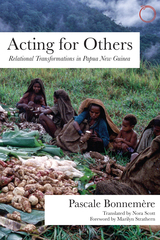
At the heart of Pascale Bonnemère’s argument is the idea that it is possible for genders to act for and upon one another, and to do so almost paradoxically, by limiting action through the obeying of taboos and other restrictions. With this first English translation by acclaimed French translator Nora Scott, accompanied by a foreword from Marilyn Strathern, Acting for Others brings the Ankave ritual world to new theoretical life, challenging how we think about mutual action, mutual being, and mutual life.
In recent years, different family types have begun demanding recognition to an unprecedented extent. Despite notable changes to our cultural and academic landscapes, however, adoptive families remain overlooked. According to census data, about two and a half percent of children in the United States are adopted. But mere numbers do not begin to indicate the profound impact that these families have on cultural definitions of kinship.
Adoptive Families in a Diverse Society brings together twenty-one prominent scholars to explore the experience, practice, and policy of adoption in North America. While much existing literature tends to stress the potential problems inherent in non-biological kinship, the essays in this volume consider adoptive family life in a broad and balanced context.
Essays explore our current fascination with genetics, showing how our intense belief that we are produced, shaped, and controlled by our genes has affected the authenticity and value that we credit to adoptive parent/child relations. Other essays look at identity development, community attitudes toward adoption, gay adoptive fathers’ experiences, the ways in which single mother adoptive families create kinship, and the ways in which cultural assumptions about race and class operate in the system.
Bringing new perspectives to the topics of kinship, identity, and belonging, this path-breaking book expands more than our understandings of adoptive family life; it urges us to rethink the limits and possibilities of diversity and assimilation in American society.

In contemporary Norwegian fiction Tomas Espedal’s work stands out as uniquely personal; it can be difficult to separate the fiction from Espedal’s own experiences. In that vein, his novel Against Art is not just the story of a boy growing up to be a writer, but it is also the story of writing. Specifically, it is about the profession of writing—the routines, responsibility, and obstacles. Yet, Against Art is also about being a father, a son, and a grandson; about a family and a family’s tales, and about how preceding generations mark their successors. It is at once about choices and changes, about motion and rest, about moving to a new place, and about living.
Michael Rosenfeld offers a new theory of family dynamics to account for the interesting and startling changes in marriage and family composition in the United States in recent years. His argument revolves around the independent life stage that emerged around 1960. This stage is experienced by young adults after they leave their parents' homes but before they settle down to start their own families. During this time, young men and women go away to college, travel abroad, begin careers, and enjoy social independence. This independent life stage has reduced parental control over the dating practices and mate selection of their children and has resulted in a sharp rise in interracial and same-sex unions--unions that were more easily averted by previous generations of parents.
Complementing analysis of newly available census data from the entire twentieth century with in-depth interviews that explore the histories of families and couples, Rosenfeld proposes a conceptual model to explain many social changes that may seem unrelated but that flow from the same underlying logic. He shows, for example, that the more a relationship is transgressive of conventional morality, the more likely it is for the individuals to live away from their family and area of origin.
Still fragile, a bereft Annie returns to the ranch, where she is befriended by Leona, a Umatilla-Cayuse neighbor. Leona, as it turns out, has a long connection to the family that even Jack never knew about. At the time of his disappearance, Jack had been grappling with his family’s legacy—with the conflicts and consequences of white settlement of native ground. Three generations before he was born, the family ranch was taken from the Umatilla reservation through the Allotment Act. Jack’s mother died when he was six, but his father’s stern presence still cast a shadow on the land.
“Survival is hard sometimes,” Leona says, but with her help, Annie is able to bring Riley home from rehab and begin the work of healing their small family, learning, season by season, how to go on living without Jack. Leona, Riley’s friends Alex and Mattie, and old neighbors Gus and Audrey become a larger family for Annie as they share the stories that connect them—long-silenced stories from both cultures that could solve the mystery of Jack’s disappearance.
In prose that is lyrical and clear-eyed, All Coyote’s Children weaves an unforgettable tale of cultures and families caught in the inescapable web of who they are and what they have inherited.
By closely observing the attachments that arise in families despite profound disagreements and incommensurabilities, Ferguson argues, we can imagine a political engagement that accommodates radical differences without sacrificing community. After examining how the concept of the family has been deployed and misused in political philosophy, Ferguson turns to the ways in which families actually operate: the macropolitical significance of family coping strategies such as silence and the impact that disability and caregiving have on conceptions of spatiality, sameness, and disparity. He also considers the emotional attachment between humans and their pets as an acknowledgment that compassion and community can exist even under conditions of profound difference.
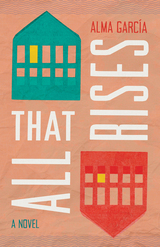
What follows is a story in which mysteries are unraveled, odd alliances are forged, and the boundaries between lives blur in destiny-changing ways—all in a place where the physical border between two countries is as palpable as it is porous, and the legacies of history are never far away. There are no easy solutions to the issues the characters face in this story, and their various realities—as undocumented workers, Border Patrol agents, the American supervisor of a Mexican factory employing an impoverished workforce—never play out against a black-and-white moral canvas. Instead, they are complex human beings with sometimes messy lives who struggle to create a place for themselves in a part of the world like no other, even as they are forced to confront the lives they have made.
All That Rises is about secrets, lies, border politics, and discovering where you belong—within a family, as well as in the world beyond. It is a novel for the times we live in, set in a place many people know only from the news.
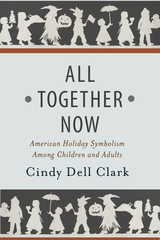
The decorations, songs, special ways of dressing, and rituals carry deep significance that is viscerally felt by even young tots. Ritual has the capacity to condense a plethora of meaning into a unified metaphor such as a Christmas tree, a menorah, or the American flag. These symbols allow children and adults to co-opt the meaning of symbols in flexible and age-relevant ways, all while the symbols are still treasured and shared in common.
When a loved one dies we mourn our loss. We take comfort in the rituals that mark the passing, and we turn to those around us for support. But what happens when there is no closure, when a family member or a friend who may be still alive is lost to us nonetheless? How, for example, does the mother whose soldier son is missing in action, or the family of an Alzheimer’s patient who is suffering from severe dementia, deal with the uncertainty surrounding this kind of loss?
In this sensitive and lucid account, Pauline Boss explains that, all too often, those confronted with such ambiguous loss fluctuate between hope and hopelessness. Suffered too long, these emotions can deaden feeling and make it impossible for people to move on with their lives. Yet the central message of this book is that they can move on. Drawing on her research and clinical experience, Boss suggests strategies that can cushion the pain and help families come to terms with their grief. Her work features the heartening narratives of those who cope with ambiguous loss and manage to leave their sadness behind, including those who have lost family members to divorce, immigration, adoption, chronic mental illness, and brain injury. With its message of hope, this eloquent book offers guidance and understanding to those struggling to regain their lives.
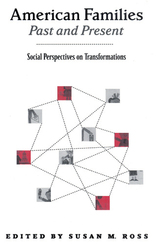
American families today are noted for their wide variety of guises. Among the mix are single-parent families, childless-by-choice marriages, nuclear families, multigenerational families, and same-sex couples. Although this diversity has come under the scrutiny of everyone from politicians to the media, family diversity is not a recent development of contemporary culture. While nuclear families with a mother, a father, and children are the presumed historical norm, people have always resided in an assortment of family formations.
Bringing together essays by twenty-one distinguished scholars who have helped shape the field of family sociology in the last decade, this interdisciplinary anthology examines variation within family experience, especially as it has evolved across racial, ethnic, social, gender, and generational lines. The essays place historical and institutional frameworks at the center of the discussion.
The first part of the book focuses on the development of socially constructed dominant ideologies, demographic shifts in family composition, and historical perspectives on family rituals and mythmaking. Essays in the second part provide a historical perspective on the interdependence between the family as a social institution and other institutions. Selections highlight changes in women’s roles, the impact of economic, racial, and social inequalities on household labor and child care, the effects of war and military service, and the implications of the political climate for family welfare policy.
In-depth chapter introductions along with critical questions to spark class discussion make this an ideal text for courses focusing on family composition, trends, and controversies in the United States.
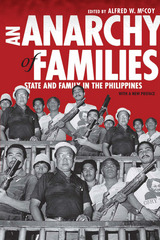
Edited by Alfred W. McCoy, An Anarchy of Families explores the pervasive influence of the modern dynasties that have led the Philippines during the past century. Exemplified by the Osmeñas and Lopezes, elite Filipino families have formed a powerful oligarchy—controlling capital, dominating national politics, and often owning the media. Beyond Manila, strong men such as Ramon Durano, Ali Dimaporo, and Justiniano Montano have used “guns, goons, and gold” to accumulate wealth and power in far-flung islands and provinces. In a new preface for this revised edition, the editor shows how this pattern of oligarchic control has continued into the twenty-first century, despite dramatic socio-economic change that has supplanted the classic “three g’s” of Philippine politics with the contemporary “four c’s”—continuity, Chinese, criminality, and celebrity.
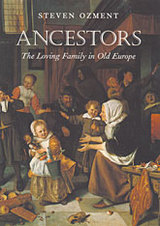
Rescuing the premodern family from the grim picture many historians have given us of life in early Europe, Ancestors offers a major reassessment of a crucial aspect of European history—and tells a story of age-old domesticity inextricably linked, and surprisingly similar, to our own.
An elegant summa on family life in Europe past, this compact and powerful book extends and completes a project begun with Steven Ozment’s When Fathers Ruled: Family Life in Reformation Europe. Here Ozment, the leading historian of the family in the middle centuries, replaces the often miserable depiction of premodern family relations with a delicately nuanced portrait of a vibrant and loving social group. Mining the records of families’ private lives—from diaries and letters to fiction and woodcuts—Ozment shows us a preindustrial family not very different from the later family of high industry that is generally viewed as the precursor to the sentimental nuclear family of today.
In Ancestors, we see the familiar pattern of a domestic wife and working father in a home in which spousal and parental love were amply present: parents cherished their children, wives were helpmeets in providing for the family, and the genders were nearly equal. Contrary to the abstractions of history, parents then—as now—were sensitive to the emotional and psychological needs of their children, treated them with affection, and gave them a secure early life and caring preparation for adulthood.
As it recasts familial history, Ancestors resonates beyond its time, revealing how much the story of the premodern family has to say to a modern society that finds itself in the throes of a family crisis.

Expanding the insights of Arlette Farge and Michel Foucault’s Disorderly Families into policing, public order, (in)justice, and daily life
What might it mean for ordinary people to intervene in the circulation of power between police and the streets, sovereigns and their subjects? How did the police come to understand themselves as responsible for the circulation of people as much as things—and to separate law and justice from the maintenance of a newly emergent civil order? These are among the many questions addressed in the interpretive essays in Archives of Infamy.
Crisscrossing the Atlantic to bring together unpublished radio broadcasts, book reviews, and essays by historians, geographers, and political theorists, Archives of Infamy provides historical and archival contexts to the recent translation of Disorderly Families by Arlette Farge and Michel Foucault. This volume includes new translations of key texts, including a radio address Foucault gave in 1983 that explains the writing process for Disorderly Families; two essays by Foucault not readily available in English; and a previously untranslated essay by Farge that describes how historians have appropriated Foucault.
Archives of Infamy pushes past old debates between philosophers and historians to offer a new perspective on the crystallization of ideas—of the family, gender relations, and political power—into social relationships and the regimes of power they engender.
Contributors: Roger Chartier, Collège de France; Stuart Elden, U of Warwick; Arlette Farge, Centre national de recherche scientifique; Michel Foucault (1926–1984); Jean-Philippe Guinle, Catholic Institute of Paris; Michel Heurteaux; Pierre Nora, École des Hautes Études en Sciences Sociales; Michael Rey (1953–1993); Thomas Scott-Railton; Elizabeth Wingrove, U of Michigan.
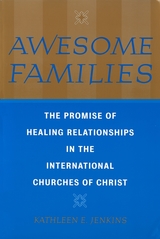
Denounced by some as a dangerous cult and lauded by others as a miraculous faith community, the International Churches of Christ was a conservative evangelical Christian movement that grew rapidly in the 1980s and 1990s.
Among its followers, promises to heal family relationships were central to the group's appeal. Members credit the church for helping them develop so-called "awesome families"-successful marriages and satisfying relationships with children, family of origin, and new church "brothers and sisters." The church engaged an elaborate array of services, including round-the-clock counseling, childcare, and Christian dating networks-all of which were said to lead to fulfilling relationships and exciting sex lives. Before the unified movement's demise in 2003-2004, the lure of blissful family-life led more than 100,000 individuals worldwide to be baptized into the church.
In Awesome Families, Kathleen Jenkins draws on four years of ethnographic research to explain how and why so many individuals-primarily from middle- to upper-middle-class backgrounds-were attracted to this religious group that was founded on principles of enforced community, explicit authoritative relationships, and therapeutic ideals. Weaving classical and contemporary social theory, she argues that members were commonly attracted to the structure and practice of family relationships advocated by the church, especially in the context of contemporary society where gender roles and family responsibilities are often ambiguous.
Tracing the rise and fall of this fast-growing religious movement, this timely study adds to our understanding of modern society and offers insight to the difficulties that revivalist movements have in sustaining growth.
READERS
Browse our collection.
PUBLISHERS
See BiblioVault's publisher services.
STUDENT SERVICES
Files for college accessibility offices.
RECENTLY PUBLISHED




UChicago Accessibility Resources
home | accessibility | search | about | contact us
BiblioVault ® 2001 - 2024
The University of Chicago Press