
 A SCHOLARLY BOOK REPOSITORY
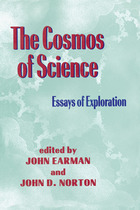
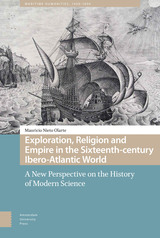
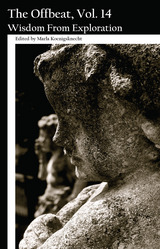
Travel gets us from one place to another—often with wonderful attendant enjoyment–but exploration makes us understand our travel, the places we travel to—and ourselves. The essays in this collection constitute a major step toward this understanding. They open up new areas for concern and draw many valuable insights and conclusions.

This book argues that the individuated and discrete human self in possession of consciousness, rationality, empathy, a voice, and a face, is open to challenge by nonhuman capacities such as distributed cognition, gender ambiguity, metamorphosis, mimicry, and avian speech. In traditional philosophy, animals represent all that is lacking in humankind. However, Animals and Artists argues that just because humans frame “the animal” as a negative term does not mean that animals have no meaning in themselves. Rather animals, in their very unknowability, mark the limits of human thinking.
By combining art analysis with poststructuralist, posthumanist, and animal studies theories, Atkinson decenters the human and establishes a new position that embraces difference. Amid our current ecological crisis, Animals and Artists brings readers into solidarity with animal species, among them spiders, silkworms, bees, parrots, and octopuses. The book raises empathy for other life forms, drawing attention to the shared vulnerabilities of human and nonhuman animals, and in so doing underlines the power of art to bring about social change.
Winner of the Eugene M. Emme Astronautical Literature Award
A Bloomberg View Must-Read Book of the Year
A Choice Outstanding Academic Title of the Year
“A substance-rich, original on every page exploration of how the space program interacted with the environmental movement, and also with the peace and ‘Whole Earth’ movements of the 1960s.”
—Tyler Cowen, Marginal Revolution
The summer of 1969 saw astronauts land on the moon for the first time and hippie hordes descend on Woodstock. This lively and original account of the space race makes the case that the conjunction of these two era-defining events was not entirely coincidental.
With its lavishly funded mandate to put a man on the moon, the Apollo mission promised to reinvigorate a country that had lost its way. But a new breed of activists denounced it as a colossal waste of resources needed to solve pressing problems at home. Neil Maher reveals that there were actually unexpected synergies between the space program and the budding environmental, feminist and civil rights movements as photos from space galvanized environmentalists, women challenged the astronauts’ boys club and NASA’s engineers helped tackle inner city housing problems. Against a backdrop of Saturn V moonshots and Neil Armstrong’s giant leap for mankind, Apollo in the Age of Aquarius brings the cultural politics of the space race back down to planet Earth.
“As a child in the 1960s, I was aware of both NASA’s achievements and social unrest, but unaware of the clashes between those two historical currents. Maher [captures] the maelstrom of the 1960s and 1970s as it collided with NASA’s program for human spaceflight.”
—George Zamka, Colonel USMC (Ret.) and former NASA astronaut
“NASA and Woodstock may now seem polarized, but this illuminating, original chronicle…traces multiple crosscurrents between them.”
—Nature
“I reckon stranger you have not been used much to traveling in the woods,” a hunter remarked to Henry Rowe Schoolcraft as he trekked through the Ozark backcountry in late 1818. The ensuing exchange is one of many compelling encounters between Arkansas travelers and settlers depicted in Arkansas Travelers: Geographies of Exploration and Perception, 1804–1834. This book is the first to integrate the stories of four travelers who explored Arkansas during the transformative period between the Louisiana Purchase of 1803 and statehood in 1836: William Dunbar, Thomas Nuttall, Henry Rowe Schoolcraft, and George William Featherstonhaugh.
In addition to gathering their tales of treacherous rivers, drunken scoundrels, and repulsive food, historian and geographer Andrew J. Milson explores the impact such travel narratives have had on geographical understandings of Arkansas places. Using the language in each traveler’s narrative, Milson suggests, and the book includes, new maps that trace these perceptions, illustrating not just the lands traversed, but the way travelers experienced and perceived place. By taking a geographical approach to the history of these spaces, Arkansas Travelers offers a deeper understanding—a deeper map—of Arkansas.
As environmental, political, and public health crises multiply on Earth, we are also at the dawn of a new space race in which governments team up with celebrity billionaires to exploit the cosmos for human gain. The best-known of these pioneers are selling different visions of the future: while Elon Musk and SpaceX seek to establish a human presence on Mars, Jeff Bezos and Blue Origin work toward moving millions of earthlings into rotating near-Earth habitats. Despite these distinctions, these two billionaires share a core utopian project: the salvation of humanity through the exploitation of space.
In Astrotopia, philosopher of science and religion Mary-Jane Rubenstein pulls back the curtain on the not-so-new myths these space barons are peddling, like growth without limit, energy without guilt, and salvation in a brand-new world. As Rubenstein reveals, we have already seen the destructive effects of this frontier zealotry in the centuries-long history of European colonialism. Much like the imperial project on Earth, this renewed effort to conquer space is presented as a religious calling: in the face of a coming apocalypse, some very wealthy messiahs are offering an other-worldly escape to a chosen few. But Rubenstein does more than expose the values of capitalist technoscience as the product of bad mythologies. She offers a vision of exploring space without reproducing the atrocities of earthly colonialism, encouraging us to find and even make stories that put cosmic caretaking over profiteering.
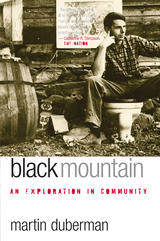
With faculty and alumni that included John Cage, Robert Creeley, Merce Cunningham, Buckminster Fuller, Charles Olson, Josef and Anni Albers, Paul Goodman, and Robert Rauschenberg, Black Mountain College ranked among the most important artistic and intellectual communities of the twentieth century. In his groundbreaking history, Martin Duberman uses interviews, anecdotes, and research to depict the relationships that made Black Mountain College what it was. Black Mountain documents the college’s twenty-three-year tenure, from its most brilliant moments of self-reinvention to its lowest moments of petty infighting. It records the financial difficulties that beleaguered the community throughout its existence and the determination it took to keep the college in operation. Duberman creates a nuanced portrait of this community so essential to the development of American arts and counterculture.
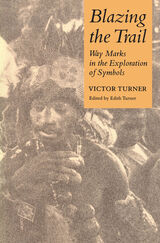
"The essays reveal a passionate struggle between a committed conceptualization and a dedication to the telling detail. Turner is willing to address the moral and spiritual dimensions of being human, which are all too easily set aside by much social science."—Anthropos
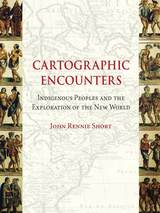
There’s no excuse for getting lost these days—satellite maps on our computers can chart our journey in detail and electronics on our car dashboards instruct us which way to turn. But there was a time when the varied landscape of North America was largely undocumented, and expeditions like that of Lewis and Clark set out to map its expanse. As John Rennie Short argues in Cartographic Encounters, that mapping of the New World was only possible due to a unique relationship between the indigenous inhabitants and the explorers.
In this vital reinterpretation of American history, Short describes how previous accounts of the mapping of the new world have largely ignored the fundamental role played by local, indigenous guides. The exchange of information that resulted from this “cartographic encounter” allowed the native Americans to draw upon their wide knowledge of the land in the hope of gaining a better position among the settlers.
This account offers a radical new understanding of Western expansion and the mapping of the land and will be essential to scholars in cartography and American history.
Evolution has provided a new understanding of reality, with revolutionary consequences for Christianity. In an evolutionary perspective the incarnation involved God entering the evolving human species to help it imitate the trinitarian altruism in whose image it was created and counter its tendency to self-absorption. Primarily, however, the evolutionary achievement of Jesus was to confront and overcome death in an act of cosmic significance, ushering humanity into the culminating stage of its evolutionary destiny, the full sharing of God’s inner life. Previously such doctrines as original sin, the fall, sacrifice, and atonement stemmed from viewing death as the penalty for sin and are shown not only to have serious difficulties in themselves, but also to emerge from a Jewish culture preoccupied with sin and sacrifice that could not otherwise account for death. The death of Jesus on the cross is now seen as saving humanity, not from sin, but from individual extinction and meaninglessness. Death is now seen as a normal process that affect all living things and the religious doctrines connected with explaining it in humans are no longer required or justified. Similar evolutionary implications are explored affecting other subjects of Christian belief, including the Church, the Eucharist, priesthood, and moral behavior.
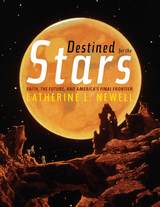
Where did humanity get the idea that outer space is a frontier waiting to be explored? Destined for the Stars unravels the popularization of the science of space exploration in America between 1944 and 1955, arguing that the success of the US space program was due not to technological or economic superiority, but was sustained by a culture that had long believed it was called by God to settle new frontiers and prepare for the inevitable end of time and God’s final judgment. Religious forces, Newell finds, were in no small way responsible for the crescendo of support for and interest in space exploration in the early 1950s, well before Project Mercury—the United States’ first human spaceflight program—began in 1959.
In this remarkable history, Newell explores the connection between the art of Chesley Bonestell—the father of modern space art whose paintings drew inspiration from depictions of the American West—and the popularity of that art in Cold War America; Bonestell’s working partnership with science writer and rocket expert Willy Ley; and Ley and Bonestell’s relationship with Wernher von Braun, father of both the V-2 missile and the Saturn V rocket, whose millennial conviction that God wanted humankind to leave Earth and explore other planets animated his life’s work. Together, they inspired a technological and scientific faith that awoke a deep-seated belief in a sense of divine destiny to reach the heavens. The origins of their quest, Newell concludes, had less to do with the Cold War strife commonly associated with the space race and everything to do with the religious culture that contributed to the invention of space as the final frontier.
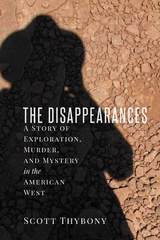
Intrigued by this unusual string of coincidental disappearances, Scott Thybony set out to learn what happened. His investigations took him from Island in the Sky to Skeleton Mesa, from Texas to Tucson, and from the Green River to the Red. He traced the journey of Lucy Garrett from the murder of her father to her dramatic courtroom testimony. Using the pages of an old journal he followed the route of Dan Thrapp as he crossed an expanse of wildly rugged country with a pair of outlaws. Thrapp’s story of survival in an unforgiving land is a poignant counterpoint to the fate of the artist Everett Ruess, which the New York Times has called “one of the most enduring mysteries of the modern West.” Thybony draws on extensive research and a lifetime of exploration to create a riveting story of these three lives.
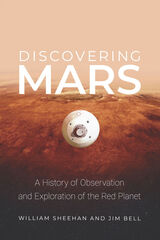
Historian William Sheehan and astronomer and planetary scientist Jim Bell combine their talents to tell a unique story of what we’ve learned by studying Mars through evolving technologies. What the eye sees as a mysterious red dot wandering through the sky becomes a blurry mirage of apparent seas, continents, and canals as viewed through Earth-based telescopes. Beginning with the Mariner and Viking missions of the 1960s and 1970s, space-based instruments and monitoring systems have flooded scientists with data on Mars’s meteorology and geology, and have even sought evidence of possible existence of life-forms on or beneath the surface. This knowledge has transformed our perception of the Red Planet and has provided clues for better understanding our own blue world.
Discovering Mars vividly conveys the way our understanding of this other planet has grown from earliest times to the present. The story is epic in scope—an Iliad or Odyssey for our time, at least so far largely without the folly, greed, lust, and tragedy of those ancient stories. Instead, the narrative of our quest for the Red Planet has showcased some of our species’ most hopeful attributes: curiosity, cooperation, exploration, and the restless drive to understand our place in the larger universe. Sheehan and Bell have written an ambitious first draft of that narrative even as the latest chapters continue to be added both by researchers on Earth and our robotic emissaries on and around Mars, including the latest: the Perseverance rover and its Ingenuity helicopter drone, which set down in Mars’s Jezero Crater in February 2021.
A History Today Book of the Year
A world-renowned astronomer and an esteemed science writer make the provocative argument for space exploration without astronauts.
Human journeys into space fill us with wonder. But the thrill of space travel for astronauts comes at enormous expense and is fraught with peril. As our robot explorers grow more competent, governments and corporations must ask, does our desire to send astronauts to the Moon and Mars justify the cost and danger? Donald Goldsmith and Martin Rees believe that beyond low-Earth orbit, space exploration should proceed without humans.
In The End of Astronauts, Goldsmith and Rees weigh the benefits and risks of human exploration across the solar system. In space humans require air, food, and water, along with protection from potentially deadly radiation and high-energy particles, at a cost of more than ten times that of robotic exploration. Meanwhile, automated explorers have demonstrated the ability to investigate planetary surfaces efficiently and effectively, operating autonomously or under direction from Earth. Although Goldsmith and Rees are alert to the limits of artificial intelligence, they know that our robots steadily improve, while our bodies do not. Today a robot cannot equal a geologist’s expertise, but by the time we land a geologist on Mars, this advantage will diminish significantly.
Decades of research and experience, together with interviews with scientific authorities and former astronauts, offer convincing arguments that robots represent the future of space exploration. The End of Astronauts also examines how spacefaring AI might be regulated as corporations race to privatize the stars. We may eventually decide that humans belong in space despite the dangers and expense, but their paths will follow routes set by robots.

Contributors. Geraldine Barnes, Alexandra Cook, David Culpin, John Greene, Suzanne Kiernan, Christa Knellwolf, Adrian Mitchell, Lisa O’Connell, David Paxman, Ali Uzay Peker, Glynis Ridley, Nicholas Rogers, Walter Veit
As George Vason's anguished narrative shows, European encounters with Pacific peoples often proved as wrenching to the Europeans as to the natives. This anthology gathers some of the most vivid accounts of these cultural exchanges for the first time, placing the works of well-known figures such as Captain James Cook and Robert Louis Stevenson alongside the writings of lesser-known explorers, missionaries, beachcombers, and literary travelers who roamed the South Seas from the late seventeenth through the late nineteenth centuries.
Here we discover the stories of the British buccaneers and privateers who were lured to the Pacific by stories of fabulous wealth; of the scientists, cartographers, and natural historians who tried to fit the missing bits of terra incognita into a universal scheme of knowledge; and of the varied settlers who established a permanent European presence in Polynesia and Australia. Through their detailed commentary on each piece and their choice of selections, the editors—all respected scholars of the literature and cultures of the Pacific—emphasize the mutuality of impact of these colonial encounters and the continuity of Pacific cultures that still have the power to transform visitors today.
Originally published from 1948 to 1949 as volumes sixteen and seventeen of the Utah Historical Quarterly, this volume looks to the larger significance and fruits of the second of Powell’s explorations, a more carefully constituted and better equipped scientific operation, yet one strangely neglected in historical records. Copublished with the Utah State Historical Society.
This volume contains the journals of Major John Wesley Powell, George Young Bradley, Walter Henry Powell, and J. C. Sumner. Also included are various letters and notes by the members of the first expedition, and the journal of Francis Marion Bishop from the second expedition. All of the writings offer vivid descriptions of both adventure and of able and energetic scientific field work, and are of enduring interest and importance.
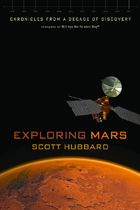
The Red Planet has been a subject of fascination for humanity for thousands of years, becoming part of our folklore and popular culture. The most Earthlike of the planets in our solar system, Mars may have harbored some form of life in the past and may still possess an ecosystem in some underground refuge. The mysteries of this fourth planet from our Sun make it of central importance to NASA and its science goals for the twenty-first century.
In the wake of the very public failures of the Mars Polar Lander and the Mars Climate Orbiter in 1999, NASA embarked on a complete reassessment of the Mars Program. Scott Hubbard was asked to lead this restructuring in 2000, becoming known as the "Mars Czar." His team's efforts resulted in a very successful decade-long series of missions—each building on the accomplishments of those before it—that adhered to the science adage "follow the water" when debating how to proceed. Hubbard's work created the Mars Odyssey mission, the twin rovers Spirit and Opportunity, the Mars Reconnaissance Orbiter, the Phoenix mission, and most recently the planned launch of the Mars Science Laboratory.
Now for the first time Scott Hubbard tells the complete story of how he fashioned this program, describing both the technical and political forces involved and bringing to life the national and international cast of characters engaged in this monumental endeavor. Blending the exciting stories of the missions with the thrills of scientific discovery, Exploring Mars will intrigue anyone interested in the science, the engineering, or the policy of investigating other worlds.
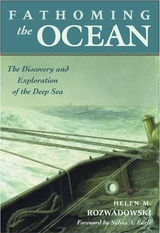
By the middle of the nineteenth century, as scientists explored the frontiers of polar regions and the atmosphere, the ocean remained silent and inaccessible. The history of how this changed—of how the depths became a scientific passion and a cultural obsession, an engineering challenge and a political attraction—is the story that unfolds in Fathoming the Ocean.
In a history at once scientific and cultural, Helen Rozwadowski shows us how the Western imagination awoke to the ocean's possibilities—in maritime novels, in the popular hobby of marine biology, in the youthful sport of yachting, and in the laying of a trans-Atlantic telegraph cable. The ocean emerged as important new territory, and scientific interests intersected with those of merchant-industrialists and politicians. Rozwadowski documents the popular crazes that coincided with these interests—from children's sailor suits to the home aquarium and the surge in ocean travel. She describes how, beginning in the 1860s, oceanography moved from yachts onto the decks of oceangoing vessels, and landlubber naturalists found themselves navigating the routines of a working ship's physical and social structures.
Fathoming the Ocean offers a rare and engaging look into our fascination with the deep sea and into the origins of oceanography—origins still visible in a science that focuses the efforts of physicists, chemists, geologists, biologists, and engineers on the common enterprise of understanding a vast, three-dimensional, alien space.
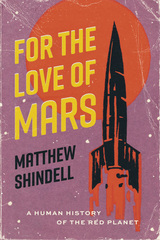
Mars and its secrets have fascinated and mystified humans since ancient times. For the Love of Mars surveys the red planet’s place in the human imagination, beginning with ancient astrologers and skywatchers and ending in our present moment of exploration and virtual engagement.
National Air and Space Museum curator Matthew Shindell describes how historical figures across eras and around the world have made sense of this mysterious planet. We meet Mayan astrologer priests who incorporated Mars into seasonal calendars and religious ceremonies, Babylonian astrologers who discerned bad omens, figures of the Scientific Revolution who struggled to comprehend Mars as a world, Victorian astronomers who sought signs of intelligent life, and twentieth- and twenty-first-century scientists who have established a technological presence on the planet’s surface. Along the way, we encounter writers and artists from each of these periods who took readers and viewers along on imagined journeys to Mars.
By focusing on the diverse human stories behind the telescopes and behind the robots we know and love, Shindell shows how Mars exploration has evolved in ways that have also expanded knowledge about other facets of the universe. Captained by an engaging and erudite expert, For the Love of Mars is a captivating voyage through time and space for anyone curious about Curiosity and the red planet.
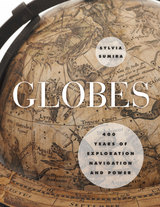
Showcasing the impressive collection of globes held by the British Library, Sumira traces the inception and progression of globes during the period in which they were most widely used—from the late fifteenth century to the late nineteenth century—shedding light on their purpose, function, influence, and manufacture, as well as the cartographers, printers, and instrument makers who created them. She takes readers on a chronological journey around the world to examine a wide variety of globes, from those of the Renaissance that demonstrated a renewed interest in classical thinkers; to those of James Wilson, the first successful commercial globe maker in America; to those mass-produced in Boston and New York beginning in the 1800s. Along the way, Sumira not only details the historical significance of each globe, but also pays special attention to their materials and methods of manufacture and how these evolved over the centuries.
A stunning and accessible guide to one of the great tools of human exploration, Globes will appeal to historians, collectors, and anyone who has ever examined this classroom accessory and wondered when, why, and how they came to be made.

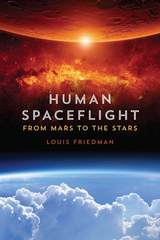
Far from diminishing our future in space, Human Spaceflight lays out a provocative future for human space travel. The noted aerospace engineer and scientist says that human space exploration will continue well into the future, but space travel by humans will stop at Mars. Instead, nanotechnology, space sails, robotics, biomolecular engineering, and artificial intelligence will provide the vehicles of the future for an exciting evolution not just of space travel but of humankind.
Friedman has worked with agencies around the globe on space exploration projects to extend human presence beyond Mars and beyond the solar system. He writes that once we accept Mars as the only viable destination for humans, our space program on planet Earth can become more exciting and more relevant. Mars, he writes, will take hundreds, even thousands, of years to settle. During that time, humans and all our supporting technologies will evolve, allowing our minds to be present throughout the universe while our bodies stay home on Earth and Mars.
Lives in Two Languages focuses on the experience of multicultural authors--like Richard Rodriguez, Amy Tan, Eva Hoffman, Chang-rae Lee, and Julia Alvarez--whose experiences can be related to anyone who has moved from one culture or subculture to another. As such, this text is an excellent comprehensive introduction to the multicultural experience for teachers and educators in all disciplines, as well as of interest to anyone interested in language culture and psychological process of identity.
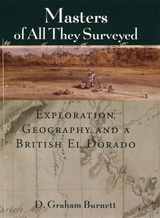
In answering these questions, D. Graham Burnett brings to light the work of several such explorers, particularly Sir Robert H. Schomburgk, the man who claimed to be the first to reach the site of Ralegh's El Dorado. Commissioned by the Royal Geographical Society and later by the British Crown, Schomburgk explored and mapped regions in modern Brazil, Venezuela, and Guyana, always in close contact with Amerindian communities. Drawing heavily on the maps, reports, and letters that Schomburgk sent back to England, and especially on the luxuriant images of survey landmarks in his Twelve Views in the Interior of Guiana (reproduced in color in this book), Burnett shows how a vast network of traverse surveys, illustrations, and travel narratives not only laid out the official boundaries of British Guiana but also marked out a symbolic landscape that fired the British imperial imagination.
Engagingly written and beautifully illustrated, Masters of All They Surveyed will interest anyone who wants to understand the histories of colonialism and science.
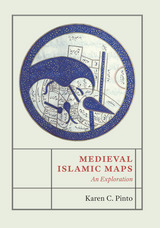
Pinto focuses on the distinct tradition of maps known collectively as the Book of Roads and Kingdoms (Kitab al-Masalik wa al-Mamalik, or KMMS), examining them from three distinct angles—iconography, context, and patronage. She untangles the history of the KMMS maps, traces their inception and evolution, and analyzes them to reveal the identities of their creators, painters, and patrons, as well as the vivid realities of the social and physical world they depicted. In doing so, Pinto develops innovative techniques for approaching the visual record of Islamic history, explores how medieval Muslims perceived themselves and their world, and brings Middle Eastern maps into the forefront of the study of the history of cartography.
In nineteen essays dealing with musical theories from the twelfth to the twentieth century, two recurring themes emerge. One is the need to understand the historical circumstances of the writing and reception of theory, a humanistic approach that gives theory a place within social and intellectual history. The other is the advantages of applying contemporaneous theory to the music of a given period, thus linking theory to the history of musical styles and structures. The periods given principal attention in these essays are the Renaissance, the years around 1800, and the twentieth century.
Abundantly illustrated with musical examples, Music Theory and the Exploration of the Past offers models of new practical applications of theory to the analysis of music. At the same time, it raises the broader question of how historical knowledge can deepen the understanding of an art and of systematic writings about that art.

Goldfarb—who examines conditions in the Soviet Union, the United States, and their respective European allies—focuses most closely upon Poland and the United States. He investigates a wide range of concrete cases, including the Polish opposition movement and Solidarity, the migration of artists, the American television and magazine industries, American philanthropy, and communist cultural conveyor belts.
From these cases, Goldfarb derives a definitive set of sociological conditions for cultural freedom: critical creativity which resists systematic constraints, continuity of cultural tradition, and a relatively autonomous public realm for the reception of culture. Cultural freedom, Goldfarb shows, is not a static state but a process of achievement. Its parameters and content are determined by social practice in cultural institutions and by their relations with other components and the totality of social structure.
So defined, cultural freedom is transformed from an ideological concept into one with real critical and analytical power. Through it we can appreciate the invisible nature of constraint in the West and the unapparent but acting supports of cultural freedom existing in socialist countries. Most importantly, Goldfarb's conclusions provide a framework for understanding more clearly than before the circumstance of cultural freedom in both East and West so that citizens may utilize their full creative abilities as they address the problems of the present day.
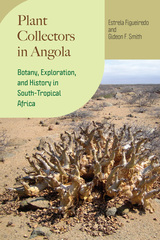
For any region, cataloging, interpreting, and understanding the history of botanical exploration and plant collecting, and the preserved specimens that were amassed as a result, are critically important for research and conservation. In this book, published in cooperation with the International Association for Plant Taxonomy, Estrela Figueiredo and Gideon F. Smith, both botanists with expertise in the taxonomy of African plants, provide the first comprehensive, contextualized account of plant collecting in Angola, a large country in south-tropical Africa. An essential book for anyone concerned with the biodiversity and history of Africa, this authoritative work offers insights into the lives, times, and endeavors of 358 collectors. In addition, the authors present analyses of the records that accompanied the collectors’ preserved specimens. Illustrated in color throughout, the book fills a large gap in the current knowledge of the botanical and exploration history of Africa.
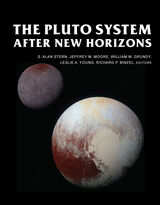
The Pluto System After New Horizons seeks to become the benchmark for synthesizing our understanding of the Pluto system. The volume’s lead editor is S. Alan Stern, who also serves as NASA’s New Horizons Principal Investigator; co-editors Richard P. Binzel, William M. Grundy, Jeffrey M. Moore, and Leslie A. Young are all co-investigators on New Horizons. Leading researchers from around the globe have spent the last five years assimilating Pluto system flyby data returned from New Horizons. The chapters in this volume form an enduring foundation for ongoing study and understanding of the Pluto system. The volume also advances insights into the nature of dwarf planets and Kuiper Belt objects, providing a cornerstone for planning new missions that may return to the Pluto system and explore others of the myriad important worlds beyond Neptune.

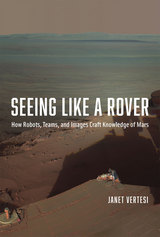
With Seeing Like a Rover, Janet Vertesi takes us behind the scenes to reveal the work that goes into creating our knowledge of Mars. Every photograph that the Rovers take, she shows, must be processed, manipulated, and interpreted—and all that comes after team members negotiate with each other about what they should even be taking photographs of in the first place. Vertesi’s account of the inspiringly successful Rover project reveals science in action, a world where digital processing uncovers scientific truths, where images are used to craft consensus, and where team members develop an uncanny intimacy with the sensory apparatus of a robot that is millions of miles away. Ultimately, Vertesi shows, every image taken by the Mars Rovers is not merely a picture of Mars—it’s a portrait of the whole Rover team, as well.
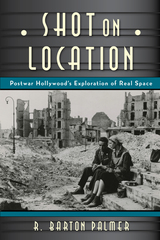
Renowned film scholar R. Barton Palmer answers this question in Shot on Location by exploring the historical, ideological, economic, and technological developments that led Hollywood to head back outside in order to capture footage of real places. His groundbreaking research reveals that wartime newsreels had a massive influence on postwar Hollywood film, although there are key distinctions to be made between these movies and their closest contemporaries, Italian neorealist films. Considering how these practices were used in everything from war movies like Twelve O’Clock High to westerns like The Searchers, Palmer explores how the blurring of the formal boundaries between cinematic journalism and fiction lent a “reality effect” to otherwise implausible stories.
Shot on Location describes how the period’s greatest directors, from Alfred Hitchcock to Billy Wilder, increasingly moved beyond the confines of the studio. At the same time, the book acknowledges the collaborative nature of moviemaking, identifying key roles that screenwriters, art designers, location scouts, and editors played in incorporating actual geographical locales and social milieus within a fictional framework. Palmer thus offers a fascinating behind-the-scenes look at how Hollywood transformed the way we view real spaces.
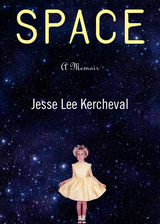
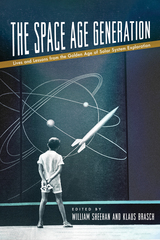
At the heart of this momentous time were the men and women working behind the scenes. Scientists, historians, and astronomers share their memories and contributions from this unparalleled era in essays told in their own words. They are the remarkable generation who witnessed and contributed to some of space science’s most stunning achievements. Here they have recorded their memories—their childhood inspirations, their challenges, failures, and triumphs—for future generations.
A unique and authoritative record of a momentous period in human history, The Space Age Generation highlights the golden age of space exploration and the people who made it happen.
Contributors
Leo Aerts
Alexander Basilevsky
Klaus Brasch
Clark R. Chapman
Dale P. Cruikshank
William K. Hartmann
William Leatherbarrow
Baerbel Koesters Lucchitta
Yvonne Pendleton
Peter H. Schultz
William Sheehan
Paolo Tanga
Charles A. Wood
A Telegraph Best Science Book of the Year
“A witty yet in-depth exploration of the prospects for human habitation beyond Earth…Spacefarers is accessible, authoritative, and in the end, inspiring.”
—Richard Panek, author of The Trouble with Gravity
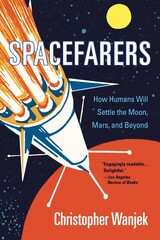
It’s been over fifty years since Apollo 11 landed on the moon. So why is there so little human presence in space? Will we ever reach Mars? And what will it take to become a multiplanet species? While many books have speculated on the possibility of living beyond the Earth, few have delved into the practical challenges.
A wry and compelling take on the who, how, and why of near-future colonies in space, Spacefarers introduces us to the engineers, scientists, planners, dreamers, and entrepreneurs who are striving right now to make life in space a reality. While private companies such as SpaceX are taking the lead and earning profits from human space activity, Christopher Wanjek is convinced this is only the beginning. From bone-whittling microgravity to eye-popping profits, the risks and rewards of space settlement have never been so close at hand. He predicts we will have hotels in low-earth orbit, mining and tourism on the Moon, and science bases on Mars—possibly followed (gravity permitting) by full blown settlements.
“Nerdily engaging (and often funny)…Technology and science fiction enthusiasts will find much here to delight them, as Wanjek goes into rich detail on rocketry and propulsion methods, including skyhooks and railguns to fling things into orbit…He is a sensible skeptic, yet also convinced that, in the long run, our destiny is among the stars.”
—The Guardian
“If the events of this year have had you daydreaming about abandoning the planet entirely, [Spacefarers] is a geekily pleasurable survey of the practicalities and challenges.”
—The Telegraph
“The best book I’ve read on space exploration since Isaac Asimov.”
—Michael Shermer, publisher of Skeptic
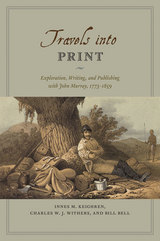
Drawing on detailed examination of the John Murray Archive of manuscripts, images, and the firm’s correspondence with its many authors—a list that included such illustrious explorers and scientists as Charles Darwin and Charles Lyell, and literary giants like Jane Austen, Lord Byron, and Sir Walter Scott—Travels into Print considers how journeys of exploration became published accounts and how travelers sought to demonstrate the faithfulness of their written testimony and to secure their personal credibility. This fascinating study in historical geography and book history takes modern readers on a journey into the nature of exploration, the production of authority in published travel narratives, and the creation of geographical authorship—a journey bound together by the unifying force of a world-leading publisher.
In Worlds in the Sky, William Sheehan gives us a history of this long fascination, weaving together scientific history, anecdotes surrounding planetary discoveries, and the personal reflections of an incurable amateur astronomer. He describes how we arrived at our current understanding of the Moon and the planets and shows how certain individuals in history shaped the world’s knowledge about the Solar System.
READERS
Browse our collection.
PUBLISHERS
See BiblioVault's publisher services.
STUDENT SERVICES
Files for college accessibility offices.
RECENTLY PUBLISHED





UChicago Accessibility Resources
home | accessibility | search | about | contact us
BiblioVault ® 2001 - 2024
The University of Chicago Press