
 A SCHOLARLY BOOK REPOSITORY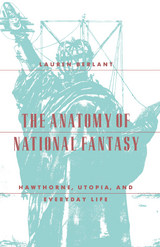
At the core of Berlant's work is a three-part study of The Scarlet Letter, analyzing the modes and effects of national identity that characterize the narrator's representation of Puritan culture and his construction of the novel's political present tense. This analysis emerges from an introductory chapter on American citizenship in the 1850s and a following chapter on national fantasy, ranging from Hawthorne's early work "Alice Doane's Appeal" to the Statue of Liberty. In her conclusion, Berlant suggests that Hawthorne views everyday life and local political identities as alternate routes to the revitalization of the political and utopian promises of modern national life.



Strathern incisively engages some of the leading feminist thinkers of the time, including Shulamith Firestone, Simone de Beauvoir, Ann Oakley, and Kate Millett. Building with characteristic precision toward a bold conclusion in which she argues that we underestimate the materializing grammars of sex and gender at our own peril, she offers a powerful challenge to the intransigent mythologies of sex that still plague contemporary society. The result is a sweeping display of Strathern’s vivid critical thought and an important contribution to feminist studies that has gone unpublished for far too long.


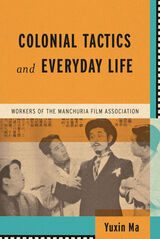
By focusing on the daily challenges and experiences of the Chinese workers at the corporation, Ma examines how life was actually lived by people navigating between practical and ideological concerns. She illustrates how the inhabitants of Manchukuo navigated social opportunities, economic depression, educational reforms, fascist rule, commercial interests, practical daily needs, and more—and reveals ways in which these conflicting preoccupations sometimes manifested as tension and ambiguity on screen. In the battle between repression and expression, these Chinese actors, directors, writers, and technicians adopted defensive and opportunistic tactics. They did so in colonial spaces, often rejecting modernist representations of Manchukuo in favor of venerating traditional Chinese culture and values. The expertise, skills, and professional networks they developed extended well beyond the occupation into the postwar period, and may individuals reestablished themselves as cinema professionals in the socialist era.
One narrative is based on an idea of the law as magisterial and remote. Another views the law as a game with rules that can be manipulated to one's advantage. A third narrative describes the law as an arbitrary power that is actively resisted. Drawing on these extensive case studies, Ewick and Silbey present individual experiences interwoven with an analysis that charts a coherent and compelling theory of legality. A groundbreaking study of law and narrative, The Common Place of Law depicts the institution as it is lived: strange and familiar, imperfect and ordinary, and at the center of daily life.
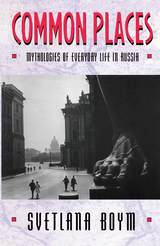
What is the “real Russia”? What is the relationship between national dreams and kitsch, between political and artistic utopia and everyday existence? Commonplaces of daily living would be perfect clues for those seeking to understand a culture. But all who write big books on Russian life confess their failure to get properly inside Russia, to understand its “doublespeak.”
Svetlana Boym is a unique guide. A member of the last Soviet Generation, the Russian equivalent of our Generation X, she grew up in Leningrad and has lived in the West for the past thirteen years. Her book provides a view of Russia that is historically informed, replete with unexpected detail, and everywhere stamped with authority. Alternating analysis with personal accounts of Russian life, Boym conveys the foreignness of Russia and examines its peculiar conceptions of private life and common good, of Culture and Trash, of sincerity and banality. Armed with a Dictionary of Untranslatable Terms, we step around Uncle Fedia asleep in the hall, surrounded by a puddle of urine, and enter the Communal Apartment, the central exhibit of the book. It is the ruin of the communal utopia and a unique institution of Soviet daily life; a model Soviet home and a breeding ground for grassroots informants. Here, privacy is forbidden; here the inhabitants defiantly treasure their bits of “domestic trash,” targets of ideological campaigns for the transformation (perestroika) of everyday life.
Against the Russian and Soviet myths of national destiny, the trivial, the ordinary, even the trashy, take on a utopian dimension. Boym studies Russian culture in a broad sense of the word; she ranges from nineteenth- and twentieth-century intellectual thought to art and popular culture. With her we go walking in Moscow and Leningrad, eavesdrop on domestic life, and discover jokes, films, and TV programs. Boym then reflects on the 1991 coup that marked the end of the Soviet Union and evoked fin-de-siècle apocalyptic visions. The book ends with a poignant reflection on the nature of communal utopia and nostalgia, on homesickness and the sickness of being home.
Cyberspaces of Everyday Life provides a critical framework for understanding how the Internet takes part in the production of social space. Mark Nunes draws on the spatial analysis work of Henri Lefebvre to make sense of cyberspace as a social product. Looking at online education, he explores the ways in which the Internet restructures the university. Nunes also examines social uses of the World Wide Web and illustrates the ways online communication alters the relation between the global and the local. He also applies Deleuzian theory to emphasize computer-mediated communications’ performative elements of spatial production.
Addressing the social and cultural implications of spam and anti-spam legislation, as well as how the burst Internet stock bubble and the Patriot Act have affected the relationship between networked spaces and daily living, Cyberspaces of Everyday Life sheds new light on the question of virtual space and its role in the offline world.
Mark Nunes is associate professor and chair of the English, Technical Communication, and Media Arts Department at Southern Polytechnic State University.
Nelson analyzes the practices of specific performers, showing how memories are recalled, bodies remade, and actions rethought as Okinawans work through fragments of the past in order to reconstruct the fabric of everyday life. Artists such as the popular Okinawan actor and storyteller Fujiki Hayato weave together genres including Japanese stand-up comedy, Okinawan celebratory rituals, and ethnographic studies of war memory, encouraging their audiences to imagine other ways to live in the modern world. Nelson looks at the efforts of performers and activists to wrest the Okinawan past from romantic representations of idyllic rural life in the Japanese media and reactionary appropriations of traditional values by conservative politicians. In his consideration of eisā, the traditional dance for the dead, Nelson finds a practice that reaches beyond the expected boundaries of mourning and commemoration, as the living and the dead come together to create a moment in which a new world might be built from the ruins of the old.

From advance planning to advice on bridging the return from the twenty-four week retreat to everyday life, this Director's Guide provides assistance to those organizing Ignatian retreats based on James W. Skehan's Place Me with Your Son and those wishing to deepen the previous retreat experience. This volume explains the foundations of each phase of the retreat and suggests ways to prepare for the transitions between the phases. Skehan reviews the basic concepts; anticipates problems and opportunities that may arise in each week; offers possible responses to exercitants' questions; and interprets Scriptural passages for modern readers. The Guide also includes a list of recommended supplemental readings and guidelines for integrating the retreat into the liturgical year.
Psychologists, says the old joke, know everything there is to know about the college sophomore and the white rat. But what about the rest of us, older than the former, bigger than the latter, with lives more labyrinthine than either? In this ambitious book, Karl E. Scheibe aims to take psychology out of its rut and bring it into contact with the complex lives that most people quietly live.
Drama, Scheibe reminds us, is no more confined to the theater than religion is to the church or education to the schoolroom. Accordingly, he brings to his reflection on psychology the drama of literature, poetry, philosophy, history, music, and theater. The essence of drama is transformation: the transformation of the quotidian world into something that commands interest and stimulates conversation. It is this dramatic transformation that Scheibe seeks in psychology as he pursues a series of suggestive questions, such as: Why is boredom the central motivational issue of our time? Why are eating and sex the biological foundations of all human dramas? Why is indifference a natural condition, caring a dramatic achievement? Why is schizophrenia disappearing? Why does gambling have cosmic significance?
Writing with elegance and passion, Scheibe asks us to take note of the self-representation, performance, and scripts of the drama that is our everyday life. In doing so, he challenges our dispirited senses and awakens psychology to a new realm of dramatic possibility.
Amato examines the common facts and occurrences in lives from all spheres, whether of a pauper or a noble, a criminal or state official, or a lunatic or a philosopher. Such facts include basic aspects of human existence, such as play, work, conflict, and healing, as well the logistics of survival, such as housing, clothing, cleaning, cooking, animals, plants, and machines. Tracing core historical developments like efficiency of production and greater mobility, Amato shows how we became modern in everyday ways. He explores how, paradoxically, commerce, technology, design, industrialization, nationalism, and democratization—which have so undercut traditional culture and have homogenized, centralized, and secularized masses of people—have also profoundly transformed daily life, affording citizens with materially improved lives, individual rights, and productive and rewarding expectations.
A wide-ranging account of lives throughout history, this book gives us new insights into our own condition, showing us how extraordinary the ordinary can be.
In the 150 years since Darwin, evolutionary biology has proven as essential as it is controversial, a critical concept for answering questions about everything from the genetic code and the structure of cells to the reproduction, development, and migration of animal and plant life. But today, as David P. Mindell makes undeniably clear in The Evolving World, evolutionary biology is much more than an explanatory concept. It is indispensable to the world we live in. This book provides the first truly accessible and balanced account of how evolution has become a tool with applications that are thoroughly integrated, and deeply useful, in our everyday lives and our societies, often in ways that we do not realize.
When we domesticate wild species for agriculture or companionship; when we manage our exposure to pathogens and prevent or control epidemics; when we foster the diversity of species and safeguard the functioning of ecosystems: in each of these cases, Mindell shows us, evolutionary biology applies. It is at work when we recognize that humans represent a single evolutionary family with variant cultures but shared biological capabilities and motivations. And last but not least, we see here how evolutionary biology comes into play when we use knowledge of evolution to pursue justice within the legal system and to promote further scientific discovery through education and academic research.
More than revealing evolution's everyday uses and value, The Evolving World demonstrates the excitement inherent in its applications--and convinces us as never before that evolutionary biology has become absolutely necessary for human existence.

Francis interviewed the mothers and fathers of children with such problems as depression, bi-polar disorder, autism, learning disabilities, drug addiction, alcoholism, fetal alcohol syndrome, and cerebral palsy. Children’s problems, she finds, profoundly upset the foundations of parents’ everyday lives, overturning taken-for-granted expectations, daily routines, and personal relationships. Indeed, these problems initiated a chain of disruption that moved through parents’ lives in domino-like fashion, culminating in a crisis characterized by uncertainty, loneliness, guilt, grief, and anxiety. Francis looks at how mothers and fathers often differ in their interpretation of a child’s condition, discusses the gendered nature of child rearing, and describes how parents struggle to find effective treatments and to successfully navigate medical and educational bureaucracies. But above all, Family Trouble examines how children’s problems disrupt middle-class dreams of the “normal” family. It captures how children’s problems “radiate” and spill over into other areas of parents’ lives, wreaking havoc even on their identities, leading them to reevaluate deeply held assumptions about their own sense of self and what it means to achieve the good life.
Engagingly written, Family Trouble offers insight to professionals and solace to parents. The book offers a clear message to anyone in the throes of family trouble: you are in good company, and you are not as different as you might feel...
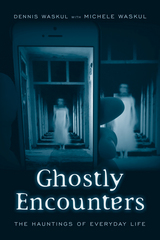
“In the top corner of the window a pale, milky-white wisp is rising almost to the top of our ten-foot ceiling…. I am startled but not afraid…. Mostly, I am engrossed; I have never seen anything like this before (or since) and it fascinates me.”
Dennis Waskul writes these lines—about his first-hand experience with the supernatural—in the introduction to his beguiling book Ghostly Encounters. Based on two years of fieldwork and interviews with 71 midwestern Americans, the Waskuls’ book is a reflexive ethnography that examines how people experience ghosts and hauntings in everyday life. The authors explore how uncanny happenings become ghosts, and the reasons people struggle with or against a will to believe. They present the variety and character of hauntings and ghostly encounters, outcomes of people telling haunted legends, and the nested consequences of ghostly experiences.
Through these stories, Ghostly Encounters seeks to understand the persistence of uncanny experiences and beliefs in ghosts in an age of reason, science, education, and technology—as well as how those beliefs and experiences both reflect and serve important social and cultural functions.


The Joyce of Everyday Life teaches us how to interpret seemingly mundane objects and encounters with openness and active curiosity in order to attain greater self-understanding and a fuller appreciation of others. Through a close examination of Joyce's joyous, musical prose, it shows how language provides us with the means to revitalize daily experience and social interactions across a huge, diverse, everchanging world.
Acclaimed Joyce scholar Vicki Mahaffey demonstrates how his writing might prompt us to engage in a different kind of reading, treating words and fiction as tools for expanding the boundaries of the self with humor and feeling. A book for everyone who loves language, The Joyce of Everyday Life is a lyrical romp through quotidian existence.
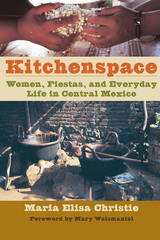
Throughout the world, the kitchen is the heart of family and community life. Yet, while everyone has a story to tell about their grandmother's kitchen, the myriad activities that go on in this usually female world are often devalued, and little scholarly attention has been paid to this crucial space in which family, gender, and community relations are forged and maintained. To give the kitchen the prominence and respect it merits, Maria Elisa Christie here offers a pioneering ethnography of kitchenspace in three central Mexican communities, Xochimilco, Ocotepec, and Tetecala.
Christie coined the term "kitchenspace" to encompass both the inside kitchen area in which everyday meals for the family are made and the larger outside cooking area in which elaborate meals for community fiestas are prepared by many women working together. She explores how both kinds of meal preparation create bonds among family and community members. In particular, she shows how women's work in preparing food for fiestas gives women status in their communities and creates social networks of reciprocal obligation. In a culture rigidly stratified by gender, Christie concludes, kitchenspace gives women a source of power and a place in which to transmit the traditions and beliefs of older generations through quasi-sacramental food rites.

"The subject of law in everyday life is timely in theory and in practice. The essays collected here are stimulating for the very different ways in which they reconfigure the meanings of 'the law' as cultural practice, and 'the everyday' as a cultural domain in which the state expresses a range of interests and engagements. Readers looking for an introduction to this topic will come away from the book with a clear sense of the varied voices and modes of inquiry now involved in sociolegal studies, and what distinguishes them. More experienced readers will appreciate the book's meticulous reconsideration of the instrumentalities, agencies, and constructedness of law." --Carol Greenhouse, Indiana University
Contributors include David Engel, Hendrik Hartog, Thomas R. Kearns, David Kennedy, Catharine MacKinnon, George Marcus, Austin Sarat, and Patricia Williams.
Austin Sarat is William Nelson Cromwell Professor of Jurisprudence and Political Science, and Chair of the Department of Law, Jurisprudence, and Social Thought, Amherst College. Thomas R. Kearns is William H. Hastie Professor of Philosophy and Professor of Law, Jurisprudence, and Social Thought, Amherst College.
Luck touches us all. "Why me?" we complain when things go wrong—though seldom when things go right. But although luck has a firm hold on all our lives, we seldom reflect on it in a cogent, concerted way.
In Luck, one of our most eminent philosophers offers a realistic view of the nature and operation of luck to help us come to sensible terms with life in a chaotic world. Differentiating luck from fate (inexorable destiny) and fortune (mere chance), Nicholas Rescher weaves a colorful tapestry of historical examples, from the use of lots in the Old and New Testaments to Thomas Gataker’s treatise of 1619 on the great English lottery of 1612, from casino gambling to playing the stock market. Because we are creatures of limited knowledge who do and must make decisions in the light of incomplete information, Rescher argues, we are inevitably at the mercy of luck. It behooves us to learn more about it.
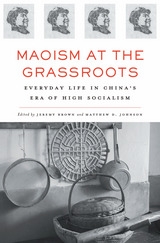
The Maoist state’s dominance over Chinese society, achieved through such watersheds as the Great Leap Forward and the Cultural Revolution, is well known. Maoism at the Grassroots reexamines this period of transformation and upheaval from a new perspective, one that challenges the standard state-centered view. Bringing together scholars from China, Europe, North America, and Taiwan, this volume marshals new research to reveal a stunning diversity of individual viewpoints and local experiences during China’s years of high socialism.
Focusing on the period from the mid-1950s to 1980, the authors provide insights into the everyday lives of citizens across social strata, ethnicities, and regions. They explore how ordinary men and women risked persecution and imprisonment in order to assert personal beliefs and identities. Many displayed a shrewd knack for negotiating the maze-like power structures of everyday Maoism, appropriating regime ideology in their daily lives while finding ways to express discontent and challenge the state’s pervasive control.
Heterogeneity, limited pluralism, and tensions between official and popular culture were persistent features of Maoism at the grassroots. Men had gay relationships in factory dormitories, teenagers penned searing complaints in diaries, mentally ill individuals cursed Mao, farmers formed secret societies and worshipped forbidden spirits. These diverse undercurrents were as representative of ordinary people’s lives as the ideals promulgated in state propaganda.
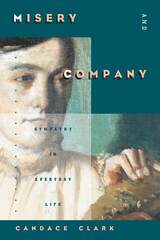
"Clark's . . . research methods [are] inventive and her glimpses of U.S. life revealing. . . . And you have to love a social scientist so respectful of Miss Manners."—Clifford Orwin, Toronto Globe and Mail
"Clark offers a thought-provoking and quite interesting etiquette of sympathy according to which we ought to act in order to preserve the sympathy credits we can call on in time of need."—Virginia Quarterly Review
In TheMorality of Everyday Life, Thomas Fleming offers an alternative to the enlightened liberalism espoused by thinkers as different as Kant, Mill, Rand, and Rawls. Philosophers in the liberal tradition, although they disagree on many important questions, agree that moral and political problems should be looked at from an objective point of view and a decision made from a rational perspective that is universally applied to all comparable cases.
Fleming instead places importance on the particular, the local, and moral complexity. He advocates a return to premodern traditions, such as those exemplified in the texts of Aristotle, the Talmud, and the folk wisdom in ancient Greek literature, for a solution to ethical predicaments. In his view, liberalism and postmodernism ignore the fact that human beings by their very nature refuse to live in a world of universal abstractions.
While such modern philosophers as Kant and Kohlberg have regarded a mother’s self-sacrificing love for her children as beneath their level of morality, folk wisdom tells us it is nearly the highest morality, taking precedence over the duties of citizenship or the claims of humanity. Fleming believes that a modern type of “casuistry” should be applied to these moral conflicts in which the line between right and wrong is rarely clear.
This volume will appeal to students of ethics and classics, as well as the general educated reader, who will appreciate Fleming’s jargon-free prose. Teachers will find this text useful because each chapter is a self-contained essay that could be used as the basis for classroom discussion.

Waite advances his argument by bringing Marxist—especially Gramscian and Althusserian—theories to bear on the concept of Nietzsche/anism. But he also goes beyond ideological convictions to explore the vast Nietzschean influence that proliferates throughout the marketplace of contemporary philosophy, political and literary theory, and cultural and technocultural criticism. In light of a philological reconstruction of Nietzsche’s published and unpublished texts, Nietzsche’s Corps/e shuttles between philosophy and everyday popular culture and shows them to be equally significant in their having been influenced by Nietzsche—in however distorted a form and in a way that compromises all of our best interests.
Controversial in its “decelebration” of Nietzsche, this remarkable study asks whether the postcontemporary age already upon us will continue to be dominated and oriented by the haunting spectre of Nietzsche’s corps/e. Philosophers, intellectual historians, literary theorists, and those interested in western Marxism, popular culture, Friedrich Nietzsche, and the intersection of French and German thought will find this book both appealing and challenging.
Santner's crucial innovation in this new study is to bring the theological notion of revelation into a broadly psychoanalytic field, where it can be understood as a force that opens the self to everyday life and encourages accountability within the larger world. Revelation itself becomes redefined as an openness toward what is singular, enigmatic, even uncanny about the Other, whether neighbor or stranger, thereby linking a theory of drives and desire to a critical account of sociality. Santner illuminates what it means to be genuinely open to another human being or culture and to share and take responsibility for one's implication in the dilemmas of difference.
By bringing Freud and Rosenzweig together, Santner not only clarifies in new and surprising ways the profound connections between psychoanalysis and the Judeo-Christian tradition, he makes the resources of both available to contemporary efforts to rethink concepts of community and cross-cultural communication.
Arranged as a twenty-four week retreat in four phases, this edition is a guide to The Spiritual Exercises of St. Ignatius Loyola. It incorporates "centering" exercises of awareness patterned on Eastern or Buddhist meditation practices and devotional exercises similar to or drawn from those found in Sadhana, by the late Anthony de Mello, SJ. Poems and prayers by Rainer Maria Rilke, Rabindranath Tagore, T.S. Eliot, Ezra Pound, Edith Sitwell, and others are also included, as well as materials from Teilhard de Chardin's Divine Milieu.
This book reflects a conscious attempt to follow the general model of Martin Heidegger’s Zollikon Seminars, in which Heidegger engaged psychiatrists and psychologists in a sustained dialogue aimed at developing their critical awareness of the unexamined philosophical foundations informing their everyday clinical practice. Wender draws on Heidegger to argue that “praxis is poetry” and from this standpoint interprets all social action as intentional creation (or “poiesis”), which by its very nature is intrinsically meaningful. Using an interpretive framework that he calls a “phenomenological aesthetics of encounter,” Wender takes up a number of case studies of police-citizen encounters, including cases of domestic violence, contacts with juveniles, drug-related situations, instances of mental and emotional crisis, and death.
This important new work is a study of the everyday lives of the inhabitants of São Paulo in the nineteenth century. Full of vivid detail, the book concentrates on the lives of working women--black, white, Indian, mulatta, free, freed, and slaves, and their struggles to survive. Drawing on official statistics, and on the accounts of travelers and judicial records, the author paints a lively picture of the jobs, both legal and illegal, that were performed by women. Her research leads to some surprising discoveries, including the fact that many women were the main providers for their families and that their work was crucial to the running of several urban industries. This book, which is a unique record of women’s lives across social and race strata in a multicultural society, should be of interest to students and researchers in women’s studies, urban studies, historians, geographers, economists, sociologists, and anthropologists.
This important new work is a study of the everyday lives of the inhabitants of São Paulo in the nineteenth century. Full of vivid detail, the book concentrates on the lives of working women--black, white, Indian, mulatta, free, freed, and slaves, and their struggles to survive. Drawing on official statistics, and on the accounts of travelers and judicial records, the author paints a lively picture of the jobs, both legal and illegal, that were performed by women. Her research leads to some surprising discoveries, including the fact that many women were the main providers for their families and that their work was crucial to the running of several urban industries. This book, which is a unique record of women’s lives across social and race strata in a multicultural society, should be of interest to students and researchers in women’s studies, urban studies, historians, geographers, economists, sociologists, and anthropologists.

Since the 1970s, health professionals, researchers, governments, advocacy groups, and commercial interests have invested in the pursuit of something called "sexual health." Under this expansive banner, a wide array of programs have been launched, organizations founded, initiatives funded, products sold—and yet, no book before this one asks: What does it mean to be sexually healthy? When did people conceive of a form of health called sexual health? And how did it become the gateway to addressing a host of social harms and the reimagining of private desires and public dreams?
Conjoining "sexual" with "health" changes both terms: it alters how we conceive of sexuality and transforms what it means to be healthy, prompting new expectations of what medicine can provide. Yet the ideal of achieving sexual health remains elusive and open-ended, and the benefits and costs of promoting it are unevenly distributed across genders, races, and sexual identities. Rather than a thing apart, sexual health is intertwined with nearly every conceivable topical debate—from sexual dysfunction to sexual violence, from reproductive freedom to the practicalities of sexual contact in a pandemic. In this book Steven Epstein analyzes the rise, proliferation, uptake, and sprawling consequences of sexual health activities, offering critical tools to assess those consequences, expand capacities for collective decision making, and identify pathways that promote social justice.
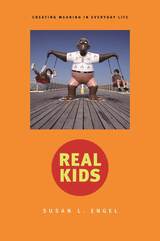
Decades of work in psychology labs have vastly enhanced our knowledge about how children perceive, think, and reason. But it has also encouraged a distorted view of children, argues psychologist Susan Engel in this provocative and passionate book--a view that has affected every parent who has tried to debate with a six-year-old. By focusing on the thinking processes prized by adults, too many expert opinions have rendered children as little adults. What has been lost is what is truly unique and mysterious--the childlike quality of a child's mind.
Engel draws on keen observations and descriptive research to take us into the nearly forgotten, untidy, phantasmagorical world of children's inner lives. She reminds us that children fuse thought and emotion, play and reality; they swing wildly between different ways of interpreting and acting in the world. But just as a gawky child may grow into a beauty, illogical and sometimes maddening childishness can foreshadow great adult ability.
Engel argues that the "scientist in a crib" view encourages parents and teachers to expect more logical reasoning and emotional self-control from children than they possess. She provides a concise and valuable overview of what modern developmental psychologists have learned about children's developing powers of perception and capacity for reasoning, but also suggests new ways of studying children that better capture the truth about their young minds.
Lynn Chancer advances the provocative thesis that sadomasochism is far more prevalent in contemporary societies like the United States than we realize. According to Chancer, sexual sadomasochism is only the best-known manifestation of what is actually a much more broadly based social phenomenon. Moving from personal relationships to school, the workplace, and other interactions, Chancer uses a variety of examples that are linked by a recurrent pattern of behavior. She goes beyond the predominantly individualistic and psychological explanations generally associated with sadomasochism (including those popularized in the "how to" literature of the recent Women Who Love Too Much genre) toward a more sociological interpretation. Chancer suggests that the structure of societies organized along male-dominated and capitalistic lines reflects and perpetuates a sadomasochistic social psychology, creating a culture steeped in everyday experiences of dominance and subordination.
In the first part of the book, Chancer discusses the prevalence of sadomasochistic cultural imagery in contemporary America and examines sadomasochism through several perspectives. She develops a set of definitional traits both through existential analysis of an instance of S/M sex and by incorporating a number of Hegelian and psychoanalytic concepts. In the second part of the book, she places sadomasochism in a broader context by exploring whether and how it appears in the workplace and how it relates to gender and race.
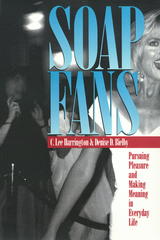
Do soap opera fans deserve their reputation as lonely people, hopeless losers, or bored housewives? No, according to C. Lee Harrington and Denise D. Bielby. These authors—soap fans themselves—argue that soap fans are normal individuals who translate their soap watching into a broad range of public and private experience. People who cut across all categories of age, gender, race, ethnicity, income, education, and ideology incorporate a love of the soaps into their day-to-day leisure activities.
Interviews with soap opera viewers, actors, writers, producers, directors, the daytime press, and fan club staff members reveal fascinating details about the inside world of fandom and the multitude of outlets for fan expression—clubs, newsletters, electronic bulletin boards, and public events. Numerous examples illustrate the pleasure fans derive from critiquing characters, speculating on plot twists, and swapping memorabilia.
Examining the experiences that shape fan culture, Harrington and Bielby analyze the narrative structure and various aspects of the production of the soaps. Their examination reveals that the "meaning" of soaps is complex, individualized, and not simply a reflection of the narrative content of the stories. The authors show fans who actively contemplate what it means to be a fan, and who adjust their level of involvement accordingly.

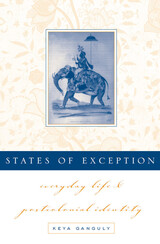
Explores the conflict between capitalism and tradition in an immigrant community
A philosophical anthropology of everyday experience, this book is also a deeply informed and thought-provoking reflection on the work of cultural critique. States of Exception looks into a community of immigrants from India living in southern New Jersey—a group to whom the author, as a daughter of two of its members, enjoyed unprecedented access.
Her position allows Keya Ganguly to approach the culture of a middle-class group (albeit one that is marginalized by racial prejudice), while the group’s relatively comfortable and protected style of life offers unusual insight into the concept of the everyday and the sense in which a seemingly commonplace existence can be understood as in crisis: a state of exception. Thus, Ganguly draws on the work of the Frankfurt School, particularly Walter Benjamin and Theodor Adorno, to explore the possibilities of a dialectical critique of the everyday—a state of exception informing ordinary yet crisis-ridden narratives of the self under late capitalism.

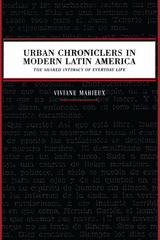
An unstructured genre that blends high aesthetic standards with nonfiction commentary, the journalistic crónica, or chronicle, has played a vital role in Latin American urban life since the nineteenth century. Drawing on extensive archival research, Viviane Mahieux delivers new testimony on how chroniclers engaged with modernity in Mexico City, Buenos Aires, and São Paulo during the 1920s and 1930s, a time when avant-garde movements transformed writers' and readers' conceptions of literature. Urban Chroniclers in Modern Latin America: The Shared Intimacy of Everyday Life examines the work of extraordinary raconteurs Salvador Novo, Cube Bonifant, Roberto Arlt, Alfonsina Storni, and Mário de Andrade, restoring the original newspaper contexts in which their articles first emerged.
Each of these writers guided their readers through a constantly changing cityscape and advised them on matters of cultural taste, using their ties to journalism and their participation in urban practice to share accessible wisdom and establish their role as intellectual arbiters. The intimate ties they developed with their audience fostered a permeable concept of literature that would pave the way for overtly politically engaged chroniclers of the 1960s and 1970s. Providing comparative analysis as well as reflection on the evolution of this important genre, Urban Chroniclers in Modern Latin America is the first systematic study of the Latin American writers who forged a new reading public in the early twentieth century.
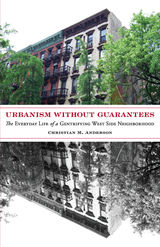
A unique more-than-capitalist take on urban dynamics
Vigilante action. Renegades. Human intrigue and the future at stake in New York City. In Urbanism without Guarantees, Christian M. Anderson offers a new perspective on urban dynamics and urban structural inequality based on an intimate ethnography of on-the-ground gentrification.
The book is centered on ethnographic work undertaken on a single street in Clinton/Hell’s Kitchen in New York City—once a site of disinvestment, but now rapidly gentrifying. Anderson examines the everyday strategies of residents to preserve the quality of life of their neighborhood and to define and maintain their values of urban living—from picking up litter and reporting minor concerns on the 311 hotline to hiring a private security firm to monitor the local public park. Anderson demonstrates how processes such as investment and gentrification are constructed out of the collective actions of ordinary people, and challenges prevalent understandings of how place-based civic actions connect with dominant forms of political economy and repressive governance in urban space.
Examining how residents are pulled into these systems of gentrification, Anderson proposes new ways to think and act critically and organize for transformation of a place—in actions that local residents can start to do wherever they are.

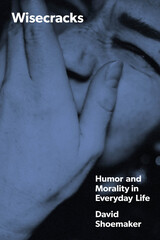
A good sense of humor is key to the good life, but a joke taken too far can get anyone into trouble. Where to draw the line is not as simple as it may seem. After all, even the most innocent quips between friends rely on deception, sarcasm, and stereotypes and often run the risk of disrespect, meanness, and harm. How do we face this dilemma without taking ourselves too seriously?
In Wisecracks, philosopher David Shoemaker examines this interplay between humor and morality and ultimately argues that even morally suspect humor is an essential part of ethical life. Shoemaker shows how improvised “wisecracks” between family and friends—unlike scripted stand-up, sketches, or serials—help us develop a critical human skill: the ability to carry on and find the funny in tragedy. In developing a new ethics of humor in defense of questionable gibes, Wisecracks offers a powerful case for humor as a healing presence in human life.
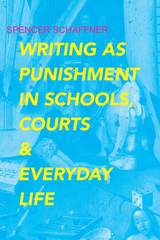
Writing tends to be characterized as a positive aspect of literacy that helps us to express our thoughts, to foster interpersonal communication, and to archive ideas. However, there is a vast array of evidence that emphasizes the counterbelief that writing has the power to punish, shame, humiliate, control, dehumanize, fetishize, and transform those who are subjected to it. In Writing as Punishment in Schools, Courts, and Everyday Life, Spencer Schaffner looks at many instances of writing as punishment, including forced tattooing, drunk shaming, court-ordered letters of apology, and social media shaming, with the aim of bringing understanding and recognition to the coupling of literacy and subjection.
Writing as Punishment in Schools, Courts, and Everyday Life is a fascinating inquiry into how sinister writing can truly be and directly questions the educational ideal that powerful writing is invariably a public good. While Schaffner does look at the darker side of writing, he neither vilifies nor supports the practice of writing as punishment. Rather, he investigates the question with humanistic inquiry and focuses on what can be learned from understanding the many strange ways that writing as punishment is used to accomplish fundamental objectives in everyday life.
Through five succinct case studies, we meet teachers, judges, parents, sex traffickers, and drunken partiers who have turned to writing because of its presumed power over writers and readers. Schaffner provides careful analysis of familiar punishments, such as schoolchildren copying lines, and more bizarre public rituals that result in ink-covered bodies and individuals forced to hold signs in public.
Schaffner argues that writing-based punishment should not be dismissed as benign or condemned as a misguided perversion of writing, but instead should be understood as an instrument capable of furthering both the aims of justice and degradation.
READERS
Browse our collection.
PUBLISHERS
See BiblioVault's publisher services.
STUDENT SERVICES
Files for college accessibility offices.
RECENTLY PUBLISHED


UChicago Accessibility Resources
home | accessibility | search | about | contact us
BiblioVault ® 2001 - 2024
The University of Chicago Press