 A SCHOLARLY BOOK REPOSITORY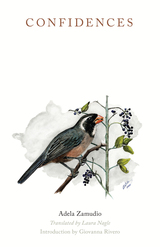
Juan is a Bolivian poet at the turn of the century, visiting the city of Cochabamba and writing letters to his friend Armando about the masked sensuality and hostility he feels seething beneath the placid face of this insular mining town. Antonia is a married woman living in Cochabamba, writing to her friend Gracia about the local gossip—which soon erupts into a scandal that threatens to destroy a family. Contrasting Juan’s letters home with Antonia’s private correspondence to her friend, Confidences tells a story of tragic love and explosive passions, showing how the intimacies that begin behind closed doors spill out into the public sphere.
The only novel written by acclaimed feminist poet Adela Zamudio, Confidences was harshly criticized for not following the conventions of realist literature, but it has since been hailed as a lost classic of Bolivian modernism. Now available in English for the first time, this translation captures the lyrical qualities of Zamudio’s prose as it vividly depicts how sexism, religious dogma, and prejudice prevented women from shaping their own destinies.
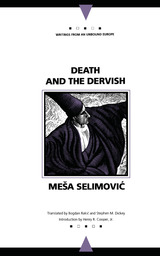
Hugely successful when published in the 1960s, Death and the Dervish is an enduring classic made into a feature length film in 1974.
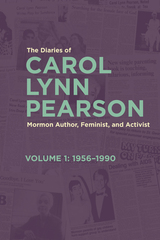
“I feel somehow that of all the writing I am doing, my diary is the most important.” So wrote the beloved and bestselling author, poet, and playwright Carol Lynn Pearson in her 1979 diary. Several years before, she recorded, “I feel the imperative of history. . . . Add that to my being a household word to many and I cannot escape the feeling that in many years there might be a number of people interested in these pages.” That time has now come.
Unbeknownst to almost everyone but herself, Pearson kept a near-daily diary since she was a teenager, recording her remarkable story in the context of twentieth- and twenty-first-century Mormon America. In this first of a four-volume series, Pearson chronicles her love for her church but also her troubling experiences and concerns with its patriarchy, historic doctrine of polygamy, omission of a feminine divine, and homophobia. Readers will rejoice with her as her first book of poetry, Beginnings, sells an astonishing 150,000+ copies and puts her on the map in the 1960s, empathize with her as she watches her church help kill the Equal Rights Amendment in the 1970s, and mourn with her as her mixed-orientation marriage ends and she cares for her former husband in her home as he dies of AIDS in the 1980s. The sensitive-girl-turned-strong-woman who emerges in these diaries insists that we move from patriarchy into partnership, change our destructive policies towards Queer people, and invite God the Mother back into our heavenly family.
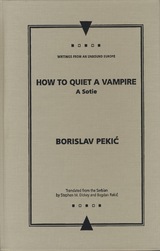
Delving far deeper than mere intellect, however, Borislav Pekic was himself a frequent political agitator and occasional prisoner, and he drew on his first hand knowledge of police methods and life under totalitarianism to paint a chilling portrait of a supposedly free-thinking intellectual acting in the service of repression. At the same time he questions whether Rutkowski's ideology puts him outside the philosophical tradition he so admires—or if the line separating European thought from totalitarianism is not as clear as we like to think.
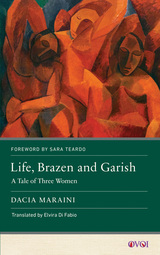
Life, Brazen and Garish offers a fresh take on the epistolary novel, telling the story of a family through the fragmented and disparate perspectives of daughter, mother, and grandmother. Yet even as each woman endures her private struggles with love and betrayal, youth and maturity, knowledge and ignorance, reality and illusion, the Cascadeis forge a solidarity that transcends generations. In turns heartbreaking and laugh-out-loud funny, this novel is a triumph of narrative voice and literary style from one of Italy’s most renowned writers.
Questo libro è stato tradotto grazie a un contributo del Ministero degli Affari Esteri e della Cooperazione Internazionale italiano.
This book has been translated thanks to a contribution from the Italian Ministry of Foreign Affairs and International Cooperation.
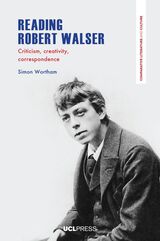
Robert Walser’s letters to Frieda Mermet, the laundry manager at a Swiss psychiatric hospital, offer an intimate and enigmatic glimpse into the mind of a writer whose literary fortunes waned even as his influence grew in the decades following his death. Covering nearly thirty years, from 1913 to 1942, these letters chart Walser’s transition from a celebrated modernist to a man institutionalized, yet still deeply engaged with language and identity.
In Reading Robert Walser, Simon Wortham studies Walser’s letters within the broader context of modernist literature and deconstruction, and also imaginatively reconstructs Mermet’s possible lost responses, blurring the lines between criticism and creativity. The result is an innovative exploration of authorship and the act of reading itself—one that deepens our understanding of Walser’s life and work while questioning the very nature of literary correspondence.
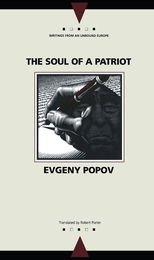
Freely parodying conformist Russian writing, this novel takes its lead as much from Sterne and Diderot as from the brilliant Russian satirist Mikhail Zoshchenko. In the offhand witticisms and jaunty humor speaks the spirit that survived the "era of stagnation" of Soviet literature.
READERS
Browse our collection.
PUBLISHERS
See BiblioVault's publisher services.
STUDENT SERVICES
Files for college accessibility offices.
RECENTLY PUBLISHED





UChicago Accessibility Resources
home | accessibility | search | about | contact us
BiblioVault ® 2001 - 2025
The University of Chicago Press