
front cover of A A Political Space
A A Political Space
Reading The Global Through Clayoquot Sound
Warren Magnusson
University of Minnesota Press, 2002

An innovative look at the convergence of global trends and local struggles in this out-of-the-way place.

On the remote outer coast of Vancouver Island in British Columbia, Clayoquot Sound might seem to be situated at the periphery of contemporary power and authority. And yet, as the disputed land of native peoples and the contentious site of corporate logging in one of the world’s last remaining temperate rain forests, Clayoquot Sound is also squarely in the middle of global politics today. These authors develop a new way of making sense of the rapidly changing character of political life in our day, revealing the political problems and possibilities inherent in the convergence of the global and the local so dramatically enacted in Clayoquot Sound.

Contributors: Umeek of Ahousaht (E. Richard Atleo), Malaspina U College, British Columbia; William Chaloupka, U of Montana; Thom Kuehls, Weber State U; Timothy W. Luke, Virginia Polytechnic; R. Michael M’Gonigle, U of Victoria; Catriona Sandilands, York U, Toronto; Gary C. Shaw, California State U, Stanislaus; R. B. J. Walker, Keele U, UK; Sharon Zukin, Brooklyn College and CUNY.rights: CAN
[more]

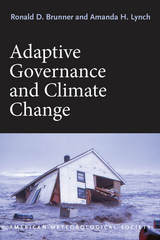
front cover of Adaptive Governance and Climate Change
Adaptive Governance and Climate Change
Ronald D. Brunner and Amanda H. Lynch
American Meteorological Society, 2010

While recent years have seen undeniable progress in international acknowledgement both of the dangers of climate change and the importance of working to mitigate it, little has actually been done. Emissions continue to rise, and even the ambitious targets set by international accords would fall far short of the drastic cuts that are needed to prevent catastrophe.

            
With Adaptive Governance and Climate Change, Ronald D. Brunner and Amanda H. Lynch argue that we need to take a new tack, moving away from reliance on centralized, top-down approaches—the treaties and accords that have proved disappointingly ineffective thus far—and towards a more flexible, multi-level approach. Based in the principles of adaptive governance—which are designed to produce programs that adapt quickly and easily to new information and experimental results—such an approach would encourage diversity and innovation in the search for solutions, while at the same time pointedly recasting the problem as one in which every culture and community around the world has an inherent interest.
[more]

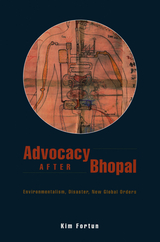
front cover of Advocacy after Bhopal
Advocacy after Bhopal
Environmentalism, Disaster, New Global Orders
Kim Fortun
University of Chicago Press, 2001
The 1984 explosion of the Union Carbide chemical plant in Bhopal, India was undisputedly one of the world's worst industrial disasters. Some have argued that the resulting litigation provided an "innovative model" for dealing with the global distribution of technological risk; others consider the disaster a turning point in environmental legislation; still others argue that Bhopal is what globalization looks like on the ground.

Kim Fortun explores these claims by focusing on the dynamics and paradoxes of advocacy in competing power domains. She moves from hospitals in India to meetings with lawyers, corporate executives, and environmental justice activists in the United States to show how the disaster and its effects remain with us. Spiraling outward from the victims' stories, the innovative narrative sheds light on the way advocacy works within a complex global system, calling into question conventional notions of responsibility and ethical conduct. Revealing the hopes and frustrations of advocacy, this moving work also counters the tendency to think of Bhopal as an isolated incident that "can't happen here."

[more]

front cover of After Preservation
After Preservation
Saving American Nature in the Age of Humans
Edited by Ben A. Minteer and Stephen J. Pyne
University of Chicago Press, 2015
From John Muir to David Brower, from the creation of Yellowstone National Park to the Endangered Species Act, environmentalism in America has always had close to its core a preservationist ideal. Generations have been inspired by its ethos—to encircle nature with our protection, to keep it apart, pristine, walled against the march of human development. But we have to face the facts. Accelerating climate change, rapid urbanization, agricultural and industrial devastation, metastasizing fire regimes, and other quickening anthropogenic forces all attest to the same truth: the earth is now spinning through the age of humans. After Preservation takes stock of the ways we have tried to both preserve and exploit nature to ask a direct but profound question: what is the role of preservationism in an era of seemingly unstoppable human development, in what some have called the Anthropocene?
           
Ben A. Minteer and Stephen J. Pyne bring together a stunning consortium of voices comprised of renowned scientists, historians, philosophers, environmental writers, activists, policy makers, and land managers to negotiate the incredible challenges that environmentalism faces. Some call for a new, post-preservationist model, one that is far more pragmatic, interventionist, and human-centered. Others push forcefully back, arguing for a more chastened and restrained vision of human action on the earth. Some try to establish a middle ground, while others ruminate more deeply on the meaning and value of wilderness. Some write on species lost, others on species saved, and yet others discuss the enduring practical challenges of managing our land, water, and air.

From spirited optimism to careful prudence to critical skepticism, the resulting range of approaches offers an inspiring contribution to the landscape of modern environmentalism, one driven by serious, sustained engagements with the critical problems we must solve if we—and the wild garden we may now keep—are going to survive the era we have ushered in.  

Contributors include: Chelsea K. Batavia, F. Stuart (Terry) Chapin III, Norman L. Christensen, Jamie Rappaport Clark, William Wallace Covington, Erle C. Ellis, Mark Fiege, Dave Foreman, Harry W. Greene, Emma Marris, Michelle Marvier, Bill McKibben, J. R. McNeill, Curt Meine, Ben A. Minteer, Michael Paul Nelson, Bryan Norton, Stephen J. Pyne, Andrew C. Revkin, Holmes Rolston III, Amy Seidl, Jack Ward Thomas, Diane J. Vosick, John A. Vucetich, Hazel Wong, and Donald Worster. 
[more]

front cover of Amazon Sweet Sea
Amazon Sweet Sea
Land, Life, and Water at the River's Mouth
By Nigel J. H. Smith
University of Texas Press, 2002

Far into the Atlantic Ocean, the outflow from the Amazon River creates a "sweet sea" of fresh water. At the river's mouth, a vast delta of river channels and marshes, floodplain and upland forests, open and scrub savannas, floating meadows, and mangrove swamps hosts an astonishingly diverse assemblage of plant and animal life. So rich is this biological treasure house that early European explorers deemed it inexhaustible.

In this highly readable book, Nigel Smith explores how human use of the Amazon estuary's natural resources has been affected by technological change, rapid urban growth, and accelerated market integration. Avoiding alarmist rhetoric, he shows how human intervention in the estuary has actually diversified agriculture and helped save floodplain forests from wanton destruction. His findings underscore the importance of understanding the history of land use and the ecological knowledge of local people when formulating development and conservation policies. The book will be of interest to everyone concerned with the fate of tropical forests, conserving biodiversity, and developing natural resources in a sustainable manner.

[more]

front cover of Back to Earth
Back to Earth
Tomorrow's Environmentalism
Anthony Weston
Temple University Press, 1994

front cover of Behavioral and Distributional Effects of Environmental Policy
Behavioral and Distributional Effects of Environmental Policy
Edited by Carlo Carraro and Gilbert E. Metcalf
University of Chicago Press, 2001
Most people would agree that it makes sense to tax a company that pollutes in a way that directly reflects the amount of environmental and social damage it has done. Yet in practice, such taxes are fraught with difficulty and have far-reaching implications. A company facing a new tax may lay off workers, for example, exacerbating an unemployment problem. This volume focuses on such external issues and examines in detail the trade-offs involved in designing policies to deal with environmental problems. Reflecting the broad nature of the subject, the contributors include leading economists in the areas of public finance, industrial organization, and trade theory, as well as environmental economists. Integrating both theoretical and empirical methods, they examine environmental policy design as it relates to location decisions, compliance costs, administrative costs, effects on research and development, and international factor movements. Shedding light on an extraordinarily complex and important topic, this collection will be of interest to all those involved in designing effective environmental policy.
[more]

front cover of Beyond Sun and Sand
Beyond Sun and Sand
Caribbean Environmentalisms
Edited by Sherrie L. Baver and Barbara Deutsch Lynch
Rutgers University Press, 2006
Filtered through the lens of the North American and European media, the Caribbean appears to be a series of idyllic landscapes-sanctuaries designed for sailing, diving, and basking in the sun on endless white sandy beaches. Conservation literature paints a similarly enticing portrait, describing the region as a habitat for endangered coral reefs and their denizens, parrots, butterflies, turtles, snails, and a myriad of plant species.

In both versions, the image of the exotic landscape overshadows the rich island cultures that are both linguistically and politically diverse, but trapped in a global economy that offers few options for development. Popular depictions also overlook the reality that the region is fraught with environmental problems, including water and air pollution, solid waste mismanagement, destruction of ecosystems, deforestation, and the transition from agriculture to ranching.

Bringing together ten essays by social scientists and activists, Beyond Sun and Sand provides the most comprehensive exploration to date of the range of environmental issues facing the region and the social movements that have developed to deal with them. The authors consider the role that global and regional political economies play in this process and provide valuable insight into Caribbean environmentalism. Many of the essays by prominent Caribbean analysts are made available for the first time in English.
[more]

front cover of The Blue and the Green
The Blue and the Green
A Cultural Ecological History of an Arizona Ranching Community
Jack Stauder
University of Nevada Press, 2016

In The Blue and the Green, anthropologist Jack Stauder analyzes how large-scale political, social, and environmental processes have transformed ranching and rural life in the West. Focusing on the community of Blue, Arizona, Stauder details how the problems of overgrazing, erosion, and environmental stresses on the open range in the early twentieth century coincided with a push by the newly created US Forest Service to develop fenced grazing allotments on federal lands. Later in the twentieth century, with the enactment of the Endangered Species Act and other laws, the growing power of urban-based environmental groups resulted in the reduction of federal grazing leases throughout the West.

The author combines historical research with oral interviews to explore the impact of these transformations on the ranchers residing in the Blue River Valley of eastern Arizona. Stauder gives voice to these ranchers, along with Forest Service personnel, environmental activists, scientists, and others involved with issues on “the Blue,” shedding light on how the ranchers’ rural way of life has changed dramatically over the course of the past century. This is a fascinating case study of the effects of increasing government regulations and the influence of outsiders on ranching communities in the American West.

[more]

front cover of Building a Green Economy
Building a Green Economy
Perspectives from Ecological Economics
Robert B. Richardson
Michigan State University Press, 2013

The first decade of the twenty-first century has been characterized by a growing global awareness of the tremendous strains that human economic activity place on natural resources and the environment. As the world’s population increases, so does the demand for energy, food, and other resources, which adds to existing stresses on ecosystems, with potentially disastrous consequences. Humanity is at a crossroads in our pathway to future prosperity, and our next steps will impact our long-term sustainability immensely. In this timely volume, leading ecological economics scholars offer a variety of perspectives on building a green economy. Grounded in a critique of conventional thinking about unrestrained economic expansion and the costs of environmental degradation, this book presents a roadmap for an economy that prioritizes human welfare over consumerism and growth. As the authors represented here demonstrate, the objective of ecological economics is to address contemporary problems and achieve long-term socioeconomic well-being without undermining the capacity of the ecosphere. The volume is organized around three sections: “Perspectives on a Green Economy,” “Historical and Theoretical Perspectives,” and “Applications and Practice.” A rich resource in its own right, Building a Green Economy contains the most innovative thinking in ecological economics at a critical time in the reexamination of the human relationship with the natural world.

[more]

front cover of Bureaucracy vs. Environment
Bureaucracy vs. Environment
The Environmental Costs of Bureaucratic Governance
John Baden and Richard L. Stroup, Editors
University of Michigan Press, 1981
Bureaucracy vs. Environment: The Environmental Costs of Bureaucratic Governance explores a provocative and under-examined reality: that the very institutions created to protect and manage America’s natural resources often become the source of environmental harm. Edited by John Baden and Richard L. Stroup and featuring contributions from prominent economists and policy analysts, this volume challenges the widely held assumption that bureaucratic governance and collective management are inherently more environmentally responsible than private enterprise.Drawing on frameworks such as property rights theory and public choice economics, the book demonstrates that when authority to manage resources is separated from responsibility for the consequences, self-interest and perverse incentives drive public decision-makers—just as they do in the private sector. Bureaucrats, operating outside the discipline of market pressures and profits, may consistently expand their agencies’ activities for personal or institutional gain, often at the expense of both taxpayers and the environment. Case studies on water management, public lands grazing, and energy policy show how these distorted incentives can lead to overexploitation, inefficiency, and environmental degradation.The collection not only critiques misplaced trust in bureaucratic benevolence but also highlights a surprising potential alliance between environmentalists and advocates of market-based solutions. The contributors argue that genuine environmental stewardship requires institutional reforms that link authority with responsibility, foster accountability, and harness incentives for efficiency.Both a warning and a call to action, Bureaucracy vs. Environment provides vital analytical tools for policymakers, scholars, and citizens interested in how to realistically align public institutions with the goals of environmental sustainability and economic sense. The book stands as a seminal contribution to the ongoing debate over the best ways to protect natural resources in the face of complex political and economic pressures.
[more]

front cover of China’s Engine of Environmental Collapse
China’s Engine of Environmental Collapse
Richard Smith
Pluto Press, 2020

As the world hurtles towards environmental oblivion, China is leading the charge. The nation's CO2 emissions are more than twice those of the US with a GDP just two-thirds as large. China leads the world in renewable energy yet it is building new coal-fired power plants faster than renewables. The country's lakes, rivers, and farmlands are severely polluted yet China's police state can't suppress pollution, even from its own industries.

This is the first book to explain these contradictions. Richard Smith explains how the country's bureaucratic rulers are driven by nationalist-industrialist tendencies that are even more powerful than the drive for profit under 'normal' capitalism. In their race to overtake the US they must prioritise hyper-growth over the environment, even if this ends in climate collapse and eco-suicide.

Smith contends that nothing short of drastic shutdowns and the scaling back of polluting industries, especially in China and the US, will suffice to slash greenhouse gas emissions enough to prevent climate catastrophe.

[more]

logo for Intellect Books
China's Environment and China's Environment Journalists
A Study
Hugo de Burgh and Zeng Rong
Intellect Books, 2012
Environmental issues are of growing concern in China, with numerous initiatives aimed at encouraging dialogue and increasing awareness. And key to these initiatives is the environmental journalist. The first English-language study of this burgeoning field, this book investigates Chinese environmental journalists—their methodologies, their attitudes toward the environment, and their views on the significance of their work—and concludes that most respond enthusiastically to government promptings to report on the environment and climate change. Additional chapters demonstrate journalists’ impact in helping to shape governmental decision making.
[more]

front cover of Cities in the Anthropocene
Cities in the Anthropocene
New Ecology and Urban Politics
Ihnji Jon
Pluto Press, 2021

Climate change is real, and extreme weather events are its physical manifestations. These extreme events affect how we live and work in cities, and subsequently the way we design, plan, and govern them. Taking action ‘for the environment’ is not only a moral imperative; instead, it is activated by our everyday experience in the city.

Based on the author’s site visits and interviews in Darwin (Australia), Tulsa (Oklahoma), Cleveland (Ohio), and Cape Town (South Africa), this book tells the story of how cities can lead a transformative pro-environment politics.

National governments often fail to make binding agreements that bring about radical actions for the environment. This book shows how cities, as local sites of mobilizing a collective, political agenda, can be frontiers for activating the kind of environmental politics that appreciates the role of ‘nature’ in the everyday functioning of our urban life.

[more]

logo for Pluto Press
Cities in the Anthropocene
New Ecology and Urban Politics
Ihnji Jon
Pluto Press, 2021

Climate change is real, and extreme weather events are its physical manifestations. These extreme events affect how we live and work in cities, and subsequently the way we design, plan, and govern them. Taking action ‘for the environment’ is not only a moral imperative; instead, it is activated by our everyday experience in the city.

Based on the author’s site visits and interviews in Darwin (Australia), Tulsa (Oklahoma), Cleveland (Ohio), and Cape Town (South Africa), this book tells the story of how cities can lead a transformative pro-environment politics.

National governments often fail to make binding agreements that bring about radical actions for the environment. This book shows how cities, as local sites of mobilizing a collective, political agenda, can be frontiers for activating the kind of environmental politics that appreciates the role of ‘nature’ in the everyday functioning of our urban life.

[more]

front cover of Citizens, Experts, and the Environment
Citizens, Experts, and the Environment
The Politics of Local Knowledge
Frank Fischer
Duke University Press, 2000
The tension between professional expertise and democratic governance has become increasingly significant in Western politics. Environmental politics in particular is a hotbed for citizens who actively challenge the imposition of expert theories that ignore forms of local knowledge that can help to relate technical facts to social values.
Where information ideologues see the modern increase in information as capable of making everyone smarter, others see the emergence of a society divided between those with and those without knowledge. Suggesting realistic strategies to bridge this divide, Fischer calls for meaningful nonexpert involvement in policymaking and shows how the deliberations of ordinary citizens can help solve complex social and environmental problems by contributing local contextual knowledge to the professionals’ expertise. While incorporating theoretical critiques of positivism and methodology, he also offers hard evidence to demonstrate that the ordinary citizen is capable of a great deal more participation than is generally recognized. Popular epidemiology in the United States, the Danish consensus conference, and participatory resource mapping in India serve as examples of the type of inquiry he proposes, showing how the local knowledge of citizens is invaluable to policy formation. In his conclusion Fischer examines the implications of the approach for participatory democracy and the democratization of contemporary deliberative structures.
This study will interest political scientists, public policy practitioners, sociologists, scientists, environmentalists, political activists, urban planners, and public administrators along with those interested in understanding the relationship between democracy and science in a modern technological society.
[more]

front cover of Conservation Fallout
Conservation Fallout
Nuclear Protest At Diablo Canyon
John Wills
University of Nevada Press, 2012

An unprecedented look at nuclear politics in California Vehement, widespread opposition accompanied the rise of the U.S. nuclear industry during the 1960s and 1970s. In Conservation Fallout, John Wills examines one of the most controversial atomic projects of the period: Pacific Gas and Electric Company’s decision to build its premier nuclear power plant at Diablo Canyon, a relatively unsettled, biologically rich, and especially scenic part of the central California coastline. Two competing visions of California emerged while the plant underwent construction. Environmentalists used Diablo as a symbol of impending ecological doomsday, while PG&E envisioned it as the model that would usher in a new age of energy production. The Sierra Club almost disbanded over whether to condone or protest the reactor project. Divisions also emerged in the local community as residents and politicians, enticed by the promise of cheap electricity and lucrative tax revenues, found themselves pitted against others who feared the dangers of radiation in their own backyards. The controversy intensified when a fault line was discovered within three miles of the plant. Grassroots groups The Mothers for Peace, a local women’s group, and The Abalone Alliance, a statewide nonviolent direct-action organization, did their utmost to stop the plant from going on-line. In 1979, an Alliance rally in San Francisco attracted 25,000 people, while 40,000 others gathered in San Luis Obispo. During a two-week-long blockade of the Diablo plant in 1981, over 1,900 activists were jailed, the largest arrest in the history of American antinuclear protest. Despite its significance in the history of twentieth-century environmental issues and the continuing debate over the safety of nuclear power, the full story of Diablo Canyon has not been told until now. Wills bases his account on extensive interviews with the individuals involved, as well as on the archives of the Sierra Club, several protest organizations, public agencies, PG&E, and others. The result is an engaging, balanced examination of nuclear politics in California. By focusing on one of the last wild places in the state and its transformation into a major technological center, and on the evolution and strategies of the little-studied grassroots protest groups determined to protect California and resist the spread of nuclear technology, Wills has made a major contribution to our understanding of America’s nuclear age.

[more]

front cover of Contours of the Illiberal State
Contours of the Illiberal State
Governing Circulation in the Smart Economy
Edited by Boris Vormann and Christian Lammert
Campus Verlag, 2019
The post-Cold War era was marked by the emergence of unprecedented new networks of international private trade, cooperation, and circulation of goods that promised to render the state nearly obsolete—at least in theory. The essays collected in this book dissect the notions of this so-called “smart economy,” revealing the crucial role that government interventions still play in facilitating the production and the global flow of goods. The contributors focus particularly on the role played by the United States, often incorrectly assumed to be the most liberal and least interventionist in the global order. More than a mere market fixer, the United States has long assumed an outsized position in expediting the global circulation of goods through its supply chains and communication channels. Drawing from such diverse fields as political science, urban sociology, and cultural studies, Contours of the Illiberal State takes a broad interdisciplinary look at how nations became active market enablers.
[more]

front cover of Core Samples
Core Samples
A Climate Scientist's Experiments in Politics and Motherhood
Anna Farro Henderson
University of Minnesota Press, 2024

People live by their stories—how can we use them to accelerate action on climate change?
 

Climate scientist and policy expert Anna Farro Henderson embarks on a remarkable narrative journey in Core Samples, exploring how science is done, discussed, legislated, and imagined. Through stories both raucous and poignant—of far-flung expeditions, finding artistic inspiration in research, and traversing the systemic barriers women and mothers face in science and politics—she brings readers into the daily rhythms and intimacies of scientific research and political negotiation.


Grounded in her experiences as a climate scientist, an environmental policy advisor to Minnesota Senator Al Franken and Governor Mark Dayton, and a constant juggler of the many roles and responsibilities of professional moms, Henderson’s eclectic, unconventional essays range from observations, confessions, and meditations on lab and fieldwork to a packing list for a trip to the State Capitol and a lactation diary. Readers are invited on voyages as far afield as the Trinity nuclear test site in New Mexico, the Juneau Icefield in Alaska, and a meteor crater in Ghana—and as close to home as a town hall meeting in America’s corn belt.


A love letter to science and a bracing (and sometimes hilarious) portrait of the many obstacles women, mothers, and people digging for truth navigate, Core Samples illuminates the messy, contradictory humanity of our scientific and political institutions. Bringing us behind the closed doors of discovery and debate, Henderson exposes the flaws in research institutions, the halls of government, and the role of science in policy, yet she shows how each crack is also an invitation for camaraderie, creativity, and change.

[more]

front cover of Crafting Wounaan Landscapes
Crafting Wounaan Landscapes
Identity, Art, and Environmental Governance in Panama's Darién
Julie Velásquez Runk
University of Arizona Press, 2017

Panama’s Darién is a name many conservationists know. Renowned for its lowland tropical forests, its fame is more pronounced because a road that should be there is not: environmentalists have repeatedly, and remarkably, blocked all attempts to connect the Americas via the Pan American Highway. That lacuna, that absence of a road, also serves to occlude history in the region as its old-growth forests give the erroneous impression of a peopleless nature.

In Crafting Wounaan Landscapes, Julie Velásquez Runk upends long-standing assumptions about the people that call Darién home, and she demonstrates the agency of the Wounaan people to make their living and preserve and transform their way of life in the face of continuous and tremendous change. Velásquez Runk focuses on Wounaan crafting—how their ability to subtly effect change has granted them resilience in a dynamic and globalized era. She theorizes that unpredictable landscapes, political decisions, and cultural beliefs are responsible for environmental conservation problems, and she unpacks environmental governance efforts that illustrate what happens when conservation is confronted with people in a purportedly peopleless place.

The everyday dangers of environmental governance without local crafting include logging, land grabbing, and loss of carbon in a new era of carbon governance in the face of climate change. Crafting Wounaan Landscapes provides recognition of local ways of knowing and being in the world that may be key to the future of conservation practice.

[more]

front cover of Creating The Countryside
Creating The Countryside
edited by E. Melanie DuPuis and Peter Vandergeest
Temple University Press, 1996

What does it mean to save nature and rural life? Do people know what they are trying to save and what they mean by "save"? As the answers to these questions become more and more unclear, so, too do the concepts of "environment," "wilderness," and "country."

From the abuse of the Amazon rain forest to how Vermont has been marketed as the ideal rural place, this collection looks at what the countryside is, should be, or can be from the perspective of people who are actively involved in such debates. Each contributor examines the underlying tendencies–and subsequent policies–that separate country from city, developed land from wilderness, and human activity from natural processes. The editors argue in their introduction that these dualistic categories limit our ability to think about environmental and rural problems and hamper our ability to formulate practical, realistic, and just solutions.

This book's interpretive approach to the natural world explores why people make artificial distinctions between nature and culture, and how people can create new forms of sustainable development in terms of real problems and real places.


In the series Conflicts in Urban and Regional Development, edited by John R. Logan and Todd Swanstrom.
[more]

front cover of Cultivating the Colonies
Cultivating the Colonies
Colonial States and their Environmental Legacies
Christina Folke Ax
Ohio University Press, 2011

The essays collected in Cultivating the Colonies demonstrate how the relationship between colonial power and nature revealsthe nature of power. Each essay explores how colonial governments translated ideas about the management of exoticnature and foreign people into practice, and how they literally “got their hands dirty” in the business of empire.

The eleven essays include studies of animal husbandry in the Philippines, farming in Indochina, and indigenous medicine in India. They are global in scope, ranging from the Russian North to Mozambique, examining the consequences of colonialismon nature, including its impact on animals, fisheries, farmlands, medical practices, and even the diets of indigenouspeople.

Cultivating the Colonies establishes beyond all possible doubt the importance of the environment as a locus for studyingthe power of the colonial state.

[more]

front cover of Dawn at Mineral King Valley
Dawn at Mineral King Valley
The Sierra Club, the Disney Company, and the Rise of Environmental Law
Daniel P. Selmi
University of Chicago Press, 2022
The story behind the historic Mineral King Valley case, which reveals how the Sierra Club battled Disney’s ski resort development and launched a new environmental era in America.
 
In our current age of climate change–induced panic, it’s hard to imagine a time when private groups were not actively enforcing environmental protection laws in the courts. It wasn’t until 1972, however, that a David and Goliath–esque Supreme Court showdown involving the Sierra Club and Disney set a revolutionary legal precedent for the era of environmental activism we live in today.
 
Set against the backdrop of the environmental movement that swept the country in the late 1960s and early 1970s, Dawn at Mineral King Valley tells the surprising story of how the US Forest Service, the Disney company, and the Sierra Club each struggled to adapt to the new, rapidly changing political landscape of environmental consciousness in postwar America. Proposed in 1965 and approved by the federal government in 1969, Disney’s vast development plan would have irreversibly altered the practically untouched Mineral King Valley, a magnificently beautiful alpine area in the Sierra Nevada mountains. At first, the plan met with unanimous approval from elected officials, government administrators, and the press—it seemed inevitable that this expanse of wild natural land would be radically changed and turned over to a private corporation. Then the scrappy Sierra Club forcefully pushed back with a lawsuit that ultimately propelled the modern environmental era by allowing interest groups to bring litigation against environmentally destructive projects.
 
An expert on environmental law and appellate advocacy, Daniel P. Selmi uses his authoritative narrative voice to recount the complete history of this revolutionary legal battle and the ramifications that continue today, almost 50 years later.
[more]

front cover of Dealing with Risk
Dealing with Risk
Why the Public and the Experts Disagree on Environmental Issues
Howard Margolis
University of Chicago Press, 1997
For decades, policymakers and analysts have been frustrated by the stubborn and often dramatic disagreement between experts and the public on acceptable levels of environmental risk. Most experts, for instance, see no severe problem in dealing with nuclear waste, given the precautions and safety levels now in place. Yet public opinion vehemently rejects this view, repudiating both the experts' analysis and the evidence.

In Dealing with Risk, Howard Margolis moves beyond the usual "rival rationalities" explanation proffered by risk analysts for the rift between expert and lay opinion. He reveals the conflicts of intuition that undergird those concerns, and proposes a new approach to the psychology of persuasion and belief. Examining the role of intuition, mental habits, and cognitive frameworks in the construction of public opinion, this compelling account bridges the public policy impasse that has plagued controversial environmental issues.
[more]

front cover of Democratic Dilemmas in the Age of Ecology
Democratic Dilemmas in the Age of Ecology
Trees and Toxics in the American West
Daniel Press
Duke University Press, 1994
Environmental problems present democratic dilemmas. The problems are so large and so often pit localities and interest groups against each other that they challenge basic democratic institutions, particularly the ideal of citizen participation in society’s choices. In this book, Daniel Press examines the conflict between environmental political thought and democratic theory and asks whether successful environmental protection is beyond the capabilities of democratic decisionmaking.
Press introduces the primary debate in this confrontation as a choice between political centralization and decentralization. Do citizens faced with environmental crises tend to look first to a centralized leadership for solutions or do they tend to respond at a more local and grassroots level? What is the role of technical expertise in this process and how does it effect public participation in these matters? Do confrontations over environmental issues increase support for a more fully democratic decisionmaking process? Representing social, political, and economic challenges to democracy, these and other questions are then investigated empirically through analyses of case studies. Focusing on two recent controversies in the western United States, ancient-forest logging in Oregon and California and hazardous waste management in California, and drawing on in-depth interviews with individuals involved, Press clarifies the relationship between environmentalism and democracy and explores the characteristics of "new" democratic forms of environmental policymaking.
Revealing a need for a more decentralized process and increased individual and collective action in response to environmental crises, Democratic Dilemmas in the Age of Ecology will be of interest to a wide range of audiences, from scholars concerned with applications of democratic theory, to activists and policymakers seeking to change or implement environmental policy.
[more]

front cover of Ecological Communication
Ecological Communication
Niklas Luhmann
University of Chicago Press, 1989
Niklas Luhmann is widely recognized as one of the most original thinkers in the social sciences today. This major new work further develops the theories of the author by offering a challenging analysis of the relationship between society and the environment.

Luhmann extends the concept of "ecology" to refer to any analysis that looks at connections between social systems and the surrounding environment. He traces the development of the notion of "environment" from the medieval idea—which encompasses both human and natural systems—to our modern definition, which separates social systems from the external environment.

In Luhmann's thought, human beings form part of the environment, while social systems consist only of communications. Utilizing this distinctive theoretical perspective, Luhmann presents a comprehensive catalog of society's reactions to environmental problems. He investigates the spheres of the economy, law, science, politics, religion, and education to show how these areas relate to environmental issues.

Ecological Communication is an important work that critically examines claims central to our society—claims to modernity and rationality. It will be of great importance to scholars and students in sociology, political science, philosophy, anthropology, and law.
[more]

front cover of Ecological Politics
Ecological Politics
Greta Gaard
Temple University Press, 1998
In the 1980s, ecofeminism and the U.S. Green movement seemed to offer some of this country's most powerful and promising solutions to problems of social and environmental justice. A decade later, ecofeminism has become more a perspective than a movement, and divisions within the Greens have deepened as its  national focus has shifted from issue-based politics to party building. Why have these movements faltered?

A member of both movements, Greta Gaard bases her analysis on her personal experience as well as extensive secondary sources and interviews with key theorists, activists, and speakers across the United States. By allowing each movement's members to speak for themselves, she traces the separate origins and development of each movement, explains their  connections, and reveals the light that each can cast upon the other and on the difficulties facing social action in general.

Beginning with the ecofeminists, Gaard describes the paths -- environmental causes, the feminist peace movement, the feminist spirituality movement, the animal liberation movement, and the anti-toxics movements, as well as experiences of interconnectedness -- that have led women (and a few men) to articulate an ecofeminist perspective. Tracing the movement from the 1980s to the present, she defines its present strands as liberal ecofeminism, radical ecofeminism, socialist ecofeminism, and social ecofeminism.

Gaard illustrates the development of the U.S. Greens from a national movement into a political party. She defines the various factions -- the Left Greens, the Youth Greens, and the Green Politics Network -- that influenced the movement's direction and underlay the debates during Ralph Nadar's 1996 presidential campaign. She shows how the history of these three groups can be seen as stages in the transition from a leftist and sometimes anarchist action that places the Green movement squarely within the pattern of other social movements around the world.

Despite the significant influence that ecofeminists have had in shaping the Greens as a national movement, many have chosen to withdraw from the Greens. Gaard looks at the reasons for member disaffection and draws disturbing conclusions about the compatibility between liberal feminism and cultural ecofeminism and patriarchal politics. She also presents the divisions within the Greens as ongoing battles within the new left, the radical ecology movement, and  various social justice movements. She focuses on three general areas -- conflicts over philosophy, conflicts  over representation, and conflicts over strategy -- to make suggestions for how to bring about the kind of social transformation envisioned by both the Greens and the ecofeminists. Arguing that the Concord Principles represent a populist form of liberal democracy that fundamentally betrays both ecofeminism and Green philosophy, she uses the 1996 Nadar campaign as a departure point to developing an ecofeminist theory of radical democracy and to speculate on future directions for Green politics and for ecofeminism. Her analysis illuminates the nature and direction of each of these important movements and the pressures and conflicts experienced by all social movements at the end of the twentieth century.
[more]

front cover of Ecologists and Environmental Politics
Ecologists and Environmental Politics
A History of Contemporary Ecology
Stephen Bocking
West Virginia University Press, 2017
Ecologists, like other scientists, have for decades debated their role in society. While some have argued that ecologists should participate in environmental politics, others have focused their attention strictly on scientific issues. In Ecologists and Environmental Politics, now updated with a new preface by the author, Stephen Bocking explores this debate by recounting the history of ecology in Great Britain, the United States, and Canada since the 1940s.
Bocking tells this history through four case studies: the origins and early research of the Nature Conservancy in Great Britain; the development of ecology at the Oak Ridge National Laboratory in Tennessee; the work of the Hubbard Brook Ecosystem Study in New Hampshire; and research in fisheries ecology at the University of Toronto. By comparing these case studies, Bocking demonstrates how the places of contemporary science—laboratories, landscapes, and funding agencies—and science’s purposes, as expressed through the political roles of expertise and specific managerial and regulatory responsibilities, have shaped contemporary ecology and its application to pressing environmental problems.
 
[more]

front cover of Ecopolitics
Ecopolitics
Building a Green Society
Coleman, Daniel
Rutgers University Press, 1994
Where do you place the blame for the environmental crisis-too many people? consumer greed? technology gone amok? And what do you think will save our planet-birth control? appropriate technology? recycling? eco-consumerism?

Those solutions are just "Band-Aids on a bleeding Earth," argues environmental activist Daniel A. Coleman. Where conventional wisdom sees both the cause of the environmental crisis and its cure in individual actions, Coleman says: Look again. By blaming ourselves as individuals, we let governments and corporations off the hook. Making "50 simple" changes in our personal lifestyles is worthwhile, but must not divert our attention from the underlying causes of environmental disaster. The real causes are rooted deep in the politics of human affairs-and so are their solutions.We should be asking: Why do we allow such harm to our environment? How did we create a society with no stake in the future? How can we build a green society?

The good news is that we can reverse the process of environmental abuse. Political strategies driven by the key values of ecological responsibility, participatory democracy, environmental justice, and community action are effective. Dan Coleman's stories of citizen groups whose grassroots organizing has already put ecologically sound policies in place demonstrate that the sustainable society is indeed possible.

Lucid, lively, probing, serious, yet optimistic-Coleman's analysis is required reading for all who count the earth as their home.
[more]

front cover of Eco-pragmatism
Eco-pragmatism
Making Sensible Environmental Decisions in an Uncertain World
Daniel A. Farber
University of Chicago Press, 1999
Eco-pragmatism takes on the most critical controversies in environmental law today: how to weigh economic costs against environmental quality and human life, how to assess the long time horizons of environmental problems, and how to make appropriate decisions in the face of scientific uncertainty about the scope of environmental problems.

"A comprehensive well-argued effort to address many of the most difficult issues facing legislators concerned with environmental issues."—Stephen P. Adamian, Boston Book Review

"A timely and well-argued contribution."—Calestous Juma, Nature
[more]

front cover of Ecospeak
Ecospeak
Rhetoric and Environmental Politics in America
M. Jimmie Killingsworth and Jacqueline S. Palmer
Southern Illinois University Press, 1992

In this book, M. Jimmie Killingsworth and Jacqueline S. Palmer have a twofold purpose: to analyze the patterns of rhetoric used in written discourse about environmental politics and to make a practical contribution to the art of rhetorical criticism through the study of rhetoric in use.

The language, professional objectivity, and research programs of scientists insulate these best-informed citizens in enclaves of specialization, limiting access to crucial information and hindering effective reformative action. Science, the authors stress, is not merely a database to rely upon but a view of the world that must be broadened in order to affect social morality. Science-based activism must arise to ensure the care and future of the environment.

Killingsworth and Palmer argue that for grassroots activism to be tied to this globally conscious philosophy, a rhetoric of sustainability must be cultivated.

[more]

logo for Duke University Press
Environment in the Global Arena
Actors, Values, Policies, and Futures
Kenneth A. Dahlberg, Marvin S. Soroos, Anne Thompson Feraru, James E. Harf, and B. Thomas Trout
Duke University Press, 1985
Volumes in the Global Issues series address the problems of energy and environment as matters of international concern, and a forthcoming volume provides an overview of all these areas.

The issues in the series are each considered within a systematic framework common to all. Each volume begins with a historical background and then the issues are placed in their contemporary context. Four distinct perspectives are presented: (1) Who are the "global actors" involved in the issue, and what are the linkages among them? (2) What prevailing values are operating, and how have the relevant actors responded to those values? (3) What policies are applied by these actors at the global level, and how are these policies determined? (4) What are the possible results of the values and policies of these global actors?

[more]

front cover of Environment, Power, and Justice
Environment, Power, and Justice
Southern African Histories
Graeme Wynn
Ohio University Press, 2022

Spanning the colonial, postcolonial, and postapartheid eras, these historical and locally specific case studies analyze and engage vernacular, activist, and scholarly efforts to mitigate social-environmental inequity.

This book highlights the ways poor and vulnerable people in South Africa, Lesotho, and Zimbabwe have mobilized against the structural and political forces that deny them a healthy and sustainable environment. Spanning the colonial, postcolonial, and postapartheid eras, these studies engage vernacular, activist, and scholarly efforts to mitigate social-environmental inequity. Some chapters track the genealogies of contemporary activism, while others introduce positions, actors, and thinkers not previously identified with environmental justice. Addressing health, economic opportunity, agricultural policy, and food security, the chapters in this book explore a range of issues and ways of thinking about harm to people and their ecologies.

Because environmental justice is often understood as a contemporary phenomenon framed around North American examples, these fresh case studies will enrich both southern African history and global environmental studies. Environment, Power, and Justice expands conceptions of environmental justice and reveals discourses and dynamics that advance both scholarship and social change.

Contributors:

  • Christopher Conz
  • Marc Epprecht
  • Mary Galvin
  • Sarah Ives
  • Admire Mseba
  • Muchaparara Musemwa
  • Matthew A. Schnurr
  • Cherryl Walker
[more]

front cover of Environmental Challenges in the MENA Region
Environmental Challenges in the MENA Region
The Long Road from Conflict to Cooperation
Hamid Pouran and Hassan Hakimian
Gingko, 2019
The Middle East and North Africa region is well-known for its abundant natural resources and important geostrategic position. This position is often overshadowed by continued sectarian violence and trans-boundary conflicts that threaten the stability of the entire region with serious global implications. This preoccupation with conflict has come at the expense of addressing the region’s other challenges.
 
Although the region’s fragile environmental state has increasingly preoccupied policymakers in individual countries, there is currently insufficient attention paid to coordinating collaborative action to recognise and address problems relating to its environmental sustainability and climatic change. In the absence of a positive agenda for tackling these issues, recurrent environmental setbacks and rapid depletion of the region’s natural resources continue to pose a major threat to the long-term economic, political, and social stability of the region.
 
Despite the urgency of these challenges, there is little research dedicated to studying MENA’s environmental sustainability. Environmental Challenges in the MENA Region: The Long Road from Conflict to Cooperation draws from the proceedings of a seminal international conference on the subject at SOAS in October 2016, which was held as a celebration of the SOAS Centenary. This led to a collective contribution by experts and policy-makers concerned with the state of the MENA region’s environmental predicament with the aim of addressing these problems in a constructive and forward-looking approach.
 
The chapters in this book are predicated upon two critical premises. First, expertise and awareness from a wide range of disciplines is required to understand and address environmental challenges. And, second, to have a real chance of success, MENA countries need to confront these problems as their common threats and to see them as an opportunity for regional cooperation and policy coordination. This book provides the results of an interdisciplinary effort to address the various dimensions of the region’s environmental challenges from across the region and disciplines.
 
[more]

front cover of Environmental Change in the Lake Tahoe Basin
Environmental Change in the Lake Tahoe Basin
A Synthesis of Science and Public Policy
Robert N. Coats
University of Nevada Press, 2025
The Lake Tahoe Basin is both a natural treasure and a complex case study in environmental management. Environmental Change in the Lake Tahoe Basin offers a comprehensive assessment of the region’s environmental history, current conditions, and future challenges, providing lessons in how science-based policies can drive effective stewardship in high-value, high-conflict landscapes.

For over a century, scientific research and management efforts have aimed to mitigate the impacts of logging, mining, pollution, and invasive species while balancing urban development, tourism, and ecological preservation on the Lake. The book explores these challenges through a multidisciplinary lens, integrating environmental science, policy analysis, and case studies of both successful and failed management strategies. Written by experts who have played direct roles in key scientific discoveries and policy decisions, the book also examines the influence of environmental organizations and litigation in shaping conservation efforts.

At its core, the authors argue that the Tahoe Basin serves as a model for science-driven land and water stewardship. The book evaluates long-term monitoring programs, offering actionable recommendations for improving environmental oversight and resource management. Combining scientific analysis with accessible language, Environmental Change in the Lake Tahoe Basin serves as an up-to-date review of the region’s environmental challenges, providing an essential guide for scientists, resource managers, and policymakers.
 
The authors will donate all royalties from the sale of this volume to the Union of Concerned Scientist, 
www.ucs.org.
 
[more]

front cover of The Environmental Endgame
The Environmental Endgame
Mainstream Economics, Ecological Disaster, and Human Survival
Nadeau, Robert L
Rutgers University Press, 2006
For decades, scholars have warned of an impending global environmental crisis. Yet politicians, particularly in the United States, have consistently shown that they are not taking the threat seriously. Initiatives aimed at protecting the planet are commonly seen as belonging to a category unto themselves-the preserve of scientists and environmental enthusiasts.

In this groundbreaking book, Robert L. Nadeau warns that we have moved menacingly close to a global environmental catastrophe and that to evade this fate we must stop drawing a distinction between issues that are "environmental" or "scientific" and those that reside in the sphere of "real life." Although scientists have attempted to bring ecological concerns to the forefront of global issues, problems are rarely communicated in ways that can be readily understood by those outside the scientific community.

Bringing together perspectives from a variety of disciplines, including economics, politics, biology, and the history of science, The Environmental Endgame articulates the concerns of scientists in a way that they become the real-life, tangible concerns of people around the world. Nadeau asserts that we have entered a new phase of human history that cannot be one of separation and division but must be one of cooperation and mutual goals.

Nadeau demonstrates that our current governmental and financial institutions, based on neoclassical economics, lack the mechanisms for implementing viable solutions to large-scale crises. Such steps cannot be taken without moving beyond the power politics of the nation-state system. The book concludes with a call to view the natural world as part of humanity, not separate from it. This unifying worldview would be a catalyst for implementing the international government organizations necessary to resolving the crisis.

The Environmental Endgame is an ambitious and timely book that will change the way we think about our economy, our government, and the environment. It should be read by everyone who cares about the pervasive neglect and abuse of planet Earth and wants to know what can be done about it.

[more]

front cover of Environmental Injustices, Political Struggles
Environmental Injustices, Political Struggles
Race, Class and the Environment
David E. Camacho, ed.
Duke University Press, 1998
In the United States, few issues are more socially divisive than the location of hazardous waste facilities and other environmentally harmful enterprises. Do the negative impacts of such polluters fall disproportionately on African Americans, Hispanics, Native Americans, and Asian Americans? Environmental Injustices, Political Struggles discusses how political, economic, social, and cultural factors contribute to local government officials’ consistent location of hazardous and toxic waste facilities in low-income neighborhoods and how, as a result, low-income groups suffer disproportionately from the regressive impacts of environmental policy.
David E. Camacho’s collection of essays examines the value-laden choices behind the public policy that determines placement of commercial environmental hazards, points to the underrepresentation of people of color in the policymaking process, and discusses the lack of public advocates representing low-income neighborhoods and communities. This book combines empirical evidence and case studies—from the failure to provide basic services to the “colonias” in El Paso County, Texas, to the race for water in Nevada—and covers in great detail the environmental dangers posed to minority communities, including the largely unexamined communities of Native Americans. The contributors call for cooperation between national environmental interest groups and local grassroots activism, more effective incentives and disincentives for polluters, and the adoption by policymakers of an alternative, rather than privileged, perspective that is more sensitive to the causes and consequences of environmental inequities.
Environmental Injustices, Political Struggles is a unique collection for those interested in the environment, public policy, and civil rights as well as for students and scholars of political science, race and ethnicity, and urban and regional planning.

Contributors. C. Richard Bath, Kate A. Berry, John G. Bretting, David E. Camacho, Jeanne Nienaber Clarke, Andrea K. Gerlak, Peter I. Longo, Diane-Michele Prindeville, Linda Robyn, Stephen Sandweiss, Janet M. Tanski, Mary M. Timney, Roberto E. Villarreal, Harvey L. White

[more]

front cover of Environmental Policy Analysis and Practice
Environmental Policy Analysis and Practice
Greenberg, Michael R
Rutgers University Press, 2008
Pressing environmental challenges are frequently surrounded with stakeholders on all sides of the issues. Opinions expressed by government agencies, the private sector, special interests, nonprofit communities, and the media, among others can quickly cloud the dialogue, leaving one to wonder how policy decisions actually come about.

In Environmental Policy Analysis and Practice, Michael R. Greenberg cuts through the complicated layers of bureaucracy, science, and the public interest to show how all policy considerations can be broken down according to six specific factors: 1) the reaction of elected government officials, 2) the reactions of the public and special interests, 3) knowledge developed by scientists and engineers, 4) economics, 5) ethical imperatives, and 6) time pressure to make a decision.

The book is organized into two parts, with the first part defining and illustrating each one of these criteria. Greenberg draws on examples such as nuclear power, pesticides, brownfield redevelopment, gasoline additives, and environmental cancer, but focuses on how these subjects can be analyzed rather than exclusively on the issues themselves. Part two goes on to describe a set of over twenty tools that are used widely in policy analysis, including risk assessment, environmental impact analysis, public opinion surveys, cost-benefit analysis, and others. These tools are described and then illustrated with examples from part one.

Weaving together an impressive combination of practical advice and engaging first person accounts from government officials, administrators, and leaders in the fields of public health and medicine, this clearly written volume is poised to become a leading text in environmental policy.

 
[more]

front cover of Environmental Politics and Policy in the West, Third Edition
Environmental Politics and Policy in the West, Third Edition
Zachary A. Smith
University Press of Colorado, 2016
Population growth, industrial development, and renewed resource extraction have put the wide-open spaces and natural resources that define the West under immense stress. Vested interests clash and come to terms over embattled resources such as water, minerals, and even open space. The federal government controls 40 to 80 percent of the land base in many western states, so its sway over the future of the West’s communities and environments has prompted the development of unique policies and politics. 

In the third edition of Environmental Politics and Policy in the West, Zachary A. Smith and John C. Freemuth bring together a roster of top scholars to explicate the key issues involved. The volume has been completely updated to cover rapidly changing developments in the West, including climate change, land management politics and policy, science controversies, western water and river restoration, tribal sovereignty issues, the management of endangered species, and renewable energy development. Contributors also address how bureaucracy and politics shape environmental dialogues and explore multifaceted issues such as the politics of dam removal and restoration, wildlife resource concerns, suburban sprawl and smart growth, the management of renewable resources, public land reform and science, tribal sovereignty and energy, and the allocation of the West’s tightly limited water resources.

This timely new edition offers a comprehensive and current survey of influential western policy and environmental issues. It will be of great use to students of environmental studies and also public and environmental policy, as well as activists and professionals working in the environmental arena.

Contributors: Leslie R. Alm, Carolyn D. Baber, Walter F. Baber, Robert V. Bartlett, Hugh Bartling, Matthew A. Cahn, R. McGreggor Cawley, Charles Davis, Sandra Davis, John C. Freemuth, Sheldon Kamieniecki, Matt Lindstrom, William R. Mangun, Denise McCain-Tharnstrom, Daniel McCool, Jaina L. Moan, Zachary A. Smith
[more]

logo for Duke University Press
Environmental Politics and Policy
Theories and Evidence
James P. Lester, ed.
Duke University Press, 1995
Completely revised throughout, and including five new chapters, this second edition of Environmental Politics and Policy provides an updated review and synthesis of the political science literature on the subject of environmental politics and policy. Various chapters by leading scholars in the field analyze and describe the role of public opinion, interest groups, political parties, Congress, the Executive Branch, the Courts, and elites as they have influenced the formation of U.S. environmental policies over the past twenty-five years. The book also provides ideas for future research and will stimulate thinking about the subject in the 1990s and beyond.

From reviews of the First Edition:
"All the authors in this collection of essays are well known in the field of environmental policy. Their breadth of knowledge, and diversity of perspectives, permit a rich and comprehensive coverage of the scholarly work in this field."—Daniel McCool, Journal of Politics

"An excellent collection of readings with a strong emphasis on institutional analysis as an approach to environmental policy in the United States."—Robert Paehlke, Natural Resources and Environmental Administration

"No better review of the political science of environmental policy-making has yet been published."—Christopher J. Bailey, Environmental Politics

Contributors. David Colnic, Douglas Costain, John S. Dryzek, Riley E. Dunlap, Helen M. Ingram, Sheldon Kamieniecki, Michael E. Kraft, James P. Lester, Dean E. Mann, Evan J. Ringquist, Walter A. Rosenbaum, Mark E. Rushefsky, Gerald B. Thomas, Lettie M. Wenner

[more]

logo for University of Illinois Press
Environmental Program Evaluation
A Primer
Edited by Gerrit Knaap and Tschango John Kim: Foreword by Ravinder K. Jain
University of Illinois Press, 1998
This pioneer work in a complex, interdisciplinary, and still-developing field explores the prospects for a more comprehensive approach to evaluating environmental programs. Experts in the fields of biology, chemistry, ecology, economics, management, planning, sociology, political science, and public administration provide coherent, integrated perspectives on the task of environmental program evaluation. The essays are organized thematically, covering institutional, scientific, economic, and administrative topics. The volume will be a valuable text for practitioners, regulators, policymakers, and scholars in the fields of program evaluation, environmental policy, and environmental science.
[more]

front cover of Environmental Security
Environmental Security
Simon Dalby
University of Minnesota Press, 2002

A critical look at the relationship between environmental degradation and international relations.

Since the end of the Cold War, environmental matters-especially the international implications of environmental degradation-have figured prominently in debates about rethinking security. But do the assumptions underlying such discussions hold up under close scrutiny? In this first treatment of environmental security from a truly critical perspective, Simon Dalby shows how attempts to explain contemporary insecurity falter over unexamined notions of both environment and security.

Adding environmental history, aboriginal perspectives, and geopolitics to the analysis explicitly suggests that the growing disruptions caused by a carbon-fueled and expanding modernity are at the root of contemporary difficulties. Environmental Security argues that rethinking security means revisiting questions of how we conceive identities as endangered and how we perceive threats to these identities. The book clearly demonstrates that the conceptual basis for critical security studies requires an extended engagement with political theory and with the assumptions of the modern subject as progressive political agent. Viewed thus on a global scale, the environmental security discourse raises profoundly troubling political questions as to who we are and what kind of world we are collectively making in our efforts to be secure.
[more]

front cover of Everything for Sale
Everything for Sale
The Virtues and Limits of Markets
Robert Kuttner
University of Chicago Press, 1999
In this highly acclaimed, provocative book, Robert Kuttner disputes the laissez-faire direction of both economic theory and practice that has been gaining in prominence since the mid-1970s. Dissenting voices, Kuttner argues, have been drowned out by a stream of circular arguments and complex mathematical models that ignore real-world conditions and disregard values that can't easily be turned into commodities. With its brilliant explanation of how some sectors of the economy require a blend of market, regulation, and social outlay, and a new preface addressing the current global economic crisis, Kuttner's study will play an important role in policy-making for the twenty-first century.

"The best survey of the limits of free markets that we have. . . . A much needed plea for pragmatism: Take from free markets what is good and do not hesitate to recognize what is bad."—Jeff Madrick, Los Angeles Times

"It ought to be compulsory reading for all politicians—fortunately for them and us, it is an elegant read."—The Economist

"Demonstrating an impressive mastery of a vast range of material, Mr. Kuttner lays out the case for the market's insufficiency in field after field: employment, medicine, banking, securities, telecommunications, electric power."—Nicholas Lemann, New York Times Book Review

"A powerful empirical broadside. One by one, he lays on cases where governments have outdone markets, or at least performed well."—Michael Hirsh, Newsweek

"To understand the economic policy debates that will take place in the next few years, you can't do better than to read this book."—Suzanne Garment, Washington Post Book World


[more]

front cover of Global Common Good
Global Common Good
Intercultural Perspectives on a Just and Ecological Transformation
Edited by Michael Reder, Verena Risse, Katharina Hirschbrunn, and Georg Stoll
Campus Verlag, 2015
Global challenges such as poverty, climate change, and economic crises are all problems that the global community must face collectively. But in order to do so successfully, we need to engage in a continued intercultural dialogue on alternative approaches to development that are ethically justifiable, politically acceptable, and ecologically sustainable. To this end, the Institute for Social and Development Studies at the Munich School of Philosophy in cooperation with MISEREOR, the German Catholic Bishops’ Organization for Development Cooperation, invited scholars from across the world to define and explore an overarching goal: the global common good. This book represents the product of their efforts; in it, contributors investigate normative ideals, analyze obstacles that prevent the realization of these ideals, and propose paths for global transformation.
[more]

front cover of Good-Natured Feminist
Good-Natured Feminist
Ecofeminism And The Quest For Democracy
Catriona Sandilands
University of Minnesota Press, 1999

A foundational statement of the democratic promise of ecofeminism.

Heroic mothers defending home and hearth against a nature deformed by multinationalist corporate practice: this may be a compelling story, but it is not necessarily the source of valid feminist or ecological critique. What’s missing is the democratic element, an insistence on bringing to public debate all the relations of gender and nature that such a view takes for granted. This book aims to situate a commitment to theory and politics—that is, to democratic practice—at the center of ecofeminism and, thus, to move toward an ecofeminism that is truly both feminist and ecological.

The Good-Natured Feminist inaugurates a sustained conversation between ecofeminism and recent writings in feminist postmodernism and radical democracy. Starting with the assumption that ecofeminism is a body of democratic theory, the book tells how the movement originated in debates about “nature” in North American radical feminisms, how it then became entangled with identity politics, and how it now seeks to include nature in democratic conversation and, especially, to politicize relations between gender and nature in both theoretical and activist milieus.
[more]

logo for Duke University Press
Green Delusions
An Environmentalist Critique of Radical Environmentalism
Martin W. Lewis
Duke University Press, 1994
Scholars, politicians, and activists worldwide are finally recognizing the severity of the global environmental crisis, yet serious threats to the environmental movement remain. Anti-environmentalists dismiss the very idea of a "crisis" as a mirage. Much less obvious, however, is the more subtle threat masquerading under the mantle of environmentalism itself. It is this threat that Green Delusions addresses. Writing from the standpoint of a committed environmentalist, Martin W. Lewis contends that many of the most devoted and strident "greens," those who propose a radical environmentalism, unwittingly espouse an ill-conceived doctrine that has devastating implications for the global ecosystem. In this book he distinguishes the main variants of eco-extremism, exposes the fallacies upon which such views ultimately flounder, and demonstrates that the policies advocated by their proponents would, if enacted, result in unequivocal ecological disaster. At once polemic and prescriptive, Green Delusions is an impassioned attempt to defend the environmental movement against extremist ideas that would lead to self-defeating political strategies.
[more]

logo for Pluto Press
Green Politics in China
Environmental Governance and State-Society Relations
Joy Y Zhang and Michael Barr
Pluto Press, 2013
Based on interviews with members of grassroots organisations, media and government institutions, Green Politics in China provides an in-depth and engaging account of the novel ways in which Chinese society is responding to its environmental crisis, using examples rarely captured in Western media or academia.

Joy Y. Zhang and Michael Barr explain how environmental problems are transforming Chinese society through new developments such as the struggle for clean air, low-carbon conspiracy theories, new forms of public fund raising and the international tactics of grassroots NGOs. In doing so, they challenge static understandings of state-society relations in China.

Green Politics in China is an illuminating and detailed investigation which provides crucial insights into how China is both changing internally and emerging as a powerful player in global environmental politics.
[more]

front cover of The Greenlining of Staten Island
The Greenlining of Staten Island
Environmental Preservation and Racial Segregation, 1945–1995
Patrick D. Nugent
University of Chicago Press, 2026

Illuminates how borough residents, urban planners, and politicians used environmental policy to cement a racially restrictive landscape.

Though it was once home to the world’s largest landfill, today Staten Island boasts thousands of acres of parklands, dozens of public-private conservation arrangements, and four ecological zoning districts. In this book, Patrick D. Nugent details the political forces that gave rise to this wealth of greenery in a famously dense city. He demonstrates how postwar economic and political trajectories intersected in the 1960s with the rising consciousness of environmentalism to create a distinctive laboratory in Staten Island, where white communities and politicians heeded the rising call for the preservation of green space—but often as a tool to maintain racial segregation. Ecological zoning, public-private park management, conservation easement, environmental litigation, and other strategies created a lush, discriminatory landscape. Nugent refers to these policies as greenlining.

The Greenlining of Staten Island shows that the political and environmental history of Staten Island is key to understanding how environmentalism has been used to reinforce racial discrimination, not just in New York City, but nationwide. By the mid-1970s, conservationists had embraced urban planning that preserved low-density housing districts and bolstered the sprawling and segregated landscape that took shape in metropolitan America over the coming decades. In exploring the gap between the modern environmental movement’s ambitious goals and its tangible outcomes, Nugent excavates important lessons for contemporary city dwellers debating zoning reform and planning for climate change’s impending effects.

[more]

front cover of Guide to Sustainable Development and Environmental Policy
Guide to Sustainable Development and Environmental Policy
Natalia Mirovitskaya and William L. Ascher, eds.
Duke University Press, 2001
The Guide to Sustainable Development and Environmental Policy is a comprehensive presentation of definitions, philosophies, policies, models, and analyses of global environmental and developmental issues. With a wealth of comparative, multidisciplinary, and geographically varied perspectives on environmental governance, it also provides detailed and balanced discussions about specific environmental issues.
The guide combines formal, objective entries with critical commentaries that emphasize different opinions and controversies. With succinct explanations of more than a thousand terms, thoughtful interpretations by international experts, and helpful cross-referencing, this resource is designed to serve as a roadmap for understanding the issues and debates in the overlapping fields of environment and development. Intended for use by activists, journalists, policymakers, students, scholars, and interested citizens, the Guide to Sustainable Development and Environmental Policy will be a helpful tool for anyone trying to get a comprehensive look at the many environmental organizations, schools of thought, development programs, international environmental treaties, conventions, and strategies that have proliferated in the past few decades.
[more]

front cover of Half Wild
Half Wild
People, Dogs, and Environmental Policy
Dave Dempsey
Michigan State University Press, 2023
Humans and canines have been cohabitating for centuries, straddling a boundary that allows us to live together within and across our species. In this empathetic volume, author Dave Dempsey explores this life on the border, the overlapping planes between humans and the nonhuman world that lead to both magnificent creation and appalling destruction. Dempsey’s forty-year career as an environmentalist gives this book a nuanced context that could only be afforded by someone who has lived a half-wild existence himself, both defending and expanding the range of protections afforded to other species. As the former environmental advisor to Michigan Governor James J. Blanchard, Dempsey’s recollections also provide a unique perspective on the history of environmental policy, ruminating on how such policy reflects the way we understand ourselves in relation to the environment. Through vignettes that recall personal stories and those that outline historical events that influenced policymaking, Dempsey calls attention to the philosophical question of how we as humans relate to animals and our environment.
[more]

front cover of How to Control Fire on a Burning Continent
How to Control Fire on a Burning Continent
Timothy Neale
Duke University Press, 2026
A critical and ethnographic exploration of wildfire management in Australia, one of Earth’s most fire-prone countries, Timothy Neale’s How to Control Fire on a Burning Continent critiques the colonial logics of control deployed to manage unruly environments and explores alternative forms of environmental stewardship.

Each year, Australia faces increasingly unprecedented wildfires, marked both by their scale and by the intense public disagreements about their political, cultural, and ecological causes. How to Control Fire on a Burning Continent is a critical and ethnographic exploration of wildfire management in Australia and the technoscientific systems of control that shape its current and future possibilities. Timothy Neale observes how two seemingly opposing forces—an entrenched sense of crisis and widespread normalization—combine to form an apparatus of institutional fire management that increasingly centers technical control and militarization. While sympathetic to the double binds many fire management professionals find themselves in, Neale ties contemporary wildfire problems to ongoing colonization and Indigenous dispossession, exploring Indigenous-led land management and cultural burning as a practical assertion of sovereignty. Through dialogue and collaboration with professional fire managers and Indigenous environmental stewards, Neale calls for a collective movement beyond control thinking by fostering new alliances and modes of coping with, rather than commanding, our flammable world.
[more]

front cover of Indigenous Peoples, National Parks, and Protected Areas
Indigenous Peoples, National Parks, and Protected Areas
A New Paradigm Linking Conservation, Culture, and Rights
Edited by Stan Stevens
University of Arizona Press, 2014
A vast number of national parks and protected areas throughout the world have been established in the customary territories of Indigenous peoples. In many cases these conservation areas have displaced Indigenous peoples, undermining their cultures, livelihoods, and self-governance, while squandering opportunities to benefit from their knowledge, values, and practices. This book makes the case for a paradigm shift in conservation from exclusionary, uninhabited national parks and wilderness areas to new kinds of protected areas that recognize Indigenous peoples’ conservation contributions and rights. It documents the beginnings of such a paradigm shift and issues a clarion call for transforming conservation in ways that could enhance the effectiveness of protected areas and benefit Indigenous peoples in and near tens of thousands of protected areas worldwide.
 
Indigenous Peoples, National Parks, and Protected Areas integrates wide-ranging, multidisciplinary intellectual perspectives with detailed analyses of new kinds of protected areas in diverse parts of the world. Eleven geographers and anthropologists contribute nine substantive fieldwork-based case studies. Their contributions offer insights into experience with new conservation approaches in an array of countries, including Australia, Canada, Guatemala, Honduras, Nepal, Nicaragua, Peru, South Africa, and the United States.
 
This book breaks new ground with its in-depth exploration of changes in conservation policies and practices—and their profound ramifications for Indigenous peoples, protected areas, and social reconciliation.
[more]

front cover of International Environmental Policy
International Environmental Policy
From the Twentieth to the Twenty-First Century
Lynton Keith Caldwell
Duke University Press, 1996
In this newly revised and expanded edition of the award-winning International Environmental Policy, Lynton Keith Caldwell updates his comprehensive survey of the global international movement for protection of the environment. Serving as a history of international cooperation on environmental issues, this book focuses primarily on the development of international agreements and institutional arrangements—both governmental and nongovernmental—along with the impact of science, technology, trade, and communication on environmental policy. With implications for multinational commerce, population policy, agriculture, energy issues, biological and cultural diversity, transnational equity, ideology, and education, this book takes a broad view of the policy outcomes of what may be the most important social movement of the 20th century, and addresses the events and politics that have significantly affected the movement over the last twenty years and will continue to affect it into the next century.
[more]

front cover of Interspecies Politics
Interspecies Politics
Nature, Borders, States
Rafi Youatt
University of Michigan Press, 2020

This book explores the ways that international politics is a form of interspecies politics, one that involves the interactions, ideas, and practices of multiple species, both human and nonhuman, to generate differences and create commonalities. While we frequently think of having an international politics “of” the environment, a deep and thoroughgoing anthropocentrism guides our idea of what political life can be, which prevents us from thinking about a politics “with” the environment. This anthropocentric assumption about politics drives both ecological degradation and deep forms of interhuman injustice and hierarchy.

Interspecies Politics challenges that assumption, arguing that a truly ecological account of interstate life requires us to think about politics as an activity that crosses species lines. It therefore explores a postanthropocentric account of international politics, focusing on a series of cases and interspecies practices in the American borderlands, ranging from the US-Mexico border in southern Texas, to Guantánamo Bay in Cuba, to Isle Royale, near the US-Canadian border. The book draws on international relations, environmental political theory, anthropology, and animal studies, to show how key international dimensions of states—sovereignty, territory, security, rights—are better understood as forms of interspecies assemblage that both generate new forms of multispecies inclusion, and structure forms of violence and hierarchy against human and nonhuman alike.

[more]

front cover of Keeping Oregon Green
Keeping Oregon Green
Livability, Stewardship, and the Challenges of Growth, 1960–1980
Derek R. Larson
Oregon State University Press, 2016

Keeping Oregon Green is a new history of the signature accomplishments of Oregon’s environmental era: the revitalization of the polluted Willamette River, the Beach Bill that preserved public access to the entire coastline, the Bottle Bill that set the national standard for reducing roadside litter, and the nation’s first comprehensive land use zoning law, colloquially known as LDCD. To these case studies is added the largely forgotten tale of what would have been Oregon’s second National Park, intended to preserve the Oregon Dunes as one of the country’s first National Seashores.

 Through the detailed study of the historical, political, and cultural contexts of these environmental conflicts the author uncovers new dimensions in familiar stories linked to the concepts of “livability” and environmental stewardship. Linking events in Oregon to the national environmental awakening of the 1960s-1970s, the innovative environmental policies that carried Oregon to a position of national leadership are shown to be products of place and culture as much as politics. While political leaders played critical roles in framing new laws, the advocacy of ordinary citizens-- farmers, students, business leaders, and factory workers --drove a movement that crossed partisan, geographic, and class lines to make Oregon the nation’s environmental showplace of the 1970s.

 Drawing on extensive archival research, source materials ranging from poetry to congressional hearings, and firmly rooted in the cultural, economic, and political history of the Pacific Northwest, Keeping Oregon Green argues that the state’s environmental legacy is not just the product of visionary leadership, but rather a complex confluence of events, trends, and personalities that could only have happened when and where it did. The linked concepts of livability and stewardship behind Oregon’s success were not transferrable to other places or times, dooming efforts to repeat the state’s signature achievements elsewhere to failure.

[more]

front cover of A Land Between Waters
A Land Between Waters
Environmental Histories of Modern Mexico
Edited by Christopher R. Boyer
University of Arizona Press, 2012
Mexico is one of the most ecologically diverse nations on the planet, with landscapes that range from rainforests to deserts and from small villages to the continent’s largest metropolis. Yet historians are only beginning to understand how people’s use of the land, extraction of its resources, and attempts to conserve it have shaped both the landscape and its inhabitants.

A Land Between Waters explores the relationship between the people and the environment in Mexico. It heralds the arrival of environmental history as a major area of study within the field of Mexican history. This volume brings together a dozen original works of environmental history by some of the foremost experts in Mexican environmental history from both the United States and Mexico.

The contributions collected in this seminal volume explore a wide array of topics, from the era of independence to the present day. Together they examine how humans have used, abused, and attended to nature in Mexico over more than two hundred years. Written in clear, accessible prose, A Land Between Waters showcases the breadth of Mexican environmental history in a way that defines the key topics in the field and suggests avenues for subsequent work. Most importantly, it assesses the impacts of environmental changes that Mexico has faced in the past with an eye to informing national debates about the challenges that the nation will face in the future.
[more]

front cover of Law and the Environment
Law and the Environment
A Multidisciplinary Reader
Robert Percival
Temple University Press, 1997
"One of the most remarkable developments of the twentieth century has been the worldwide growth of public concern for the environment. Efforts to translate that concern into effective public policy have posed formidable challenges for the legal system. Even as our understanding of environmental problems has improved, we have become acutely aware of the complexity and uncertainty that bedevil efforts to trace the effects of human activities on the environment." --from the Preface

Law and the Environment: A Multidisciplinary Reader
brings together for the first time some of the most important original work on environmental policy by scientists, ecologists, philosophers, historians, economists, and legal scholars. Each of the book's four parts provides a different focus on the nature and scope of environmental problems and attempts to use public policy to address these concerns. Part I examines how ecology, economics, and ethics analyze environmental problems and why they support collective action to respond to them. Part II examines the history and present state of environmental law, from early attempts to engage the government to current debate over the effectiveness of environmental policy. Part III explores the process by which environmental law gets translated into regulatory policy. Part IV considers the future of environmental law at a time when international environmental concerns have become a major force in global diplomacy and international trade agreements.

In drawing  together a wide variety of perspectives on these issues, Robert V. Percival and Dorothy C. Alevizatos offer a comprehensive examination of how society has responded to the difficult challenges posed by environmental problems. The selections provide a rich introduction to the complexities of environmental policy disputes.
[more]

front cover of Managing the Environmental Crisis
Managing the Environmental Crisis
Incorporating Competing Values in Natural Resource Administration
William R. Mangun and Daniel H. Henning
Duke University Press, 1999
Second edition
With a new foreword by Lynton Keith Caldwell

In Managing the Environmental Crisis William R. Mangun and Daniel H. Henning provide a balanced and comprehensive guide to the management of complex environmental and natural resource policy issues. Taking into account new developments, trends, and issues that have arisen in recent years, the authors begin with the recognition, often overlooked, that it is not the environment that needs to be managed but human action relating to the environment.
The authors review issues associated with a range of environmental policy concerns, including energy considerations, renewable and non renewable resource management, pollution control, wilderness management, and urban and regional policy. The history of these issues, recent actions pertaining to their management, difficulties associated with their continued presence, and the consequences of a failure to address these concerns are explored. Though focused on specific political issues, Mangun and Henning direct their attention to two large-scale trends—globalization and the political polarization of the environmental movement. At the level of the decision-making process, the incorporation of values—specifically addressed from multicultural and cross-disciplinary perspectives—is also discussed. International in scope, the book provides descriptions of the roles of both governmental and nongovernmental organizations in the formulations and implementation of national and global environmental policy.
This thoroughly revised second edition discusses various successes in the arenas of environmental cooperation and management strategy while pointing to the new challenges that have emerged in the last decade.

[more]

front cover of The Medicine Wheel
The Medicine Wheel
Environmental Decision-Making Process of Indigenous Peoples
Michael E. Marchand
Michigan State University Press, 2020
The Medicine Wheel built by Indigenous people acknowledges that ecosystems experience unpredictable recurring cycles and that people and the environment are  interconnected. The Western science knowledge framework is incomplete unless localized intergenerational knowledge is respected and becomes part of the problem-definition and solution process. The goal of this book is to lay the context for how to connect Western science and Indigenous knowledge frameworks to form a holistic and ethical decision process for the environment. What is different about this book is that it not only describes the problems inherent to each knowledge framework but also offers new insights for how to connect culture and art to science knowledge frameworks. Read this book and learn how you can move beyond stereotypes to connect with nature.
[more]

front cover of Mexican Americans and the Environment
Mexican Americans and the Environment
Tierra y Vida
Devon G. Peña
University of Arizona Press, 2005
Mexican Americans have traditionally had a strong land ethic, believing that humans must respect la tierra because it is the source of la vida. As modern market forces exploit the earth, communities struggle to control their own ecological futures, and several studies have recorded that Mexican Americans are more impacted by environmental injustices than are other national-origin groups. In our countryside, agricultural workers are poisoned by pesticides, while farmers have lost ancestral lands to expropriation. And in our polluted inner cities, toxic wastes sicken children in their very playgrounds and homes. This book addresses the struggle for environmental justice, grassroots democracy, and a sustainable society from a variety of Mexican American perspectives. It draws on the ideas and experiences of people from all walks of life—activists, farmworkers, union organizers, land managers, educators, and many others—who provide a clear overview of the most critical ecological issues facing Mexican-origin people today. The text is organized to first provide a general introduction to ecology, from both scientific and political perspectives. It then presents an environmental history for Mexican-origin people on both sides of the border, showing that the ecologically sustainable Norteño land use practices were eroded by the conquest of El Norte by the United States. It finally offers a critique of the principal schools of American environmentalism and introduces the organizations and struggles of Mexican Americans in contemporary ecological politics. Devon Peña contrasts tenets of radical environmentalism with the ecological beliefs and grassroots struggles of Mexican-origin people, then shows how contemporary environmental justice struggles in Mexican American communities have challenged dominant concepts of environmentalism. Mexican Americans and the Environment is a didactically sound text that introduces students to the conceptual vocabularies of ecology, culture, history, and politics as it tells how competing ideas about nature have helped shape land use and environmental policies. By demonstrating that any consideration of environmental ethics is incomplete without taking into account the experiences of Mexican Americans, it clearly shows students that ecology is more than nature study but embraces social issues of critical importance to their own lives.
[more]

front cover of The Militarization of Indian Country
The Militarization of Indian Country
Winona LaDuke
Michigan State University Press, 2013

When it became public that Osama bin Laden’s death was announced with the phrase “Geronimo, EKIA!” many Native people, including Geronimo’s descendants, were insulted to discover that the name of a Native patriot was used as a code name for a world-class terrorist. Geronimo descendant Harlyn Geronimo explained, “Obviously to equate Geronimo with Osama bin Laden is an unpardonable slander of Native America and its most famous leader.” The Militarization of Indian Country illuminates the historical context of these negative stereotypes, the long political and economic relationship between the military and Native America, and the environmental and social consequences. This book addresses the impact that the U.S. military has had on Native peoples, lands, and cultures. From the use of Native names to the outright poisoning of Native peoples for testing, the U.S. military’s exploitation of Indian country is unparalleled and ongoing.

[more]

front cover of The Moral Austerity of Environmental Decision Making
The Moral Austerity of Environmental Decision Making
Sustainability, Democracy, and Normative Argument in Policy and Law
John Martin Gillroy and Joe Bowersox, eds.
Duke University Press, 2002
In The Moral Austerity of Environmental Decision Making a group of prominent environmental ethicists, policy analysts, political theorists, and legal experts challenges the dominating influence of market principles and assumptions on the formulation of environmental policy. Emphasizing the concept of sustainability and the centrality of moral deliberation to democracy, they examine the possibilities for a wider variety of moral principles to play an active role in defining “good” environmental decisions. If environmental policy is to be responsible to humanity and to nature in the twenty-first century, they argue, it is imperative that the discourse acknowledge and integrate additional normative assumptions and principles other than those endorsed by the market paradigm.
The contributors search for these assumptions and principles in short arguments and debates over the role of science, social justice, instrumental value, and intrinsic value in contemporary environmental policy. In their discussion of moral alternatives to enrich environmental decision making and in their search for a less austere and more robust role for normative discourse in practical policy making, they analyze a series of original case studies that deal with environmental sustainability and natural resources policy including pollution, land use, environmental law, globalism, and public lands. The unique structure of the book—which features the core contributors responding in a discourse format to the central chapters’ essays and debates—helps to highlight the role personal and public values play in democratic decision making generally and in the field of environmental politics specifically.

Contributors. Joe Bowersox, David Brower, Susan Buck, Celia Campbell-Mohn, John Martin Gillroy, Joel Kassiola, Jan Laitos, William Lowry, Bryan Norton, Robert Paehlke, Barry G. Rabe, Mark Sagoff, Anna K. Schwab, Bob Pepperman Taylor, Jonathan Wiener

[more]

front cover of Mother Earth and Uncle Sam
Mother Earth and Uncle Sam
How Pollution and Hollow Government Hurt Our Kids
By Rena I. Steinzor
University of Texas Press, 2007

In this compelling study, Rena Steinzor highlights the ways in which the government, over the past twenty years, has failed to protect children from harm caused by toxic chemicals. She believes these failures—under-funding, excessive and misguided use of cost/benefit analysis, distortion of science, and devolution of regulatory authority—have produced a situation in which harm that could be reduced or eliminated instead persists.

Steinzor states that, as a society, we are neglecting our children's health to an extent that we would find unthinkable as individual parents, primarily due to the erosion of the government's role in protecting public health and the environment. At this pace, she asserts, our children will inherit a planet under grave threat. We can arrest these developments if a critical mass of Americans become convinced that these problems are urgent and the solutions are near at hand.

By focusing on three specific case studies—mercury contamination through the human food chain, perchlorate (rocket fuel) in drinking water, and the effects of ozone (smog) on children playing outdoors—Steinzor creates an analysis grounded in law, economics, and science to prove her assertions about the existing dysfunctional system.

Steinzor then recommends a concise and realistic series of reforms that could reverse these detrimental trends and serve as a blueprint for restoring effective governmental intervention. She argues that these recommendations offer enough material to guide government officials and advocacy groups toward prompt implementation, for the sake of America's—and the world's—future generations.

[more]

front cover of Mythical River
Mythical River
Chasing the Mirage of New Water in the American Southwest
Melissa L. Sevigny
University of Iowa Press, 2016
In a lyrical mix of natural science, history, and memoir, Melissa L. Sevigny ponders what it means to make a home in the American Southwest at a time when its most essential resource, water, is overexploited and undervalued. Mythical River takes the reader on a historical sojourn into the story of the Buenaventura, an imaginary river that led eighteenth- and nineteenth-century explorers, fur trappers, and emigrants astray for seventy-five years. This mythical river becomes a metaphor for our modern-day attempts to supply water to a growing population in the Colorado River Basin. Readers encounter a landscape literally remapped by the search for “new” water, where rivers flow uphill, dams and deep wells reshape geography, trees become intolerable competitors for water, and new technologies tap into clouds and oceans.

In contrast to this fantasy of abundance, Sevigny explores acts of restoration. From a dismantled dam in Arizona to an accidental wetland in Mexico, she examines how ecologists, engineers, politicians, and citizens have attempted to secure water for desert ecosystems. In a place scarred by conflict, she shows how recognizing the rights of rivers is a path toward water security. Ultimately, Sevigny writes a new map for the future of the American Southwest, a vision of a society that accepts the desert’s limits in exchange for an intimate relationship with the natural world. 
[more]

front cover of Nature and the City
Nature and the City
Making Environmental Policy in Toronto and Los Angeles
Gene Desfor and Roger Keil
University of Arizona Press, 2004
Pollution of air, soil, and waterways has become a primary concern of urban environmental policy making, and over the past two decades there has emerged a new era of urban policy that links development with ecological issues, based on the notion that both nature and the economy can be enhanced through technological changes to production and consumption systems. This book takes a new look at this application of "ecological modernization" to contemporary urban political-ecological struggles. Considering policy processes around land-use in urban watersheds and pollution of air and soil in two disparate North American "global cities," it criticizes the dominant belief in the power of markets and experts to regulate environments to everyone’s benefit, arguing instead that civil political action by local constituencies can influence the establishment of beneficial policies.

The book emphasizes ‘subaltern’ environmental justice concerns as instrumental in shaping the policy process. Looking back to the 1990s—when ecological modernization began to emerge as a dominant approach to environmental policy and theory—Desfor and Keil examine four case studies: restoration of the Don River in Toronto, cleanup of contaminated soil in Toronto, regeneration of the Los Angeles River, and air pollution reduction in Los Angeles. In each case, they show that local constituencies can develop political strategies that create alternatives to ecological modernization. When environmental policies appear to have been produced through solely technical exercises, they warn, one must be suspicious about the removal of contention from the process.

In the face of economic and environmental processes that have been increasingly influenced by neo-liberalism and globalization, Desfor and Keil’s analysis posits that continuing modernization of industrial capitalist societies entails a measure of deliberate change to societal relationships with nature in cities. Their book shows that environmental policies are about much more than green capitalism or the technical mastery of problems; they are about how future urban generations live their lives with sustainability and justice.
[more]

front cover of Nature's Burdens
Nature's Burdens
Conservation and American Politics, The Reagan Era to the Present
Daniel Nelson
Utah State University Press, 2017

Nature’s Burdens is a political and intellectual history of American natural resource conservation from the 1980s into the twenty-first century—a period of intense political turmoil, shifting priorities among federal policymakers, and changing ideas about the goals of conservation. Telling a story of persistent activism, conflict, and frustration but also of striking achievement, it is an account of how new ideas and policies regarding human relationships to plants, animals, and their surroundings have become vital features of modern environmentalism.

In the 1960s and 1970s, Congress embraced the largely dormant movement to preserve distinctive landscapes and the growing demand for outdoor recreation, establishing an unprecedented number of parks, monuments, and recreation areas. The election of Ronald Reagan and a shift to a Republican-controlled Senate brought this activity to an abrupt halt and introduced a period of intense partisanship and legislative gridlock that extends to the present. In this political climate, three developments largely defined the role of conservation in contemporary society: environmental organizations have struggled to defend the legal status quo, private land conservation has become increasingly important, and the emergence of potent scientific voices has promoted the protection of animals and plants and injected a new sense of urgency into the larger cause.

These developments mark this period as a distinctive and important chapter in the history of American conservation. Scrupulously researched, scientifically and politically well informed, concise, and accessibly written, Nature’s Burdens is the most comprehensive examination of recent efforts to protect and enhance the natural world. It will be of interest to environmental historians, environmental activists, and any general reader interested in conservation.

[more]

front cover of Nature's Experts
Nature's Experts
Science, Politics, and the Environment
Bocking, Stephen
Rutgers University Press, 2004
"With clarity and grace, Stephen Bocking tackles the complicated question of the role of scientific expertise in environmental policy making. Nature’s Experts is a timely and important book."—David H. Guston, author of Between Politics and Science: Assuring the Integrity and Productivity of Research

"This book by Stephen Bocking is as much about deliberative democracy as it is about science and the environment. Stephen Bocking’s treatment is deep, perceptive, and profoundly wise. He has caught the heart of present and future environmental science, politics, and democratic governance."—C. S. Holling, The Resilience Alliance and emeritus professor, Arthur R. Marshall Jr. Chair in Ecological Sciences at the University of Florida

"If knowledge is power, how should expert advice be deployed by a would-be democratic society? This perennial question is newly illuminated by this timely and wide-ranging review of the role played by science in the making of environmental policy."—William C. Clark, Harvey Brooks Professor of International Science, Public Policy, and Human Development, Harvard University, John F. Kennedy School of Government

It seems self-evident that science plays a central role in environmental affairs. Regulatory agencies, businesses, and public interest groups all draw on scientific research to support their claims. Some critics, however, describe science not as the solution to environmental problems, but as their source. Moreover, the science itself is often controversial, as debates over global warming and environmental health risks have shown.

Nature’s Experts explores the contributions and challenges presented when scientific authority enters the realm of environmental affairs. Stephen Bocking focuses on four major areas of environmental politics: the formation of environmental values and attitudes, management of natural resources such as forests and fish, efforts to address international environmental issues such as climate change, and decisions relating to environmental and health risks. In each area, practical examples and case studies illustrate that science must fulfill two functions if it is to contribute to resolving environmental controversies. First, science must be relevant and credible, and second, it must be democratic, where everyone has access to the information they need to present and defend their views.

[more]

front cover of Nevada's Environmental Legacy
Nevada's Environmental Legacy
Progress or Plunder
James W. Hulse
University of Nevada Press, 2009

Nevada's relatively brief history (it became a state in 1864) has been largely a story of the exploitation of its natural resources. Mining has torn down mountains and poisoned streams and groundwater. Uncontrolled grazing by vast herds of sheep and cattle has denuded grasslands and left them prey to the invasion of noxious plant species and vulnerable to wildfire. Clear-cut logging practices have changed the composition of forests and induced serious soil erosion. More recently, military testing, including hundreds of atomic blasts to determine the efficacy of nuclear weapons, has irreversibly polluted expanses of fragile desert landscape. And rampant development throughout the state over the past four decades, along with the public's growing demand for recreational facilities, has placed intolerable demands on the arid state's limited water resources and threatened the survival of numerous rare plant and animal species. Veteran historian and Nevada native James W. Hulse considers the state's complex environmental history as a series of Faustian bargains between the state's need for economic development and the industries, government agencies, and individuals that have exploited Nevada's natural resources with little concern for the long-term consequences of their activities. His survey covers all these issues, and examines public attitudes about the environment and the role of federal and state agencies in creating, interpreting, and enforcing environmental policies.

[more]

logo for Pluto Press
A New Green Order?
The World Bank and the Politics of the Global Environment Facility
Zoe Young
Pluto Press, 2002
The Global Environment Facility (GEF) is a publicly funded, multi-billion dollar experiment in global resource management. It was set up in 1991 by the World Bank to fund international conventions on climate change and biodiversity.

Investigating the workings of this little known aid fund, Zoe Young takes a critical look at the conflicts involved, focusing on how the GEF's agenda relates to questions of globalisation, knowledge and accountability in the United States and the World Bank.

As our landscapes, fertility, cultures and ecosystems are being destroyed every day, Zoe Young gives a disturbing account of the complex issues that must be addressed before the world's environment can be managed more democratically - and effectively.
[more]

front cover of New Jersey's Environments
New Jersey's Environments
Past, Present, and Future
Maher, Neil M
Rutgers University Press, 2006

Americans often think of New Jersey as an environmental nightmare. As seen from its infamous turnpike, which is how many travelers experience the Garden State, it is difficult not to be troubled by the wealth of industrial plants, belching smokestacks, and hills upon hills of landfills. Yet those living and working in New Jersey often experience a very different environment. Despite its dense population and urban growth, two-thirds of the state remains covered in farmland and forest, and New Jersey has a larger percentage of land dedicated to state parks and forestland than the average for all states. It is this ecological paradox that makes New Jersey important for understanding the relationship between Americans and their natural world.

In New Jersey’s Environments,historians, policy-makers, and earth scientists use a case study approach to uncover the causes and consequences of decisions regarding land use, resources, and conservation. Nine essays consider topics ranging from solid waste and wildlife management to the effects of sprawl on natural disaster preparedness. The state is astonishingly diverse and faces more than the usual competing interests from environmentalists, citizens, and businesses.

This book documents the innovations and compromises created on behalf of and in response to growing environmental concerns in New Jersey, all of which set examples on the local level for nationwide and worldwide efforts that share the goal of protecting the natural world.

[more]

front cover of New Strategies for Wicked Problems
New Strategies for Wicked Problems
Science and Solutions in the 21st Century
Edward P. Weber
Oregon State University Press, 2017
According to Wikipedia: "A wicked problem is one that is impossible or difficult to solve because of incomplete, contradictory, and changing requirements that are often difficult to recognize.  The term 'wicked' refers to such a problem's resistance to resolution, not to an evil nature.  Classic examples of wicked problems include economic, environmental, and political issues.”
 
We now live in a world full of wicked problems, most of them urgent challenges calling out for creative, democratic, and effective solutions.  Ed Weber, Denise Lach, and Brent Steele, of the Oregon State University School of Public Policy, solicited papers from a wide variety of accomplished scholars in the fields of science, politics, and policy with significant research experience to address this challenge.  The resultant collection focuses on major contemporary environmental and natural resource policy issues, and proposes an assortment of alternative problem-solving methodologies to tackle such problems. 
 
New Strategies for Wicked Problems will appeal to scholars, students, and decision-makers wrestling with wicked problems and “post-normal” science settings beyond simply environmental and natural resource-based issues.  It will provide much needed guidance to policymakers, citizens, public managers, and various stakeholders who are struggling with wicked problems in their professional lives.

Other Contributors:
Tanya Heikkila
Helen Ingram
Ann C. Keller
Bob Lackey
Anna Pakenham Stevenson
Christopher M. Weible
Daniel R. Williams
[more]

front cover of Opening Windows
Opening Windows
Embracing New Perspectives and Practices in Natural Resource Social Sciences
Kate Sherren
Utah State University Press, 2024
The third decennial review from the International Association for Society and Natural Resources, Opening Windowssimultaneously examines the breadth and societal relevance of Society and Natural Resources (SNR) knowledge, explores emergent issues and new directions in SNR scholarship, and captures the increasing diversity of SNR research. Authors from various backgrounds—career stage, gender and sexuality, race/ethnicity, and global region—provide a fresh, nuanced, and critical look at the field from both researchers’ and practitioners’ perspectives.
 
This reflexive book is organized around four key themes: diversity and justice, governance and power, engagement and elicitation, and relationships and place. This is not a complacent volume—chapters point to gaps in conventional scholarship and to how much work remains to be done. Power is a central focus, including the role of cultural and economic power in “participatory” approaches to natural resource management and the biases encoded into the very concepts that guide scholarly and practical work. The chapters include robust literature syntheses, conceptual models, and case studies that provide examples of best practices and recommend research directions to improve and transform natural resource social sciences. An unmistakable spirit of hope is exemplified by findings suggesting positive roles for research in the progress ahead.
 
Bringing fresh perspectives on the assumptions and interests that underlie and entangle scholarship on natural resource decisionmaking and the justness of its outcomes, Opening Windows is significant for scholars, students, natural resource practitioners, managers and decision makers, and policy makers.
[more]

front cover of Opposing Power
Opposing Power
Building Opposition Alliances in Electoral Autocracies
Elvin Ong
University of Michigan Press, 2022
Opposing Power argues that perceptions of regime vulnerability and mutual dependency by opposition elites shape the building of opposition alliances. When electoral autocracies are consistently dominant, opposition parties eschew fully fledged alliances. At best, they allocate only one candidate to contest against the incumbent in each subnational electoral district to avoid splitting the opposition vote. However, when multiple regime-debilitating events strike within a short period of time, thus pushing an incumbent to the precipice of power, opposition elites expect victory, accepting costly compromises to build alliances and seize power. Opposing Power shows how oppositions build these alliances through case study comparisons in East and Southeast Asia—between the Philippines and South Korea in the late 1980s, and between Malaysia and Singapore from 1965 to 2020.
[more]

front cover of Patterns, Thinking, and Cognition
Patterns, Thinking, and Cognition
A Theory of Judgment
Howard Margolis
University of Chicago Press, 1988
What happens when we think? How do people make judgments? While different theories abound—and are heatedly debated—most are based on an algorithmic model of how the brain works. Howard Margolis builds a fascinating case for a theory that thinking is based on recognizing patterns and that this process is intrinsically a-logical. Margolis gives a Darwinian account of how pattern recognition evolved to reach human cognitive abilities.

Illusions of judgment—standard anomalies where people consistently misjudge or misperceive what is logically implied or really present—are often used in cognitive science to explore the workings of the cognitive process. The explanations given for these anomalous results have generally explained only the anomaly under study and nothing more. Margolis provides a provocative and systematic analysis of these illusions, which explains why such anomalies exist and recur.

Offering empirical applications of his theory, Margolis turns to historical cases to show how an individual's cognitive repertoire—the available cognitive patterns and their relation to cues—changes or resists changes over time. Here he focuses on the change in worldview occasioned by the Copernican discovery: not only how an individual might come to see things in a radically new way, but how it is possible for that new view to spread and become the dominant one. A reanalysis of the trial of Galileo focuses on social cognition and its interactions with politics.

In challenging the prevailing paradigm for understanding how the human mind works, Patterns, Thinking, and Cognition is certain to stimulate fruitful debate.
[more]

front cover of A People’s Green New Deal
A People’s Green New Deal
Max Ajl
Pluto Press, 2021

'Hands-down the best book yet on the Green New Deal' - Jason Hickel

The idea of a Green New Deal was launched into popular consciousness by US Congressperson Alexandria Ocasio-Cortez in 2018. It has become a watchword in the current era of global climate crisis. But what - and for whom - is the Green New Deal?

In this concise and urgent book, Max Ajl provides an overview of the various mainstream Green New Deals. Critically engaging with their proponents, ideological underpinnings and limitations, he goes on to sketch out a radical alternative: a 'People's Green New Deal' committed to decommodification, working-class power, anti-imperialism and agro-ecology.

Ajl diagnoses the roots of the current socio-ecological crisis as emerging from a world-system dominated by the logics of capitalism and imperialism. Resolving this crisis, he argues, requires nothing less than an infrastructural and agricultural transformation in the Global North, and the industrial convergence between North and South. As the climate crisis deepens and the literature on the subject grows, A People's Green New Deal contributes a distinctive perspective to the debate.

[more]

front cover of Peril in the Ponds
Peril in the Ponds
Deformed Frogs, Politics, and a Biologist's Quest
Judy Helgen
University of Massachusetts Press, 2012
Peril in the Ponds tells the story of a government biologist's investigation into the mystery of deformed frogs, an epidemic that grew during the 1990s and continues today. It provides an inside view of a highly charged environmental issue that aroused the attention of the public and the media and sparked controversies among scientists, politicians, and government agencies.

By the 1990s, wetlands across the United States were endangered from pollution and decades of drainage to convert them into farmland and urban developments. But when deformed frogs—many with missing legs or eyes, footless stumps, or misshapen jaws—began to emerge from Minnesota wetlands, alarm bells went off. What caused such deformities? Pollution? Ultraviolet rays? Biological agents? And could the mysterious cause also pose a threat to humans?

Judy Helgen writes with passionate concern about vulnerable frogs and wetlands as she navigates through a maze of inquisitive media and a reluctant government agency. She reports on the complexity of a growing catastrophe for frogs and broadens the issue as she researches and meets with scientists from around the world. She affirms the importance of examining aquatic life to understand pollution and the need to rescue our remaining wetlands. She also shares the fears expressed by the teachers, students, and other citizens who found these creatures, sensed a problem, and looked to her for answers. Ultimately, this is a story about the biological beauty of wetlands and our need to pay attention to the environment around us.
[more]

front cover of Political Economy of Environmental Protection
Political Economy of Environmental Protection
Analysis and Evidence
Roger D. Congleton, Editor
University of Michigan Press, 1996
Underlying all the contributions to this volume is the understanding that both political and economic considerations affect environmental outcomes. Political decisions largely determine the feasible uses of natural resources by defining and enforcing fundamental property rights and entitlements over matters with environmental consequences. By determining the rules of the game, political decisions determine the extent to which humanity is empowered to transform the world, the processes used, and the waste products remaining. Environmental policies and thereby environmental outcomes emerge from a complex political process that accommodates a variety of conflicting interests. The essays in this volume examine the links between politics and economic interdependencies, using the modern tools of economics and public choice. Each essay develops a balanced and generally positive analysis of a particular environmental policy area ranging from international treaties on global warming to EPA regulations regarding pesticide usage. Contributors use a variety of mathematical and statistical methods to examine policy formation in such policy areas as global warming, wildlife management, undersea oil rights, and the location of NIMBYs. The volume will be of interest to those who study environmental policy from the perspectives of economics, political science, public policy, and environmental studies.
[more]

front cover of Postcolonial Developments
Postcolonial Developments
Agriculture in the Making of Modern India
Akhil Gupta
Duke University Press, 1998
This definitive study brings together recent critiques of development and work in postcolonial studies to explore what the postcolonial condition has meant to rural people in the Third World. Focusing on local-level agricultural practices in India since the “green revolution” of the 1960s, Akhil Gupta challenges the dichotomy of “developed” and “underdeveloped,” as well as the notion of a monolithic postcolonial condition. In so doing, he advances discussions of modernity in the Third World and offers a new model for future ethnographic scholarship.
Based on fieldwork done in the village of Alipur in rural north India from the early 1980s through the 1990s, Postcolonial Developments examines development itself as a post–World War II sociopolitical ideological formation, critiques related policies, and explores the various uses of the concept of the “indigenous” in several discursive contexts. Gupta begins with an analysis of the connections and conflicts between the world food economy, transnational capital, and technological innovations in wheat production. He then examines narratives of village politics in Alipur to show how certain discourses influenced governmental policies on the green revolution. Drawing links between village life, national trends, and global forces, Gupta concludes with a discussion of the implications of environmentalism as exemplified by the Rio Earth Summit and an examination of how global environmental treaties may detrimentally affect the lives of subaltern peoples.
With a series of subtle observations on rural politics, nationalism, gender, modernization, and difference, this innovative study capitalizes on many different disciplines: anthropology, sociology, comparative politics, cultural geography, ecology, political science, agricultural economics, and history.
[more]

front cover of Protecting New Jersey's Environment
Protecting New Jersey's Environment
From Cancer Alley to the New Garden State
Belton, Thomas
Rutgers University Press, 2011
Contaminants in fish. Ocean dumping. Biological diversity/integrity and endangered species. Pinelands and forest preservation. Wetlands protection. Watersheds and headwaters. In Protecting New Jersey's Environment these concerns translate into real human interest stories about people and their surroundings not only in the state-a critical site for the growth of environmentalism-but all around the country as well.

And you can add even more to the list-ozone depletion, nuclear power, toxic waste, sprawl, racial inequity, brownfields remediation versus environmental justice concerns. Through a series of gripping accounts organized by geographic area, Thomas Belton considers key environmental issues in New Jersey and champions the ways common citizens have sought justice when faced with unseen health threats. Often, as people search for remedies in their neighborhoods, the challenges they face result in what Belton calls bare-knuckles environmental protection, replete with back-room political deals, infighting, criminals, and hapless victims.

With people as its focus, Protecting New Jersey's Environment explores the science underpinning environmental issues and the public policy infighting that goes undocumented behind the scenes and beneath the controversies. Belton demonstrates the ways that scientists, regulators, lobbyists, and politicians interact and offers the public a go-to guide on how to seek environmental protection in practical ways.
[more]

front cover of Resource Radicals
Resource Radicals
From Petro-Nationalism to Post-Extractivism in Ecuador
Thea Riofrancos
Duke University Press, 2020
In 2007, the left came to power in Ecuador. In the years that followed, the “twenty-first-century socialist” government and a coalition of grassroots activists came to blows over the extraction of natural resources. Each side declared the other a perversion of leftism and the principles of socioeconomic equality, popular empowerment, and anti-imperialism. In Resource Radicals, Thea Riofrancos unpacks the conflict between these two leftisms: on the one hand, the administration's resource nationalism and focus on economic development; and on the other, the anti-extractivism of grassroots activists who condemned the government's disregard for nature and indigenous communities. In this archival and ethnographic study, Riofrancos expands the study of resource politics by decentering state resource policy and locating it in a field of political struggle populated by actors with conflicting visions of resource extraction. She demonstrates how Ecuador's commodity-dependent economy and history of indigenous uprisings offer a unique opportunity to understand development, democracy, and the ecological foundations of global capitalism.
[more]

front cover of Revolutionary Parks
Revolutionary Parks
Conservation, Social Justice, and Mexico’s National Parks, 1910–1940
Emily Wakild
University of Arizona Press, 2011
Winner of the Alfred B. Thomas Award (Southeastern Council of Latin American Studies)

Revolutionary Parks tells the surprising story of how forty national parks were created in Mexico during the latter stages of the first social revolution of the twentieth century. By 1940 Mexico had more national parks than any other country. Together they protected more than two million acres of land in fourteen states. Even more remarkable, Lázaro Cárdenas, president of Mexico in the 1930s, began to promote concepts akin to sustainable development and ecotourism.

Conventional wisdom indicates that tropical and post-colonial countries, especially in the early twentieth century, have seldom had the ability or the ambition to protect nature on a national scale. It is also unusual for any country to make conservation a political priority in the middle of major reforms after a revolution. What emerges in Emily Wakild’s deft inquiry is the story of a nature protection program that takes into account the history, society, and culture of the times. Wakild employs case studies of four parks to show how the revolutionary momentum coalesced to create early environmentalism in Mexico.

According to Wakild, Mexico’s national parks were the outgrowth of revolutionary affinities for both rational science and social justice. Yet, rather than reserves set aside solely for ecology or politics, rural people continued to inhabit these landscapes and use them for a range of activities, from growing crops to producing charcoal. Sympathy for rural people tempered the radicalism of scientific conservationists. This fine balance between recognizing the morally valuable, if not always economically profitable, work of rural people and designing a revolutionary state that respected ecological limits proved to be a radical episode of government foresight.
[more]

front cover of Rock | Water | Life
Rock | Water | Life
Ecology and Humanities for a Decolonial South Africa
Lesley Green
Duke University Press, 2020
In Rock | Water | Life Lesley Green examines the interwoven realities of inequality, racism, colonialism, and environmental destruction in South Africa, calling for environmental research and governance to transition to an ecopolitical approach that could address South Africa's history of racial oppression and environmental exploitation. Green analyzes conflicting accounts of nature in environmental sciences that claim neutrality amid ongoing struggles for land restitution and environmental justice. Offering in-depth studies of environmental conflict in contemporary South Africa, Green addresses the history of contested water access in Cape Town; struggles over natural gas fracking in the Karoo; debates about decolonizing science; the potential for a politics of soil in the call for land restitution; urban baboon management; and the consequences of sending sewage to urban oceans.
[more]

front cover of Roots of Our Renewal
Roots of Our Renewal
Ethnobotany and Cherokee Environmental Governance
Clint Carroll
University of Minnesota Press, 2015

Honorable Mention: Labriola Center American Indian National Book Award

In Roots of Our Renewal, Clint Carroll tells how Cherokee people have developed material, spiritual, and political ties with the lands they have inhabited since removal from their homelands in the southeastern United States. Although the forced relocation of the late 1830s had devastating consequences for Cherokee society, Carroll shows that the reconstituted Cherokee Nation west of the Mississippi eventually cultivated a special connection to the new land—a connection that is reflected in its management of natural resources.

Until now, scant attention has been paid to the interplay between tribal natural resource management programs and governance models. Carroll is particularly interested in indigenous environmental governance along the continuum of resource-based and relationship-based practices and relates how the Cherokee Nation, while protecting tribal lands, is also incorporating associations with the nonhuman world. Carroll describes how the work of an elders’ advisory group has been instrumental to this goal since its formation in 2008.

An enrolled citizen of the Cherokee Nation, Carroll draws from his ethnographic observations of Cherokee government–community partnerships during the past ten years. He argues that indigenous appropriations of modern state forms can articulate alternative ways of interacting with and “governing” the environment.

[more]

front cover of Seeds of Power
Seeds of Power
Environmental Injustice and Genetically Modified Soybeans in Argentina
Amalia Leguizamón
Duke University Press, 2020
In 1996 Argentina adopted genetically modified (GM) soybeans as a central part of its national development strategy. Today, Argentina is the third largest global grower and exporter of GM crops. Its soybeans—which have been modified to tolerate being sprayed with herbicides—now cover half of the country's arable land and represent a third of its total exports. While soy has brought about modernization and economic growth, it has also created tremendous social and ecological harm: rural displacement, concentration of landownership, food insecurity, deforestation, violence, and the negative health effects of toxic agrochemical exposure. In Seeds of Power Amalia Leguizamón explores why Argentines largely support GM soy despite the widespread damage it creates. She reveals how agribusiness, the state,  and their allies in the media and sciences deploy narratives of economic redistribution, scientific expertise, and national identity as a way to elicit compliance among the country’s most vulnerable rural residents. In this way, Leguizamón demonstrates that GM soy operates as a tool of power to obtain consent, to legitimate injustice, and to quell potential dissent in the face of environmental and social violence.
[more]

front cover of Sixties Sandstorm
Sixties Sandstorm
The Fight over Establishment of a Sleeping Bear Dunes National Lakeshore, 1961-1970
Brian C. Kalt
Michigan State University Press, 2001
In 1961, Senator Philip Hart of Michigan introduced legislation to add Michigan's Sleeping Bear Dunes and 77,000 surrounding acres to America's National Park system. The 1,600 people who lived in the proposed park area feared not only that the federal government would confiscate their homes, but that a wave of tourists would ensue and destroy their beloved and fragile lands. In response, they organized citizen action groups and fought a nine-year battle against the legislation.
     Sixties Sandstorm is not a book about dunes as much as it is a book about people and their government. It chronicles the public meetings, bills, protests, and congressional interactions that led to the signing of the Sleeping Bear Sand Dunes Act in 1970. The Dunes park fight is a case study of the politics, the legislative process, citizen response to the expanded role of government in the 1960s, and the rise of the environmental movement in America during that decade. Since Hart's legislation was made law, millions of Americans have traveled to the Sleeping Bear Sand Dunes National Lakeshore. Few imagine what the area would look like today if not for the efforts of people like Senator Hart. On the other hand, few appreciate the sacrifice of the landowners who-not always willingly-gave up their property in this place where, as one resident put it, "stars are closer to the earth than anywhere else in the world."
[more]

logo for Ohio University Press
Social History and African Environments
William Beinart
Ohio University Press, 2003

The explosion of interest in African environmental history has stimulated research and writing on a wide range of issues facing many African nations.

This collection represents some of the finest studies to date. The general topics include African environmental ideas and practices; colonial science, the state and African responses; and settlers and Africans' culture and nature. The contributors are Emmanuel Kreike, Karen Middleton, Innocent Pikirayi, Terence Ranger, JoAnn McGregor, Helen Tilley, Grace Garswell, John McCracken, Ingrid Yngstrom, David Bunn, Sandra Swart, Robert J. Gordon, and Jane Carruthers.

[more]

front cover of Still the Wild River Runs
Still the Wild River Runs
Congress, the Sierra Club, and the Fight to Save Grand Canyon
Byron E. Pearson
University of Arizona Press, 2002
Between 1963 and 1968, environmentalists were outraged when western water interests sought to construct two dams in Grand Canyon as part of the Central Arizona Project. The Sierra Club led a national campaign opposed to the project, which most environmental historians credit with defeating the dams. In the wake of its victory, the Sierra Club has been lauded as the savior of Grand Canyon. Byron Pearson now takes a closer look at history to show that the Sierra Club's ability to mobilize public opinion did not appreciably influence Congress, where the issue was actually decided. When Arizona congressman Stewart Udall became Interior Secretary in 1960, he promoted a plan to import water from the Pacific Northwest to California in order to placate that state's opposition to the CAP with its proposed dams. When this support dissolved in the face of resistance from Washington senator Henry Jackson, who chaired the Senate Interior Committee, the pragmatic Udall sought passage of a bare-bones CAP bill without the dams before he and Arizona senator Carl Hayden retired. Despite this congressional deal-making, the Sierra Club received credit for blocking the dams and was propelled to the undisputed leadership of the environmental movement. Using the myth that it had saved the Canyon, the club transformed its image of power into real political influence after Congress passed the National Environmental Policy Act in 1970, giving environmental advocates access to the policy-making process for the first time. In revealing how the Sierra Club played a much lesser role in blocking the dams than they would have had the public believe, Pearson contrasts the ways in which the controversy unfolded in the court of public opinion versus the actual political process. He takes readers into congressional chambers and conference rooms, reconstructing the legislative process to convey the full flavor of this political give-and-take. Based on research in archives from all over the country, Still the Wild River Runs will itself be a subject of controversy as it challenges long-standing notions about the power of environmental lobbies. By putting this chain of historical events in clearer perspective, it can give citizens concerned with future causes a better understanding of the political process and what really moves it.
[more]

front cover of Sustainability
Sustainability
A Philosophy of Adaptive Ecosystem Management
Bryan G. Norton
University of Chicago Press, 2005
While many disciplines contribute to environmental conservation, there is little successful integration of science and social values. Arguing that the central problem in conservation is a lack of effective communication, Bryan Norton shows in Sustainability how current linguistic resources discourage any shared, multidisciplinary public deliberation over environmental goals and policy. In response, Norton develops a new, interdisciplinary approach to defining sustainability—the cornerstone of environmental policy—using philosophical and linguistic analyses to create a nonideological vocabulary that can accommodate scientific and evaluative environmental discourse.

Emphasizing cooperation and adaptation through social learning, Norton provides a practical framework that encourages an experimental approach to language clarification and problem formulation, as well as an interdisciplinary approach to creating solutions. By moving beyond the scientific arena to acknowledge the importance of public discourse, Sustainability offers an entirely novel approach to environmentalism.


[more]

front cover of Sustainable Values, Sustainable Change
Sustainable Values, Sustainable Change
A Guide to Environmental Decision Making
Bryan G. Norton
University of Chicago Press, 2015
Sustainability is a nearly ubiquitous concept today, but can we ever imagine what it would be like for humans to live sustainably on the earth? No, says Bryan G. Norton in Sustainable Values, Sustainable Change. One of the most trafficked terms in the press, on university campuses, and in the corridors of government, sustainability has risen to prominence as a buzzword before the many parties laying claim to it have come close to agreeing how to define it. But the term’s political currency urgently demands that we develop an understanding of this elusive concept.

While economists, philosophers, and ecologists argue about what in nature is valuable, and why, Norton here offers an action-oriented, pragmatic response to the disconnect between public and academic discourse around sustainability. Looking to the arenas in which decisions are made—and the problems that are driving these decisions—Norton reveals that the path to sustainability cannot be guided by fixed, utopian objectives projected into the future; sustainability will instead be achieved through experimentation, incremental learning, and adaptive management. Drawing inspiration from Aldo Leopold’s famed metaphor of “thinking like a mountain” for a spatially explicit, pluralistic approach to evaluating environmental change, Norton replaces theory-dependent definitions with a new decision-making process guided by deliberation and negotiation across science and philosophy, encompassing all stakeholders and activists and seeking to protect as many values as possible. Looking across scales to today’s global problems, Norton urges us to learn to think like a planet.
[more]

front cover of Technological Democracy
Technological Democracy
Bureaucracy and Citizenry in the German Energy Debate
Carol J. Hager
University of Michigan Press, 1995
What are the prospects for democratic participation in the modern technological state? Is technology a force of emancipation or enslavement? Intellectuals such as Max Weber have prophesied that complex issues would ultimately be decided by technical experts instead of by those who were affected or their political representatives—and that politics would give way to technocracy. Technological Democracy explores the connection between environmental and democratizing concerns in Germany, to see what answers environmental groups might provide to the question of the citizen's role in a technological society. The volume explores the ways in which lay citizens can participate in policy decisions of a technical nature, and whether in doing so they can repoliticize and democratize those policy areas that have become the territory of experts. Technological Democracy will be of interest to scholars and students in German history, political science, and sociology.
[more]

front cover of Texas Land Ethics
Texas Land Ethics
By Pete A. Y. Gunter and Max Oelschlaeger
University of Texas Press, 1997

From the dense forests of the Big Thicket to the limitless vistas of the Davis Mountains, Texas is a land of astonishing diversity and natural beauty. Yet it is also a land where commuters endure endless traffic jams in the major cities and where pollution and environmental degradation threaten the most essential elements of our common living space—the land, air, and water.

In this thoughtful, practical book, Pete Gunter and Max Oelschlaeger offer a new vision for living on the land, a 'land ethic' that respects the stability, integrity, and beauty of the "land community." Avoiding harsh rhetoric that seeks only to place blame and foretell doom, they discuss how economic and environmental goals may be reconciled so that Texans can continue to enjoy a reasonable prosperity while living in a land free of pollutants and scars, where some wild lands still exist and animals range freely.

In presenting their land ethic, the authors draw on the ideas of Aldo Leopold, whose A Sand County Almanac persuasively urges human beings to respect the land—with all of its animal and plant inhabitants—that supports us. This is an ethic to take Texas into the twenty-first century, in which the wise choices we make now will create a stable and sustainable future.

[more]

front cover of Underdeveloping the Amazon
Underdeveloping the Amazon
Extraction, Unequal Exchange, and the Failure of the Modern State
Stephen G. Bunker
University of Chicago Press, 1988
Underdeveloping the Amazon shows how different extractive economies have periodically enriched various dominant classes but progressively impoverished the entire region by disrupting both the Amazon Basin's ecology and human communities. Contending that traditional models of development based almost exclusively on the European and American experience of industrial production cannot apply to a regional economy founded on extraction, Stephen G. Bunker proposes a new model based on the use and depletion of energy values in natural resources as the key to understanding the disruptive forces at work in the Basin.
[more]

front cover of Upstream/Downstream
Upstream/Downstream
Issues in Environmental Ethics
Donald Scherer
Temple University Press, 1993

front cover of Violent Acts and Urban Space in Contemporary Tel Aviv
Violent Acts and Urban Space in Contemporary Tel Aviv
Revisioning Moments
By Tali Hatuka
University of Texas Press, 2010

Violent acts over the past fifteen years have profoundly altered civil rituals, cultural identity, and the meaning of place in Tel Aviv. Three events in particular have shed light on the global rule of urban space in the struggle for territory, resources, and power: the assassination of Prime Minister Rabin in 1995 in the city council square; the suicidal bombing at the Dolphinarium Discothèque along the shoreline in 2001; and bombings in the Neve Shaanan neighborhood in 2003.

Tali Hatuka uses an interdisciplinary framework of urban theory and sociopolitical theory to shed light on the discourse regarding violent events to include an analysis of the physical space where these events take place. She exposes the complex relationships among local groups, the state, and the city, challenging the national discourse by offering a fresh interpretation of contesting forces and their effect on the urban environment.

Perhaps the most valuable contribution of this book is its critical assessment of the current Israeli reality, which is affected by violent events that continually alter the everyday life of its citizens. Although these events have been widely publicized by the media, there is scant literature focusing on their impact on the urban spaces where people live and meet. In addition, Hatuka shows how sociopolitical events become crucial defining moments in contemporary lived experience, allowing us to examine universal questions about the way democracy, ideology, and memory are manifested in the city.

[more]

front cover of A Vital Frontier
A Vital Frontier
Water Insurgencies in Europe
Andrea Muehlebach
Duke University Press, 2023
In A Vital Frontier Andrea Muehlebach examines the work of activists across Europe as they organize to preserve water as a commons and public good in the face of privatization. Traversing social, political, legal, and hydrological terrains, Muehlebach situates water as a political fault line at the frontiers of financialization, showing how the seemingly relentless expansion of capital into public utilities is being challenged by an equally relentless and often successful insurgence of political organizing. Drawing on ethnographic research, Muehlebach presents water protests as a vital politics that comprises popular referenda, barricades in the streets, huge demonstrations, the burning of utility bills, and legal disputes over transparency and contracts. As Muehlebach documents, Europe’s water activists articulate their own values of democracy and just price, raising far-reaching political questions about private versus common property and financing, liberal democracy, sovereignty, legality, and collective infrastructural responsibility in the face of financialization and commodification. Muehlebach shows that water-rights activists can successfully resist financial markets by exposing the commodification of water as the theft of life itself.
[more]

front cover of Wayne Aspinall and the Shaping of the American West
Wayne Aspinall and the Shaping of the American West
Steven C. Schulte
University Press of Colorado, 2002
Colorado Congressman Wayne N. Aspinall was variously dubbed the "Ruler of the Land," a "bridge between the old and new Wests," and the environmental movement's "most durable foe." The late David Brower, the notable Sierra Club leader, remarked that the environmental movement had seen "dream after dream dashed on the stony continents of Wayne Aspinall."

In Wayne Aspinall and the Shaping of the American West, Steven C. Schulte details a political career that encompassed some of the most crucial years in the development of the twentieth-century West. As chairman of the House Interior and Insular Affairs Committee from 1959 to 1973, Aspinall shaped the nation's reclamation, land, wilderness, and natural resource policies. His crusty and dtermined personality was at the enter of some of the key environmental battles of the twentieth century, including the Echo Park Dam fight, the struggle for the Wilderness Act, and the long controversy over the Central Arizona Project.

[more]

front cover of What's Nature Worth
What's Nature Worth
Terre Satterfield
University of Utah Press, 2004
Based on either written or oral interviews with a dozen prominent environmental writers, What’s Nature Worth? explores how the art of storytelling might bring new perspectives and insights to economic and policy discussions regarding the "value" of nature and the environment. The diverse points of view explored, and the writers’ insistence on careful interpretation, demonstrate that environmental values are complex, rich, and deeply felt—far more so than mainstream economic methodology would have us believe. There is general consensus among the contributors that the narrative form allows for an exploration of the richness of what it means to "value" nature without being preachy or didactic. Following interviews with the twelve authors, examples of their work demonstrate how indirect expressions of value, in the words of Allison Hawthorne Deming, have an "emotional hue" that can replenish the energy depleted by the coldness of cost-benefit arguments.
[more]


Send via email Share on Facebook Share on Twitter