
 A SCHOLARLY BOOK REPOSITORY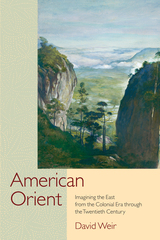
In eighteenth-century America, the East was, paradoxically, a means of reinforcing the enlightenment values of the West: Franklin, Jefferson, and other American writers found in Confucius a complement to their own political and philosophical beliefs. In the nineteenth century, with the shift from an agrarian to an industrial economy, the Hindu Orient emerged as a mystical alternative to American reality. During this period, Emerson, Thoreau, and other Transcendentalists viewed the "Oriental" not as an exotic other but as an image of what Americans could be, if stripped of all the commercialism and materialism that set them apart from their ideal. A similar sense of Oriental otherness informed the aesthetic discoveries of the early twentieth century, as Pound, Eliot, and other poets found in Chinese and Japanese literature an artistic purity and intensity absent from Western tradition. For all of these figures the Orient became a complex fantasy that allowed them to overcome something objectionable, either in themselves or in the culture of which they were a part, in order to attain some freer, more genuine form of philosophical, religious, or artistic expression.

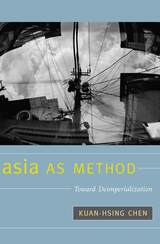
Chen is one of the most important intellectuals working in East Asia today; his writing has been influential in Taiwan, South Korea, Hong Kong, Japan, Singapore, and mainland China for the past fifteen years. As a founding member of the Inter-Asia Cultural Studies Society and its journal, he has helped to initiate change in the dynamics and intellectual orientation of the region, building a network that has facilitated inter-Asian connections. Asia as Method encapsulates Chen’s vision and activities within the increasingly “inter-referencing” East Asian intellectual community and charts necessary new directions for cultural studies.
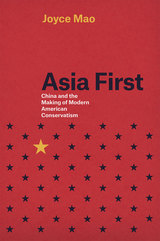
Mao explores the deep resonance American conservatives felt with the defeat of Chiang Kai-Shek and his exile to Taiwan, which they lamented as the loss of China to communism and the corrosion of traditional values. In response, they fomented aggressive anti-communist positions that urged greater action in the Pacific, a policy known as “Asia First.” While this policy would do nothing to oust the communists from China, it was powerfully effective at home. Asia First provided American conservatives a set of ideals—American sovereignty, selective military intervention, strident anti-communism, and the promotion of a technological defense state—that would bring them into the global era with the positions that are now their hallmark.
Warren Cohen reviews the role of the United States in East Asia over the past century, making a convincing case for American influence in Asia as generally positive. He illustrates specific ways in which American culture has affected Asians, from forms of government to entertainment, and offers valuable insights into the nature of cultural exchange. Americanization was most successful when Asians freely adopted cultural elements, while efforts to impose values generally failed, notably in the Philippines. And in a fascinating and eye-opening assessment of the "Asianization" of America, Cohen observes that Asian influences in food, film, music, medicine, and religion are now woven deeply--and permanently--into the American fabric. Indeed, Asians are changing American identity itself: by mid-century, approximately one in ten Americans will boast Asian ancestry.
In this lively look at the cultural bonds that continue to shape the relationship between East Asians and Americans, Cohen invites us to ponder the past and envision the future as the "American century" gives way to one with a decidedly more Asian focus.
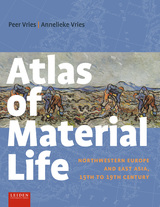
Large-scale comparative economic history of westernmost and easternmost Eurasia provides insight into our global history. Atlas of Material Life highlights the main characteristics of the economic landscape in Great Britain, the Netherlands, China, and Japan between the fifteenth and nineteenth centuries. It demonstrates the constraints to which all pre-industrial economies were subjected but also the different ways in which the societies discussed dealt with those challenges. Replete with maps, graphs, and accessible figures, this transnational study offers fresh insight into the economy of limited possibilities and humanity’s ever-evolving relationship to resources.
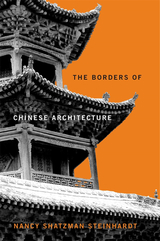
An internationally acclaimed expert explains why Chinese-style architecture has remained so consistent for two thousand years, no matter where it is built.
For the last two millennia, an overwhelming number of Chinese buildings have been elevated on platforms, supported by pillars, and covered by ceramic-tile roofs. Less obvious features, like the brackets connecting the pillars to roof frames, also have been remarkably constant. What makes the shared features more significant, however, is that they are present in Buddhist, Daoist, Confucian, and Islamic milieus; residential, funerary, and garden structures; in Japan, Korea, Mongolia, and elsewhere. How did Chinese-style architecture maintain such standardization for so long, even beyond China’s borders?
Nancy Shatzman Steinhardt examines the essential features of Chinese architecture and its global transmission and translation from the predynastic age to the eighteenth century. Across myriad political, social, and cultural contexts within China and throughout East Asia, certain design and construction principles endured. Builders never abandoned perishable wood in favor of more permanent building materials, even though Chinese engineers knew how to make brick and stone structures in the last millennium BCE. Chinese architecture the world over is also distinctive in that it was invariably accomplished by anonymous craftsmen. And Chinese buildings held consistently to the plan of the four-sided enclosure, which both afforded privacy and differentiated sacred interior space from an exterior understood as the sphere of profane activity. Finally, Chinese-style buildings have always and everywhere been organized along straight lines.
Taking note of these and other fascinating uniformities, The Borders of Chinese Architecture offers an accessible and authoritative overview of a tradition studiously preserved across time and space.
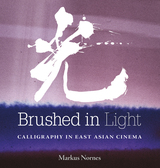
Drawing on a millennia of calligraphy theory and history, Brushed in Light examines how the brushed word appears in films and in film cultures of Korea, Japan, Taiwan, Hong Kong, and PRC cinemas. This includes silent era intertitles, subtitles, title frames, letters, graffiti, end titles, and props. Markus Nornes also looks at the role of calligraphy in film culture at large, from gifts to correspondence to advertising. The book begins with a historical dimension, tracking how calligraphy is initially used in early cinema and how it is continually rearticulated by transforming conventions and the integration of new technologies. These chapters ask how calligraphy creates new meaning in cinema and demonstrate how calligraphy, cinematography, and acting work together in a single film. The last part of the book moves to other regions of theory. Nornes explores the cinematization of the handwritten word and explores how calligraphers understand their own work.
Historically, most developing nations have employed strict exchange rate controls and heavy protection of domestic industry-policies now thought to be at odds with sustainable and desirable rates of economic growth. By contrast, many East Asian nations maintained exchange rate regimes designed to achieve an attractive climate for exports and an "outer-oriented" development strategy. The result has been rapid and consistent economic growth over the past few decades.
Changes in Exchange Rates in Rapidly Developing Countries explores the impact of such diverse exchange control regimes in both historical and regional contexts, focusing particular attention on East Asia. This comprehensive, carefully researched volume will surely become a standard reference for scholars and policymakers.
Chinese Asianism examines Chinese intellectual discussions of East Asian solidarity, analyzing them in connection with Chinese nationalism and Sino–Japanese relations. Beginning with texts written after the first Sino–Japanese War of 1894 and concluding with Wang Jingwei’s failed government in World War II, Craig Smith engages with a period in which the Chinese empire had crumbled and intellectuals were struggling to adapt to imperialism, new and hegemonic forms of government, and radically different epistemes. He considers a wide range of writings that show the depth of the pre-war discourse on Asianism and the influence it had on the rise of nationalism in China.
Asianism was a “call” for Asian unity, Smith finds, but advocates of a united and connected Asia based on racial or civilizational commonalities also utilized the packaging of Asia for their own agendas, to the extent that efforts towards international regionalism spurred the construction of Chinese nationalism. Asianism shaped Chinese ideas of nation and region, often by translating and interpreting Japanese perspectives, and leaving behind a legacy in the concepts and terms that persist in the twenty-first century. As China plays a central role in regional East Asian development, Asianism is once again of great importance today.
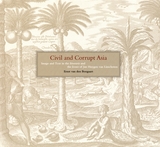
Divine and Spoiled Asia reproduces these engravings and their captions (in English), together with an extensive analysis of them by historian Ernst van den Boogaart. In addition to providing unparalleled insights into early modern European views of the East, the engravings also contain valuable depictions of the peoples, customs, and flora and fauna of late sixteenth-century India and neighboring countries.
Fluctuations of commodity prices, most notably of oil, capture considerable attention and have been tied to important economic effects, such as inflation and low rates of economic growth. Commodity Prices and Markets advances our understanding of the consequences of these fluctuations, providing both general analysis and a particular focus on the countries of the Pacific Rim. The volume addresses three distinct subjects: the difficulties in forecasting commodity prices, the effects of exogenous commodity price shocks on the domestic economy, and the relationship between price shocks and monetary policy. The ability to forecast commodity prices is difficult but of great importance to businesses and governments, and this volume will be invaluable to professionals and policy makers interested in the field.
How Confucian traditions have shaped styles of being modern in Japan, South Korea, Taiwan, Hong Kong, and Singapore presents a particular challenge to the intellectual community. Explorations of Confucian network capitalism, meritocratic democracy, and liberal education have practical implications for a sense of self, community, economy, and polity.
Seventeen scholars, of varying fields of study, here bring their differing perspectives to a consideration of the Confucian role in industrial East Asia. Confucian concerns such as self-cultivation, regulation of the family, social civility, moral education, well-being of the people, governance of the state, and universal peace provide a general framework for the study. The Confucian Problematik—how a fiduciary community can come into being through exemplary teaching and moral transformation—underlies much of the discussion. The contributors question all unexamined assumptions about the rise of industrial East Asia, at the same time exploring the ideas, norms, and values that underlie the moral fabric of East Asian societies.
Is Confucian ethics a common discourse in industrial East Asia? The answer varies according to academic discipline, regional specialization, and personal judgment. Although there are conflicting interpretations and diverging perspectives, this study represents the current thinking of some of the most sophisticated minds on this vital and intriguing subject.
This is an interdisciplinary study of the cultural politics of nationalism and national identities in modern East Asia. Combining theoretical insights with empirical research, it explores the cultural dimensions of nationhood and identity-making in China, Japan, Korea, Hong Kong, and Taiwan. The essays address issues ranging from the complex relations between popular culture and national consciousness to the representation of ethnic/racial identity and gendered discourse on nationalism. The cutting-edge research on the diverse forms of cultural preacceptance and the various ways in which this participates in the construction and projection of national and ethnic identities in East Asia illuminates several understudied issues in Asian studies, including the ambiguity of Hong Kong identity during World War II and the intricate politics of the post-war Taiwanese trial of collaboration.
Addressing a wide range of theoretical and historical issues regarding cultural dimensions of nationalism and national identities all over East Asia, these essays draw insights from such recent theories as cultural studies, postcolonial theories, and archival-researched cultural anthropology. The book will be important reading for students of Asian studies as well as for serious readers interested in issues of nationalism and culture.
Kai-wing Chow is Associate Professor of East Asian Languages and Cultures. Kevin Doak is Associate Professor of History. Poshek Fu is Associate Professor of History and Cinema Studies. All three teach at University of Illinois, Urbana-Champaign.
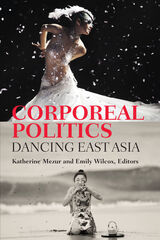
Through the lens of “corporeal politics”—the close attention to bodily acts in specific cultural contexts—each study in this book challenges existing dance and theater histories to re-investigate the performer's role in devising the politics and aesthetics of their performance, as well as the multidimensional impact of their lives and artistic works. Corporeal Politics addresses a wide range of performance styles and genres, including dances produced for the concert stage, as well as those presented in popular entertainments, private performance spaces, and street protests.
On the basis of rich empirical analyses of East and Southeast Asia, and with theoretical insights from different approaches in the social sciences, Culture and Economy addresses these issues in both macroscopic and microscopic terms. Specific topics discussed range from the use and reinvention of Confucian and Islamic legacies in South Korea and Malaysia to promote a particular vision of the economy, to the role of family- and network-structured firms and the reliance on trust-based personal networks in Southeast Asia, to the cultures of labor and management in Chinese village enterprises and Vietnamese ceramics firms, as well as in South Korean export processing zones and the current Chinese labor market.
These careful case studies suggest that it is inevitable that Eastern Asia will shape, even remake, capitalism into a system of production and consumption beyond its original definition.
Timothy Brook is Professor of History, Stanford University. Hy V. Luong is Professor of Anthropology, University of Toronto.
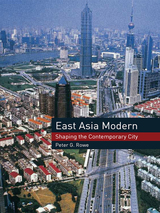
A renowned scholar on East Asian architecture and urbanism, Peter G. Rowe examines how the unique modernizing process of East Asian cities can be most usefully understood. Rowe offers a historical assessment of the region, chronicling the cities' development over the last century and setting into context their individual paths toward becoming modern. Rowe explains what the modernizing process has meant for the cultural diffusion of predominantly Western ideas, how East Asian urban regions have developed a distinct type of modernity, and what lessons can be gleaned from the contemporary East Asian experience. Refuting many common misconceptions about contemporary East Asian life, East Asia Modern offers a readable critical assessment of life in modern East Asia while also pointing to possibilities for the future.
In the early 1960s, fewer than five percent of Japanese owned automobiles, China’s per capita income was among the lowest in Asia, and living standards in South Korea’s rural areas were on par with some of the world’s poorest countries. Today, these are three of the most powerful economies on earth. Dwight Perkins grapples with both the contemporary and historical causes and consequences of the turnaround, drawing on firsthand experience in the region to explain how Asian countries sustained such rapid economic growth in the second half of the twentieth century.
East Asian Development offers a comprehensive view of the region, from Japan and the “Asian Tigers” (Hong Kong, Singapore, Taiwan, South Korea) to Indonesia, Vietnam, Thailand, Malaysia, and China—a behemoth larger than all the other economies combined. While the overall picture of Asian growth is positive, no single economic policy has been effective regionwide. Interventionist policies that worked well in some countries failed elsewhere. Perkins analyzes income distribution, to uncover why initially egalitarian societies have ended up in very different places, with Japan, for example, maintaining a modest gap between rich and poor while China has become one of Asia’s most unequal economies.
Today, the once-dynamic Japanese and Korean economies are sluggish, and even China shows signs of losing steam. Perkins investigates whether this is a regional phenomenon or typical of all economies at this stage of development. His inquiry reminds us that the uncharted waters of China’s vast economy make predictions of its future performance speculative at best.
Recent studies show that almost all industrial countries have experienced dramatic decreases in both fertility and mortality rates. This situation has led to aging societies with economies that suffer from both a decline in the working population and a rise in fiscal deficits linked to increased government spending. East Asia exemplifies these trends, and this volume offers an in-depth look at how long-term demographic transitions have taken shape there and how they have affected the economy in the region.
The Economic Consequences of Demographic Change in East Asia assembles a group of experts to explore such topics as comparative demographic change, population aging, the rising cost of health care, and specific policy concerns in individual countries. The volume provides an overview of economic growth in East Asia as well as more specific studies on Japan, Korea, China, and Hong Kong. Offering important insights into the causes and consequences of this transition, this book will benefit students, researchers, and policy makers focused on East Asia as well as anyone concerned with similar trends elsewhere in the world.
The rise of the Mongol empire transformed world history. Its collapse in the mid-fourteenth century had equally profound consequences. Four themes dominate this study of the late Mongol empire in Northeast Asia during this chaotic era: the need for a regional perspective encompassing all states and ethnic groups in the area; the process and consequences of pan-Asian integration under the Mongols; the tendency for individual and family interests to trump those of dynasty, country, or linguistic affiliation; and finally, the need to see Koryo Korea as part of the wider Mongol empire.
Northeast Asia was an important part of the Mongol empire, and developments there are fundamental to understanding both the nature of the Mongol empire and the new post-empire world emerging in the 1350s and 1360s. In Northeast Asia, Jurchen, Mongol, Chinese, Korean, and Japanese interests intersected, and the collapse of the Great Yuan reshaped Northeast Asia dramatically. To understand this transition, or series of transitions, the author argues, one cannot examine states in isolation. The period witnessed intensified interactions among neighboring polities and new regional levels of economic, political, military, and social integration that explain the importance of personal and family interests and of Korea in the Mongol state.
In these thirteen essays, American and Asian scholars analyze the effects of financial deregulation and integration on East Asian markets. Topics covered include the roles of the United States and Japan in trading with Asian countries, macroeconomic policy implications of export-led growth in Korea and Taiwan, the effects of foreign direct investment in China, and the impact of financial liberalization in Japan, Korea, and Singapore.
Demonstrating the complexity of financial deregulation and the challenges it poses for policy makers, this volume provides an excellent picture of the overall status of East Asian financial markets for scholars in international finance and Asian economic development.
The reform in Asian financial sectors—especially in banking and stock markets—has been remarkable since the currency crisis of 1997–98. East Asia is now a major player in international finance, providing serious competition to the more traditional financial centers of London and New York. Financial Sector Development in the Pacific Rim provides a rich collection of theoretical and empirical analyses of the growing capital markets in the region.
Bringing together authors from various East Asian and Pacific nations, this volume examines the institutional factors influencing financial innovation, the consequences of financial development, widespread consolidation occurring through mergers and acquisitions, and the implementation of policy reform. Financial Sector Development in the Pacific Rim offers the comparative analysis necessary to answer broad questions about economic development and the future of Asia.
Fiscal Policy and Management in East Asia explores the inefficient tax systems of many developing countries, the relationship between public and private sector economic behavior, and the pressing issue of future obligations that governments have undertaken to provide pensions and health care for their citizens. Featuring both overviews and analyses of the countries discussed, this book will be of value to economists and policymakers seeking to understand fiscal policy in a global context.
Demonstrating an impatience with social science models of knowledge, the contributors show that binary categories focused on during the Cold War are no longer central to the project of history writing. By bringing together articles previously published in the journal positions: east asia cultures critique, editor Tani Barlow has demonstrated how scholars construct identity and history, providing cultural critics with new ways to think about these concepts—in the context of Asia and beyond.
Chapters address topics such as the making of imperial subjects in Okinawa, politics and the body social in colonial Hong Kong, and the discourse of decolonization and popular memory in South Korea. This is an invaluable collection for students and scholars of Asian studies, postcolonial studies, and anthropology.
Contributors. Charles K. Armstrong, Tani E. Barlow, Fred Y. L. Chiu, Chungmoo Choi, Alan S. Christy, Craig Clunas, James A. Fujii, James L. Hevia, Charles Shiro Inouye, Lydia H. Liu, Miriam Silverberg, Tomiyama Ichiro, Wang Hui
Japan and the four little dragons—Taiwan, South Korea, Hong Kong, and Singapore—constitute less than 1 percent of the world’s land mass and less than 4 percent of the world’s population. Yet in the last four decades they have become, with Europe and North America, one of the three great pillars of the modern industrial world order. How did they achieve such a rapid industrial transformation? Why did the four little dragons, dots on the East Asian periphery, gain such Promethean energy at this particular time in history?
Ezra F. Vogel, one of the most widely read scholars on Asian affairs, provides a comprehensive explanation of East Asia’s industrial breakthrough. While others have attributed this success to tradition or to national economic policy, Vogel’s penetrating analysis illuminates how cultural background interacted with politics, strategy, and situational factors to ignite the greatest burst of sustained economic growth the world has yet seen.
Vogel describes how each of the four little dragons acquired the political stability needed to take advantage of the special opportunities available to would-be industrializers after World War II. He traces how each little dragon devised a structure and a strategy to hasten industrialization and how firms acquired the entrepreneurial skill, capital, and technology to produce internationally competitive goods. Vogel brings masterly insight to the underlying question of why Japan and the little dragons have been so extraordinarily successful in industrializing while other developing countries have not. No other work has pinpointed with such clarity how institutions and cultural practices rooted in the Confucian tradition were adapted to the needs of an industrial society, enabling East Asia to use its special situational advantages to respond to global opportunities.
This is a book that all scholars and lay readers with an interest in Asia will want to read and ponder.
In most contexts, privatization is expected to yield greater efficiency and cost effectiveness while avoiding the corruption and bloated budgets of government regulation or monopoly control. But broad-scale privatization, if ill designed, has also yielded its share of difficulties in East Asia. Privatization sometimes has created a vacuum in corporate governance for some of the region's most important industries and in some cases merely reinstated the monopoly-like configurations. The papers presented in this book discuss the experiences of privatization in several industries, including railroad and telecom, corporate governance problems, accounting issues, and challenges for the future in East Asian countries.
The first section is theoretical in nature and proposes boundaries among government protection, market freedom, and shareholder expectations. The second part is constituted by country case studies, beginning with an analysis of both the Korean financial crisis that followed its 1997 law to privatize large, public sector corporations and the new ways Korean corporations finance themselves. Following is an evaluation of China's approach to privatization, with an in-depth look at the financial transitions of companies slated for initial public offering.
Providing provocative examples of the methods of privatization in the Asia-Pacific region specifically, these papers will be of huge import to any economist or policymaker interested in transposing those successes for their own region.
Takatoshi Ito and Andrew K. Rose have organized a group of collaborators from several Asian countries, the United States, and other parts of the globe who ably balance both macroeconomic and microeconomic study with theoretical and empirical approaches. Growth and Productivity in East Asia gives special attention to the causes for the unusual success of Australia, one of the few nations to maintain unprecedented economic growth despite the 1997 Asian financial crisis and the 2001 global downturn. A new database comprising eighty-four Japanese sectors reveals new findings for the last thirty years of sectoral productivity and growth in Japan. Studies focusing on Indonesia, Taiwan, and Korea also consider productivity and its relationship to research and development, foreign ownership, and policy reform in such industries as manufacturing, automobile production, and information technology.
The theory explored in this volume attributes the phenomenal economic success of these countries to, among other factors, the role of an outward orientation—a focus on exporting rather than on protecting home markets. In addition, the importance of exchange rate behavior, of the supportive role of government policy, and of the accumulation and promotion of physical and human capital are explored in detail. This collection also examines the extent to which growth in each country became self-sustaining once it began.
Demonstrating the relevance of endogenous growth theory for studying this important region, this fourth volume in the NBER-East Asia Seminar on Economics series will be of interest to observers of East Asian affairs.
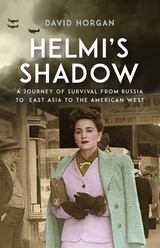
Rachel Koskin was a middle-class Russian Jew born in Odessa, Ukraine, in 1896. Ten years later, her family fled from the murderous pogroms against Jews in the Russian Empire eastward to Harbin, a Russian-controlled city within China’s borders on the harsh plain of Manchuria. Full of lively detail and the struggles of being stateless in a time of war, the narrative follows Rachel through her life in Harbin, which became a center of Russian culture in the Far East; the birth of her daughter, Helmi, in Kobe, Japan; their life together in the slums of Shanghai and back in Japan during World War II, where they endured many more hardships; and their subsequent immigration to the United States.
This remarkable account uncovers a history of refugees living in war-torn China and Japan, a history that to this day remains largely unknown. It is also a story of survival during a long period of upheaval and war—from the Russian Revolution to the Holocaust—and an intimate portrait of an American immigrant family. David reveals both the joys and tragedies he experienced growing up in a multicultural household in post\-Second World War America with a Jewish mother, a live-in Russian grandmother, and a devout Irish Catholic American father.
As David develops a clearer awareness of the mysterious past lives of his mother and grandmother—and the impact of these events on his own understanding of the long-term effects of fear, trauma, and loss—he shows us that, even in times of peace and security, we are all shadows of our past, marked by our experiences, whether we choose to reveal them to others or not.
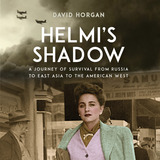
Rachel Koskin was a middle-class Russian Jew born in Odessa, Ukraine, in 1896. Ten years later, her family fled from the murderous pogroms against Jews in the Russian Empire eastward to Harbin, a Russian-controlled city within China’s borders on the harsh plain of Manchuria. Full of lively detail and the struggles of being stateless in a time of war, the narrative follows Rachel through her life in Harbin, which became a center of Russian culture in the Far East; the birth of her daughter, Helmi, in Kobe, Japan; their life together in the slums of Shanghai and back in Japan during World War II, where they endured many more hardships; and their subsequent immigration to the United States.
This remarkable account uncovers a history of refugees living in war-torn China and Japan, a history that to this day remains largely unknown. It is also a story of survival during a long period of upheaval and war—from the Russian Revolution to the Holocaust—and an intimate portrait of an American immigrant family. David reveals both the joys and tragedies he experienced growing up in a multicultural household in post\-Second World War America with a Jewish mother, a live-in Russian grandmother, and a devout Irish Catholic American father.
As David develops a clearer awareness of the mysterious past lives of his mother and grandmother—and the impact of these events on his own understanding of the long-term effects of fear, trauma, and loss—he shows us that, even in times of peace and security, we are all shadows of our past, marked by our experiences, whether we choose to reveal them to others or not.
Historical Perspectives on Contemporary East Asiaaddresses provocative themes concerning the experience of particular nations and of East Asia as a whole. It explores the turbulent process of integrating Asian societies and political systems into a global order dominated by the West over the past two centuries.
The authors show that important changes were already underway before the western advance, which had their own internal logic and staying power. They describe how people in China, Japan, and Korea redefined and defended indigenous "traditions" even as they disagreed over what these traditions were and how to transform them. They make it clear that nationalism was a powerful motivating force in the modern development of these countries, but they stress that a wide variety of nationalisms emerged and collided in the dramatic history of modern Asia.
Volume 2, book 2, considers the cartographic traditions of China, Korea, Japan, Vietnam, Tibet, Burma, Thailand, Laos, Malaysia, Indonesia, Brunei, and the Philippines, presenting significant new research and interpretation of archaeological, literary, and graphic sources. Richly illustrated with forty color plates and over five hundred black and white illustrations, the book includes a number of rare and elaborate maps, many previously unpublished.
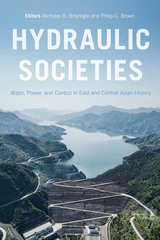
Hydraulic Societies explores the linked themes of water, power, state-building, and hydraulic control. Bringing together a range of ecological, geographical, chronological, and methodological perspectives, the essays in this book address the how humans have long harnessed water and sought to contain its destructive power for political, economic and social ends. Water defines every aspect of life and remains at the center of human activity: in irrigation and agriculture; waste and sanitation; drinking and disease; floods and droughts; religious beliefs and practices; fishing and aquaculture; travel and discovery; scientific study; water pollution and conservation; multi-purpose dam building; boundaries and borders; politics and economic life; and wars and diplomacy.
From the earliest large irrigation works thousands of years ago, control over water has involved control over people, as the essays in this volume reflect. The intersections of water and political, economic, and social power historically span international as well as domestic politics and operate at scales ranging from the local to the global. The authors consider the role of water in national development schemes, water distribution as a tool of political power, international disputes over waterways and water supplies, and the place of water in armed conflicts. They explore the ways in which political power and social hierarchies have themselves been defined and redefined by water and its control, how state leaders legitimized their rule both culturally and economically through the control of water, and how water management schemes were a means to impose and refine colonial power.
An Imperial Path to Modernity examines the role of liberal intellectuals in reshaping transnational ideas and internationalist aspirations into national values and imperial ambitions in early twentieth-century Japan. Perceiving the relationship between liberalism and the international world order, a cohort of Japanese thinkers conformed to liberal ideas and institutions to direct Japan’s transformation into a liberal empire in Asia. To sustain and rationalize the imperial enterprise, these Japanese liberals sought to make the domestic political stage less hostile to liberalism. Facilitating the creation of print-mediated public opinion, liberal intellectuals attempted to enlist the new middle class as a social ally in circulating liberal ideas and practices within Japan and throughout the empire.
In tracing the interconnections between liberalism and the imperial project, Jung-Sun N. Han focuses on the ideas and activities of Yoshino Sakuzo (1878–1933), who was and is remembered as a champion of prewar Japanese liberalism and Taisho democracy. Drawing insights from intellectual history, cultural studies, and international relations, this study argues that prewar Japanese liberalism grew out of the efforts of intellectuals such as Yoshino who worked to devise a transnational institution to govern the Japanese empire.

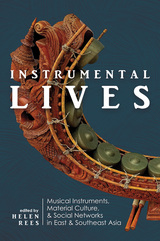
Original and expert, Instrumental Lives brings a new understanding of how musical instruments interact with their environments and societies. Contributors: Supeena Insee Adler, Marie-Pierre Lissoir, Terauchi Naoko, Jennifer C. Post, Helen Rees, Xiao Mei, Tyler Yamin, and Bell Yung
Comprised of twelve fascinating studies, International Trade in East Asia highlights many of the trading practices between countries within the region as well as outside of it. The contributors bring into focus some of the region's endemic and external barriers to international trade and discuss strategies for improving productivity and fostering trade relationships. Studies on some of the factors that drive exports, the influence of research and development, the effects of foreign investment, and the ramifications of different types of protectionism will particularly resonate with the financial and economic communities who are trying to keep pace with this dramatically altered landscape.
Tracy Dahlby is an award-winning journalist who has reported internationally as a contributor to National Geographic magazine and served as a staff correspondent for Newsweek and the Washington Post. In this memoir of covering a far-flung swath of Asia, he takes readers behind the scenes to reveal “the stories behind the stories”—the legwork and (mis)adventures of a foreign correspondent on a mission to be the eyes and ears of people back home, helping them understand the forces and events that shape our world.
Into the Field centers on the travel and reporting Dahlby did for a half-dozen pieces that ran in National Geographic. The book tours the South China Sea during China’s rise as a global power, visits Japan in a time of national midlife crisis, and explores Southeast Asia during periods of political transition and tumult. Dahlby’s vivid anecdotes of jousting with hardboiled sea captains, communing with rebellious tribal chieftains, enduring a spectacular shipboard insect attack, and talking his way into a far place or out of a tight spot offer aspiring foreign correspondents a realistic introduction to the challenges of the profession. Along the way, he provides practical advice about everything from successful travel planning to managing headstrong local fixers and dealing with circumstances that can range from friendly to formidable. A knowledgeable, entertaining how-to book for observing the world and making sense of events, Into the Field is a must-read for student journalists and armchair travelers alike.
In international relations today, influence is as essential as military and economic might. Consequently, leaders promote favorable images of the state in order to attract allies and win support for their policies. Jing Sun, an expert on international relations and a former journalist, refers to such soft power campaigns as "charm offensives."
Sun focuses on the competition between China and Japan for the allegiance of South Korea, Taiwan, and other states in the region. He finds that, instead of adopting a one-size-fits-all approach, the Chinese and the Japanese deploy customized charm campaigns for each target state, taking into consideration the target's culture, international position, and political values. He then evaluates the effectiveness of individual campaigns from the perspective of the target state, on the basis of public opinion polls, media coverage, and the response from state leaders.
A deep, comparative study, Japan and China as Charm Rivals enriches our understanding of soft power by revealing deliberate image campaign efforts and offering a method for assessing the effectiveness of such charm offensives.
Part 1 includes the case studies for the first generation of rapidly developing East Asian economics--the tigers--while Part 2 incorporates the later generation success stories--the cubs--plus the Philippines, a country only now beginning to show significant progress. Part 3 includes cross-country essays on public investment, foreign direct investment, and cross-country patterns that synthesize the lessons learned and propose actions for other development aspirants to pursue.
The essays aim to fill two major gaps--the paucity of country-specific work on the institutional side of development policy and the failure to explain the mixed record of industrial policies in East Asia. The volume will appeal to students, scholars, and policymakers in development economics.
Danny M. Leipziger is Lead Economist, Latin America Region, World Bank.
This title was formally part of the Studies in International Trade Policy Series, now called Studies in International Economics.
These fourteen papers are organized around four themes: the overall determinants of growth and trading relations in the East Asian region; monetary policies in relation to capital controls and capital accounts; the impact of exchange rate behavior on industrial structure; and the potential for greater regional integration. The contributors examine interactions among exchange rate movements, trade balances, and capital flows; how government monetary policy affects capital flows; the effect of exchange rates on industrial structure, inventories, and prices; and the extent of regional integration in East Asia.
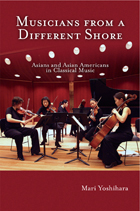
Musicians of Asian descent enjoy unprecedented prominence in concert halls, conservatories, and classical music performance competitions. In the first book on the subject, Mari Yoshihara looks into the reasons for this phenomenon, starting with her own experience of learning to play piano in Japan at the age of three. Yoshihara shows how a confluence of culture, politics and commerce after the war made classical music a staple in middle-class households, established Yamaha as the world's largest producer of pianos and gave the Suzuki method of music training an international clientele. Soon, talented musicians from Japan, China and South Korea were flocking to the United States to study and establish careers, and Asian American families were enrolling toddlers in music classes.
Against this historical backdrop, Yoshihara interviews Asian and Asian American musicians, such as Cho-Liang Lin, Margaret Leng Tan, Kent Nagano, who have taken various routes into classical music careers. They offer their views about the connections of race and culture and discuss whether the music is really as universal as many claim it to be. Their personal histories and Yoshihara's observations present a snapshot of today's dynamic and revived classical music scene.
Asia provides fertile ground for this inquiry, the volume argues, because in Asia the history of the modern nation has been inseparable from global influences in the form of Western imperialism. Yet, while the impetus for building a modern national identity may have come from the need to fashion a favorable place in a world system dominated by Western nations, those engaged in nationalist enterprises found their particular voices more often in relation to tensions within Asia than in relation to more generic tensions between Asia and the West.
With topics ranging from public health measures in nineteenth-century Japan through textual scholarship of Tamil intellectuals, the willful division of Korea's history from China's, the development of China's cotton industry, and the meaning of "postnational-ism" for Chinese artists, the essays reveal the fascinating array of sites at which nation work can take place.
This will be essential reading for historians and social scientists interested in Asia.
Timothy Brook is Professor of History, Stanford University. André Schmid is Assistant Professor of East Asian Studies, University of Toronto.
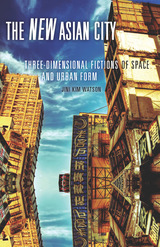
Under Jini Kim Watson’s scrutiny, the Asian Tiger metropolises of Seoul, Taipei, and Singapore reveal a surprising residue of the colonial environment. Drawing on a wide array of literary, filmic, and political works, and juxtaposing close readings of the built environment, Watson demonstrates how processes of migration and construction in the hypergrowth urbanscapes of the Pacific Rim crystallize the psychic and political dramas of their colonized past and globalized present.
Examining how newly constructed spaces—including expressways, high-rises, factory zones, department stores, and government buildings—become figured within fictional and political texts uncovers how massive transformations of citizenries and cities were rationalized, perceived, and fictionalized. Watson shows how literature, film, and poetry have described and challenged contemporary Asian metropolises, especially around the formation of gendered and laboring subjects in these new spaces. She suggests that by embracing the postwar growth-at-any-cost imperative, they have buttressed the nationalist enterprise along neocolonial lines.
The New Asian City provides an innovative approach to how we might better understand the gleaming metropolises of the Pacific Rim. In doing so, it demonstrates how reading cultural production in conjunction with built environments can enrich our knowledge of the lived consequences of rapid economic and urban development.
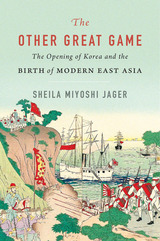
A dramatic new telling of the dawn of modern East Asia, placing Korea at the center of a transformed world order wrought by imperial greed and devastating wars.
In the nineteenth century, Russia participated in two “great games”: one, well known, pitted the tsar’s empire against Britain in Central Asia. The other, hitherto unrecognized but no less significant, saw Russia, China, and Japan vying for domination of the Korean Peninsula. In this eye-opening account, brought to life in lucid narrative prose, Sheila Miyoshi Jager argues that the contest over Korea, driven both by Korean domestic disputes and by great-power rivalry, set the course for the future of East Asia and the larger global order.
When Russia’s eastward expansion brought it to the Korean border, an impoverished but strategically located nation was wrested from centuries of isolation. Korea became a prize of two major imperial conflicts: the Sino-Japanese War at the close of the nineteenth century and the Russo-Japanese War at the beginning of the twentieth. Japan’s victories in the battle for Korea not only earned the Meiji regime its yearned-for colony but also dislodged Imperial China from centuries of regional supremacy. And the fate of the declining tsarist empire was sealed by its surprising military defeat, even as the United States and Britain sized up the new Japanese challenger.
A vivid story of two geopolitical earthquakes sharing Korea as their epicenter, The Other Great Game rewrites the script of twentieth-century rivalry in the Pacific and enriches our understanding of contemporary global affairs, from the origins of Korea’s bifurcated identity—a legacy of internal politics amid the imperial squabble—to China’s irredentist territorial ambitions and Russia’s nostalgic dreams of recovering great-power status.
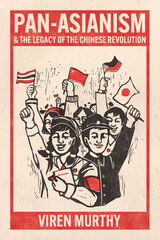
Recent proposals to revive the ancient Silk Road for the contemporary era and ongoing Western interest in China’s growth and development have led to increased attention to the concept of pan-Asianism. Most of that discussion, however, lacks any historical grounding in the thought of influential twentieth-century pan-Asianists. In this book, Viren Murthy offers an intellectual history of the writings of theorists, intellectuals, and activists—spanning leftist, conservative, and right-wing thinkers—who proposed new ways of thinking about Asia in their own historical and political contexts. Tracing pan-Asianist discourse across the twentieth century, Murthy reveals a stronger tradition of resistance and alternative visions than the contemporary discourse on pan-Asianism would suggest. At the heart of pan-Asianist thinking, Murthy shows, were the notions of a unity of Asian nations, of weak nations becoming powerful, and of the Third World confronting the “advanced world” on equal terms—an idea that grew to include non-Asian countries into the global community of Asian nations. But pan-Asianists also had larger aims, imagining a future beyond both imperialism and capitalism. The fact that the resurgence of pan-Asianist discourse has emerged alongside the dominance of capitalism, Murthy argues, signals a profound misunderstanding of its roots, history, and potential.
Using information based on thirty years of research, Cumings offers a new perspective on a wide range of issues that originated with the cold war—with particular focus on the possibly inappropriate collaboration between universities, foundations, and intelligence agencies. Seeking to explode the presuppositions that Americans usually bring to the understanding of our relations with East Asia, the study ranges over much of the history of the twentieth century in East Asian–American relations—Pearl Harbor, Hiroshima and Nagasaki, the Korean War, and more recent difficulties in U.S. relations with China and Japan. Cumings also rebuts U.S. media coverage of North Korea’s nuclear diplomacy in the 1990s and examines how experiences of colonialism and postcolonialism have had varying effects on economic development in each of these countries. Positing that the central defining experience of twentieth-century East Asia has been its entanglement first with British and Japanese imperialism, and then with the United States, Cumings ends with a discussion of how the situation could change over the next century as the economic and political global clout of the United States declines.
Illuminating the sometimes self-deluded ideology of cold war America, Parallax Visions will engage historians, political scientists, and students and scholars of comparative politics and social theory, as well as readers interested in questions of modernity and the role of the United States in shaping the destinies of modernizing societies in Asia.
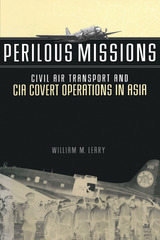
Civil Air Transport (CAT), founded in China after World War II by Claire Chennault and Whiting Willauer, was initially a commercial carrier specializing in air freight. Its role quickly changed as CAT became first a paramilitary adjunct of the Nationalist Chinese Air Force, then the CIA's secret "air force" in Korea, then "the most shot-at airline in the world" in French Indochina, and eventually becoming reorganized as Air America at the height of the Vietnam War. William M. Leary's detailed operational history of CAT sets the story in the perspective of Asian and Cold War geopolitics and shows how CAT allowed the CIA to operate with a level of flexibility and secrecy that it would not have attained through normal military or commercial air transportation.
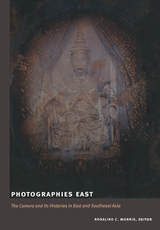
The contributors analyze how in specific cultural and historical contexts, the camera has affected experiences of time and subjectivity, practices of ritual and tradition, and understandings of death. They highlight the links between photography and power, looking at how the camera has figured in the operations of colonialism, the development of nationalism, the transformation of monarchy, and the militarization of violence. Moving beyond a consideration of historical function or effect, the contributors also explore the forms of illumination and revelation for which the camera has offered itself as instrument and symbol. And they trace the emergent forms of alienation and spectralization, as well as the new kinds of fetishism, that photography has brought in its wake. Taken together, the essays chart a bravely interdisciplinary path to visual studies, one that places the particular knowledge of a historicized anthropology in a comparative frame and in conversation with aesthetics and art history.
Contributors. James L. Hevia, Marilyn Ivy, Thomas LaMarre, Rosalind C. Morris, Nickola Pazderic, John Pemberton, Carlos Rojas, James T. Siegel, Patricia Spyer

Since the 1960s, the Asian Tigers have combined economic success and autocratic politics. Now in the wake of a daunting financial crisis, these nations are moving toward political change as well as renewed growth. What direction will these changes take? Will the traditional Asian "development state" give way to the American model of market liberalism?
This book explores the complex transitions under way in China, Japan, South Korea, and Taiwan, as the leaderships shift their economic and political relationships in order to survive in the global economy. Written by a team of international scholars in political science, economics, international relations, and Asian studies, this book illuminates the significant changes in the political economies of the major Asian states.
Experts from Taiwan, Korea, the Philippines, Japan, and Thailand, as well as the United States, Canada, and Israel examine the major tax programs of the 1980s and their domestic and international economic effects. The analyses reveal similarities between the United States and countries in East Asia in political constraints on policy making, and taken together they show how growing interdependence interacts with domestic economic and political concerns to affect issues as politically vital as tax reform. Economists, policymakers, and members of the business community will benefit from these studies.
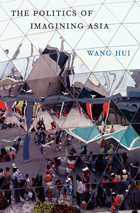
In this bold, provocative collection, Wang Hui confronts some of the major issues concerning modern China and the status quo of contemporary Chinese thought.
The book’s overarching theme is the possibility of an alternative modernity that does not rely on imported conceptions of Chinese history and its legacy. Wang Hui argues that current models, based largely on Western notions of empire and the nation-state, fail to account for the richness and diversity of pre-modern Chinese historical practice. At the same time, he refrains from offering an exclusively Chinese perspective and placing China in an intellectual ghetto. Navigating terrain on regional language and politics, he draws on China’s unique past to expose the inadequacies of European-born standards for assessing modern China’s evolution. He takes issue particularly with the way in which nation-state logic has dominated politically charged concerns like Chinese language standardization and “The Tibetan Question.” His stance is critical—and often controversial—but he locates hope in the kinds of complex, multifaceted arrangements that defined China and much of Asia for centuries.
The Politics of Imagining Asia challenges us not only to re-examine our theories of “Asia” but to reconsider what “Europe” means as well. As Theodore Huters writes in his introduction, “Wang Hui’s concerns extend beyond China and Asia to an ambition to rethink world history as a whole.”
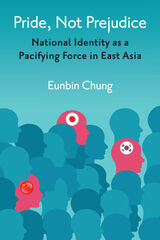
As shown by China’s relationship to Japan, and Japan’s relationship to South Korea, even growing regional economic interdependencies are not enough to overcome bitter memories grounded in earlier wars, invasions, and periods of colonial domination. Although efforts to ease historical animosity have been made, few have proven to be successful in Northeast Asia. In previous research scholars anticipated an improvement in relations through thick economic interdependence or increased societal contact. In economic terms, however, Japan and China already trade heavily: Japan has emerged as China’s largest trading partner and China as second largest to Japan. Societal contact is already intense, as millions of Chinese, Koreans, and Japanese visit one another’s countries annually as students, tourists, and on business trips. But these developments have not alleviated international distrust and negative perception, or resolved disagreement on what constitutes “adequate reparation” regarding the countries’ painful history.
Noticing clashes of strong nationalisms around the world in areas like Northeast Asia, numerous studies have suggested that more peaceful relations are likely only if countries submerge or paper over existing national identities by promoting universalism. Pride, Not Prejudice argues, to the contrary, that affirmation of national identities may be a more effective way to build international cooperation. If each national population reflects on the values of their national identity, trust and positive perception can increase between countries. This idea is consistent with the theoretical foundation that those who have a clear, secure, and content sense of self, in turn, can be more open, evenhanded, and less defensive toward others. In addition, this reduced defensiveness also enhances guilt admission by past “inflictors” of conflict and colonialism. Eunbin Chung borrows the social psychological theory of self-affirmation and applies it to an international context to argue that affirmation of a national identity, or reflecting on what it means to be part of one’s country, can increase trust, guilt recognition, and positive perception between countries.
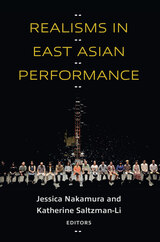
Existing scholarly discussions of theatrical realism have been predominantly limited to 19th-century European and Russian theater, with little attention paid to wider explorations and alternative definitions of the practice. Examining theater forms and artists from China, Japan, and Korea, Realisms in East Asian Performance brings together a group of theater historians to reconsider realism through the performing arts of East Asia.
The book’s contributors emphasize trans-regional conversations and activate inter-Asian dialogues on theatrical production. Tracing historical trajectories, starting from premodern periods through today, the book seeks to understand realisms’ multiple origins, forms, and cultural significances, and examines their continuities, disruptions, and divergences. In its diversity of topics, geographic locations, and time periods, Realisms in East Asian Performance aims to globalize and de-center the dominant narratives surrounding realism in theater, and revise assumptions about the spectacular and theatrical forms of Asian performance. Understanding realism as a powerful representational style, chapters collectively reevaluate acts of representation on stage not just for East Asia, but for theater and performance studies more broadly.
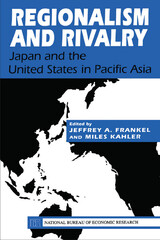
The authors contend that although intraregional trade in East Asia is growing rapidly, a trade bloc is not necessarily forming. They show that the trade increase can be explained entirely by factors independent of discriminatory trading arrangements, such as the rapid growth of East Asian economies. Other chapters look in detail at cases of Japanese direct investment in Southeast Asia and find little evidence of attempts by Japan to use the power of its multinational corporations for political purposes. A third group of papers attempt to gauge Japan's leadership characteristics. They focus on Japan's "technology ideology," its contributions to international public goods, international monetary cooperation, and economic liberalization in East Asia.
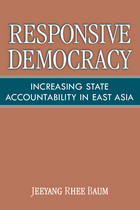
"Responsive Democracy is a pioneering contribution to the political analysis of administrative law in East Asia. Both political scientists and legal academics will greatly benefit from the author's in-depth analysis of the intersection between presidential power and administrative law in the contrasting cases of South Korea, Taiwan, and the Philippines."
---Susan Rose-Ackerman, Yale University Law School
"Baum's book is a very significant contribution because it focuses on a part of the world that has often been neglected in studies of democratization. It focuses attention on the nuts and bolts of what we mean by democratic consolidation and responsiveness. Indeed, if more political science were written with this clarity, we would all enjoy reading the literature much more!"
---Joseph Fewsmith, Boston University
Under what conditions is a newly democratic government likely to increase transparency, accountability, and responsiveness to its citizens? What incentives might there be for bureaucrats, including those appointed by a previously authoritarian government, to carry out the wishes of an emerging democratic regime? Responsive Democracy addresses an important problem in democratic transition and consolidation: the ability of the chief executive to control the state bureaucracy.
Using three well-chosen case studies---the Philippines, South Korea, and Taiwan---Jeeyang Rhee Baum explores the causes and consequences of codifying rules and procedures in a newly democratic government. In the Philippines, a president facing opposition has the option of appointing and dismissing officials at will and, therefore, has no need for administrative procedure acts. However, in South Korea and Taiwan, presidents employ such legislation to rein in recalcitrant government agencies, and, as a consequence, increase transparency, accountability, and responsiveness. Moreover, as Baum demonstrates by drawing upon surveys conducted both before and after implementation, administrative procedural reforms in South Korea and Taiwan improved public confidence in and attitudes toward democratic institutions.
Jeeyang Rhee Baum is a Research Fellow at the Ash Center for Democratic Governance and Innovation, John F. Kennedy School of Government, Harvard University.
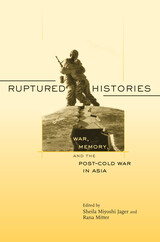
What has the end of the Cold War meant for East Asia, and for how its people understand their recent history? These thought-provoking essays explore a vigorously contested area in public culture, the wars of the modern era.
All the major East Asian states have undergone a profound reassessment of their experiences from World War II to Vietnam. New and at times aggressive forms of nationalism in Japan, China, South Korea, Vietnam, and Taiwan have affected American security policy in the Pacific and posed a challenge to the post-communist world order. Japan has met fervent opposition to its premiers’ visits to the Yasukuni shrine honoring the wartime dead. China has reclaimed a forgotten war history, such as the positive contributions of Chiang Kai-shek’s Nationalists. South Korea has embraced an interpretation of the Korean War that is hostile to the United States and sympathetic to its North Korean adversaries.
This volume not only illuminates regional and global changes in East Asia today, but also underscores the need for rethinking the Cold War language that continues to inform U.S.–East Asian relations.
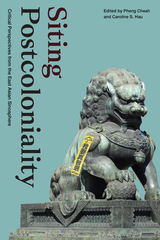
Contributors. Pheng Cheah, Dai Jinhua, Caroline S. Hau, Elaine Yee Lin Ho, Wendy Larson, Liao Ping-hui, Lin Pei-yin, Lo Kwai-Cheung, Lui Tai-lok, Pang Laikwan, Lisa Rofel, David Der-wei Wang, Erebus Wong, Robert J. C. Young
Xiao Hong, Yom Sang-sop, Abe Kobo, and Zhong Lihe—these iconic literary figures from China, Korea, Japan, and Taiwan all described Manchuria extensively in their literary works. Now China’s Northeast but a contested frontier in the first half of the twentieth century, Manchuria has inspired writers from all over East Asia to claim it as their own, employing novel themes and forms for engaging nation and empire in modern literature. Many of these works have been canonized as quintessential examples of national or nationalist literature—even though they also problematize the imagined boundedness and homogeneity of nation and national literature at its core.
Through the theoretical lens of literary territorialization, Miya Xie reconceptualizes modern Manchuria as a critical site for making and unmaking national literatures in East Asia. Xie ventures into hitherto uncharted territory by comparing East Asian literatures in three different languages and analyzing their close connections in the transnational frontier. By revealing how writers of different nationalities constantly enlisted transnational elements within a nation-centered body of literature, Territorializing Manchuria uncovers a history of literary co-formation at the very site of division and may offer insights for future reconciliation in the region.

George B. Gideon Jr. served as second assistant engineer aboard the USS Powhatan from 1852 to 1856. From his position on the steam frigate, Gideon traveled to Singapore, Labuan, Borneo, Hong Kong, and many other Asian lands. During his time at sea, Gideon penned dozens of letters to his wife, Lide, back home in Philadelphia. Recently discovered in the attic of his great-great-grandniece, were fifty-one letters penned by Gideon providing thorough and insightful commentary throughout the voyage.
Through these correspondences, Gideon laboriously documents the details of his daily life on board, from the food they ate to the technical aspects of his work, as well as observations concerning the historical events unfolding around him, such as Chinese piracy, the Taiping Rebellion, the Crimean War, and the devastation of Shimoda. To My Dearest Wife, Lide: Letters from George B. Gideon Jr. during Commodore Perry’s Expedition to Japan, 1853–1855 is a rare first-person account of the landmark American naval expedition to Japan to establish commercial relations between the two countries. Gideon’s letters have been meticulously transcribed and annotated by the editors and are an invaluable primary historical source.
Gideon’s letters are candid and revealing, delving into the rampant dysfunction in the navy of the 1850s—sickness and disease, alcohol abuse, and poor leadership, among other challenges. Gideon also unabashedly shares his own cynical views of the navy’s role in supporting American economic interests in Japan. This firsthand account of the political mission of the Perry expedition is a unique contribution to naval and military history and gives readers a better view of life aboard a navy ship.
The authors look at the current global trading system and at the potential threats to East Asian economies from possible regional arrangements, such as separate trading blocks in the Western Hemisphere and Europe. They cover trade between the United States and Japan, Korea and Japan, and Japanese-East Asian trade policies; trade in agriculture and semiconductors and the frictions that have jeopardized this trade; and direct foreign investment. The contributors round out the work with discussions of the political economy of protection in Korea and Taiwan and political economy considerations as they affect trade policy in general.
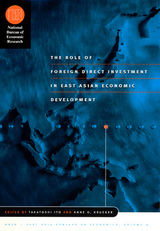
This is the second volume of the National Bureau of Economic Research-East Asia Seminar on Economics. The first volume, The Political Economy of Tax Reform, also edited by Takatoshi Ito and Anne O. Krueger, addresses tax reform in the global economy.
Themes in the research reported here includes the sectoral composition of output and trade; rates of structural change in production and exports and their relation to economic growth; the effect of abundant resource endowments on industrialization and manufactured exports; the nature of the mix between active government policies and market forces; and the balance between demand-determined and supply-determined industrialization and exports. Many of the issues explored have important implications for United States foreign economic policy, and the volume includes a look at the basic economic and political forces influencing shifts in United States trade policy in the postwar period.
A timely and informative analysis, the volume probes the causes and consequences of economic growth in Pacific Asia, focusing on the interaction of exports of manufactured goods and the developmental process. The results reported contribute to ongoing research in structural change and economic policy and will be important to economists working on empirical patters in international trade and the process of economic development.
This volume is the first book-length attempt to analyze trade in services in the Asia-Pacific region. Contributors provide overviews of basic issues involved in studying the service sector; investigate the impact of increasing trade in services on the economies of Taiwan, Korea, and Hong Kong; present detailed analyses of specific service sectors (telecommunications, financial services, international tourism, and accounting); and extend our understanding of trade in services beyond the usual concept (measured in balance of payment statistics) to include indirect services and services undertaken abroad by subsidiaries and affiliates.

The most complete survey to date of the vibrant strands of this music and its colorful practitioners, Mountains of Music delineates a unique culture where music and music making are part of an ancient and treasured heritage. The sly humor, strong faith, clear regional identity, and musical convictions of these performers draw the reader into families and communities bound by music from one generation to another. For devotees as well as newcomers to this infectiously joyous and heartfelt music, Mountains of Music captures the strength of tradition and the spontaneous power of living artistry.
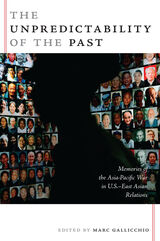
The contributors interpret mass media sources, museum displays, monuments, film, and literature, as well as the archival sources traditionally used by historians. They explore how American ideas about Japanese history shaped U.S. occupation policy following Japan’s surrender in 1945, and how memories of the Asia-Pacific War influenced Washington and Tokyo policymakers’ reactions to the postwar rise of Soviet power. They investigate topics from the resurgence of Pearl Harbor images in the U.S. media in the decade before September 11, 2001, to the role of Chinese war museums both within China and in Chinese-Japanese relations, and from the controversy over the Smithsonian Institution’s Enola Gay exhibit to Japanese tourists’ reactions to the USS Arizona memorial at Pearl Harbor. One contributor traces how a narrative commemorating African Americans’ military service during World War II eclipsed the history of their significant early-twentieth-century appreciation of Japan as an ally in the fight against white supremacy. Another looks at the growing recognition and acknowledgment in both the United States and Japan of the Chinese dimension of World War II. By focusing on how memories of the Asia-Pacific War have been contested, imposed, resisted, distorted, and revised, The Unpredictability of the Past demonstrates the crucial role that interpretations of the past play in the present.
Contributors. Marc Gallicchio, Waldo Heinrichs, Haruo Iguchi, Xiaohua Ma, Frank Ninkovich, Emily S. Rosenberg, Takuya Sasaki, Yujin Yaguchi, Daqing Yang
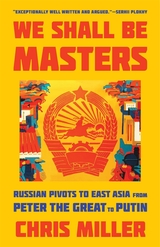
An illuminating account of Russia’s attempts—and failures—to achieve great power status in Asia.
Since Peter the Great, Russian leaders have been lured by opportunity to the East. Under the tsars, Russians colonized Alaska, California, and Hawaii. The Trans-Siberian Railway linked Moscow to Vladivostok. And Stalin looked to Asia as a sphere of influence, hospitable to the spread of Soviet Communism. In Asia and the Pacific lay territory, markets, security, and glory.
But all these expansionist dreams amounted to little. In We Shall Be Masters, Chris Miller explores why, arguing that Russia’s ambitions have repeatedly outstripped its capacity. With the core of the nation concentrated thousands of miles away in the European borderlands, Russia’s would-be pioneers have always struggled to project power into Asia and to maintain public and elite interest in their far-flung pursuits. Even when the wider population professed faith in Asia’s promise, few Russians were willing to pay the steep price. Among leaders, too, dreams of empire have always been tempered by fears of cost. Most of Russia’s pivots to Asia have therefore been halfhearted and fleeting.
Today the Kremlin talks up the importance of “strategic partnership” with Xi Jinping’s China, and Vladimir Putin’s government is at pains to emphasize Russian activities across Eurasia. But while distance is covered with relative ease in the age of air travel and digital communication, the East remains far off in the ways that matter most. Miller finds that Russia’s Asian dreams are still restrained by the country’s firm rooting in Europe.
“Miller’s terrific book reminds that Russia made moves toward the East five hundred years ago, and explains why ignoring the Russian factor in Asian geopolitics today would be a big mistake.”
—Michael McFaul, author of From Cold War to Hot Peace
“Miller presents a Russia little known in the West: a Eurasian power that treats its eastern calling as seriously as it does its western one. Exceptionally well written and argued, We Shall Be Masters helps us understand Russia on its own terms and offers historical insight into the future of its relations with China, its main rival and occasional ally.”
—Serhii Plokhy, author of The Gates of Europe
“Challenges the conventional view that [Russia] has enduring interests in the Far East…For Russia, Miller argues, Asia has been a land of unfulfilled promises.”
—Foreign Affairs
“Captures the immensity, complexity, and importance of Russia’s eastern borderlands through the eyes of its explorers…Comprehensive and fluidly written.”
—Publishers Weekly
Ever since Peter the Great, Russian leaders have been lured by the promise of the East. But from the tsars to Stalin and beyond, Russia’s ambitions have repeatedly outstripped its capacity. In We Shall Be Masters, Chris Miller explores why these expansionist dreams so often ended in disappointment. With the heart of the nation in the European borderlands, Russia’s would-be pioneers struggled to maintain public interest in their far-flung pursuits. But its leaders never stopped setting their sights on the riches of the East. Today, as Vladimir Putin seeks to cement his strategic partnership with Xi Jinping’s China, the East remains as elusive and attractive to Russia as ever—and is likely to be as unattainable.

The economic deregulation that followed the East Asian financial crisis and recession in the 1990s blocked youth from the labor market. This issue investigates the resulting youth labor crisis and its predominant manifestations—youth unemployment and underemployment. The contributors examine these phenomena not as social anomalies but as the new faces of labor for youth. They conceptualize this situation as emblematic of a global crisis in capitalism and study how the politics of youth unemployment and underemployment emerge interconnected in China, Japan, and South Korea. The essays highlight how political leaders in these countries gamble with the futures of their young people to secure their places in neoliberal globalization, disconnecting national futures from personal ones.
Gabriella Lukács is associate professor of anthropology at the University of Pittsburgh. She is the author of Scripted Affects, Branded Selves: Television, Subjectivity, and Capitalism in 1990s Japan, also published by Duke University Press.
Contributors: Cho Hae-joang, Jennifer Jihye Chun, Mark Driscoll, Michael Fisch, Ju Hui Judy Han, Anita Koo, Gabriella Lukács, Pun Ngai, Xia Zhang
READERS
Browse our collection.
PUBLISHERS
See BiblioVault's publisher services.
STUDENT SERVICES
Files for college accessibility offices.
RECENTLY PUBLISHED






UChicago Accessibility Resources
home | accessibility | search | about | contact us
BiblioVault ® 2001 - 2024
The University of Chicago Press