
 A SCHOLARLY BOOK REPOSITORY
41 start with A start with A
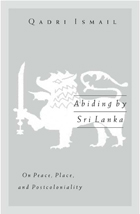
Abiding by Sri Lanka examines how the disciplines of anthropology, history, and literature treat the Sri Lankan ethnic conflict. Anthropology, Ismail contends, approaches Sri Lanka as an object from an “outside” and western point of view. History, addressing the conflict from the “inside,” abides by the place and so promotes change that is nationalist and exclusive. Neither of these fields imagines an inclusive community. Literature, Ismail argues, can.
With close readings of texts that “abide” by Sri Lanka, texts that have a commitment to it, Ismail demonstrates that the problems in Sri Lanka raise fundamental concerns for us all regarding the relationship between democracies and minorities. Recognizing the structural as well as political tendencies of representative democracies to suppress minorities, Ismail rethinks democracy by redefining the concept of the minority perspective, not as a subject-position of numerical insignificance, but as a conceptual space that opens up the possibility for distinction without domination and, ultimately, peace.
Qadri Ismail is associate professor of English at the University of Minnesota. He has also been a journalist in Sri Lanka.
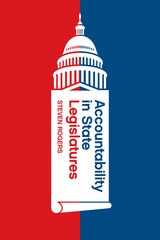
A troubling portrait of democracy in US state legislatures.
State legislatures hold tremendous authority over key facets of our lives, ranging from healthcare to marriage to immigration policy. In theory, elections create incentives for state legislators to produce good policies. But do they?
Drawing on wide-ranging quantitative and qualitative evidence, Steven Rogers offers the most comprehensive assessment of this question to date, testing different potential mechanisms of accountability. His findings are sobering: almost ninety percent of American voters do not know who their state legislator is; over one-third of incumbent legislators run unchallenged in both primary and general elections; and election outcomes have little relationship with legislators’ own behavior.
Rogers’s analysis of state legislatures highlights the costs of our highly nationalized politics, challenging theories of democratic accountability and providing a troubling picture of democracy in the states.
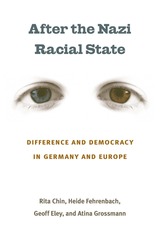
"After the Nazi Racial State offers a comprehensive, persuasive, and ambitious argument in favor of making 'race' a more central analytical category for the writing of post-1945 history. This is an extremely important project, and the volume indeed has the potential to reshape the field of post-1945 German history."
---Frank Biess, University of California, San Diego
What happened to "race," race thinking, and racial distinctions in Germany, and Europe more broadly, after the demise of the Nazi racial state? This book investigates the afterlife of "race" since 1945 and challenges the long-dominant assumption among historians that it disappeared from public discourse and policy-making with the defeat of the Third Reich and its genocidal European empire. Drawing on case studies of Afro-Germans, Jews, and Turks---arguably the three most important minority communities in postwar Germany---the authors detail continuities and change across the 1945 divide and offer the beginnings of a history of race and racialization after Hitler. A final chapter moves beyond the German context to consider the postwar engagement with "race" in France, Britain, Sweden, and the Netherlands, where waves of postwar, postcolonial, and labor migration troubled nativist notions of national and European identity.
After the Nazi Racial State poses interpretative questions for the historical understanding of postwar societies and democratic transformation, both in Germany and throughout Europe. It elucidates key analytical categories, historicizes current discourse, and demonstrates how contemporary debates about immigration and integration---and about just how much "difference" a democracy can accommodate---are implicated in a longer history of "race." This book explores why the concept of "race" became taboo as a tool for understanding German society after 1945. Most crucially, it suggests the social and epistemic consequences of this determined retreat from "race" for Germany and Europe as a whole.
Rita Chin is Associate Professor of History at the University of Michigan.
Heide Fehrenbach is Presidential Research Professor at Northern Illinois University.
Geoff Eley is Karl Pohrt Distinguished University Professor of Contemporary History at the University of Michigan.
Atina Grossmann is Professor of History at Cooper Union.
Cover illustration: Human eye, © Stockexpert.com.

In a range of politically inflected essays by philosophers, community activists, political scientists, sociologists, literary scholars, and cultural and postcolonial theorists—many of whom are diasporic or resident South Africans—this special issue of SAQ provides a critical look at the realities of black majority governance, at the African National Congress, and at the costs of ANC rule to the populace. One essay draws a condemning sketch of poverty and violence in the townships and the growing communities of squatters that continue despite the emergence of democracy. A philosophical piece contemplates the practice of human rights in a South African society grappling with the memory of apartheid abuses. The fiction and poetry in the collection explore sexual identity, including issues created by the AIDS epidemic, and offer critiques of government policies. Using comic strips, another contributor demonstrates the ability of South African popular culture to satirize the nation’s political status quo. Taken together, the essays in After the Thrill Is Gone open a sobering perspective on South Africa’s recent history, its present, and its future.
Contributors. Rita Barnard, Patrick Bond, Ashwin Desai, Emmanuel Chukwudi Eze, Grant Fared, Michiel Heyns, Shaun Irlam, Neil Lazarus, Michael MacDonald, Zine Magubane, Richard Pithouse, Lesego Rampolokeng, Adam Sitze
The afterlife of prisons became an important tool in the “forgetting” of past politics, while also serving as a reminder to citizens of the liberties they now enjoyed. In Draper’s analysis, these symbols led the populace to believe they had attained freedom, although they had only witnessed the veneer of democracy—in the ability to vote and consume.
In selected literary works by Roberto Bolaño, Eleuterio Fernández Huidoboro, and Diamela Eltit and films by Alejandro Agresti and Marco Bechis, Draper finds further evidence of the emptiness and melancholy of underachieved goals in the afterlife of dictatorships. The social changes that did not occur, the inability to effectively mourn the losses of a now-hidden past, the homogenizing effects of market economies, and a yearning for the promises of true freedom are thematic currents underlying much of these texts.
Draper’s study of the manipulation of culture and consumerism under the guise of democracy will have powerful implications not only for Latin Americanists but also for those studying neoliberal transformations globally.
A New Statesman Book of the Year
A critical analysis of the transformation of constitutionalism from an increasingly irrelevant theory of limited government into the most influential philosophy of governance in the world today.
Constitutionalism is universally commended because it has never been precisely defined. Martin Loughlin argues that it is not some vague amalgam of liberal aspirations but a specific and deeply contentious governing philosophy. An Enlightenment idea that in the nineteenth century became America’s unique contribution to the philosophy of government, constitutionalism was by the mid-twentieth century widely regarded as an anachronism. Advocating separated powers and limited government, it was singularly unsuited to the political challenges of the times. But constitutionalism has since undergone a remarkable transformation, giving the Constitution an unprecedented role in society. Once treated as a practical instrument to regulate government, the Constitution has been raised to the status of civil religion, a symbolic representation of collective unity.
Against Constitutionalism explains why this has happened and its far-reaching consequences. Spearheaded by a “rights revolution” that subjects governmental action to comprehensive review through abstract principles, judges acquire greatly enhanced power as oracles of the regime’s “invisible constitution.” Constitutionalism is refashioned as a theory maintaining that governmental authority rests not on collective will but on adherence to abstract standards of “public reason.” And across the world the variable practices of constitutional government have been reshaped by its precepts.
Constitutionalism, Loughlin argues, now propagates the widespread belief that social progress is advanced not through politics, electoral majorities, and legislative action, but through innovative judicial interpretation. The rise of constitutionalism, commonly conflated with constitutional democracy, actually contributes to its degradation.
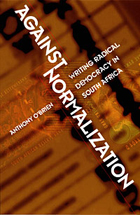
O’Brien brings together an unusual array of contemporary South African writing: cultural theory and debate, worker poetry, black and white feminist writing, Black Consciousness drama, the letters of exiled writers, and postapartheid fiction and film. Paying subtle attention to well-known figures like Nadine Gordimer, Bessie Head, and Njabulo Ndebele, but also foregrounding less-studied writers like Ingrid de Kok, Nise Malange, Maishe Maponya, and the Zimbabwean Dambudzo Marechera, he reveals in their work the construction of a political aesthetic more radically democratic than the current normalization of nationalism, ballot-box democracy, and liberal humanism in culture could imagine. Juxtaposing his readings of these writers with the theoretical traditions of postcolonial thinkers about race, gender, and nation like Paul Gilroy, bell hooks, and Gayatri Spivak, and with others such as Samuel Beckett and Vaclav Havel, O’Brien adopts a uniquely comparatist and internationalist approach to understanding South African writing and its relationship to the cultural settlement after apartheid.
With its appeal to specialists in South African fiction, poetry, history, and politics, to other Africanists, and to those in the fields of colonial, postcolonial, race, and gender studies, Against Normalization will make a significant intervention in the debates about cultural production in the postcolonial areas of global capitalism.

Editor John P. Kaminski has gathered a remarkable collection of quotations by and about Alexander Hamilton that paint for us a nuanced portrait of a complex man. Through his own words and the words of his contemporaries -- including the man who killed him in a duel, Aaron Burr -- we can gain a better understanding of this fascinating man who rose from anonymity on a small Caribbean island to the corridors of power.
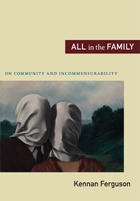
By closely observing the attachments that arise in families despite profound disagreements and incommensurabilities, Ferguson argues, we can imagine a political engagement that accommodates radical differences without sacrificing community. After examining how the concept of the family has been deployed and misused in political philosophy, Ferguson turns to the ways in which families actually operate: the macropolitical significance of family coping strategies such as silence and the impact that disability and caregiving have on conceptions of spatiality, sameness, and disparity. He also considers the emotional attachment between humans and their pets as an acknowledgment that compassion and community can exist even under conditions of profound difference.
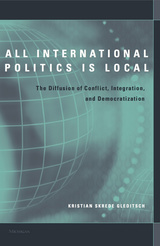
How does regional interdependence influence the prospects for conflict, integration, and democratization? Some researchers look at the international system at large and disregard the enormous regional variations. Others take the concept of sovereignty literally and treat each nation-state as fully independent. Kristian Skrede Gleditsch looks at disparate zones in the international system to see how conflict, integration, and democracy have clustered over time and space. He argues that the most interesting aspects of international politics are regional rather than fully global or exclusively national. Differences in the local context of interaction influence states' international behavior as well as their domestic attributes.
In All International Politics Is Local, Gleditsch clarifies that isolating the domestic processes within countries cannot account for the observed variation in distribution of political democracy over time and space, and that the likelihood of transitions is strongly related to changes in neighboring countries and the prior history of the regional context. Finally, he demonstrates how spatial and statistical techniques can be used to address regional interdependence among actors and its implications.
Kristian Skrede Gleditsch is Assistant Professor of Political Science at the University of California, San Diego.
Deriving stable hypotheses from a simple theoretical model, the book proceeds to a study of party formation in twenty-two developed democracies. New or neglected issues still appear as a driving force in explaining the emergence of new parties, but their effect is partially mediated by institutional factors, such as access to the ballot, public support for parties, and the electoral system. The hypotheses in part support existing theoretical work, but in part present new insights. The theoretical model also pinpoints problems of research design that are hardly addressed in the comparative literature on new political parties. These insights from the theoretical model lead to empirical tests that improve on those employed in the literature and allow for a much-enhanced understanding of the formation and the success of new parties.
Simon Hug is Lecturer in Political Science, University of Geneva.

Through vivid and searching portraits of these three redoubtable journalists, prize-winning historian John L. Thomas traces for the first time the evolving ideologies of the most significant reformers of their age.
Henry George’s Progress and Poverty, Edward Bellamy’s Looking Backward, and Henry Lloyd’s Wealth against Commonwealth each in its turn became an international bestseller, championing a course of national policy and social reform that owed allegiance neither to the large-scale capitalist model then emerging, nor to the bureaucratic socialism espoused on the left. Also common to the vast writings of all three were a deep distrust of partisan machine politics and a mounting sense of social crisis which neither spoilsmanship nor materialism seemed able to address.
Seeking instead diversity and cooperation within society, small economic units, and simplicity in government, the authors of these works were moved to defend strikes during the heyday of industrial capitalism. They spoke out for international peace when imperialism was rampant. They called for the preservation of community values in the face of urban sprawl. And they urged the goals of brotherhood and interdependence in an age when survival of the fittest was seen as holy writ.
They failed magnificently as apostles of a radical culture based on the ideal of a community, yet their intellectual legacy was not lost: their heirs include the broad movement that took the name Progressive, the New Deal, and the hopeful crusades of the 1960s. This magnificent book is their memorial and their history.
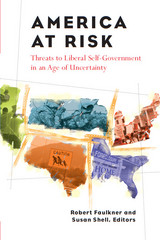
America at Risk gathers original essays by a distinguished and bipartisan group of writers and intellectuals to address a question that matters to Americans of every political persuasion: what are some of the greatest dangers facing America today? The answers, which range from dwindling political participation to rising poverty, and religion to empire, add up to a valuable and timely portrait of a particular moment in the history of American ideas.
While the opinions are many, there is a central theme in the book: the corrosion of the liberal constitutional order that has long guided the country at home and abroad. The authors write about the demonstrably important dangers the United States faces while also breaking the usual academic boundaries: there are chapters on the family, religious polarization, immigration, and the economy, as well as on governmental and partisan issues.
America at Risk is required reading for all Americans alarmed about the future of their country.
Contributors
- Traci Burch
- James W. Ceaser
- Robert Faulkner
- Niall Ferguson
- William A. Galston
- Hugh Heclo
- Pierre Manent
- Harvey C. Mansfield
- Peter Rodriguez
- Kay Lehman Schlozman
- Susan Shell
- Peter Skerry
- James Q. Wilson
- Alan Wolfe
Robert Faulkner is Professor of Political Science at Boston College. Susan Shell is Professor of Political Science at Boston College.
"America at Risk goes well beyond the usual diagnoses of issues debated in public life like immigration, war, and debt, to consider the Republic’s founding principles, and the ways in which they have been displaced by newer thoughts and habits in contemporary America. A critical book for understanding our present condition."
—Francis Fukuyama, Bernard L. Schwartz Professor of International Political Economy, Johns Hopkins School of Advanced International Studies
"In this penetrating book, the nation’s finest social and political thinkers from across the spectrum take a careful and no-holds-barred look at the dangers facing the American political system. The conclusions are more unsettling than reassuring---but that is because they are honest and real."
—Norm Ornstein, Resident Scholar, American Enterprise Institute
"In the midst of overwrought pundits, irate soccer moms, and outraged bloggers, it is difficult to distinguish genuine dangers from false alarms and special pleading. This book enables us to do so, in a way that helps us to actually think about, not just feel anxious about, threats to those features of American society that are worth cherishing. The authors range in ideology and expertise, but they are uniformly judicious, incisive, and informative. This is a fascinating book about issues that the political system usually ignores or exaggerates."
—Jennifer L. Hochschild, Henry LaBarre Jayne Professor of Government and Professor of African and African American Studies, Harvard University
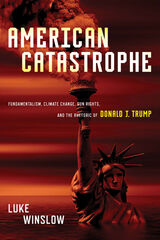
Luke Winslow introduces the rhetorical homology as a critical tool useful for understanding how catastrophic appeals unite Americans across disparate religious, ecological, cultural, and political spheres. More specifically, the four case study chapters examining Christian fundamentalism, anti-environmentalism, gun rights messaging, and the administration of Donald Trump reveal a consistent formal pattern oriented toward catastrophe. In teasing out this orientation toward catastrophe, Winslow offers a fresh, provocative, and insightful contribution to our most pressing social challenges.
—James Carroll, author of House of War and An American Requiem, winner of the National Book Award
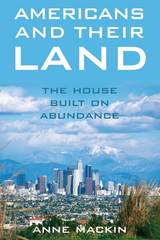
“Anne Mackin has taken a fresh and provocative look at that most fascinating of relationships: the one between the American people and the American land.”
—Michael Pollan, Knight Professor of Journalism and Director of the Knight Program in Science and Environmental Journalism at University of California Berkeley, contributing writer to the New York Times Magazine, and author of The Omnivore's Dilemma and The Botany of Desire
“Anne Mackin has given us a valuable and less-used lens to view the development of our neighborhoods, towns and cities: the land itself. Our relationship to the earth beneath our feet—how we dig it, buy it, sell it, zone it, pave it, spoil it or pamper it—helps explain what is produced on top of the land in our nation, from farms to homes to skyscrapers. All in all, Mackin takes us on a novel and erudite journey, from one coast to the other, and from Colonial times to the present. This valuable book marks a significant and lasting contribution to the way we see and understand our landscape and ourselves.”
—Alex Marshall, author of How Cities Work: Suburbs, Sprawl, and the Roads Not Taken
“To really understand the origins of the range war now raging between smart growth and property rights advocates over the future of the American land, you need to read this exceptional book.”
—Robert D. Yaro, President Regional Plan Association and Professor in Practice, University of Pennsylvania
Thomas Malthus once said, “The happiness of the Americans depended much less upon their peculiar degree of civilization than . . . upon their having a great plenty of fertile uncultivated land.”
Malthus knew. Lord MacCaulay knew. Albert Gallatin knew. America and its people would change as a growing population whittled away the supply of land.
Nothing has shaped the American character like the abundance of land that met the colonist, the pioneer, and the early suburbanite. With today’s political and economic institutions shaped by the largesse of yesteryear, how will Americans fare in the new landscape of water wars, expensive housing, rising fuel prices, environmental and property rights battles, and powerful industrial lobbies?
Why is land the key to American democracy? How can we protect our democracy as more people and industries compete more intensively for our remaining resources? Americans and Their Land begins an important, overdue discussion of these questions. Anne Mackin takes the reader story by story from frontier history to the present and shows how land shaped the American political landscape. She shows how our evolving traditions of apportioning resources have allowed diminished supplies to create our present, increasingly unequal society, and she asks how 300 million Americans living in the new American landscape of growing competition can better share those resources.
“Eminently readable, and anybody who cares about the future of American democracy in these perilous times can only hope that it will be widely read and carefully considered.”
—James Pope, Washington Post
“Fishkin and Forbath’s accessible work serves as both history lesson and political playbook, offering the Left an underutilized—and perhaps counterintuitive—tool in the present-day fight against social and economic injustice: the Constitution.”
—Benjamin Morse, Jacobin
“Aims to recover the Constitution’s pivotal role in shaping claims of justice and equality…in engaging, imaginative prose that makes even the present court’s capture by the ideological right a compelling platform for a revived social-democratic constitutional politics.”
—New Republic
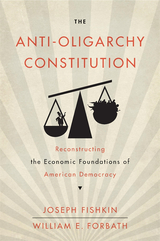
Oligarchy is a threat to the American republic. When too much economic and political power is concentrated in too few hands, we risk losing the “republican form of government” the Constitution requires. Today, courts enforce the Constitution as if it had almost nothing to say about this threat. But as this revolutionary retelling of constitutional history shows, a commitment to prevent oligarchy once stood at the center of a robust tradition in American political and constitutional thought.
Joseph Fishkin and William Forbath demonstrate that reformers, legislators, and even judges working in this “democracy-of-opportunity” tradition understood that the Constitution imposes a duty on legislatures to thwart oligarchy and promote a broad distribution of wealth and political power. These ideas led Jacksonians to fight special economic privileges for the few, Populists to try to break up monopoly power, and Progressives to battle for the constitutional right to form a union.
But today, as we enter a new Gilded Age, this tradition in progressive American economic and political thought lies dormant. The Anti-Oligarchy Constitution begins the work of recovering it and exploring its profound implications for our deeply unequal society and badly damaged democracy.
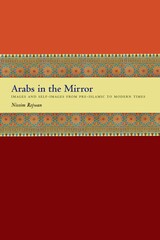
What is an Arab? Though many in the West would answer that question with simplistic stereotypes, the reality is far more complex and interesting. Arabs themselves have been debating Arab identity since pre-Islamic times, coming to a variety of conclusions about the nature and extent of their “Arabness.” Likewise, Westerners and others have attempted to analyze Arab identity, reaching mostly negative conclusions about Arab culture and capacity for self-government.
To bring new perspectives to the question of Arab identity, Iraqi-born scholar Nissim Rejwan has assembled this fascinating collection of writings by Arab and Western intellectuals, who try to define what it means to be Arab. He begins with pre-Islamic times and continues to the last decades of the twentieth century, quoting thinkers ranging from Ibn Khaldun to modern writers such as al-Ansari, Haykal, Ahmad Amin, al-'Azm, and Said. Through their works, Rejwan shows how Arabs have grappled with such significant issues as the influence of Islam, the rise of nationalism, the quest for democracy, women's status, the younger generation, Egypt's place in the Arab world, Israel's role in Middle Eastern conflict, and the West's "cultural invasion."
By letting Arabs speak for themselves, Arabs in the Mirror refutes a prominent Western stereotype—that Arabs are incapable of self-reflection or self-government. On the contrary, it reveals a rich tradition of self-criticism and self-knowledge in the Arab world.
This posthumous publication is more than an honor to Delba Winthrop’s memory. It is a gift to partisans of democracy, advocates of justice, and students of Aristotle.
Since Pakistan gained independence in 1947, only once has an elected government completed its tenure and peacefully transferred power to another elected government. In sharp contrast to neighboring India, the Muslim nation has been ruled by its military for over three decades. Even when they were not directly in control of the government, the armed forces maintained a firm grip on national politics. How the military became Pakistan’s foremost power elite and what its unchecked authority means for the future of this nuclear-armed nation are among the crucial questions Aqil Shah takes up in The Army and Democracy.
Pakistan’s and India’s armies inherited their organization, training, and doctrines from their British predecessor, along with an ethic that regarded politics as outside the military domain. But Pakistan’s weak national solidarity, exacerbated by a mentality that saw war with India looming around every corner, empowered the military to take national security and ultimately government into its own hands. As the military’s habit of disrupting the natural course of politics gained strength over time, it arrested the development of democratic institutions.
Based on archival materials, internal military documents, and over 100 interviews with politicians, civil servants, and Pakistani officers, including four service chiefs and three heads of the clandestine Inter-Services Intelligence, The Army and Democracy provides insight into the military’s contentious relationship with Pakistan’s civilian government. Shah identifies steps for reforming Pakistan’s armed forces and reducing its interference in politics, and sees lessons for fragile democracies striving to bring the military under civilian control.

When art hits the headlines, it is usually because it has caused offence or is perceived by the media to have shock-value. Over the last fifty years many artists have been censored, vilified, accused of blasphemy and obscenity, threatened with violence, prosecuted and even imprisoned. Their work has been trashed by the media and physically attacked by the public.
In Art & Outrage, John A. Walker covers the period from the late 1940s to the 1990s to provide the first detailed survey of the most prominent cases of art that has scandalised. The work of some of Britain’s leading, and less well known, painters and sculptors of the postwar period is considered, such as Richard Hamilton, Bryan Organ, Rachel Whiteread, Reg Butler, Damien Hirst, Jamie Wagg, Barry Flanagan and Antony Gormley. Included are works made famous by the media, such as Carl Andre’s Tate Gallery installation of 120 bricks, Rick Gibson’s foetus earrings, Anthony-Noel Kelly’s cast body-parts sculptures and Marcus Harvey’s portrait of Myra Hindley. Walker describes how each incident emerged, considers the arguments for and against, and examines how each was concluded. While broadly sympathetic to radical contemporary art, Walker has some residual sympathy for the layperson’s bafflement and antagonism. This is a scholarly yet accessible study of the interface between art, society and mass media which offers an alternative history of postwar British art and attitudes.
When the Iron Curtain fell in 1989, Eastern Europe saw a new era begin, and the widespread changes that followed extended into the world of art. Art and Democracy in Post-Communist Europe examines the art created in light of the profound political, social, economic, and cultural transformations that occurred in the former Eastern Bloc after the Cold War ended. Assessing the function of art in post-communist Europe, Piotr Piotrowski describes the changing nature of art as it went from being molded by the cultural imperatives of the communist state and a tool of political propaganda to autonomous work protesting against the ruling powers.
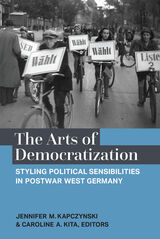
These essays highlight the contradictory and competing impulses that ran through the project to democratize postwar society and cast a critical eye toward the internal biases that shaped the model of Western democracy. In so doing, the contributions probe critical questions that we continue to grapple with today. How did postwar thinkers understand what it meant to be democratic? Did they conceive of democratic subjectivity in terms of acts of participation, a set of beliefs or principles, or perhaps in terms of particular feelings or emotions? How did the work to define democracy and its subjects deploy notions of nation, race, and gender or sexuality? As this book demonstrates, the case of West Germany offers compelling ways to think more broadly about the emergence of democracy. The Arts of Democratization offers lessons that resonate with the current moment as we consider what interventions may be necessary to resuscitate democracy today.
Coming to terms with a new period of uncertainty when it is still replete with possibilities
This quick and engaging study clearly lays out the United States’ current democratic crisis. Examining the early stages of the Nazi movement in Germany, William E. Connolly detects synergies with Donald Trump’s rhetorical style. Tapping into a sense of contemporary fragility, Aspirational Fascism pays particular attention to how conflicts between neoliberalism and the pluralizing left have placed the white working class in a bind. Ultimately, Connolly believes a multifaceted democracy constitutes the best antidote to aspirational fascism and rethinks what a politics of the left might look like today.
Forerunners is a thought-in-process series of breakthrough digital works. Written between fresh ideas and finished books, Forerunners draws on scholarly work initiated in notable blogs, social media, conference plenaries, journal articles, and the synergy of academic exchange. This is gray literature publishing: where intense thinking, change, and speculation take place in scholarship.
Not simply a utopian idea, associative democracy calls for new forms of economic and social governance as supplements to representative democracy and market economies. It addresses the problems of the overload of big government by democratizing and empowering civil society. It transfers social provision to self-governing voluntary associations, while retaining public funding and political accountability. In the economic sphere, it advocates regional economic regulation through public-private partnerships, the promotion of self-governing industrial districts, and the democratization of the company.
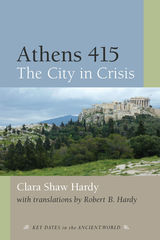
On a summer night in 415 BCE, unknown persons systematically mutilated most of the domestic “herms”—guardian statues of the god Hermes—in Athens. The reaction was immediate and extreme: the Athenians feared a terrifying conspiracy was underway against the city and its large fleet—and possibly against democracy itself. The city established a board of investigators, which led to informants, accusations, and flight by many of the accused. Ultimately, dozens were exiled or executed, their property confiscated.
This dramatic period offers the opportunity to observe the city in crisis. Sequential events allow us to see the workings of the major institutions of the city (assembly, council, law courts, and theater, as well as public and private religion). Remarkably, the primary sources for these tumultuous months name conspirators and informants from a very wide range of status-groups: citizens, women, slaves, and free residents. Thus the incident provides a particularly effective entry-point into a full multifaceted view of the way Athens worked in the late fifth century.
Designed for classroom use, Athens 415 is no potted history, but rather a source-based presentation of ancient urban life ideal for the study of a people and their institutions and beliefs. Original texts—all translated by poet Robert B. Hardy—are presented along with thoughtful discussion and analyses by Clara Shaw Hardy in an engaging narrative that draws students into Athens’ crisis.
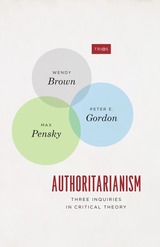
In this volume, three distinguished scholars draw on critical theory to address our current predicament. Wendy Brown, Peter E. Gordon, and Max Pensky share a conviction that critical theory retains the power to illuminate the forces producing the current political constellation as well as possible paths away from it. Brown explains how “freedom” has become a rallying cry for manifestly un-emancipatory movements; Gordon dismantles the idea that fascism is rooted in the susceptible psychology of individual citizens and reflects instead on the broader cultural and historical circumstances that lend it force; and Pensky brings together the unlikely pair of Tocqueville and Adorno to explore how democracies can buckle under internal pressure. These incisive essays do not seek to smooth over the irrationality of the contemporary world, and they do not offer the false comforts of an easy return to liberal democratic values. Rather, the three authors draw on their deep engagements with nineteenth–and twentieth–century thought to investigate the historical and political contradictions that have brought about this moment, offering fiery and urgent responses to the demands of the day.
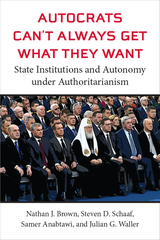
In Autocrats Can’t Always Get What They Want, the authors find that when state bodies form strong institutional patterns and forge links with key allies both inside the state and outside of it, they can define interests and missions that are different from those at the top of the regime. By focusing on three such structures (parliaments, constitutional courts, and official religious institutions), the book shows that the degree of autonomy realized by a particular part of the state rests on how thoroughly it is institutionalized and how strong its links are with constituencies. Instead of viewing authoritarian governance as something that reduces politics to rulers’ whims and opposition movements, the authors show how it operates—and how much what we call “authoritarianism” varies.
READERS
Browse our collection.
PUBLISHERS
See BiblioVault's publisher services.
STUDENT SERVICES
Files for college accessibility offices.
RECENTLY PUBLISHED


UChicago Accessibility Resources
home | accessibility | search | about | contact us
BiblioVault ® 2001 - 2024
The University of Chicago Press