
 A SCHOLARLY BOOK REPOSITORY
The Other Voice in Early Modern Women: The Toronto Series volume 70
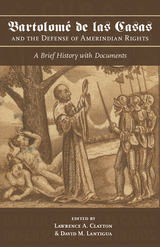
With the exception of Christopher Columbus, Bartolomé de las Casas is arguably the most notable figure of the Encounter Age. He is remembered principally as the creator of the Black Legend, as well as the protector of American Indians. He was one of the pioneers of the human rights movement, and a Christian activist who invoked law and Biblical scripture to challenge European colonialism in the great age of the Encounter. He was also one of the first and most thorough chroniclers of the conquest, and a biographer who saved the diary of Columbus’s first voyage for posterity by transcribing it in his History of the Indies before the diary was lost.
Bartolomé de las Casas and the Defense of Amerindian Rights: A Brief History with Documents provides the most wide-ranging and concise anthology of Las Casas’s writings, in translation, ever made available. It contains not only excerpts from his most well-known texts, but also his largely unavailable writings on political philosophy and law, and addresses the underappreciated aspects of his thought. Fifteen of the twenty-six documents are entirely new translations of Las Casas’s writings, a number of them appearing in English for the first time.
This volume focuses on his historical, political, and legal writings that address the deeply conflicted and violent sixteenth-century encounter between Europeans and indigenous peoples of the Americas. It also presents Las Casas as a more comprehensive and systematic philosophical and legal thinker than he is typically given credit for. The introduction by Lawrence A. Clayton and David M. Lantigua places these writings into a synthetic whole, tracing his advocacy for indigenous peoples throughout his career. By considering Las Casas’s ideas, actions, and even regrets in tandem, readers will understand the historical dynamics of Spanish imperialism more acutely within the social-political context of the times.
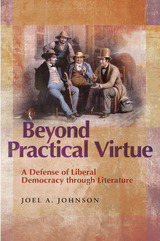
Why hasn’t democracy been embraced worldwide as the best form of government?
Aesthetic critics of democracy such as Carlyle and Nietzsche have argued that modern democracy, by removing the hierarchical institutions that once elevated society’s character, turns citizens into bland, mediocre souls. Joel A. Johnson now offers a rebuttal to these critics, drawing surprising inspiration from American literary classics.
Addressing the question from a new perspective, Johnson takes a fresh look at the worth of liberal democracy in these uncertain times and tackles head-on the thorny question of cultural development. Examining the novels of James Fenimore Cooper, Mark Twain, and William Dean Howells, he shows that through their fiction we can gain a better appreciation of the rich detail of everyday life, making the debate relevant to contemporary discussions of liberal democracy.
Johnson focuses on an issue that liberals have inadequately addressed: whether people tend to develop fully as individuals under liberal democracy when such a regime does little formally to encourage their development. He argues that, though the liberal fear of state-guided culture is well founded, it should not prevent us from evaluating liberalism’s effect on individual flourishing. By extending the debate over the worthiness of liberal democracy to include democracy’s effect on individual development, he contends that the democratic experience is much fuller than the aristocratic one and thus expands the faculties of its citizens.
Critics of American democracy such as John Rawls have sought to transform it into a social or egalitarian democracy in the European style. Johnson shows that neither the debate between Rawls and his communitarian critics nor the ongoing discussion of the globalization of American values adequately addresses the fundamental critique of democratic culture advanced by the aesthetic critics. Johnson’s cogent analysis reaches out to those readers who are ready for a more comprehensive evaluation of liberal democracy, offering new insight into the relationship between the state and the individual while blazing new trails in the intersection of politics and literature.
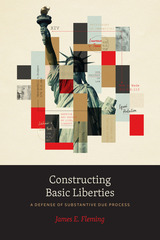
From reproductive rights to marriage for same-sex couples, many of our basic liberties owe their protection to landmark Supreme Court decisions that have hinged on the doctrine of substantive due process. This doctrine is controversial—a battleground for opposing views around the relationship between law and morality in circumstances of moral pluralism—and is deeply vulnerable today.
Against recurring charges that the practice of substantive due process is dangerously indeterminate and irredeemably undemocratic, Constructing Basic Liberties reveals the underlying coherence and structure of substantive due process and defends it as integral to our constitutional democracy. Reviewing the development of the doctrine over the last half-century, James E. Fleming rebuts popular arguments against substantive due process and shows that the Supreme Court has constructed basic liberties through common law constitutional interpretation: reasoning by analogy from one case to the next and making complex normative judgments about what basic liberties are significant for personal self-government.
Elaborating key distinctions and tools for interpretation, Fleming makes a powerful case that substantive due process is a worthy practice that is based on the best understanding of our constitutional commitments to protecting ordered liberty and securing the status and benefits of equal citizenship for all.
A strong and lively defense of substantive due process.
From reproductive rights to marriage for same-sex couples, many of our basic liberties owe their protection to landmark Supreme Court decisions that have hinged on the doctrine of substantive due process. This doctrine is controversial—a battleground for opposing views around the relationship between law and morality in circumstances of moral pluralism—and is deeply vulnerable today.
Against recurring charges that the practice of substantive due process is dangerously indeterminate and irredeemably undemocratic, Constructing Basic Liberties reveals the underlying coherence and structure of substantive due process and defends it as integral to our constitutional democracy. Reviewing the development of the doctrine over the last half-century, James E. Fleming rebuts popular arguments against substantive due process and shows that the Supreme Court has constructed basic liberties through common law constitutional interpretation: reasoning by analogy from one case to the next and making complex normative judgments about what basic liberties are significant for personal self-government.
Elaborating key distinctions and tools for interpretation, Fleming makes a powerful case that substantive due process is a worthy practice that is based on the best understanding of our constitutional commitments to protecting ordered liberty and securing the status and benefits of equal citizenship for all.

Following the invasion of Iraq in 2003 the U.S. military found itself in a battle with a lethal and adaptive insurgency, where the divisions between enemy and ally were ambiguous at best, and working with the local population was essential for day-to-day survival. From the lessons they learned during multiple tours of duty in Iraq, two American veterans have penned The Defense of Jisr al-Doreaa, an instructional parable of counterinsurgency that addresses the myriad of difficulties associated with war in the postmodern era.
In this tactical primer based on the military classic The Defence of Duffer’s Drift, a young officer deployed for the first time in Iraq receives ground-level lessons about urban combat, communications technology, and high-powered weaponry in an environment where policy meets reality. Over the course of six dreams, the inexperienced soldier fights the same battle again and again, learning each time—the hard way—which false assumptions and misconceptions he needs to discard in order to help his men avoid being killed or captured. As the protagonist struggles with his missions and grapples with the consequences of his mistakes, he develops a keen understanding of counterinsurgency fundamentals and the potential pitfalls of working with the native population.
Accompanied here by the original novella that inspired it, The Defense of Jisr al-Doreaa offers an invaluable resource for cadets and junior military leaders seeking to master counterinsurgency warfare—as well as general readers seeking a deeper understanding of the wars in Iraq and Afghanistan. Just as its predecessor has been a hallmark of military instruction, The Defense of Jisr al-Doreaa will draw the road map for counterinsurgency in the postmodern world.
Visit a website for the book here: www.defenseofJAD.com

Michael W. Clune’s provocative book challenges these objections to judgment and offers a positive account of literary studies as an institution of aesthetic education. It is impossible, Clune argues, to separate judgments about literary value from the practices of interpretation and analysis that constitute any viable model of literary expertise. Clune envisions a progressive politics freed from the strictures of dogmatic equality and enlivened by education in aesthetic judgment, transcending consumer culture and market preferences. Drawing on psychological and philosophical theories of knowledge and perception, Clune advocates for the cultivation of what John Keats called “negative capability,” the capacity to place existing criteria in doubt and to discover new concepts and new values in artworks. Moving from theory to practice, Clune takes up works by Keats, Emily Dickinson, Gwendolyn Brooks, Samuel Beckett, and Thomas Bernhard, showing how close reading—the profession’s traditional key skill—harnesses judgment to open new modes of perception.
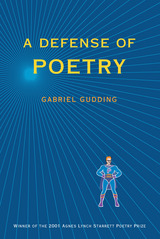
Runner-up, Society of Midland Authors 2002 Poetry Prize
Gabriel Gudding’s poems not only defend against the pretense and vanity of war, violence, and religion, but also against the vanity of poetry itself. These poems sometimes nestle in the lowest regions of the body, and depict invective, donnybrooks, chase scenes, and the abuse of animals, as well as the indignities and bumblings of the besotted, the lustful, the annoyed, and the stupid.
In short, Gudding seeks to reclaim the lowbrow. Dangerous, edgy, and dark, this is an innovative writer unafraid to attack the unremitting high seriousness of so much poetry, laughing with his readers as he twists the elegiac lyric "I" into a pompous little clown.
Two leading scholars of democracy make the case for political bargaining and define its proper limits.
Bargains—grand and prosaic—are a central fact of political life. The distribution of bargaining power affects the design of constitutions, the construction of party coalitions, legislative outcomes, judicial opinions, and much more. But can political bargaining be justified in theory? If it inevitably involves asymmetric power, is it anything more than the exercise of sublimated force, emerging from and reifying inequalities?
In Democratic Deals, Melissa Schwartzberg and Jack Knight defend bargaining against those who champion deliberation or compromise, showing that, under the right conditions and constraints, it can secure political equality and protect fundamental interests. The challenge, then, is to ensure that these conditions prevail. Drawing a sustained analogy to the private law of contracts—in particular, its concepts of duress and unconscionability—the authors articulate a set of procedural and substantive constraints on the bargaining process and analyze the circumstances under which unequal bargaining power might be justified in a democratic context. Institutions, Schwartzberg and Knight argue, can facilitate gains from exchange while placing meaningful limits on the exercise of unequal power.
Democratic Deals examines frameworks of just bargaining in a range of contexts—constitution-making and legislative politics, among judges and administrative agencies, across branches of government, and between the state and private actors in the course of plea deals. Bargaining is an ineradicable fact of political life. Schwartzberg and Knight show that it can also be essential for democracy.


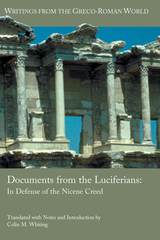
Six important documents for scholars of early church history
This volume includes English translations of several documents concerning the Luciferians, a group of fourth-century Christians whose name derives from the bishop Lucifer of Cagliari. Documents include a confession of faith written for Emperor Theodosius I and a theological treatise written for his wife by Luciferian clergyman Faustinus, the first English translation of a Luciferian petition to Theodosius that focuses on the persecution the community has suffered, Theodosius’s imperial law in response to the Luciferians, two letters composed by Luciferians that purport to represent correspondence from the bishop Athanasius of Alexandria to Lucifer, and the priest Jerome’s Dialogus adversus Luciferianos. These texts highlight connections between developments in Christian theology and local Christian communities in the course of the fourth century.
Features:
- The first English translation of Faustinus’s Libellus precum
- An overview of the development of late antique theology and Christianity
- An introduction to Luciferian beliefs and the translated texts
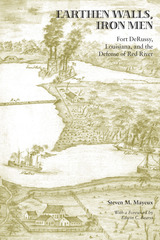
Earthen Walls, Iron Men tells the story of Fort DeRussy, Louisiana, a major Confederate fortification that defended the lower Red River in 1863-64 during the last stages of the Civil War. Long regarded as little more than a footnote by historians, the fort in fact played a critical role in the defense of the Red River region. The Red River Campaign was one of the Confederacy's last great triumphs of the war, and only the end of the conflict saved the reputations of Union leaders who had recently been so successful at Vicksburg. Fort DeRussy was the linchpin of the Confederates' tactical and strategic victory.
Steven M. Mayeux does more than just tell the story of the fort from the military perspective; it goes deeper to closely examine the lives of the people that served in-and lived around-Fort DeRussy. Through a thorough examination of local documents, Mayeux has uncovered the fascinating stories that reveal for the first time what wartime life was like for those living in central Louisiana.
In this book, the reader will meet soldiers and slaves, plantation owners and Jayhawkers, elderly women and newborn babies, all of whom played important roles in making the history of Fort DeRussy. Mayeux presents an unvarnished portrait of the life at the fort, devoid of any romanticized notions, but more accurately capturing the utter humanity of those who built it, defended it, attacked it, and lived around it.
Earthen Walls, Iron Men intertwines the stories of naval battles and military actions with those human elements such as greed, theft, murder, and courage to create a vibrant, relevant history that will appeal to all who seek to know what real life was like during the Civil War.
Steve Mayeux is a graduate of LSU and a former Marine officer. His work as an agricultural consultant in the central Louisiana area for the past thirty years has given him a great appreciation for the history and geography of the lower Red River.

From the formation of the DOD to the long wars of the twenty-first century, the United States rebranded war as the defense of Western liberalism from first communism, then crime, authoritarianism, and terrorism. Officials learned to frame state violence against Asians, Black and brown people, Arabs, and Muslims as the safeguarding of human rights from illiberal beliefs and behaviors. Through government documents, news media, and the writing and art of Joseph Heller, June Jordan, Trinh T. Minh-ha, I. F. Stone, and others, Darda shows how defense remade and sustained a weakened color line with new racial categories (the communist, the criminal, the authoritarian, the terrorist) that cast the state’s ideological enemies outside the human of human rights. Amid the rise of anticolonial and antiracist movements the world over, defense secured the future of war and white dominance.

A multidisciplinary examination of the role of military forts in the Caribbean during the age of European colonial expansion
A Fortified Sea illuminates the key role of military forts in the greater Caribbean during the long eighteenth century. The historical Caribbean, with its multiple contested boundaries at the periphery of European western expansion, typically has been analyzed as part of an empire. European powers, including Spain, the Netherlands, England, and Denmark, carved up the Caribbean Sea into a cultural patchwork. These varied cultural contexts were especially evident during regional and national conflicts throughout the eighteenth century and prompted the construction of more fortifications to protect imperial interests. The emergence of Anglo-American colonies during the eighteenth century and later the United States gradually altered previous geopolitical balances, redefining the cultural and geopolitical boundaries of the region.
This collection of essays incorporates several historiographical traditions—from Spanish to American—all portraying the borderland as a breakthrough contested cultural, social, economic, and military boundary. A multinational roster of contributors approaches topics through a war studies lens as well as architecturally and historically, enriching a usually monothematic view. As well, discussion of cultural management of the historical remains of forts shows local communities trying to preserve and interpret the role of forts in society.
Part I defines the training of military engineers in Spain. Part II engages with British defensive military plans and settlements in the Caribbean and shows how the British dealt with the rhetorical image of the empire. Part III clarifies the building processes of fortifications in Santiago de Cuba, Cartagena de Indias, Havana, and Veracruz, among other places. Copious period maps complement the prodigious research. The book will appeal to readers interested in the history of the Caribbean, military history, and European imperial expansion.
CONTRIBUTORS
Mónica Cejudo Collera / Pedro Cruz Freire / María Mercedes Fernández Martín / Aaron Graham / Manuel Gámez Casado / Francisco Javier Herrera García / Nuria Hinarejos Martín / Pedro Luengo / Ignacio J. López-Hernández / José Miguel Morales Folguera / Alfredo J. Morales / Juan Miguel Muñoz Corbalán / Jesús Maria Ruiz Carrasco / Germán Segura García / Gene Allen Smith / Christopher K. Waters

Guarding the Frontier was first published in 1935. Minnesota Archive Editions uses digital technology to make long-unavailable books once again accessible, and are published unaltered from the original University of Minnesota Press editions.
"For almost a century the defense of the frontier was the chief consideration in the military policy of the United States," Dr. Wesley observes. His book is the first detailed historical study of the military policy of the United States in the years immediately following the War of 1812, the period during which its policy was becoming clearly defined.
The political, military, and economic factors lying behind the establishment of that policy are all given thorough treatment by the author, who discusses the various methods of defense evolved against the British to the north, the Spaniards in the south and west, and the Indians everywhere. The author demonstrates the importance of Indian affairs, of the factory system, and of the fur trade as elements in the westward expansion of the United States.


This updated comprehensive history of the American Civil Liberties Union recounts the ACLU's stormy history since its founding in 1920 to fight for free speech and explores its involvement in some of the most famous causes in American history, including the Scopes "monkey trial," the internment of Japanese Americans during World War II, the Cold War anti-Communist witch hunts, and the civil rights movement. The new introduction covers the history of the organization and developments in civil liberties in the 1990s, including the U.S. Supreme Court's declaration of the Communications Decency Act as unconstitutional in ACLU v. Reno.

One of the leading humanists of Quattrocento Italy, Lorenzo Valla (ca. 1406–1457) has been praised as a brilliant debunker of medieval scholastic philosophy. In this book Lodi Nauta seeks a more balanced assessment, presenting us with the first comprehensive analysis of the humanist’s attempt at radical reform of Aristotelian scholasticism.
This study examines Valla’s attack on major tenets of Aristotelian metaphysics, showing how Valla employed common sense and linguistic usage as his guides. It then explicates Valla’s critique of Aristotelian psychology and natural philosophy and discusses his moral and religious views, including Valla’s notorious identification of Christian beatitude with Epicurean pleasure and his daring views on the Trinity. Finally, it takes up Valla’s humanist dialectic, which seeks to transform logic into a practical tool measured by persuasiveness and effectiveness.
Nauta firmly places Valla’s arguments and ideas within the contexts of ancient and medieval philosophical traditions as well as renewed interest in ancient rhetoric in the Renaissance. He also demonstrates the relevance of Valla’s conviction that the philosophical problems of the scholastics are rooted in a misunderstanding of language. Combining philosophical exegesis and historical scholarship, this book offers a new approach to a major Renaissance thinker.
Drawing on diverse sources of data, Jacobs offers a new theory of liberal arts disciplines such as biology, economics, and history that identifies the organizational sources of their dynamism and breadth. Illustrating his thesis with a wide range of case studies including the diffusion of ideas between fields, the creation of interdisciplinary scholarly journals, and the rise of new fields that spin off from existing ones, Jacobs turns many of the criticisms of disciplines on their heads to mount a powerful defense of the enduring value of liberal arts disciplines. This will become one of the anchors of the case against interdisciplinarity for years to come.
In this book, Amy Lai examines the current free speech crisis in Western universities. She studies the origin, history, and importance of freedom of speech in the university setting, and addresses the relevance and pitfalls of political correctness and microaggressions on campuses, where laws on harassment, discrimination, and hate speech are already in place, along with other concepts that have gained currency in the free speech debate, including deplatforming, trigger warning, and safe space. Looking at numerous free speech disputes in the United Kingdom, the United States, and Canada, the book argues for the equal application of the free speech principle to all expressions to facilitate respectful debates. All in all, it affirms that the right to free expression is a natural right essential to the pursuit of truth, democratic governance, and self-development, and this right is nowhere more important than in the university.

While some Brazilian elites used the issue of sexual purity to boast of their country’s moral superiority, others claimed that the veneration of such concepts as virginity actually frustrated efforts at modernization. Moreover, although individuals of all social classes invoked values they considered “traditional,” such as the confinement of women’s sexuality within marriage, these values were at odds with social practices—such as premarital sex, cohabitation, divorce, and female-headed households—that had been common throughout Brazil’s history. The persistence of these practices, together with post-World War I changes in both official and popular moral ideals, presented formidable obstacles to the Estado Novo’s renewed drive to define and enforce public morality and private family values in the late 1930s.
With sophisticated theoretical underpinnings, In Defense of Honor is written in a clear and lively manner, making it accessible to students and scholars in a variety of disciplines, including Brazilian and Latin American studies, gender studies, and legal history.


Los Angeles’s consulate was confronted with the country’s largest concentration of Mexican Americans, for whom the consuls often assumed a position of community leadership. Whether helping the unemployed secure repatriation and relief or intervening in labor disputes, consuls uniquely adapted their roles in international diplomacy to the demands of local affairs.

In Defense of Monopoly offers an unconventional but empirically grounded argument in favor of market monopolies. Authors McKenzie and Lee claim that conventional, static models exaggerate the harm done by real-world monopolies, and they show why some degree of monopoly presence is necessary to maximize the improvement of human welfare over time.
Inspired by Joseph Schumpeter's suggestion that market imperfections can drive an economy's long-term progress, In Defense of Monopoly defies conventional assumptions to show readers why an economic system's failure to efficiently allocate its resources is actually a necessary precondition for maximizing the system's long-term performance: the perfectly fluid, competitive economy idealized by most economists is decidedly inferior to one characterized by market entry and exit restrictions or costs.
An economy is not a board game in which players compete for a limited number of properties, nor is it much like the kind of blackboard games that economists use to develop their monopoly models. As McKenzie and Lee demonstrate, the creation of goods and services in the real world requires not only competition but the prospect of gains beyond a normal competitive rate of return.

Wendell Berry has called John Hay a “carrier of light and wisdom.” In Defense of Nature reveals why this is true. In it Hay has written an extended meditation on the environment and our place in it. Its lessons never more important, In Defense of Nature eerily presages the tenuous state of our environment and our place in it. As our technical abilities have moved forward, our judgment has not kept pace. “What we call natural resources cannot be limited to gas, oil, pulpwood, or uranium,we are starving the natural resources in ourselves. The soul needs to stretch; being needs to exercise.”

In Defense of Negativity, Geer’s study of negative advertising in presidential campaigns from 1960 to 2004, asserts that the proliferating attack ads are far more likely than positive ads to focus on salient political issues, rather than politicians’ personal characteristics. Accordingly, the ads enrich the democratic process, providing voters with relevant and substantial information before they head to the polls.
An important and timely contribution to American political discourse, In Defense of Negativity concludes that if we want campaigns to grapple with relevant issues and address real problems, negative ads just might be the solution.
its compromises and power struggles, remains the only tested alternative to government by
coercion, making both freedom and order possible in heterogeneous societies. For Crick,
politics is messy and complex, and his book defends it against those who would identify it with (and reduce it to) ideology, democracy, nationalism, or technology.
This Fourth edition has been updated to include an assessment of the revolutions in 1989 in
Eastern Europe. It also examines current situations in Northern Ireland, Israel and Palestine,
and South Africa.
“A short book written with verve and brilliance. . . . He has written an exceedingly clever and
disturbing book on important issues, all that he writes is alive and much of what he says, even when it seems perversely provocative, turns out to be penetrating and serious.”
—Isaiah Berlin, 20th Century
“One of the most thoughtful products of the political dialogues of the London School of
Economics since the great days of Tawney, Dalton, Wallas and Hobhouse. Its sobriety,
liberal spirit and toughness of mind are rare qualities in any political work.”
—Edward Shils, Guardian

Scholars of public administration have historically too often been disdainful towards politics in the field, viewing political activities and interests as opportunities for corruption, mismanagement, and skewed priorities. Supporters of this anti-political stance have become even more strident in recent years, many of them advancing scientific models for the study and practice of public administration and governance.

By turns a scientific, feminist, and economic critique, this book gleefully attacks received wisdom about the dangers of processed food. Anastacia Marx de Salcedo argues that, in fact, most processed foods are relatively healthy and that their consumption is an undisputed boon to women’s equality—since the burdens of cooking disproportionately fall on women. In de Salcedo’s account, processed foods take too much blame for the negative effects of modern sedentary life, and alternative food systems are doomed to economic dysfunction. Ultimately, de Salcedo embraces the preserved foods in her pantry and encourages the reader to do the same.

Debates continue to rage over the merits or flaws of public land and whether or not it should be privatized—or at least, radically reconfigured in some way. In Defense of Public Lands offers a comprehensive refutation of the market-oriented arguments. Steven Davis passionately advocates that public land ought to remain firmly in the public’s hands. He reviews empirical data and theoretical arguments from biological, economic, and political perspectives in order to build a case for why our public lands are an invaluable and irreplaceable asset for the American people.
In Defense of Public Lands briefly lays out the history and characteristics of public lands at the local, state, and federal levels while examining the numerous policy prescriptions for their privatization or, in the case of federal lands, transfer. He considers the dimensions of environmental health; markets and valuation of public land, the tensions between collective values and individual preferences, the nature and performance of bureaucratic management, and the legitimacy of interest groups and community decision-making. Offering a fair, good faith overview of the privatizers’ best arguments before refuting them, this timely book contemplates both the immediate and long-term future of our public lands.

Yvor Winters has here collected, with an introduction, the major critical works—Primitivism and Decadence, Maule’s Curse, and The Anatomy of Nonsense—of the period in which he worked out his famous and influential critical position. The works together show an integrated position which illuminates the force and importance of the individual essays. With The Function of Criticism, a subsequent collection, In Defense of Reason provides an incomparable body of critical writing.
The noted critic bases his analysis upon a belief in the existence of absolute truths and values, in the ethical judgment of literature, and in an insistence that it is the duty of the writer—as it is of very man—to approximate these truths insofar as human fallibility permits. His argument is by theory, but also by definite example—the technique of the “whole critic” who effectively combines close study of specific literary works and a penetrating investigation of aesthetic philosophies.
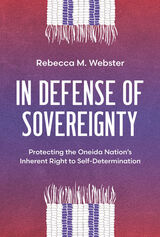
As in so many conflicts between Indigenous nations and local municipalities, the media narrative about the Oneida Nation’s battle for sovereignty has been dominated by the local government’s standpoint. In Defense of Sovereignty offers another perspective, that of a nation citizen directly involved in the litigation, augmented by contributions from historians, attorneys, and a retired nation employee. It makes an important contribution to public debates about the inherent right of Indigenous nations to continue to exist and exercise self-governance within their territories without being challenged at every turn.

Pompeo Colonna’s In Defense of Women (1530), presented in this volume in Latin and English translation, is one of several important defenses of women composed in the fifteenth and sixteenth centuries by male advocates of women’s moral and intellectual worth. Known as a cardinal and a warrior, but also as an active participant in sixteenth-century Italian literary circles, Colonna addresses the work to his cousin Vittoria Colonna, the most renowned Italian woman poet of the era, who, he writes, had urged him to undertake it. His Defense not only refutes arguments of women’s inferiority and incapacity but, remarkably, asserts their ability to hold political office and govern. It contains original Latin text and a critical introduction by Franco Minonzio. It also features a foreword by Margaret L. King, as well as a postscript by King, tracing the separate male-authored and female-authored Renaissance defenses of women.
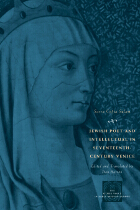
The first Jewish woman to leave her mark as a writer and intellectual, Sarra Copia Sulam (1600?–41) was doubly tainted in the eyes of early modern society by her religion and her gender. This remarkable woman, who until now has been relatively neglected by modern scholarship, was a unique figure in Italian cultural life, opening her home, in the Venetian ghetto, to Jews and Christians alike as a literary salon.
For this bilingual edition, Don Harrán has collected all of Sulam’s previously scattered writings—letters, sonnets, a Manifesto—into a single volume. Harrán has also assembled all extant correspondence and poetry that was addressed to Sulam, as well as all known contemporary references to her, making them available to Anglophone readers for the first time. Featuring rich biographical and historical notes that place Sulam in her cultural context, this volume will provide readers with insight into the thought and creativity of a woman who dared to express herself in the male-dominated, overwhelmingly Catholic Venice of her time.

scapegoats for many of the problems of our
age. In The Lawyer Myth: A Defense of the
American Legal Profession, Rennard Strickland and
Frank T. Read look behind current antilawyer media
images to explore the historical role of lawyers as a
balancing force in times of social, economic, and political change. One source of this disjunction of perception and reality, they find, is that American society has lost touch with the need for the lawyer’s skill and has come to blame unrelated social problems on the legal profession. This highly personal and impassioned book is their defense of lawyers and the rule of law in the United States.
The Lawyer Myth confronts the hypocrisy of critics from both the right and
the left who attempt to exploit popular misperceptions about lawyers and
judges to further their own social and political agendas. By revealing the facts and reasoning behind the decisions in such cases as the infamous McDonald’s coffee spill, the authors provide a clear explanation of the operation of the law while addressing misconceptions about the number of lawsuits, runaway jury verdicts, and legal “technicalities” that turn criminals out on the street.
Acknowledging that no system is perfect, the authors propose a slate of reforms for the bar, the judiciary, and law schools that will enable today’s lawyers—and tomorrow’s—to live up to the noble potential of their profession. Whether one thinks of lawyers as keepers of the springs of democracy, foot soldiers of the Constitution, architects and carpenters of commerce, umpires and field levelers, healers of the body politic, or simply bridge builders, The Lawyer Myth reminds us that lawyers are essential to American democracy.

The United States Supreme Court has numbered nine justices for the past 150 years. But that number is not fixed. With the Democrats controlling the House and Senate during the Biden presidency, they could add justices to the Supreme Court. But would court packing destroy the Court as an apolitical judicial institution? This is the crucial question Stephen Feldman addresses in his provocative book, Pack the Court! He uses a historical, analytical, and political argument to justify court-packing in general and Democratic court-packing more specifically.
Republicans and Democrats alike profess to worry that court-packing will destroy the legitimacy of the Supreme Court as a judicial institution by injecting politics into a purely legal adjudicative process. But as Feldman’s insightful book shows, law and politics are forever connected in judicial interpretation and decision making. Pack the Court! insists that court packing is not the threat to the Supreme Court’s institutional legitimacy that many fear. Given this, Feldman argues that Democrats should pack the Court while they have the opportunity. Doing so might even strengthen the American people’s faith in the Court.
An ARTery Best Book of the Year
An Art of Manliness Best Book of the Year
In a culture that has become progressively more skeptical and materialistic, the desires of the individual self stand supreme, Mark Edmundson says. We spare little thought for the great ideals that once gave life meaning and worth. Self and Soul is an impassioned effort to defend the values of the Soul.
“An impassioned critique of Western society, a relentless assault on contemporary complacency, shallowness, competitiveness and self-regard…Throughout Self and Soul, Edmundson writes with a Thoreau-like incisiveness and fervor…[A] powerful, heartfelt book.”
—Michael Dirda, Washington Post
“[Edmundson’s] bold and ambitious new book is partly a demonstration of what a ‘real education’ in the humanities, inspired by the goal of ‘human transformation’ and devoted to taking writers seriously, might look like…[It] quietly sets out to challenge many educational pieties, most of the assumptions of recent literary studies—and his own chosen lifestyle.”
—Mathew Reisz, Times Higher Education
“Edmundson delivers a welcome championing of humanistic ways of thinking and living.”
—Kirkus Reviews
How is our conception of what there is affected by our counting ourselves as inhabitants of the natural world? How do our actions fit into a world that is altered through our agency? And how do we accommodate our understanding of one another as fellow subjects of experience--as beings with thoughts and wants and hopes and fears? These questions provide the impetus for the detailed discussions of ontology, human agency, and everyday psychological explanation presented in this book. The answers offer a distinctive view of questions about "the mind's place in nature," and they argue for a particular position in philosophy of mind: naive naturalism.
This position opposes the whole drift of the last thirty or forty years' philosophy of mind in the English-speaking world. Jennifer Hornsby sets naive naturalism against dualism, but without advancing the claims of "materialism," "physicalism," or "naturalism" as these have come to be known. She shows how we can, and why we should, abandon the view that thoughts and actions, to be seen as real, must be subject to scientific explanation.
Ruth A. Miller excavates a centuries-old history of nonhuman and nonbiological constitutional engagement and outlines a robust mechanical democracy that challenges existing theories of liberal and human political participation. Drawing on an eclectic set of legal, political, and automotive texts from France, Turkey, and the United States, she proposes a radical mechanical re-articulation of three of the most basic principles of democracy: vitality, mobility, and liberty.
Rather than defending a grand theory of materialist or posthumanist politics, or addressing abstract concepts or “things” writ large, Miller invites readers into a self-contained history of constitutionalism situated in a focused discussion of automobile traffic congestion in Paris, Istanbul, and Boston. Within the mechanical public sphere created by automotive space, Snarl finds a model of democratic politics that transforms our most fundamental assumptions about the nature, and constitutional potential, of life, movement, and freedom.


A new form of philosophizing known as ordinary language philosophy took root in England after the Second World War, promising a fresh start and a way out of long-standing dead-end philosophical debates. Pioneered by Wittgenstein, Austin, and others, OLP is now widely rumored, within mainstream analytic philosophy, to have been seriously discredited, and consequently its perspective is ignored.
Avner Baz begs to differ. In When Words Are Called For, he shows how the prevailing arguments against OLP collapse under close scrutiny. All of them, he claims, presuppose one version or another of the very conception of word-meaning that OLP calls into question and takes to be responsible for many traditional philosophical difficulties. Worse, analytic philosophy itself has suffered as a result of its failure to take OLP’s perspective seriously. Baz blames a neglect of OLP’s insights for seemingly irresolvable disputes over the methodological relevance of “intuitions” in philosophy and for misunderstandings between contextualists and anti-contextualists (or “invariantists”) in epistemology. Baz goes on to explore the deep affinities between Kant’s work and OLP and suggests ways that OLP could be applied to other philosophically troublesome concepts.
When Words Are Called For defends OLP not as a doctrine but as a form of practice that might provide a viable alternative to work currently carried out within mainstream analytic philosophy. Accordingly, Baz does not merely argue for OLP but, all the more convincingly, practices it in this eye-opening book.
READERS
Browse our collection.
PUBLISHERS
See BiblioVault's publisher services.
STUDENT SERVICES
Files for college accessibility offices.
RECENTLY PUBLISHED



UChicago Accessibility Resources
home | accessibility | search | about | contact us
BiblioVault ® 2001 - 2024
The University of Chicago Press