
 A SCHOLARLY BOOK REPOSITORY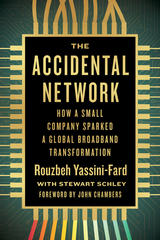
The Accidental Network shares the untold story of the invention of the cable modem by the small, struggling tech company LANcity in the early 1990s, illustrating how Yassini-Fard overcame a cascade of technical challenges, investment community naysayers, and unnerving business obstacles to create the cable modem technology that has changed the way billions of individuals across the globe now manage their daily lives and commerce. The cable modem delivered broadband, with speeds ranging from 10 megabits per second (Mbps) to 10 gigabits per second (Gbps)—a big leap from the dial-up speeds of 56 kilobits per second (Kbps). This platform, along with the adoption of the DOCSIS (Data Over Cable Service Interface Specification) standard, engendered the modern revolution in broadband Internet access. Shunned by venture capitalists and surviving on a shoestring budget, Yassini-Fard and his colleagues were willing to bet it all (including the deed for Yassini-Fard’s home) on the creation of the cable modem and the pursuit of global adoption.
The Accidental Network is both a valuable history of technology innovation and an engrossing account of business conducted at high speed. The book details Yassini-Fard’s journey from electrical engineer to entrepreneur in the race to secure technology partners, create a wholly new marketplace, and convince cable industry executives that a bold business awaited in transmitting data to households at a time when skepticism about the reach of personal computing was the norm.
Written from the lens of a devoted idealist and WVU alum known as “the father of the cable modem,” this book reveals how a perfect storm of forces—the rise of cable television, the onset of the personal computing era, a growing awareness of the Internet for information and commerce, and the development of the cable modem—converged to usher in the age of broadband access.

Networks the intricate relationship between rapidly advancing digital technologies and environmental degradation and reveals the costs of our globally connected world.
Taking a step back from the screens of electronic devices and exploring the profound impacts of digital technologies on our environment, Enduring Digital Damage lifts the veil on the “hidden costs” in our modern technological world.
Dustin Edwards traces key moments in the lifecycle of technology—such as the extraction of raw materials to the disposal of electronic waste—to uncover the often overlooked consequence of our digital age. He illuminates how data centers, mining operations, and other digital infrastructures contribute to environmental harm and how the rapidly increasing demand for land use and water access is essential to sustain our growing digital needs. Weaving together narratives of technological advancement and ecological destruction, Edwards presents a comprehensive analysis of the true cost of our digital lives. By drawing on case studies, cultural critique, and a critical examination of labor and sustainability, Enduring Digital Damage reveals the deeper histories and ongoing struggles that make our digital lives possible, urging readers to imagine the possibility of a less harmful and extractive world.
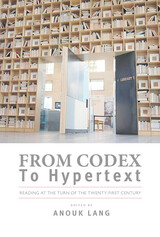
In From Codex to Hypertext, scholars from multiple disciplines engage with both of these strands. This volume includes essays that consider how changes such as the mounting ubiquity of digital technology and the globalization of structures of publication and book distribution are shaping the way readers participate in the encoding and decoding of textual meaning. Contributors also examine how and why reading communities cohere in a range of contexts, including prisons, book clubs, networks of zinesters, state-funded programs designed to promote active citizenship, and online spaces devoted to sharing one's tastes in books.
As concerns circulate in the media about the ways that reading—for so long anchored in print culture and the codex—is at risk of being irrevocably altered by technological shifts, this book insists on the importance of tracing the historical continuities that emerge between these reading practices and those of previous eras.
In addition to the volume editor, contributors include Daniel Allington, Bethan Benwell, Jin Feng, Ed Finn, Danielle Fuller, David S. Miall, Julian Pinder, Janice Radway, Julie Rak, DeNel Rehberg Sedo, Megan Sweeney, Joan Bessman Taylor, Molly Abel Travis, and David Wright.
READERS
Browse our collection.
PUBLISHERS
See BiblioVault's publisher services.
STUDENT SERVICES
Files for college accessibility offices.
RECENTLY PUBLISHED





UChicago Accessibility Resources
home | accessibility | search | about | contact us
BiblioVault ® 2001 - 2025
The University of Chicago Press