logo for University of Utah Press
Amateurs in North American Archaeology
Changing Perspectives
Edited by Andrew L. Christenson
University of Utah Press, 2025
Interrogates the boundaries between amateur and professional archaeology

Until the mid-twentieth century, professional archaeologists readily worked alongside amateur or avocational archaeologists—those who did not have an academic, professional, or governmental affiliation. However, the gulf between professionals and amateurs has grown in recent decades, and amateurs are now often viewed more warily and are even conflated with looters. Amateurs in North American Archaeology traces the trajectory of this change, noting its implications for archaeological studies across the continent.

The volume’s contributors discuss time periods, noteworthy individuals, archaeological societies, and geographical regions, offering a wide-ranging perspective on a topic that is frequently overlooked. Though the book evaluates the past, it also makes crucial claims for the future of effective, inclusive archaeological study, emphasizing the importance of diverse perspectives and alternate interpretations.
[more]


logo for University of North Texas Press
Changing Perspectives
Black-Jewish Relations in Houston during the Civil Rights Era
Allison E. Schottenstein
University of North Texas Press, 2021

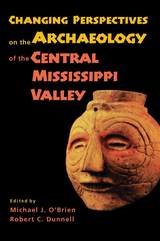
front cover of Changing Perspectives on the Archaeology of the Central Mississippi Valley
Changing Perspectives on the Archaeology of the Central Mississippi Valley
Michael J. O'Brien
University of Alabama Press, 1998

Fourteen experts examine the current state of Central Valley prehistoric research and provide an important touchstone for future archaeological study of the region

The Mississippi Valley region has long played a critical role in the development of American archaeology and continues to be widely known for the major research of the early 1950s. To bring the archaeological record up to date, fourteen Central Valley experts address diverse topics including the distribution of artifacts across the landscape, internal configurations of large fortified settlements, human-bone chemistry, and ceramic technology.

The authors demonstrate that much is to be learned from the rich and varied archaeological record of the region and that the methods and techniques used to study the record have changed dramatically over the past half century. Operating at the cutting edge of current research strategies, these archaeologists provide a fresh look at old problems in central Mississippi Valley research.


[more]


Send via email Share on Facebook Share on Twitter