
 A SCHOLARLY BOOK REPOSITORY
146 start with A start with A
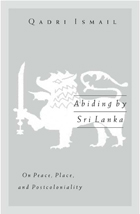
Abiding by Sri Lanka examines how the disciplines of anthropology, history, and literature treat the Sri Lankan ethnic conflict. Anthropology, Ismail contends, approaches Sri Lanka as an object from an “outside” and western point of view. History, addressing the conflict from the “inside,” abides by the place and so promotes change that is nationalist and exclusive. Neither of these fields imagines an inclusive community. Literature, Ismail argues, can.
With close readings of texts that “abide” by Sri Lanka, texts that have a commitment to it, Ismail demonstrates that the problems in Sri Lanka raise fundamental concerns for us all regarding the relationship between democracies and minorities. Recognizing the structural as well as political tendencies of representative democracies to suppress minorities, Ismail rethinks democracy by redefining the concept of the minority perspective, not as a subject-position of numerical insignificance, but as a conceptual space that opens up the possibility for distinction without domination and, ultimately, peace.
Qadri Ismail is associate professor of English at the University of Minnesota. He has also been a journalist in Sri Lanka.

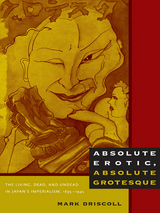
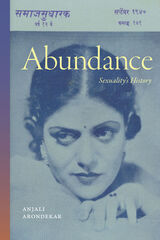
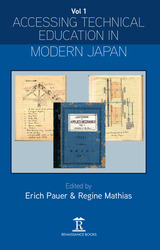
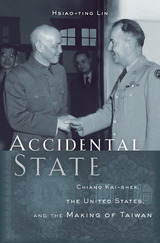
The existence of two Chinese states—one controlling mainland China, the other controlling the island of Taiwan—is often understood as a seemingly inevitable outcome of the Chinese civil war. Defeated by Mao Zedong, Chiang Kai-shek’s Nationalists fled to Taiwan to establish a rival state, thereby creating the “Two Chinas” dilemma that vexes international diplomacy to this day. Accidental State challenges this conventional narrative to offer a new perspective on the founding of modern Taiwan.
Hsiao-ting Lin marshals extensive research in recently declassified archives to show that the creation of a Taiwanese state in the early 1950s owed more to serendipity than careful geostrategic planning. It was the cumulative outcome of ad hoc half-measures and imperfect compromises, particularly when it came to the Nationalists’ often contentious relationship with the United States.
Taiwan’s political status was fraught from the start. The island had been formally ceded to Japan after the First Sino-Japanese War, and during World War II the Allies promised Chiang that Taiwan would revert to Chinese rule after Japan’s defeat. But as the Chinese civil war turned against the Nationalists, U.S. policymakers reassessed the wisdom of backing Chiang. The idea of placing Taiwan under United Nations trusteeship gained traction. Cold War realities, and the fear of Taiwan falling into Communist hands, led Washington to recalibrate U.S. policy. Yet American support of a Taiwan-based Republic of China remained ambivalent, and Taiwan had to eke out a place for itself in international affairs as a de facto, if not fully sovereign, state.
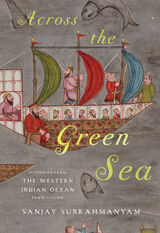
A history of two centuries of interactions among the areas bordering the western Indian Ocean, including India, Iran, and Africa.
Beginning in the mid-fifteenth century, the regions bordering the western Indian Ocean—“the green sea,” as it was known to Arabic speakers—had increasing contact through commerce, including a slave trade, and underwent cultural exchange and transformation. Using a variety of texts and documents in multiple Asian and European languages, Across the Green Sea looks at the history of the ocean from a variety of shifting viewpoints: western India; the Red Sea and Mecca; the Persian Gulf; East Africa; and Kerala.
Sanjay Subrahmanyam sets the scene for this region starting with the withdrawal of China's Ming Dynasty and explores how the western Indian Ocean was transformed by the growth and increasing prominence of the Ottoman Empire and the continued spread of Islam into East Africa. He examines how several cities, including Mecca and the vital Indian port of Surat, grew and changed during these centuries, when various powers interacted until famines and other disturbances upended the region in the seventeenth century. Rather than proposing an artificial model of a dominant center and its dominated peripheries, Across the Green Sea demonstrates the complexity of a truly dynamic and polycentric system through the use of connected histories, a method pioneered by Subrahmanyam himself.
Members of the Asian American community have always been trans-Pacific, but are now more than ever, since the 1965 change in U.S. immigration law. Entering the U.S. at the culmination of the Civil Rights movement, Asians becoming Asian Americans have joined a self-consciously multicultural society. Asian economies roared onto the world stage, creating new markets while circulating capital and labor at an unprecedented scale and intensity, thereby helping drive the forces of modern globalization. These essays by well-known scholars in the field of Asian American studies consider such topics as the impact of new migrations on Asian American subjectivity and politics, Asian American activism and U.S. foreign policy, and the role of Asian Americans in Pacific Rim economies.
Considering issues of diaspora, transmigrancy, assimilation, institutionalized racism, and community, Across the Pacific covers such cutting-edge subjects as the cultural expressions of dislocation among contemporary Asian American writers, as well as the impact of the new migrations on Asian American subjectivity and politics.
Can—or should—the United States try to promote reform in client states in the Third World? This question, which reverberates through American foreign policy, is at the heart of Adventures in Chaos. A faltering friendly state, in danger of falling to hostile forces, presents the U.S. with three options: withdraw, bolster the existing government, or try to reform it. Douglas Macdonald defines the circumstances that call these policy options into play, combining an analysis of domestic politics in the U. S., cognitive theories of decision making, and theories of power relations drawn from sociology, economics, and political science.
He examines the conditions that promote the reformist option and then explores strategies for improving the success of reformist intervention in the future. In order to identify problems in this policy—and to propose solutions—Macdonald focuses on three case studies of reformist intervention in Asia: China, 1946-1948; the Philippines, 1950-1953; and Vietnam, 1961-1963. Striking similarities in these cases suggest that such policy dilemmas are a function of the global role played by the U.S., especially during the Cold War. Though this role is changing, Macdonald foresees future applications for the lessons his study offers.
A challenge to the conventional wisdom on reformist intervention, Adventures in Chaos—through extensive archival research—displays a theoretical and historical depth often lacking in treatments of the subject.
On a December morning in 1925, a newspaper journalist reported receiving 25 different handbills in an hour's walk in downtown Tokyo, advertising everything from Western-style clothing and furniture to sweet shops, charity organizations, phonograph recordings, plays, and films. The activities of advertisers, and the new entertainment culture and patterns of consumption that they promoted, helped to define a new urban aesthetic emerging in the 1920s.
This book examines some of the responses of Japanese authors to the transformation of Tokyo in the early decades of the twentieth century. In particular, it explores the themes and formal strategies of the modernist literature that flourished in the 1920s, focusing on the work of Hagiwara Kyojiro (1899-1938) and Hayashi Fumiko (1903-1951). William Gardner shows how modernist works offer new constructions of individual subjectivity amid the social and technological changes that provided the ground for the appearance of "mass media." Hagiwara's conception of the poem and poet as an electric-radio "advertising tower" provides an emblem for the aesthetic tensions and multiple discourses of technology, media, urbanism, commerce, and propaganda that were circulating through the urban environment at the time; while Hayashi's work, with its references to popular songs, plays, and movies, suggests an understanding of "everyday life" as the interface between individual subjectivity and a highly mediated environment.
Kim Fortun explores these claims by focusing on the dynamics and paradoxes of advocacy in competing power domains. She moves from hospitals in India to meetings with lawyers, corporate executives, and environmental justice activists in the United States to show how the disaster and its effects remain with us. Spiraling outward from the victims' stories, the innovative narrative sheds light on the way advocacy works within a complex global system, calling into question conventional notions of responsibility and ethical conduct. Revealing the hopes and frustrations of advocacy, this moving work also counters the tendency to think of Bhopal as an isolated incident that "can't happen here."
This study of modern Japan engages the fields of art history, literature, and cultural studies, seeking to understand how the “beautiful woman” (bijin) emerged as a symbol of Japanese culture during the Meiji period (1868–1912). With origins in the formative period of modern Japanese art and aesthetics, the figure of the bijin appeared across a broad range of visual and textual media: photographs, illustrations, prints, and literary works, as well as fictional, critical, and journalistic writing. It eventually constituted a genre of painting called bijinga (paintings of beauties).
Aesthetic Life examines the contributions of writers, artists, scholars, critics, journalists, and politicians to the discussion of the bijin and to the production of a national discourse on standards of Japanese beauty and art. As Japan worked to establish its place in the world, it actively presented itself as an artistic nation based on these ideals of feminine beauty. The book explores this exemplary figure for modern Japanese aesthetics and analyzes how the deceptively ordinary image of the beautiful Japanese woman—an iconic image that persists to this day—was cultivated as a “national treasure,” synonymous with Japanese culture.
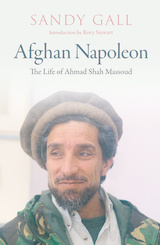
When the Soviets invaded Afghanistan in 1979, the forces of resistance were disparate. Many groups were caught up in fighting each other and competing for Western arms. The exception were those commanded by Ahmad Shah Massoud, the military strategist and political operator who solidified the resistance and undermined the Russian occupation, leading resistance members to a series of defensive victories.
Sandy Gall followed Massoud during Soviet incursions and reported on the war in Afghanistan, and he draws on this first-hand experience in his biography of this charismatic guerrilla commander. Afghan Napoleon includes excerpts from the surviving volumes of Massoud’s prolific diaries—many translated into English for the first time—which detail crucial moments in his personal life and during his time in the resistance. Born into a liberalizing Afghanistan in the 1960s, Massoud ardently opposed communism, and he rose to prominence by coordinating the defense of the Panjsher Valley against Soviet offensives. Despite being under-equipped and outnumbered, he orchestrated a series of victories over the Russians. Massoud’s assassination in 2001, just two days before the attack on the Twin Towers, is believed to have been ordered by Osama bin Laden. Despite the ultimate frustration of Massoud’s attempts to build political consensus, he is recognized today as a national hero.
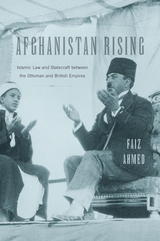
Debunking conventional narratives of Afghanistan as a perennial war zone or marginal frontier, Faiz Ahmed presents a vibrant account of the first Muslim-majority country to gain independence from the British Empire, form a fully sovereign government, and promulgate an original constitution after the fall of the Ottoman Empire.
Far from a landlocked wilderness, turn-of-the-twentieth-century Afghanistan was a magnet for itinerant scholars and emissaries shuttling between Ottoman and British imperial domains. Tracing Afghans’ longstanding but seldom examined scholastic ties to Istanbul, Damascus, and Baghdad, as well as greater Delhi and Lahore, Ahmed vividly describes how the Kabul court recruited jurists to craft a modern state within the interpretive traditions of Islamic law and ethics, or shariʿa, and international legal norms. Beginning with the first Ottoman mission to Kabul in 1877, and culminating with parallel independence struggles in Afghanistan, India, and Turkey after World War I, this rich narrative explores encounters between diverse streams of Muslim thought and politics—from Young Turk lawyers to Pashtun clerics; Ottoman Arab officers to British Raj bureaucrats; and the last caliphs to a remarkable dynasty of Afghan kings and queens.
By unearthing a lost history behind Afghanistan’s independence and first constitution, Ahmed shows how debates today on Islam, governance, and the rule of law have deep roots in a beleaguered land. Based on research in six countries and as many languages, Afghanistan Rising rediscovers a time when Kabul stood proudly for anticolonial coalitions, self-determination, and contested visions of reform in the Global South and Islamicate world.
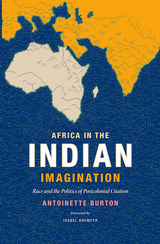

By bringing instances of Afro-Asian traffic in the realms of politics, economics, and culture to the foreground, this collection maps an alternative global circuit. The issue examines the non-Eurocentric form of cosmopolitanism that emerged from creative encounters of racialized people in Jazz Age Paris, the Harlem Renaissance, and colonial Shanghai. It reconceptualizes the Indian Ocean as a crucial site for Afro-Asian cross-pollination and investigates the cinematic culture of kung fu as a global discourse of Afro-Asian anti-imperialism.
Contributors. Brent Edwards, Andrew F. Jones, Yukiko Koshiro, Bill Mullen, Vijay Prashad, William Schaefer, Nikhil Pal Singh, Françoise Vergès, Daniel Widener
"Suppose," Clifford Geertz suggests, "having entangled yourself every now and again over four decades or so in the goings-on in two provincial towns, one a Southeast Asian bend in the road, one a North African outpost and passage point, you wished to say something about how those goings-on had changed." A narrative presents itself, a tour of indices and trends, perhaps a memoir? None, however, will suffice, because in forty years more has changed than those two towns--the anthropologist, for instance, anthropology itself, even the intellectual and moral world in which the discipline exists. And so, in looking back on four decades of anthropology in the field, Geertz has created a work that is characteristically unclassifiable, a personal history that is also a retrospective reflection on developments in the human sciences amid political, social, and cultural changes in the world. An elegant summation of one of the most remarkable careers in anthropology, it is at the same time an eloquent statement of the purposes and possibilities of anthropology's interpretive powers.
To view his two towns in time, Pare in Indonesia and Sefrou in Morocco, Geertz adopts various perspectives on anthropological research and analysis during the post-colonial period, the Cold War, and the emergence of the new states of Asia and Africa. Throughout, he clarifies his own position on a broad series of issues at once empirical, methodological, theoretical, and personal. The result is a truly original book, one that displays a particular way of practicing the human sciences and thus a particular--and particularly efficacious--view of what these sciences are, have been, and should become.
Scholars have described the eighteenth century in China as a time of “state activism” when the state sought to strengthen its control on various social and cultural sectors. The Taiping Rebellion and the postbellum restoration efforts of the mid-nineteenth century have frequently been associated with the origins of elite activism. However, drawing upon a wide array of sources, including previously untapped Qing government documents, After the Prosperous Age argues that the ascendance of elite activism can be traced to the Jiaqing and Daoguang reigns in the early nineteenth century, and that the Taiping Rebellion served as a second catalyst for the expansion of elite public roles rather than initiating such an expansion.
The first four decades of the nineteenth century in China remain almost uncharted territory. By analyzing the social and cultural interplay between state power and local elites of Suzhou, a city renowned for its economic prosperity and strong sense of local pride, from the eighteenth to the early nineteenth century, Seunghyun Han illuminates the significance of this period in terms of the reformulation of state-elite relations marked by the unfolding of elite public activism and the dissolution of a centralized cultural order.
Although most people think the American Revolution ended with the British surrender at Yorktown, Virginia, on October 19, 1781, it did not. The war spread around the world, and exhausted men kept fighting—from the Arctic to Arkansas, from India and Ceylon to Schenectady and South America—while others labored to achieve a final diplomatic resolution.
After Cornwallis’s unexpected loss, George III vowed revenge, while Washington planned his next campaign. Spain, which France had lured into the war, insisted there would be no peace without seizing British-held Gibraltar. Yet the war had spun out of control long before Yorktown. Native Americans and Loyalists continued joint operations against land-hungry rebel settlers from New York to the Mississippi Valley. African American slaves sought freedom with the British. Soon, Britain seized the initiative again with a decisive naval victory in the Caribbean against the Comte de Grasse, the French hero of Yorktown.
In After Yorktown: The Final Struggle for American Independence, Don Glickstein tells the engrossing story of this uncertain and violent time, from the remarkable American and French success in Virginia to the conclusion of the fighting—in India—and then to the last British soldiers leaving America more than two years after Yorktown. Readers will learn about the people—their humor, frustration, fatigue, incredulity, worries; their shock at the savage terrorism each side inflicted; and their surprise at unexpected grace and generosity. Based on an extraordinary range of primary sources, the story encompasses a fascinating cast of characters: a French captain who destroyed a British trading post, but left supplies for Indians to help them through a harsh winter, an American Loyalist releasing a captured Spanish woman in hopes that his act of kindness will result in a prisoner exchange, a Native American leader caught “between two hells” of a fickle ally and a greedy enemy, and the only general to surrender to both George Washington and Napoleon Bonaparte. Finally, the author asks the question we face today: How do you end a war that doesn’t want to end?
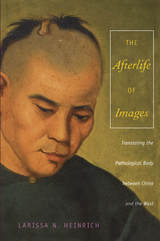
Combining literary studies, the history of science, and visual culture studies, Heinrich analyzes the rhetoric and iconography through which medical missionaries transmitted to the West an image of China as “sick” or “diseased.” He also examines the absorption of that image back into China through missionary activity, through the earliest translations of Western medical texts into Chinese, and even through the literature of Chinese nationalism. Heinrich argues that over time “scientific” Western representations of the Chinese body and culture accumulated a host of secondary meanings, taking on an afterlife with lasting consequences for conceptions of Chinese identity in China and beyond its borders.
Popular representations of the past are everywhere in Japan, from cell phone charms to manga, from television dramas to video games to young people dressed as their favorite historical figures hanging out in the hip Harajuku district. But how does this mass consumption of the past affect the way consumers think about history and what it means to be Japanese?
By analyzing representations of the famous sixteenth-century samurai leader Toyotomi Hideyoshi in historical fiction based on Taikōki, the original biography of him, this book explores how and why Hideyoshi has had a continued and ever-changing presence in popular culture in twentieth- and twenty-first-century Japan. The multiple fictionalized histories of Hideyoshi published as serial novels and novellas before, during, and after World War II demonstrate how imaginative re-presentations of Japan’s past have been used by various actors throughout the modern era.
Using close reading of several novels and short stories as well as the analysis of various other texts and paratextual materials, Susan Furukawa discovers a Hideyoshi who is always changing to meet the needs of the current era, and in the process expands our understanding of the powerful role that historical narratives play in Japan.
Popular representations of the past are everywhere in Japan, from cell phone charms to manga, from television dramas to video games to young people dressed as their favorite historical figures hanging out in the hip Harajuku district. But how does this mass consumption of the past affect the way consumers think about history and what it means to be Japanese?
By analyzing representations of the famous sixteenth-century samurai leader Toyotomi Hideyoshi in historical fiction based on Taikōki, the original biography of him, this book explores how and why Hideyoshi has had a continued and ever-changing presence in popular culture in twentieth- and twenty-first-century Japan. The multiple fictionalized histories of Hideyoshi published as serial novels and novellas before, during, and after World War II demonstrate how imaginative re-presentations of Japan’s past have been used by various actors throughout the modern era.
Using close reading of several novels and short stories as well as the analysis of various other texts and paratextual materials, Susan Furukawa discovers a Hideyoshi who is always changing to meet the needs of the current era, and in the process expands our understanding of the powerful role that historical narratives play in Japan.
An overwhelmingly Arab-centric perspective dominates the West’s understanding of Islam and leads to a view of this religion as exclusively Middle Eastern and monolithic. Teena Purohit presses for a reorientation that would conceptualize Islam instead as a heterogeneous religion that has found a variety of expressions in local contexts throughout history. The story she tells of an Ismaili community in colonial India illustrates how much more complex Muslim identity is, and always has been, than the media would have us believe.
The Aga Khan Case focuses on a nineteenth-century court case in Bombay that influenced how religious identity was defined in India and subsequently the British Empire. The case arose when a group of Indians known as the Khojas refused to pay tithes to the Aga Khan, a Persian nobleman and hereditary spiritual leader of the Ismailis. The Khojas abided by both Hindu and Muslim customs and did not identify with a single religion prior to the court’s ruling in 1866, when the judge declared them to be converts to Ismaili Islam beholden to the Aga Khan.
In her analysis of the ginans, the religious texts of the Khojas that formed the basis of the judge’s decision, Purohit reveals that the religious practices they describe are not derivations of a Middle Eastern Islam but manifestations of a local vernacular one. Purohit suggests that only when we understand Islam as inseparable from the specific cultural milieus in which it flourishes do we fully grasp the meaning of this global religion.
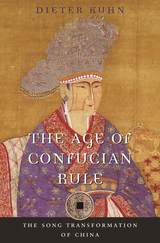
Just over a thousand years ago, the Song dynasty emerged as the most advanced civilization on earth. Within two centuries, China was home to nearly half of all humankind. In this concise history, we learn why the inventiveness of this era has been favorably compared with the European Renaissance, which in many ways the Song transformation surpassed.
With the chaotic dissolution of the Tang dynasty, the old aristocratic families vanished. A new class of scholar-officials—products of a meritocratic examination system—took up the task of reshaping Chinese tradition by adapting the precepts of Confucianism to a rapidly changing world. Through fiscal reforms, these elites liberalized the economy, eased the tax burden, and put paper money into circulation. Their redesigned capitals buzzed with traders, while the education system offered advancement to talented men of modest means. Their rationalist approach led to inventions in printing, shipbuilding, weaving, ceramics manufacture, mining, and agriculture. With a realist’s eye, they studied the natural world and applied their observations in art and science. And with the souls of diplomats, they chose peace over war with the aggressors on their borders. Yet persistent military threats from these nomadic tribes—which the Chinese scorned as their cultural inferiors—redefined China’s understanding of its place in the world and solidified a sense of what it meant to be Chinese.
The Age of Confucian Rule is an essential introduction to this transformative era. “A scholar should congratulate himself that he has been born in such a time” (Zhao Ruyu, 1194).
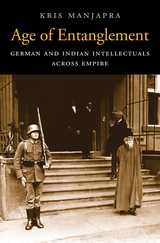
Age of Entanglement explores patterns of connection linking German and Indian intellectuals from the nineteenth century to the years after the Second World War. Kris Manjapra traces the intersecting ideas and careers of a diverse collection of individuals from South Asia and Central Europe who shared ideas, formed networks, and studied one another’s worlds. Moving beyond well-rehearsed critiques of colonialism towards a new critical approach, this study recasts modern intellectual history in terms of the knotted intellectual itineraries of seeming strangers.
Collaborations in the sciences, arts, and humanities produced extraordinary meetings of German and Indian minds. Meghnad Saha met Albert Einstein, Stella Kramrisch brought the Bauhaus to Calcutta, and Girindrasekhar Bose began a correspondence with Sigmund Freud. Rabindranath Tagore traveled to Germany to recruit scholars for a new Indian university, and the actor Himanshu Rai hired director Franz Osten to help establish movie studios in Bombay. These interactions, Manjapra argues, evinced shared responses to the cultural and political hegemony of the British empire. Germans and Indians hoped to find in one another the tools needed to disrupt an Anglocentric world order.
As Manjapra demonstrates, transnational intellectual encounters are not inherently progressive. From Orientalism and Aryanism to socialism and scientism, German–Indian entanglements were neither necessarily liberal nor conventionally cosmopolitan, often characterized as much by manipulation as by cooperation. Age of Entanglement underscores the connections between German and Indian intellectual history, revealing the characteristics of a global age when the distance separating Europe and Asia seemed, temporarily, to disappear.
The Meiji Restoration of 1868 inaugurated a period of great change in Japan; it is seldom associated, however, with advances in civil and political rights. By studying parliamentarianism—the theories, arguments, and polemics marshaled in support of a representative system of government—Kyu Hyun Kim uncovers a much more complicated picture of this era than is usually given.
Bringing a fresh perspective as well as drawing on seldom-studied archival materials, Kim examines how parliamentarianism came to dominate the public sphere in the 1870s and early 1880s and gave rise to the movement among local activists and urban intellectuals to establish a national assembly. At the same time, Kim contends that we should confront the public sphere of Meiji Japan without insisting on fitting it into schemes of historical progress, from premodernity to modernity, from feudalism to democracy. The Japanese state was inextricably linked, in its origins as well as its continuing growth, to the self-transformation of Japanese society. One could not change without effecting a change in the other. The Meiji state's efforts to ensure that the state and society were connected only through channels firmly controlled by itself were constantly and successfully contested by the public sphere.
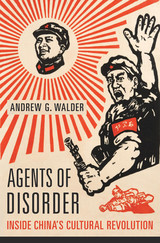
Why did the Chinese party state collapse so quickly after the onset of the Cultural Revolution? The award-winning author of China Under Mao offers a surprising answer that holds a powerful implicit warning for today’s governments.
By May 1966, just seventeen years after its founding, the People’s Republic of China had become one of the most powerfully centralized states in modern history. But that summer everything changed. Mao Zedong called for students to attack intellectuals and officials who allegedly lacked commitment to revolutionary principles. Rebels responded by toppling local governments across the country, ushering in nearly two years of conflict that in places came close to civil war and resulted in nearly 1.6 million dead.
How and why did the party state collapse so rapidly? Standard accounts depict a revolution instigated from the top down and escalated from the bottom up. In this pathbreaking reconsideration of the origins and trajectory of the Cultural Revolution, Andrew Walder offers a startling new conclusion: party cadres seized power from their superiors, setting off a chain reaction of violence, intensified by a mishandled army intervention. This inside-out dynamic explains how virulent factions formed, why the conflict escalated, and why the repression that ended the disorder was so much worse than the violence it was meant to contain.
Based on over 2,000 local annals chronicling some 34,000 revolutionary episodes across China, Agents of Disorder offers an original interpretation of familiar but complex events and suggests a broader lesson for our times: forces of order that we count on to stanch violence can instead generate devastating bloodshed.
"White proves a skillful guide in disentangling historical and theoretical complexities that have thus far bedeviled the study of these influential aspects of medieval Indian culture."—Yoga World
"Anyone seriously interested in finding out more about authentic tantra, original hatha yoga, embodied liberation . . . sacred sexuality, paranormal abilities, healing, and of course alchemy will find White's extraordinary book as fascinating as any Tom Clancy thriller."—Georg Feuerstein, Yoga Journal
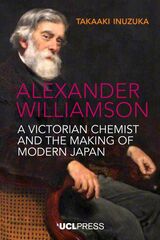
Alexander Williamson was a leading scientist and professor of chemistry at University College London in the late nineteenth century. He taught and cared for visiting Japanese students, assisting them with their goal of modernizing Japan. This short, accessible biography explores his contribution to nineteenth-century science, as well as his lasting impact on Japanese society. In 1863 five students from the Chōshū clan, with a desperate desire to learn from the West, made their way to England. They were put in the care of Williamson and his wife. Their mission was to learn about cutting-edge Western technology, science, economics, and politics. When they returned home, they rapidly became leading figures in Japanese life. The remarkable story of the part Williamson and University College London played in the modernization of Japan is little known today. This biography will promote a deeper understanding of Williamson’s scientific innovations and his legacy for Anglo-Japanese relations.
The enormous changes in twentieth-century Chinese higher education up to the Sino-Japanese War are detailed in this pioneering work. Yeh examines the impact of instruction in English and of the introduction of science and engineering into the curriculum. Such innovations spurred the movement of higher education away from the gentry academies focused on classical studies and propelled it toward modern middle-class colleges with diverse programs.
Yeh provides a typology of Chinese institutions of higher learning in the Republican period and detailed studies of representative universities. She also describes student life and prominent academic personalities in various seats of higher learning. Social changes and the political ferment outside the academy affected students and faculty alike, giving rise, as Yeh contends, to a sense of alienation on the eve of war.
Amid calls for retrenchment or restraint, Selden makes the case that a policy focused on maintaining American military preeminence and the demonstrated willingness to use force may be what sustains the cooperation of second-tier states, which in turn help to maintain US hegemony at a manageable cost.
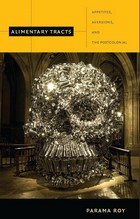
Interpreting texts that have addressed cooking, dining, taste, hungers, excesses, and aversions in South Asia and its diaspora since the mid-nineteenth century, Roy relates historical events and literary figures to tropes of disgust, abstention, dearth, and appetite. She analyzes the fears of pollution and deprivation conveyed in British accounts of the so-called Mutiny of 1857, complicates understandings of Mohandas K. Gandhi’s vegetarianism, examines the “famine fictions” of the novelist-actor Mahasweta Devi, and reflects on the diasporic cookbooks and screen performances of Madhur Jaffrey. This account of richly visceral global modernity furnishes readers with a new idiom for understanding historical action and cultural transformation.
One of the more intriguing developments within medieval Japanese literature is the incorporation into the teaching of waka poetry of the practices of initiation ceremonies and secret transmissions found in esoteric Buddhism. The main figure in this development was the obscure thirteenth-century poet Fujiwara Tameaki, grandson of the famous poet Fujiwara Teika and a priest in a tantric Buddhist sect. Tameaki's commentaries and teachings transformed secular texts such as the Tales of Ise and poetry anthologies such as the Kokin waka shu into complex allegories of Buddhist enlightenment. These commentaries were transmitted to his students during elaborate initiation ceremonies. In later periods, Tameaki's specific ideas fell out of vogue, but the habit of interpreting poetry allegorically continued.
This book examines the contents of these commentaries as well as the qualities of the texts they addressed that lent themselves to an allegorical interpretation; the political, economic, and religious developments of the Kamakura period that encouraged the development of this method of interpretation; and the possible motives of the participants in this school of interpretation. Through analyses of six esoteric commentaries, Susan Blakeley Klein presents examples of this interpretive method and discusses its influence on subsequent texts, both elite and popular.
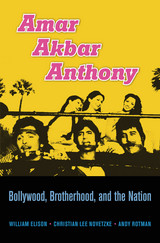
A Bollywood blockbuster when it was released in 1977, Amar Akbar Anthony has become a classic of Hindi cinema and a touchstone of Indian popular culture. Delighting audiences with its songs and madcap adventures, the film follows the heroics of three Bombay brothers separated in childhood from their parents and one another. Beyond the freewheeling comedy and camp, however, is a potent vision of social harmony, as the three protagonists, each raised in a different religion, discover they are true brothers in the end. William Elison, Christian Lee Novetzke, and Andy Rotman offer a sympathetic and layered interpretation of the film’s deeper symbolism, seeing it as a lens for understanding modern India’s experience with secular democracy.
Amar Akbar Anthony’s celebration of an India built on pluralism and religious tolerance continues to resonate with audiences today. But it also invites a critique of modernity’s mixed blessings. As the authors show, the film’s sunny exterior only partially conceals darker elements: the shadow of Partition, the crisis of Emergency Rule, and the vexed implications of the metaphor of the family for the nation. The lessons viewers draw from the film depend largely on which brother they recognize as its hero. Is it Amar, the straight-edge Hindu policeman? Is it Akbar, the romantic Muslim singer? Or is it Anthony, the Christian outlaw with a heart of gold? In this book’s innovative and multi-perspectival approach, each brother makes his case for himself (although the last word belongs to their mother).
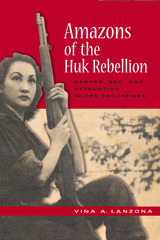
Drawing on interviews with over one hundred veterans of the movement, Vina A. Lanzona explores the Huk rebellion from the intimate and collective experiences of its female participants, demonstrating how their presence, and the complex questions of gender, family, and sexuality they provoked, ultimately shaped the nature of the revolutionary struggle.
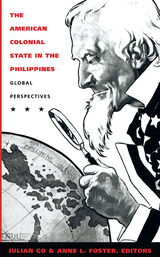
Written by social scientists and historians, these essays investigate various aspects of American colonial government through comparison with and contextualization within colonial regimes elsewhere in the world—from British Malaysia and Dutch Indonesia to Japanese Taiwan and America's other major overseas colony, Puerto Rico. Contributors explore the program of political education in the Philippines; constructions of nationalism, race, and religion; the regulation of opium; connections to politics on the U.S. mainland; and anticolonial resistance. Tracking the complex connections, circuits, and contests across, within, and between empires that shaped America's colonial regime, The American Colonial State in the Philippines sheds new light on the complexities of American imperialism and turn-of-the-century colonialism.
Contributors. Patricio N. Abinales, Donna J. Amoroso, Paul Barclay, Vince Boudreau, Anne L. Foster, Julian Go, Paul A. Kramer
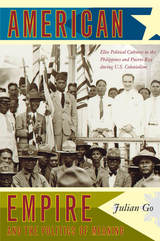
American Empire and the Politics of Meaning is an examination of how these efforts to provide the elite of Puerto Rico and the Philippines a practical education in self-government played out on the ground in the early years of American colonial rule, from 1898 until 1912. It is the first systematic comparative analysis of these early exercises in American imperial power. The sociologist Julian Go unravels how American authorities used “culture” as both a tool and a target of rule, and how the Puerto Rican and Philippine elite received, creatively engaged, and sometimes silently subverted the Americans’ ostensibly benign intentions. Rather than finding that the attempt to transplant American-style democracy led to incommensurable “culture clashes,” Go assesses complex processes of cultural accommodation and transformation. By combining rich historical detail with broader theories of meaning, culture, and colonialism, he provides an innovative study of the hidden intersections of political power and cultural meaning-making in America’s earliest overseas empire.
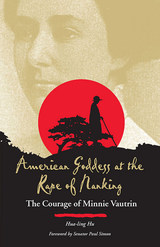
The Japanese army’s brutal four-month occupation of the city of Nanking during the 1937 Sino-Japanese War is known, for good reason, as “the rape of Nanking.” As they slaughtered an estimated three hundred thousand people, the invading soldiers raped more than twenty thousand women—some estimates run as high as eighty thousand. Hua-ling Hu presents here the amazing untold story of the American missionary Minnie Vautrin, whose unswerving defiance of the Japanese protected ten thousand Chinese women and children and made her a legend among the Chinese people she served.
Vautrin, who came to be known in China as the “Living Goddess” or the “Goddess of Mercy,” joined the Foreign Christian Missionary Society and went to China during the Chinese Nationalist Revolution in 1912. As dean of studies at Ginling College in Nanking, she devoted her life to promoting Chinese women’s education and to helping the poor.
At the outbreak of the war in July 1937, Vautrin defied the American embassy’s order to evacuate the city. After the fall of Nanking in December, Japanese soldiers went on a rampage of killing, burning, looting, rape, and torture, rapidly reducing the city to a hell on earth. On the fourth day of the occupation, Minnie Vautrin wrote in her diary: “There probably is no crime that has not been committed in this city today. . . . Oh, God, control the cruel beastliness of the soldiers in Nanking.”
When the Japanese soldiers ordered Vautrin to leave the campus, she replied: “This is my home. I cannot leave.” Facing down the blood-stained bayonets constantly waved in her face, Vautrin shielded the desperate Chinese who sought asylum behind the gates of the college. Vautrin exhausted herself defying the Japanese army and caring for the refugees after the siege ended in March 1938. She even helped the women locate husbands and sons who had been taken away by the Japanese soldiers. She taught destitute widows the skills required to make a meager living and provided the best education her limited sources would allow to the children in desecrated Nanking.
Finally suffering a nervous breakdown in 1940, Vautrin returned to the United States for medical treatment. One year later, she ended her own life. She considered herself a failure.
Hu bases her biography on Vautrin’s correspondence between 1919 and 1941 and on her diary, maintained during the entire siege, as well as on Chinese, Japanese, and American eyewitness accounts, government documents, and interviews with Vautrin’s family.
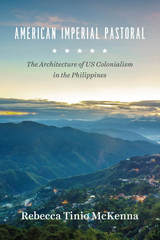
In American Imperial Pastoral, Rebecca Tinio McKenna examines the design, construction, and use of Baguio, making visible the physical shape, labor, and sustaining practices of the US’s new empire—especially the dispossessions that underwrote market expansion. In the process, she demonstrates how colonialists conducted market-making through state-building and vice-versa. Where much has been made of the racial dynamics of US colonialism in the region, McKenna emphasizes capitalist practices and design ideals—giving us a fresh and nuanced understanding of the American occupation of the Philippines.
This volume explores commercial relations between the United States and China from the eighteenth century until 1949, fleshing out with facts the romantic and shadowy image of "the China trade." These nine chapters by specialists in the field have developed from papers they presented at a conference supported by the national Committee on American-East Asian Relations.
The work begins with an Introduction by John K. Fairbank, then moves on to analysis of the old China trade up to the American Civil War, centering on traditional Chinese exports of tea and silk. A second section deals with American imports into China--cotton textiles and textile-related goods, cigarettes, kerosene. Finally, the impact of the trade on both countries is assessed and the operations of American-owned and multinational companies in China are examined. For both the United States and China, the economic importance of the trade proves to have been less than the legend might suggest.
In America's First Adventure in China, John Haddad provides a colorful history of the evolving cultural exchange and interactions between these countries. He recounts how American expatriates adopted a pragmatic attitude-as well as an entrepreneurial spirit and improvisational approach-to their dealings with the Chinese. Haddad shows how opium played a potent role in the dreams of Americans who either smuggled it or opposed its importation, and he considers the missionary movement that compelled individuals to accept a hard life in an alien culture.
As a result of their efforts, Americans achieved a favorable outcome—they established a unique presence in China—and cultivated a relationship whose complexities continue to grow.
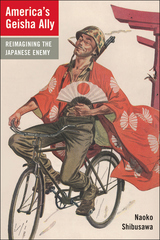
During World War II, Japan was vilified by America as our hated enemy in the East. Though we distinguished "good Germans" from the Nazis, we condemned all Japanese indiscriminately as fanatics and savages. As the Cold War heated up, however, the U.S. government decided to make Japan its bulwark against communism in Asia.
But how was the American public made to accept an alliance with Japan so soon after the "Japs" had been demonized as subhuman, bucktoothed apes with Coke-bottle glasses? In this revelatory work, Naoko Shibusawa charts the remarkable reversal from hated enemy to valuable ally that occurred in the two decades after the war. While General MacArthur's Occupation Forces pursued our nation's strategic goals in Japan, liberal American politicians, journalists, and filmmakers pursued an equally essential, though long-unrecognized, goal: the dissemination of a new and palatable image of the Japanese among the American public.
With extensive research, from Occupation memoirs to military records, from court documents to Hollywood films, and from charity initiatives to newspaper and magazine articles, Shibusawa demonstrates how the evil enemy was rendered as a feminized, submissive nation, as an immature youth that needed America's benevolent hand to guide it toward democracy. Interestingly, Shibusawa reveals how this obsession with race, gender, and maturity reflected America's own anxieties about race relations and equity between the sexes in the postwar world. America's Geisha Ally is an exploration of how belligerents reconcile themselves in the wake of war, but also offers insight into how a new superpower adjusts to its role as the world's preeminent force.

Bonner therefore brings both recent experience and the sharp eye of a veteran journalist to an analysis of the Afghan situation: the tenacity and courage of the resistance, the massive emmigration, and the toll taken by the seemingly endless conflict on the country and its people.
The author has seen both the great and small of Afghanistan--both the seared flesh of the hand that an Afghan mujahidin held in the fire to demonstrate his courage and the geopolitical reasons that impelled the former Soviet Union of set its might and treasure against a people who resisted with a fierce and sometimes (to Western eyes) thoughtless courage. This is the story of these antagonists--sobering, chilling, and finally enlightening.
The first sustained historical study of the emergence of cinema in China, An Amorous History of the Silver Screen is a fascinating narrative that illustrates the immense cultural significance of film and its power as a vehicle for social change. Named after a major feature film on the making of Chinese cinema, only part of which survives, An Amorous History of the Silver Screen reveals the intricacies of this cultural movement and explores its connections to other art forms such as photography, architecture, drama, and literature. In light of original archival research, Zhang Zhen examines previously unstudied films and expands the important discussion of how they modeled modern social structures and gender roles in early twentieth-century China.
The first volume in the new and groundbreaking series Cinema and Modernity, An Amorous History of the Silver Screen is an innovative—and well illustrated—look at the cultural history of Chinese modernity through the lens of this seminal moment in Shanghai cinema.
Mid-nineteenth century Russian radicals who witnessed the Meiji Restoration saw it as the most sweeping revolution in recent history and the impetus for future global progress. Acting outside imperial encounters, they initiated underground transnational networks with Japan. Prominent intellectuals and cultural figures, from Peter Kropotkin and Lev Tolstoy to Saigo Takamori and Tokutomi Roka, pursued these unofficial relationships through correspondence, travel, and networking, despite diplomatic and military conflicts between their respective nations.
Tracing these non-state networks, Anarchist Modernity uncovers a major current in Japanese intellectual and cultural life between 1860 and 1930 that might be described as “cooperatist anarchist modernity”—a commitment to realizing a modern society through mutual aid and voluntary activity, without the intervention of state governance. These efforts later crystallized into such movements as the Nonwar Movement, Esperantism, and the popularization of the natural sciences.
Examining cooperatist anarchism as an intellectual foundation of modern Japan, Sho Konishi offers a new approach to Japanese history that fundamentally challenges the “logic” of Western modernity. It looks beyond this foundational construct of modern history writing to understand people, practices, and cultural expressions that have been forgotten or dismissed as products of anti-modern nativist counter urges against the West.
Edited by Alfred W. McCoy, An Anarchy of Families explores the pervasive influence of the modern dynasties that have led the Philippines during the past century. Exemplified by the Osmeñas and Lopezes, elite Filipino families have formed a powerful oligarchy—controlling capital, dominating national politics, and often owning the media. Beyond Manila, strong men such as Ramon Durano, Ali Dimaporo, and Justiniano Montano have used “guns, goons, and gold” to accumulate wealth and power in far-flung islands and provinces. In a new preface for this revised edition, the editor shows how this pattern of oligarchic control has continued into the twenty-first century, despite dramatic socio-economic change that has supplanted the classic “three g’s” of Philippine politics with the contemporary “four c’s”—continuity, Chinese, criminality, and celebrity.
Ancestors, Kings, and the Dao outlines the evolution of musical performance in early China, first within and then ultimately away from the socio-religious context of ancestor worship. Examining newly discovered bamboo texts from the Warring States period, Constance A. Cook compares the rhetoric of Western Zhou (1046–771 BCE) and Spring and Autumn (770–481 BCE) bronze inscriptions with later occurrences of similar terms in which ritual music began to be used as a form of self-cultivation and education. Cook’s analysis links the creation of such classics as the Book of Odes with the ascendance of the individual practitioner, further connecting the social actors in three types of ritual: boys coming of age, heirs promoted into ancestral government positions, and the philosophical stages of transcendence experienced in self-cultivation.
The focus of this study is on excavated texts; it is the first to use both bronze and bamboo narratives to show the evolution of a single ritual practice. By viewing the ancient inscribed materials and the transmitted classics from this new perspective, Cook uncovers new linkages in terms of how the materials were shaped and reshaped over time and illuminates the development of eulogy and song in changing ritual contexts.
Christianity is often praised as an agent of Chinese modernization or damned as a form of cultural and religious imperialism. In both cases, Christianity’s foreignness and the social isolation of converts have dominated this debate. Eugenio Menegon uncovers another story. In the sixteenth century, European missionaries brought a foreign and global religion to China. Converts then transformed this new religion into a local one over the course of the next three centuries.
Focusing on the still-active Catholic communities of Fuan county in northeast Fujian, this project addresses three main questions. Why did people convert? How did converts and missionaries transform a global and foreign religion into a local religion? What does Christianity’s localization in Fuan tell us about the relationship between late imperial Chinese society and religion?
Based on an impressive array of sources from Asia and Europe, this pathbreaking book reframes our understanding of Christian missions in Chinese-Western relations. The study’s implications extend beyond the issue of Christianity in China to the wider fields of religious and social history and the early modern history of global intercultural relations. The book suggests that Christianity became part of a preexisting pluralistic, local religious space, and argues that we have so far underestimated late imperial society’s tolerance for “heterodoxy.” The view from Fuan offers an original account of how a locality created its own religious culture in Ming-Qing China within a context both global and local, and illuminates the historical dynamics contributing to the remarkable growth of Christian communities in present-day China.
Ancestral ritual in early China was an orchestrated dance between what was present (the offerings and the living) and what was absent (the ancestors). The interconnections among the tangible elements of the sacrifice were overt and almost mechanical, but extending those connections to the invisible guests required a medium that was itself invisible. Thus in early China, ancestral sacrifice was associated with focused thinking about the ancestors, with a structured mental effort by the living to reach out to the absent forebears and to give them shape and existence. Thinking about the ancestors-about those who had become distant-required active deliberation and meditation, qualities that had to be nurtured and learned.
This study is a history of the early Chinese ancestral cult, particularly its cognitive aspects. Its goals are to excavate the cult's color and vitality and to quell assumptions that it was no more than a simplistic and uninspired exchange of food for longevity, of prayers for prosperity. Ancestor worship was not, the author contends, merely mechanical and thoughtless. Rather, it was an idea system that aroused serious debates about the nature of postmortem existence, served as the religious backbone to Confucianism, and may even have been the forerunner of Daoist and Buddhist meditation practices.
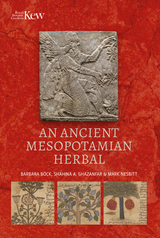
Traditional medical systems continue to impact the lives of people around the globe. These systems vary greatly in their underlying beliefs, but all commonly rely on the consumption of plant matter as a central practice. An Ancient Mesopotamian Herbal is a new, fully illustrated book that explores the uses of plants in traditional medicine and how these botanical roots extend to modern, “conventional” medicinal treatments.
Divided into two parts, An Ancient Mesopotamian Herbal introduces the lands and ancient cultures of Mesopotamia before surveying the different forms of evidence and research methods informing this academic book. The book then looks to the modern day, focusing on thirty case studies of plant-based drugs. Bridging the divide between the humanities and sciences and using new research and data from modern-day Iraq and surrounding areas, An Ancient Mesopotamian Herbal draws on the expertise of archeo-botanists, scientists, and Assyriologists specializing in historic Mesopotamian medicine to provide new identifications of Assyrian and Babylonian herbal medicines while giving a concise overview of ancient Mesopotamian herbal lore.
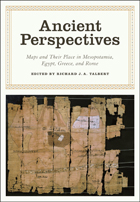
Ancient Perspectives encompasses a vast arc of space and time—Western Asia to North Africa and Europe from the third millennium BCE to the fifth century CE—to explore mapmaking and worldviews in the ancient civilizations of Mesopotamia, Egypt, Greece, and Rome. In each society, maps served as critical economic, political, and personal tools, but there was little consistency in how and why they were made. Much like today, maps in antiquity meant very different things to different people.
Anecdote, Network, Gossip, Performance is a study of the Shishuo xinyu, the most important anecdotal collection of medieval China—and arguably of the entire traditional era. In a set of interconnected essays, Jack W. Chen offers new readings of the Shishuo xinyu that draw upon social network analysis, performance studies, theories of ritual and mourning, and concepts of gossip and reputation to illuminate how the anecdotes of the collection imagine and represent a political and cultural elite. Whereas most accounts of the Shishuo have taken a historical approach, Chen argues that the work should be understood in literary terms.
At its center, Anecdote, Network, Gossip, Performance is an extended meditation on the very nature of the anecdote form, both what the anecdote affords in terms of representing a social community and how it provides a space for the rehearsal of certain longstanding philosophical and cultural arguments. Although each of the chapters may be read separately as an essay in its own right, when taken together, they present a comprehensive account of the Shishuo in all of its literary complexity.
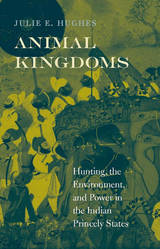
One summer evening in 1918, a leopard wandered into the gardens of an Indian palace. Roused by the alarms of servants, the prince’s eldest son and his entourage rode elephant-back to find and shoot the intruder. An exciting but insignificant vignette of life under the British Raj, we may think. Yet to the participants, the hunt was laden with symbolism. Carefully choreographed according to royal protocols, recorded by scribes and commemorated by court artists, it was a potent display of regal dominion over men and beasts alike. Animal Kingdoms uncovers the far-reaching cultural, political, and environmental importance of hunting in colonial India.
Julie E. Hughes explores how Indian princes relied on their prowess as hunters to advance personal status and solidify power. Believing that men and animals developed similar characteristics by inhabiting a shared environment, they sought out quarry—fierce tigers, agile boar—with traits they hoped to cultivate in themselves. Largely debarred from military activities under the British, they also used the hunt to establish meaningful links with the historic battlefields and legendary deeds of their ancestors.
Hunting was not only a means of displaying masculinity and heroism, however. Indian rulers strove to present a picture of privileged ease, perched in luxuriously outfitted shooting boxes and accompanied by lavish retinues. Their interest in being sumptuously sovereign was crucial to elevating the prestige of prized game. Animal Kingdoms will inform historians of the subcontinent with new perspectives and captivate readers with descriptions of its magnificent landscapes and wildlife.
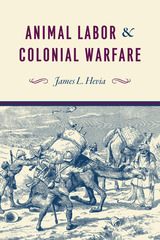
In Animal Labor and Colonial Warfare, James Hevia examines the use of camels, mules, and donkeys in colonial campaigns of conquest and pacification, starting with the Second Afghan War—during which an astonishing 50,000 to 60,000 camels perished—and ending in the early twentieth century. Hevia explains how during the nineteenth and twentieth centuries a new set of human-animal relations were created as European powers and the United States expanded their colonial possessions and attempted to put both local economies and ecologies in the service of resource extraction. The results were devastating to animals and human communities alike, disrupting centuries-old ecological and economic relationships. And those effects were lasting: Hevia shows how a number of the key issues faced by the postcolonial nation-state of Pakistan—such as shortages of clean water for agriculture, humans, and animals, and limited resources for dealing with infectious diseases—can be directly traced to decisions made in the colonial past. An innovative study of an underexplored historical moment, Animal Labor and Colonial Warfare opens up the animal studies to non-Western contexts and provides an empirically rich contribution to the emerging field of multispecies historical ecology.
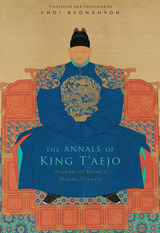
Never before translated into English, this official history of the reign of King T’aejo—founder of Korea’s long, illustrious Chosŏn dynasty (1392–1910 CE)—is a unique resource for reconstructing life in late-fourteenth-century Korea. Its narrative of a ruler’s rise to power includes a wealth of detail not just about politics and war but also about religion, astronomy, and the arts.
The military general Yi Sŏnggye, posthumously named T’aejo, assumed the throne in 1392. During his seven-year reign, T’aejo instituted reforms and established traditions that would carry down through the centuries. These included service to Korea’s overlord, China, and other practices reflecting China’s influence over the peninsula: creation of a bureaucracy based on civil service examinations, a shift from Buddhism to Confucianism, and official records of the deeds of kings, which in the Confucian tradition were an important means of educating succeeding generations. A remarkable compilation process for the sillok, or “veritable records,” was instituted to ensure the authority of the annals. Historiographers were present for every royal audience and wrote down each word that was uttered. They were strictly forbidden to divulge the contents of their daily drafts, however—even the king himself could not view the records with impunity.
Choi Byonghyon’s translation of the first of Korea’s dynastic histories, The Annals of King T’aejo, includes an introduction and annotations.
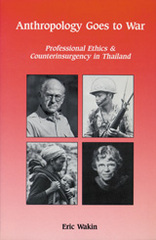
Now back in print, Eric Wakin's Anthropology Goes to War is the first comprehensive study of what became known as the Thailand Controversy—and a timely reminder of a debate whose echoes may be heard in our own time.
This study analyzes New Theses (Shinron), by Aizawa Seishisai (1781—1863), and its contribution to Japanese political thought and policy during the early–modern era. New Theses is found to be indispensable to our understanding of Japan's transformation from a feudal to a modern state.
Focusing on Aizawa, Wakabayashi traces the development of xenophobia during the Tokugawa period and examines the basis of anti–Western sentiment. He shows how knowledge of Christianity inspired Aizawa to develop thepotent concept of kokutai (“what is essential to a nation”). His analysis explains why the Edobakufu's policies of national isolation (sakoku) and armed expulsion of Westerners (jõi) gained widespread support in the late Tokugawa. Wakabayashi also describes how information on Western affairs and world conditions decisively altered Tokugawa Confucian conceptions of civilization and barbarism, and how this in turn enabled the Japanese to redefine their nation's relationship to China and the West.
Rather than place Aizawa and his New Theses of 1825 at the beginning of a process leading up to the Meiji Restoration, Wakabayashi discusses New Theses in conjunction with the bakufu's Expulsion Edict issued in the same year. He concludes that the convergence of the two events in 1825 marks the emergence of modern nationalism in Japan, and therefore should perhaps be seen as more epoch–making than the 1868 Restoration itself.
The study also presents a complete translation of New Theses.
Drawing on archival sources and fieldwork, the contributors explore aspects of modernity within societies of South Asia, the Middle East, and Africa. Whether considering how European ideas of Orientalism became foundational myths of Indian nationalism; how racial caste systems between blacks, South Asians, and whites operate in post-apartheid South Africa; or how Indian immigrants to the United States negotiate their identities, these essays demonstrate that the contours of cultural and identity politics did not simply originate in metropolitan centers and get adopted wholesale in the colonies. Colonial and postcolonial modernisms have emerged via the active appropriation of, or resistance to, far-reaching European ideas. Over time, Orientalism and nationalist and racialized knowledges become indigenized and acquire, for all practical purposes, a completely "Third World" patina. Antinomies of Modernity shows that people do make history, constrained in part by political-economic realities and in part by the categories they marshal in doing so.
Contributors. Neville Alexander, Andrew Barnes, Vasant Kaiwar, Sucheta Mazumdar, Minoo Moallem, Mohamad Tavakoli-Targhi, A. R. Venkatachalapathy, Michael O. West
This book is a project in comparative history, but along two distinct axes, one historical and the other historiographical. Its purpose is to constructively juxtapose the early modern European and Chinese approaches to historical study that have been called "antiquarian." As an exercise in historical recovery, the essays in this volume amass new information about the range of antiquarian-type scholarship on the past, on nature, and on peoples undertaken at either end of the Eurasian landmass between 1500 and 1800. As a historiographical project, the book challenges the received---and often very much under conceptualized---use of the term "antiquarian" in both European and Chinese contexts. Readers will not only learn more about the range of European and Chinese scholarship on the past---and especially the material past---but they will also be able to integrate some of the historiographical observations and corrections into new ways of conceiving of the history of historical scholarship in Europe since the Renaissance, and to reflect on the impact of these European terms on Chinese approaches to the Chinese past. This comparison is a two-way street, with the European tradition clarified by knowledge of Chinese practices, and Chinese approaches better understood when placed alongside the European ones.
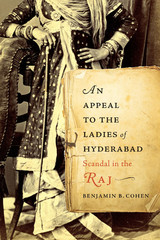
The dramatic story of Mehdi Hasan and Ellen Donnelly, whose marriage convulsed high society in nineteenth-century India and whose notorious trial and fall reverberated throughout the British Empire, setting the benchmark for Victorian scandals.
In April 1892, a damning pamphlet circulated in the south Indian city of Hyderabad, the capital of the largest and wealthiest princely state in the British Raj. An anonymous writer charged Mehdi Hasan, an aspiring Muslim lawyer from the north, and Ellen Donnelly, his Indian-born British wife, with gross sexual misconduct and deception. The scandal that ensued sent shock waves from Calcutta to London. Who wrote this pamphlet, and was it true?
Mehdi and Ellen had risen rapidly among Hyderabad’s elites. On a trip to London they even met Queen Victoria. Not long after, a scurrilous pamphlet addressed to “the ladies of Hyderabad” charged the couple with propagating a sham marriage for personal gain. Ellen, it was claimed, had been a prostitute, and Mehdi was accused of making his wife available to men who could advance his career. To avenge his wife and clear his name, Mehdi filed suit against the pamphlet’s printer, prompting a trial that would alter their lives.
Based on private letters, courtroom transcripts, secret government reports, and scathing newspaper accounts, Benjamin Cohen’s riveting reconstruction of the couple’s trial and tribulations lays bare the passions that ran across racial lines and the intimate betrayals that doomed the Hasans. Filled with accusations of midnight trysts and sexual taboos, An Appeal to the Ladies of Hyderabad is a powerful reminder of the perils facing those who tried to rewrite society’s rules. In the struggle of one couple, it exposes the fault lines that would soon tear a world apart.
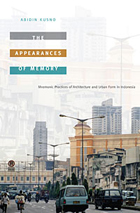
Addressing developments in Indonesia since the fall of President Suharto’s regime in 1998, Kusno delves into such topics as the domestication of traumatic violence and the restoration of order in the urban space, the intense interest in urban history in contemporary Indonesia, and the implications of “superblocks,” large urban complexes consisting of residences, offices, shops, and entertainment venues. Moving farther back in time, he examines how Indonesian architects reinvented colonial architectural styles to challenge the political culture of the state, how colonial structures such as railway and commercial buildings created a new, politically charged cognitive map of cities in Java in the early twentieth century, and how the Dutch, in attempting to quell dissent, imposed a distinctive urban visual order in the 1930s. Finally, the present and the past meet in his long-term considerations of how Java has responded to the global flow of Islamic architecture, and how the meanings of Indonesian gatehouses have changed and persisted over time. The Appearances of Memory is a pioneering look at the roles of architecture and urban development in Indonesia’s ongoing efforts to move forward.
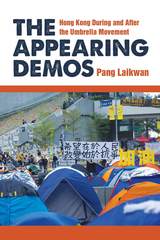
The 79-day-long Hong Kong Umbrella Movement occupied major streets in the busiest parts of the city, creating tremendous inconvenience to this city famous for capitalist order and efficiency. It was also a peaceful collective effort of appearance, and it was as much a political event as a cultural one. The urge for expressing an independent cultural identity underlined both the Occupy movement and the remarkably rich cultural expressions it generated. While understanding the specificity of Hong Kong’s situations, The Appearing Demos also comments on some global predicaments we are facing in the midst of neoliberalism and populism. It directs our attention from state-based sovereignty to city-based democracy, and emphasizes the importance of participation and cohabitation. The book also examines how the ideas of Hannah Arendt are useful to those happenings much beyond the political circumstances that gave rise to her theorization. The book pays particular attention to the actual intersubjective experiences during the protest. These experiences are local, fragile, and sometimes inarticulable, therefore resisting rationality and debates, but they define the fullness of any individual, and they also make politics possible. Using the Umbrella Movement as an example, this book examines the “freed” political agents who constantly take others into consideration in order to guarantee the political realm as a place without coercion and discrimination. In doing so, Pang Laikwan demonstrates how politics means neither to rule nor to be ruled, and these movements should be defined by hope, not by goals.
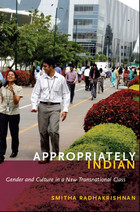
Radhakrishnan explains how this transnational class creates an Indian culture that is self-consciously distinct from Western culture, yet compatible with Western cosmopolitan lifestyles. She describes the material and symbolic privileges that accrue to India’s high-tech workers, who often claim ordinary middle-class backgrounds, but are overwhelmingly urban and upper caste. They are also distinctly apolitical and individualistic. Members of this elite class practice a decontextualized version of Hinduism, and they absorb the ideas and values that circulate through both Indian and non-Indian multinational corporations. Ultimately, though, global Indianness is rooted and configured in the gendered sphere of home and family.
For much of the twentieth century, the May Fourth movement of 1919 was seen as the foundational moment of modernity in China. Recent examinations of literary and cultural modernity in China have, however, led to a questioning of this view. By approaching May Fourth from novel perspectives, the authors of the eight studies in this volume seek to contribute to the ongoing critique of the movement.
The essays are centered on the intellectual and cultural/historical motivations and practices behind May Fourth discourse and highlight issues such as strategies of discourse formation, scholarly methodologies, rhetorical dispositions, the manipulation of historical sources, and the construction of modernity by means of the reification of China’s literary past.
Contributors. Ksenia Chizhova, Jungwon Kim, Sung-Eun Thomas Kim, Franklin Rausch, Graeme Reynolds, Sem Vermeersch, Sixiang Wang, Yuan Ye
Winner, Waldo Gifford Leland Award, Society of American Archivists
Longlist, ICAS Book Prize, International Convention of Asia Scholars
The first complete English translation of one of the great court epics of Sanskrit literature.
Kirātārjunīya, or Arjuna and the Hunter, is one of the great court epics of the Sanskrit literary canon. Written by the sixth-century poet Bharavi, it is also the first and most remarkable reinterpretation of a pivotal episode in the Mahābhārata, India’s ancient epic. The warrior Arjuna travels to the Himalayas to perform penance and win a boon from the god Shiva that will help his brothers, the Pandavas, overcome their enemies in righteous war. Appearing in the guise of a hunter, Shiva tests Arjuna’s courage in combat, ultimately reveals himself, and bestows upon the hero an invincible weapon.
In Bharavi’s hands, the episode is turned into a masterful contemplation of heroic action, ethical conduct, ascetic discipline, and religious devotion—core values in India’s classical civilization and enduring themes in Indian literature. But the poem’s fame rests above all on its aesthetic achievement. With its elegant, epigrammatic verse, powerful imagery, dramatic speeches, and vivid descriptions, Arjuna and the Hunter, now made available for the first time in a complete English translation and accompanied by the Sanskrit original in the Devanagari script, will dazzle and move contemporary readers no less powerfully than its first courtly connoisseurs.
Home to capitals of several states over time, the site of modern Beijing has been ruled by Mongolian chiefs and the glorious Ming emperors, whose tombs can still be found on its outskirts. Through Beijing, we can experience Chinese history itself, including its more famous residents—including Khubilai Khan, Mulan, and Marco Polo. Special emphasis is placed on Beijing’s precarious heritage in the twenty-first century, as modern construction wipes out much of the old city to make way for homes for twenty million people.
This book also offers detailed information on sites of tourist interest, including the pros and cons of different sections of the Great Wall and the best ways to see the Forbidden City and the fast-disappearing relics of the city’s Manchu and Maoist eras. A chapter on food and drink examines not only local delicacies, but the many other Chinese dishes that form part of Beijing’s rich dining traditions. With its blend of rich history and expert tips, An Armchair Traveller’s History of Beijing is an essential introduction to one of the world’s most remarkable cities.
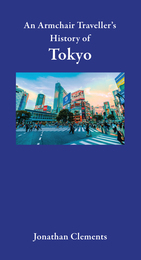
Tokyo, meaning “Eastern Capital,” has only enjoyed that name and status for 150 years. Before that, it was a medieval outpost designed to keep watch over rich farmlands. But this seemingly unassuming geographical location ultimately led to its status as a supercity. Though the imperial court ruled Japan from the sleepy city of Kyoto, the landowners of the Kanto plain where Tokyo lies held the true wealth and power in Japan, which they eventually asserted in a series of bloody civil wars. The Tokyo region became the administrative center of Japan’s Shogun overlords and the site of a vibrant urban culture home to theaters, taverns, and brothels. After the Meiji Restoration in 1868, it became Japan’s true capital, home to the emperors, the seat of government, and a site of rapid urban growth.
Anyone who’s ever longed to look upon Mount Fuji, embody the bravery of the Samurai, or savor the world’s finest sushi will find themselves transported from the comfort of their armchair while reading Clements’s account of Tokyo.
Since Pakistan gained independence in 1947, only once has an elected government completed its tenure and peacefully transferred power to another elected government. In sharp contrast to neighboring India, the Muslim nation has been ruled by its military for over three decades. Even when they were not directly in control of the government, the armed forces maintained a firm grip on national politics. How the military became Pakistan’s foremost power elite and what its unchecked authority means for the future of this nuclear-armed nation are among the crucial questions Aqil Shah takes up in The Army and Democracy.
Pakistan’s and India’s armies inherited their organization, training, and doctrines from their British predecessor, along with an ethic that regarded politics as outside the military domain. But Pakistan’s weak national solidarity, exacerbated by a mentality that saw war with India looming around every corner, empowered the military to take national security and ultimately government into its own hands. As the military’s habit of disrupting the natural course of politics gained strength over time, it arrested the development of democratic institutions.
Based on archival materials, internal military documents, and over 100 interviews with politicians, civil servants, and Pakistani officers, including four service chiefs and three heads of the clandestine Inter-Services Intelligence, The Army and Democracy provides insight into the military’s contentious relationship with Pakistan’s civilian government. Shah identifies steps for reforming Pakistan’s armed forces and reducing its interference in politics, and sees lessons for fragile democracies striving to bring the military under civilian control.
At Indian independence in 1947, the country’s founders worried that the army India inherited—conservative and dominated by officers and troops drawn disproportionately from a few “martial” groups—posed a real threat to democracy. They also saw the structure of the army, with its recruitment on the basis of caste and religion, as incompatible with their hopes for a new secular nation.
India has successfully preserved its democracy, however, unlike many other colonial states that inherited imperial “divide and rule” armies, and unlike its neighbor Pakistan, which inherited part of the same Indian army in 1947. As Steven I. Wilkinson shows, the puzzle of how this happened is even more surprising when we realize that the Indian Army has kept, and even expanded, many of its traditional “martial class” units, despite promising at independence to gradually phase them out.
Army and Nation draws on uniquely comprehensive data to explore how and why India has succeeded in keeping the military out of politics, when so many other countries have failed. It uncovers the command and control strategies, the careful ethnic balancing, and the political, foreign policy, and strategic decisions that have made the army safe for Indian democracy. Wilkinson goes further to ask whether, in a rapidly changing society, these structures will survive the current national conflicts over caste and regional representation in New Delhi, as well as India’s external and strategic challenges.
Drawing on rich ethnographic and historical research, McGranahan tells the story of the Tibetan resistance and the social processes through which this history is made and unmade, and lived and forgotten in the present. Fulfillment of veterans’ desire for recognition hinges on the Dalai Lama and “historical arrest,” a practice in which the telling of certain pasts is suspended until an undetermined time in the future. In this analysis, struggles over history emerge as a profound pain of belonging. Tibetan cultural politics, regional identities, and religious commitments cannot be disentangled from imperial histories, contemporary geopolitics, and romanticized representations of Tibet. Moving deftly from armed struggle to nonviolent hunger strikes, and from diplomatic offices to refugee camps, Arrested Histories provides powerful insights into the stakes of political engagement and the cultural contradictions of everyday life.

At the genesis of the Republic of China in 1912, many political leaders, educators, and social reformers argued that republican education should transform China's people into dynamic modern citizens—social and political agents whose public actions would rescue the national community. Over subsequent decades, however, they came to argue fiercely over the contents of citizenship and how it should be taught. Moreover, many of their carefully crafted policies and programs came to be transformed by textbook authors, teachers, administrators, and students. Furthermore, the idea of citizenship, once introduced, raised many troubling questions. Who belonged to the national community in China, and how was the nation constituted? What were the best modes of political action? How should modern people take responsibility for "public matters"? What morality was proper for the modern public?
This book reconstructs civic education and citizenship training in secondary schools in the lower Yangzi region during the Republican era. It also analyzes how students used the tools of civic education introduced in their schools to make themselves into young citizens and explores the complex social and political effects of educated youths' civic action.
Joshua Fogel offers an incisive historical look at Sino-Japanese relations from three different perspectives. Using first a wide lens, he suggests a new way to capture the relationship between China and Japan by characterizing the nature of their contact. From the first century CE, the primary reasons for contact moved from political and ceremonial to cultural, and on to commercial ties. This period ends at the dawn of the modern age, when contacts involved treaties, consulates, and international law.
Switching to a microhistorical view, Fogel examines several important behind-the-scenes players in the launching of the countries’ modern diplomatic relations. He focuses on the voyage of the Senzaimaru from Nagasaki to Shanghai in 1862—the first official meeting of Chinese and Japanese in the modern era—and the Dutchman who played an important intermediary role. Finally, he examines the first expatriate Japanese community in the modern era, in Shanghai from the 1860s to the mid-1890s, when the first Sino-Japanese War erupted.
Introducing the concept of “Sinosphere” to capture the nature of Sino-foreign relations both spatially and temporally, Fogel presents an original and thought-provoking study on the long, complex relationship between China and Japan.
The Arts of the Microbial World explores the significance of fermentation phenomena, both as life processes and as technologies, in Japanese scientific culture. Victoria Lee’s careful study documents how Japanese scientists and skilled workers sought to use the microbe’s natural processes to create new products, from soy-sauce mold starters to MSG, vitamins to statins. In traditional brewing houses as well as in the food, fine chemical, and pharmaceutical industries across Japan, they showcased their ability to deal with the enormous sensitivity and variety of the microbial world.
Charting developments in fermentation science from the turn of the twentieth century, when Japan was an industrializing country on the periphery of the world economy, to 1980 when it had emerged as a global technological and economic power, Lee highlights the role of indigenous techniques in modern science as it took shape in Japan. In doing so, she reveals how knowledge of microbes lay at the heart of some of Japan’s most prominent technological breakthroughs in the global economy.
At a moment when twenty-first-century developments in the fields of antibiotic resistance, the microbiome, and green chemistry suggest that the traditional eradication-based approach to the microbial world is unsustainable, twentieth-century Japanese microbiology provides a new, broader vantage for understanding and managing microbial interactions with society.
In 1967, leaders from Indonesia, Malaysia, the Philippines, Singapore, and Thailand struck a landmark agreement, forming ASEAN. They had realized that political and economic cooperation would bring greater stability and prosperity to the region. Fifty years and five additional countries later, the alliance has remained one of the world’s most successful collaborations. Kishore Mahbubani and Jeffery Sng explain how this partnership has benefited the ten member countries and why it should serve as a model for other regions of the world, challenging our assumptions about international cooperation. As the world turns to Asia and the United States and China jostle for dominance, the ASEAN region will have an undeniably powerful role in shaping our global systems. Mahbubani and Sng offer an important primer for understanding this immensely successful—and woefully underappreciated—regional organization.
READERS
Browse our collection.
PUBLISHERS
See BiblioVault's publisher services.
STUDENT SERVICES
Files for college accessibility offices.
RECENTLY PUBLISHED



UChicago Accessibility Resources
home | accessibility | search | about | contact us
BiblioVault ® 2001 - 2024
The University of Chicago Press