
 A SCHOLARLY BOOK REPOSITORY
Authors, booksellers, librarians, instructors, and publishing professionals across the industry will find this an invaluable resource, featuring editorial programs and publishing details for all 150+ Association members and much more.
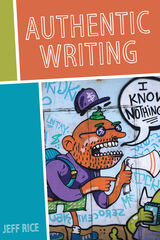
In Authentic Writing, Jeff Rice uses this question to trace a position regarding critique, the role of the scholar, the role of the personal in scholarship, the banal as subject matter, and the idea of authenticity. He explores authenticity as a writing issue, a rhetorical issue, a consumption issue, a culture issue, and an ideological issue. Rather than arguing for a more authentic state or practice, Rice examines the rhetorical features of authenticity in order to expand the focus of scholarship.
Becoming a Social Science Researcher is designed to help aspiring social scientists, including credentialed scholars, understand the formidable complexities of the research process. Instead of explaining specific research techniques, it concentrates on the philosophical, sociological, and psychological dimensions of social research. These dimensions have received little coverage in guides written for social science researchers, but they are arguably even more important than particular analytical techniques. Truly sophisticated social science scholarship requires that researchers understand the intellectual and social contexts in which they collect and interpret information. While social science training in US graduate schools has become more systematic over the past two decades, graduate training and published guidance still fall short in addressing this fundamental need.
WPAs face a range of challenges on a regular basis: organizing class schedules, leading professional learning events, conducting program assessments, responding to student needs, meeting with deans and provosts, and more. Additionally, WPAs need to learn about and direct their programs strategically when considering the kind of program they currently have, the sort of program they envision, and how they can transition from one to another. Burnin’ Daylight acts as a roadmap for IRB-approved research and provides WPAs—specifically, new and returning WPAs—with a detailed yet flexible plan for understanding the inner workings of a writing program and how to develop a future trajectory for it.
Burnin’ Daylight is for writing program administrators of all experience levels and other administrators interested in taking a “principled practices” approach to their work.
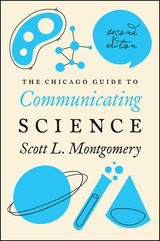
This new edition has been thoroughly revised to address crucial issues in the changing landscape of scientific communication, with an increased focus on those writers working in corporate settings, government, and nonprofit organizations as well as academia. Half a dozen new chapters tackle the evolving needs and paths of scientific writers. These sections address plagiarism and fraud, writing graduate theses, translating scientific material, communicating science to the public, and the increasing globalization of research.
The Chicago Guide to Communicating Science recognizes that writers come to the table with different needs and audiences. Through solid examples and concrete advice, Montgomery sets out to help scientists develop their own voice and become stronger communicators. He also teaches readers to think about their work in the larger context of communication about science, addressing the roles of media and the public in scientific attitudes as well as offering advice for those whose research concerns controversial issues such as climate change or emerging viruses.
More than ever, communicators need to be able to move seamlessly among platforms and styles. The Chicago Guide to Communicating Science’s comprehensive coverage means that scientists and researchers will be able to expertly connect with their audiences, no matter the medium.
The Chicago Guide to Writing about Multivariate Analysis is the book researchers turn to when looking for guidance on how to clearly present statistical results and break through the jargon that often clouds writing about applications of statistical analysis. This new edition features even more topics and real-world examples, making it the must-have resource for anyone who needs to communicate complex research results.
For this second edition, Jane E. Miller includes four new chapters that cover writing about interactions, writing about event history analysis, writing about multilevel models, and the “Goldilocks principle” for choosing the right size contrast for interpreting results for different variables. In addition, she has updated or added numerous examples, while retaining her clear voice and focus on writers thinking critically about their intended audience and objective. Online podcasts, templates, and an updated study guide will help readers apply skills from the book to their own projects and courses.
This continues to be the only book that brings together all of the steps involved in communicating findings based on multivariate analysis—finding data, creating variables, estimating statistical models, calculating overall effects, organizing ideas, designing tables and charts, and writing prose—in a single volume. When aligned with Miller’s twelve fundamental principles for quantitative writing, this approach will empower readers—whether students or experienced researchers—to communicate their findings clearly and effectively.
The ability to communicate in print and person is essential to the life of a successful scientist. But since writing is often secondary in scientific education and teaching, there remains a significant need for guides that teach scientists how best to convey their research to general and professional audiences. The Craft of Scientific Communication will teach science students and scientists alike how to improve the clarity, cogency, and communicative power of their words and images.
In this remarkable guide, Joseph E. Harmon and Alan G. Gross have combined their many years of experience in the art of science writing to analyze published examples of how the best scientists communicate. Organized topically with information on the structural elements and the style of scientific communications, each chapter draws on models of past successes and failures to show students and practitioners how best to negotiate the world of print, online publication, and oral presentation.
Using on-site research and critical ethnographic study from one university writing center, Rebecca Hallman Martini establishes an innovative, cross-disciplinary partnership approach to writing instruction in which peer tutoring plays an integral curricular role. Case studies detail three partnerships that respond directly to existing or potential disruptive innovations in higher education and showcase important concepts: mapping mutual benefit and stakeholder engagement in an online studio/hybrid first-year writing program partnership in response to online education, creating negotiated space to work through ethical issues involved when working with a public-private partnership to develop a required extracurricular portfolio project in a business school, and building transformational partnerships through establishing a writing-in-the-professions curriculum in the College of Engineering in response to career readiness initiatives.
Disrupting the Center uses interviews, observations, focus groups, analysis of consultations, meetings, and shared documents such as annual reports, budgets, assessment data, assignments, and syllabi to generate a wide view of how systems work. Writing centers are flexible university-wide service spaces where students go for one-on-one and group writing support that can become dynamic spaces for writing pedagogy by disrupting, revitalizing, and reinventing the epistemic foundations of current rhetoric and composition landscapes and traditional approaches to writing.
So, you’ve written a dissertation. Congratulations! But how do you turn it into a book? Even if you know what to do when revising your dissertation, do you know how to do those things? This workbook by Katelyn E. Knox and Allison Van Deventer, creators of the successful online Dissertation-to-Book Boot Camp, offers a series of manageable, concrete steps with exercises to help you revise your academic manuscript into publishable book form.
The Dissertation-to-Book Workbook uses targeted exercises and prompts to take the guesswork out of writing a book. You’ll clarify your book’s core priorities, pinpoint your organizing principle, polish your narrative arc, evaluate your evidence, and much more. Using what this workbook calls “book questions and chapter answers,” you’ll figure out how to thread your book’s main ideas through its chapters. Then, you’ll assemble an argument, and finally, you’ll draft any remaining material and revise the manuscript. And most important, by the time you complete the workbook, you’ll have confidence that your book works as a book—that it’s a cohesive, focused manuscript that tells the story you want to tell.
Indispensible to anyone with an academic manuscript in progress, the prompts, examples, checklists, and activities will give you confidence about all aspects of your project—that it is structurally sound, coherent, free of the hallmarks of “dissertationese," and ready for submission to an academic publisher.
Except, that is, when it comes to Deirdre Nansen McCloskey. Her conversational and witty yet always clear style is a hallmark of her classic works of economic history, enlivening the dismal science and engaging readers well beyond the discipline. And now she’s here to share the secrets of how it’s done.
Economical Writing is itself economical: a collection of thirty-five pithy rules for making your writing clear, concise, and effective. Proceeding from big-picture ideas to concrete strategies for improvement at the level of the paragraph, sentence, or word, McCloskey shows us that good writing, after all, is not just a matter of taste—it’s a product of adept intuition and a rigorous revision process. Debunking stale rules, warning us that “footnotes are nests for pedants,” and offering an arsenal of readily applicable tools and methods, she shows writers of all levels of experience how to rethink the way they approach their work, and gives them the knowledge to turn mediocre prose into magic.
At once efficient and digestible, hilarious and provocative, Economical Writing lives up to its promise. With McCloskey as our guide, it’s impossible not to see how any piece of writing—on economics or any other subject—can be a pleasure to read.
Though environmental degradation and unauthorized use threatened the Grey Cliffs recreational lake area to the point that the Corps considered closure, community members valued it highly and wanted to keep it open. The community near this damaged and crime-ridden area needed help rejuvenating its landscape and image, but the Corps and community were sharply divided on how to maintain this beloved geographic space because of the stakeholders’ different cultural backgrounds and values, as well as the narratives used to discuss them. By co-constructing and aligning narratives, values, and ethos over time—a difficult and lengthy process—the Corps and community succeeded, and Grey Cliffs remains open to all. Focusing on field notes, participant interviews, and analysis of various texts created throughout the conflict, Pickering applies rhetorical analysis and a grounded theory approach to regulation, identity, sustainability, and community values to analyze this communication process.
Illustrating the positive change that can occur when governmental organizations and rural communities work together to construct shared values and engage in a rhetoric of relationship that preserves the environment, Environmental Preservation and the Grey Cliffs Conflict provides key recommendations for resolving environmental conflicts within local communities, especially for those working in technical and professional communication, organizational communication, environmental science, and public policy.
The first book to situate feminisms and technical communication in relationship as the focal point, Feminist Technical Communication traces the thread of feminisms through technical communication’s connection to social justice studies. Clark theorizes “slow crisis,” a concept made readable to technical communicators by apparent feminisms that can help technical communicators readily recognize and address social justice problems. Clark then applies this framework to the Deepwater Horizon Disaster, an extended crisis that has been publicly framed by a traditional view of efficiency that privileges economic impact. Through rich description of apparent feminist information-gathering techniques and a layered analysis this study offers application far beyond this single disaster, making available new crisis-response possibilities that consider the economy without eliding ecological and human health concerns.
Feminist Technical Communication offers a methodological approach to the systematic interrogation of power structures that operate on hidden misogynies. This book is useful to technical communicators, scholars of technical communication and rhetoric, and readers interested in gender studies and public health and is an ideal text for graduate-level seminars focused on feminisms, social justice, and cultural studies.
Since its publication in 2005, From Dissertation to Book has helped thousands of young academic authors get their books beyond the thesis committee and into the hands of interested publishers and general readers. Now revised and updated to reflect the evolution of scholarly publishing, this edition includes a new chapter arguing that the future of academic writing is in the hands of young scholars who must create work that meets the broader expectations of readers rather than the narrow requirements of academic committees.
At the heart of From Dissertation to Book is the idea that revising the dissertation is fundamentally a process of shifting its focus from the concerns of a narrow audience—a committee or advisors—to those of a broader scholarly audience that wants writing to be both informative and engaging. William Germano offers clear guidance on how to do this, with advice on such topics as rethinking the table of contents, taming runaway footnotes, shaping chapter length, and confronting the limitations of jargon, alongside helpful timetables for light or heavy revision.
Germano draws on his years of experience in both academia and publishing to show writers how to turn a dissertation into a book that an audience will actually enjoy, whether reading on a page or a screen. Germano also acknowledges that not all dissertations can or even should become books and explores other, often overlooked, options, such as turning them into journal articles or chapters in an edited work.
With clear directions, engaging examples, and an eye for the idiosyncrasies of academic writing, From Dissertation to Book reveals to recent PhDs the secrets of careful and thoughtful revision—a skill that will be truly invaluable as they add “author” to their curriculum vitae.
From Notes to Narrative picks up where methodological training leaves off. Kristen Ghodsee, an award-winning ethnographer, addresses common issues that arise in ethnographic writing. Ghodsee works through sentence-level details, such as word choice and structure. She also tackles bigger-picture elements, such as how to incorporate theory and ethnographic details, how to effectively deploy dialogue, and how to avoid distracting elements such as long block quotations and in-text citations. She includes excerpts and examples from model ethnographies. The book concludes with a bibliography of other useful writing guides and nearly one hundred examples of eminently readable ethnographic books.
While there has been an increasing call for social scientists to engage more broadly with the public, concrete advice for starting the conversation has been in short supply. Arlene Stein and Jessie Daniels seek to change this with Going Public, the first guide that truly explains how to be a public scholar. They offer guidance on writing beyond the academy, including how to get started with op-eds and articles and later how to write books that appeal to general audiences. They then turn to the digital realm with strategies for successfully building an online presence, cultivating an audience, and navigating the unique challenges of digital world. They also address some of the challenges facing those who go public, including the pervasive view that anything less than scholarly writing isn’t serious and the stigma that one’s work might be dubbed “journalistic.”
Going Public shows that by connecting with experts, policymakers, journalists, and laypeople, social scientists can actually make their own work stronger. And by learning to effectively add their voices to the conversation, researchers can help make sure that their knowledge is truly heard above the digital din.
That’s a huge mistake, says Randy Olson: Hollywood has a lot to teach scientists about how to tell a story—and, ultimately, how to do science better. With Houston, We Have a Narrative, he lays out a stunningly simple method for turning the dull into the dramatic. Drawing on his unique background, which saw him leave his job as a working scientist to launch a career as a filmmaker, Olson first diagnoses the problem: When scientists tell us about their work, they pile one moment and one detail atop another moment and another detail—a stultifying procession of “and, and, and.” What we need instead is an understanding of the basic elements of story, the narrative structures that our brains are all but hardwired to look for—which Olson boils down, brilliantly, to “And, But, Therefore,” or ABT. At a stroke, the ABT approach introduces momentum (“And”), conflict (“But”), and resolution (“Therefore”)—the fundamental building blocks of story. As Olson has shown by leading countless workshops worldwide, when scientists’ eyes are opened to ABT, the effect is staggering: suddenly, they’re not just talking about their work—they’re telling stories about it. And audiences are captivated.
Written with an uncommon verve and enthusiasm, and built on principles that are applicable to fields far beyond science, Houston, We Have a Narrative has the power to transform the way science is understood and appreciated, and ultimately how it’s done.
David Bartholomae has been a prominent figure in the field of composition and rhetoric for almost five decades. This is an end-of-career book, a collection of late essays that reflect on the teaching of reading and writing, on the challenges and value of students’ work, and on the place of English in the university curriculum. The chapters are unified by a thread that connects some of the books and ideas, people and places, students and courses that shaped and sustained his work as a scholar and teacher over time. Several chapters present and discuss extended examples of student writing. The essays trace his formation from the early days of “Basic Writing” to his final engagements with study abroad and travel writing, where he had the chance to think again, and in radically different settings, about the fundamental problems of communication across linguistic and cultural divides.
The Predator Effect concerns predatory publishing — it is the first to chart both the rise and impact of deceptive publishing. The author — a scientific communications expert with 20 years’ experience — looks at how predatory journals had become an accepted part of scholarly publishing, reviewing in turn the history, development and impact of predatory journals. The book also puts their rise in context of wider issues such as Open Access and publication ethics. Other issues it addresses include: defining predatory journals, the history of predatory publishing practices, Beall’s List, authors’ motivations and the future of predatory publishing practices.
Project Management for Researchers tackles the how, what, and why of project management. It offers step-by-step guidance on choosing tools and developing a personalized system that will help the reader manage and organize their research so that steps and decisions are documented for accountability and reproducibility. Readers will find worksheets they can adapt to their own needs, priorities, and research as well as practical tips on issues ranging from emails to scheduling. Suitable for work across methods, experience levels, and disciplines and adaptable for those working alone, with others, or as team managers, this book will guide readers between various research stages–from planning, to execution, to adjustment of research projects big and small.
Thirty-two authors, consultants, and administrators from diverse centers—from large public four-year institutions to a private, online for-profit university—provide both theoretical frameworks and practical applications in eighteen chapters. Ten chapters focus on graduate consultants and address issues of authority, training, professional development, and mentoring, and eight focus on professional and faculty consultant training as well as specific issues of identity and authority. By sharing these voices, Redefining Roles broadens the very idea of writing centers while opening the door to more dialogue on the important role these practitioners play.
Redefining Roles is designed for writing center practitioners, scholars, and staff. It is also a necessary addition to help campus administrators in the ongoing struggle to validate the intellectually complex work that such staff performs.
Contributors: Fallon N. Allison, Vicki Behrens, Cassie J. Brownell, Matt Burchanoski, Megan Boeshart Burelle, Danielle Clapham, Steffani Dambruch, Elise Dixon, Elizabeth Festa, Will Fitzsimmons, Alex Frissell, Alex Funt, Genie Giaimo, Amanda Gomez, Lisa Lamson, Miriam E. Laufer, Kristin Messuri, Rebecca Nowacek, Kimberly Fahle Peck, Mark Pedretti, Irina Ruppo, Arundhati Sanyal, Anna Scanlon, Matthew Sharkey-Smith, Kelly A. Shea, Anne Shiell, Anna Sicari, Catherine Siemann, Meagan Thompson, Lisa Nicole Tyson, Marcus Weakley, Alex Wulff
In places where Indigenous language translation and interpretation are greatly needed, Indigenous language mediators often lack adequate systems to professionalize their field while withstanding Western practices that do not align with their worldviews. Through a “design thinking” methodology based on her work organizing and participating in an Indigenous-focused interpreter and translator conference, Rivera examines testimonios and semi-structured interviews conducted with Indigenous interpreters and translators to emphasize dialogue and desahogo (emotional release) as Indigenous communication practices.
The Rhetorical Mediator advocates for Indigenous language practices that have been sidelined by Western scholarship and systems, helping to create more equitable processes to directly benefit Indigenous individuals and other underrepresented groups. This book benefits specialists, including UX researchers, technical and professional communicators, interpreters and translators, and Indigenous professionals, as well as academics teaching graduate and undergraduate methods, Indigenous rhetoric and translation, and UX courses.
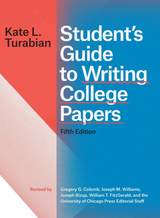
This new edition includes fresh examples of research topics, clarified terminology, more illustrations, and new information about using online sources and citation software. It features updated citation guidelines for Chicago, MLA, and APA styles, aligning with the latest editions of these popular style manuals. It emphasizes argument, research, and writing as extensions of activities that students already do in their everyday lives. It also includes a more expansive view of what the end product of research might be, showing that knowledge can be presented in more ways than on a printed page.
Friendly and authoritative, the fifth edition of Student’s Guide to Writing College Papers combines decades of expert advice with new revisions based on feedback from students and teachers. Time-tested and teacher-approved, this book will prepare students to be better critical thinkers and help them develop a sense of inquiry that will serve them well beyond the classroom.
Elegant data and ideas deserve elegant expression, argues Helen Sword in this lively guide to academic writing. For scholars frustrated with disciplinary conventions, and for specialists who want to write for a larger audience but are unsure where to begin, here are imaginative, practical, witty pointers that show how to make articles and books a pleasure to read—and to write.
Dispelling the myth that you cannot get published without writing wordy, impersonal prose, Sword shows how much journal editors and readers welcome work that avoids excessive jargon and abstraction. Sword’s analysis of more than a thousand peer-reviewed articles across a wide range of fields documents a startling gap between how academics typically describe good writing and the turgid prose they regularly produce.
Stylish Academic Writing showcases a range of scholars from the sciences, humanities, and social sciences who write with vividness and panache. Individual chapters take up specific elements of style, such as titles and headings, chapter openings, and structure, and close with examples of transferable techniques that any writer can master.
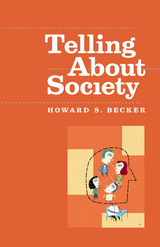
Taking Perec’s book as its cue, Telling About Society explores the unconventional ways we communicate what we know about society to others. The third in distinguished teacher Howard Becker’s best-selling series of writing guides for social scientists, the book explores the many ways knowledge about society can be shared and interpreted through different forms of telling—fiction, films, photographs, maps, even mathematical models—many of which remain outside the boundaries of conventional social science. Eight case studies, including the photographs of Walker Evans, the plays of George Bernard Shaw, the novels of Jane Austen and Italo Calvino, and the sociology of Erving Goffman, provide convincing support for Becker’s argument: that every way of telling about society is perfect—for some purpose. The trick is, as Becker notes, to discover what purpose is served by doing it this way rather than that.
With Becker’s trademark humor and eminently practical advice, Telling About Society is an ideal guide for social scientists in all fields, for artists interested in saying something about society, and for anyone interested in communicating knowledge in unconventional ways.
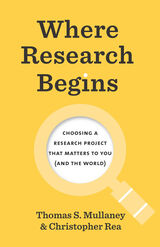
Plenty of books tell you how to do research. This book helps you figure out WHAT to research in the first place, and why it matters.
The hardest part of research isn't answering a question. It's knowing what to do before you know what your question is. Where Research Begins tackles the two challenges every researcher faces with every new project: How do I find a compelling problem to investigate—one that truly matters to me, deeply and personally? How do I then design my research project so that the results will matter to anyone else?
This book will help you start your new research project the right way for you with a series of simple yet ingenious exercises. Written in a conversational style and packed with real-world examples, this easy-to-follow workbook offers an engaging guide to finding research inspiration within yourself, and in the broader world of ideas.
Read this book if you (or your students):
- have difficulty choosing a research topic
- know your topic, but are unsure how to turn it into a research project
- feel intimidated by or unqualified to do research
- worry that you’re asking the wrong questions about your research topic
- have plenty of good ideas, but aren’t sure which one to commit to
- feel like your research topic was imposed by someone else
- want to learn new ways to think about how to do research.
Under the expert guidance of award-winning researchers Thomas S. Mullaney and Christopher Rea, you will find yourself on the path to a compelling and meaningful research project, one that matters to you—and the world.
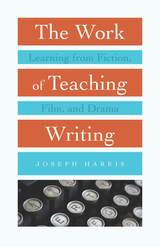
Each chapter examines a fictional representation of writing classes—Dead Poets Society, Up the Down Staircase, Educating Rita, Push, and more—and shifts the conversation from how these works portray teachers to how they dramatize the actual work of teaching. Harris considers scenes of instruction from different stages of the writing process and depictions of students and teachers at work together to highlight the everyday aspects of teaching writing.
In the writing classroom the ideas of teachers come to life in the work of their students. The Work of Teaching Writing shows what fiction, film, and drama can convey about the moment of exchange between teacher and student as they work together to create new insights into writing. It will interest both high school and undergraduate English teachers, as well as graduate students and scholars in composition and rhetoric, literary studies, and film studies.
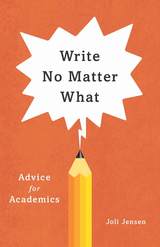
Jensen begins by busting the myth that universities are supportive writing environments. She points out that academia, an arena dedicated to scholarship, offers pressures that actually prevent scholarly writing. She shows how to acknowledge these less-than-ideal conditions, and how to keep these circumstances from draining writing time and energy. Jensen introduces tools and techniques that encourage frequent, low-stress writing. She points out common ways writers stall and offers workarounds that maintain productivity. Her focus is not on content, but on how to overcome whatever stands in the way of academic writing.
Write No Matter What draws on popular and scholarly insights into the writing process and stems from Jensen’s experience designing and directing a faculty writing program. With more than three decades as an academic writer, Jensen knows what really helps and hinders the scholarly writing process for scholars in the humanities, social sciences,and sciences.
Cut down the academic sword of Damocles, Jensen advises. Learn how to write often and effectively, without pressure or shame. With her encouragement, writers of all levels will find ways to create the writing support they need and deserve.
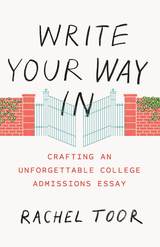
The good news? You already have the “secret sauce” for crafting a compelling personal essay: your own experiences and your unique voice.
More than twenty million students apply to college every year; many of them look similar in terms of test scores, grades, courses taken, extracurricular activities. Admissions officers wade through piles of files. As an applicant, you need to think about what will interest an exhausted reader. What can you write that will make her argue to admit you instead of the thousands of other applicants?
A good essay will be conversational and rich in vivid details, and it could only be written by one person—you. This book will help you figure out how to find and present the best in yourself. You’ll acquire some useful tools for writing well—and may even have fun—in the process.
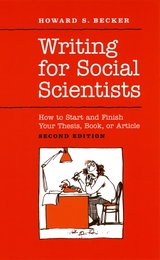
Sociologist Howard S. Becker has written the classic book on how to conquer these pressures and simply write. First published nearly twenty years ago, Writing for Social Scientists has become a lifesaver for writers in all fields, from beginning students to published authors. Becker’s message is clear: in order to learn how to write, take a deep breath and then begin writing. Revise. Repeat.
It is not always an easy process, as Becker wryly relates. Decades of teaching, researching, and writing have given him plenty of material, and Becker neatly exposes the foibles of academia and its “publish or perish” atmosphere. Wordiness, the passive voice, inserting a “the way in which” when a simple “how” will do—all these mechanisms are a part of the social structure of academic writing. By shrugging off such impediments—or at the very least, putting them aside for a few hours—we can reform our work habits and start writing lucidly without worrying about grades, peer approval, or the “literature.”
In this new edition, Becker takes account of major changes in the computer tools available to writers today, and also substantially expands his analysis of how academic institutions create problems for them. As competition in academia grows increasingly heated, Writing for Social Scientists will provide solace to a new generation of frazzled, would-be writers.
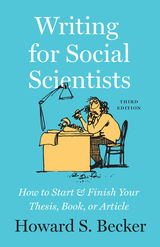
This is not a book about sociological writing. Instead, Becker applies his sociologist’s eye to some of the common problems all academic writers face, including trying to get it right the first time, failing, and therefore not writing at all; getting caught up in the trappings of “proper” academic writing; writing to impress rather than communicate with readers; and struggling with the when and how of citations. He then offers concrete advice, based on his own experiences and those of his students and colleagues, for overcoming these obstacles and gaining confidence as a writer.
While the underlying challenges of writing have remained the same since the book first appeared, the context in which academic writers work has changed dramatically, thanks to rapid changes in technology and ever greater institutional pressures. This new edition has been updated throughout to reflect these changes, offering a new generation of scholars and students encouragement to write about society or any other scholarly topic clearly and persuasively.
As Becker writes in the new preface, “Nothing prepared me for the steady stream of mail from readers who found the book helpful. Not just helpful. Several told me the book had saved their lives; less a testimony to the book as therapy than a reflection of the seriousness of the trouble writing failure could get people into.” As academics are being called on to write more often, in more formats, the experienced, rational advice in Writing for Social Scientists will be an important resource for any writer’s shelf.
While it includes a brief history of the roots of the fields of Chicanx literature and history, Writing that Matters emphasizes practice: how to research and write a Chicanx or Latinx history paper; how to research and write a Chicanx or Latinx literature or cultural studies essay; and how to conduct interviews, frame pláticas, and conduct oral histories. It also includes a brief chapter on nomenclature and a grammar guide. Each chapter includes questions for discussion, and all examples from across the subfields are from noted Chicanx and Latinx scholars. Women’s and queer scholarship and methods are not addressed in a separate chapter but are instead integral to the work.
For years Professors Heidenreich and Urquijo-Ruiz waited for a writing and research manual that was rooted in critical Chicanx and Latinx studies. Now, they have crafted one.
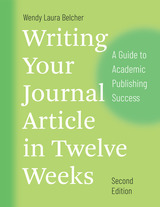
With this new edition, Belcher expands her advice to reach beginning scholars in even more disciplines. She builds on feedback from professors and graduate students who have successfully used the workbook to complete their articles. A new chapter addresses scholars who are writing from scratch. This edition also includes more targeted exercises and checklists, as well as the latest research on productivity and scholarly writing.
Writing Your Journal Article in Twelve Weeks is the only reference to combine expert guidance with a step-by-step workbook. Each week, readers learn a feature of strong articles and work on revising theirs accordingly. Every day is mapped out, taking the guesswork and worry out of writing. There are tasks, templates, and reminders. At the end of twelve weeks, graduate students, recent PhDs, postdoctoral fellows, adjunct instructors, junior faculty, and international faculty will feel confident they know that the rules of academic publishing and have the tools they need to succeed.
READERS
Browse our collection.
PUBLISHERS
See BiblioVault's publisher services.
STUDENT SERVICES
Files for college accessibility offices.
RECENTLY PUBLISHED




UChicago Accessibility Resources
home | accessibility | search | about | contact us
BiblioVault ® 2001 - 2024
The University of Chicago Press