
 A SCHOLARLY BOOK REPOSITORY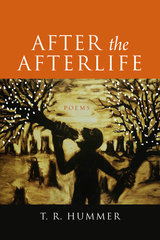
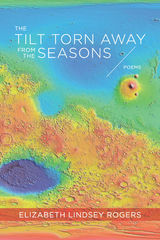
which is like trying to teach
The cat to waltz, so much awkwardness, so many tender
advances, and I’m shocked when it actually learns,
When it minces toward me in a tiny cocktail gown, offering a martini,
asking for this dance, insisting on hearing me refuse
To reply, debating all along, in the chorus of its interior mewing, who
are you really, peculiar animal, who taught you to call you you.
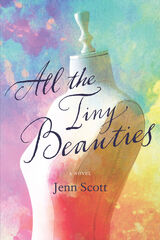
All the Tiny Beauties begins with a kitchen fire that sends the reclusive Webster Jackson to the home of his new neighbor, Colleen, who discovers him on her doorstep wearing a lacy peignoir, his house in flames. Unwilling to take responsibility for the lonely eccentric, Colleen reaches out to Webb’s estranged daughter, Debra. She also helps him find a live-in companion, a young adult reeling from the loss of her childhood friend.
Moving among perspectives and generations, we see the longings and vulnerabilities that drive and impede these characters as their stories intertwine—Webb’s first love clashing with his last; Colleen embarking on a secret affair with Debra; the older Webb and his young housemate, Hannah, forming a bond over tragedy, guilt, and his passion for baking.
Confronting the many ways they’ve failed others as well as themselves, Webb, Colleen, Hannah, and Debra slowly find ways forward and ways out. While exploring the fragile nature of our connections to one another, All the Tiny Beauties asks larger questions about the constraints society imposes that warp and wound, leading us to deny those things that make us wholly ourselves.
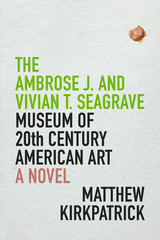
A strange museum, an even stranger curator, the deceased artist who haunts him, and the mystery surrounding the museum founders’ daughter, lost at sea as a child . . . The Ambrose J. and Vivian T. Seagrave Museum of 20th Century American Art is by turns a dark comedy, a ghost story, a romance, a whodunit, a family saga, and an exhibition catalog.
Through museum exhibit labels, as well as the interior musings of an elderly visitor wandering through its galleries, the novel’s numerous dramas gradually unfold. We learn of the powerful Seagrave family’s tragic loss of their daughter, the suspicious circumstances surrounding her disappearance during a violent storm, and of the motley conclave of artists (some accomplished, some atrocious) who frequented the Seagrave estate, producing eclectic bodies of work that betray the artists’ own obsessions, losses, and peculiarities. We learn about the curator’s rise to power, his love affair with a deeply troubled ghost—and when a first-time visitor to the museum discovers unexpected connections between the works on exhibit and her painful past, we are plunged into a meditation on the nature of perception, fabrication, memory, and time.
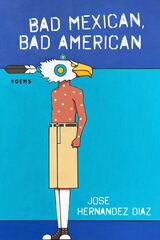
In Bad Mexican, Bad American, the minimalist, working-class aesthetic of a “disadvantaged Brown kid” takes wing in prose poems that recall and celebrate that form’s ties to Surrealism. With influences like Alberto Ríos and Ray Gonzalez on one hand, and James Tate and Charles Baudelaire on the other, the collection spectacularly combines “high” art and folk art in a way that collapses those distinctions, as in the poem “My Date with Frida Kahlo”: “Frida and I had Cuban coffee and then vegetarian tacos. We sipped on mescal and black tea. At the end of the night, following an awkward silence during a conversation on Cubism, we kissed for about thirty minutes beneath a protest mural by David Alfaro Siqueiros.”
Bad Mexican, Bad American demonstrates how having roots in more than one culture can be both unsettling and rich: van Gogh and Beethoven share the page with tattoos, graffiti, and rancheras; Quetzalcoatl shows up at Panda Express; a Mexican American child who has never had a Mexican American teacher may become that teacher; a parent’s “broken” English is beautiful and masterful. Blending reality with dream and humility with hope, Hernandez Diaz contributes a singing strand to the complex cultural weave that is twenty-first-century poetry.
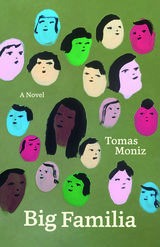
Upon the unexpected death of one of the bar’s regulars, Juan is sent reeling, and a series of upheavals follow as he both seeks and spurns intimacy, pondering the legacy of distant parents and a failed marriage and grappling with his sexuality—all the while cycling and dating, drinking at Nicks Lounge, and parenting a determined and defiant child-become-woman.
When his incarcerated father dies and Stella reveals she’s pregnant, Juan is forced to examine the emotional bonds that both hold and hinder him, to reassess his ideas of commitment, of friendship, of love. His encounters with various characters—his mother, his ex-wife, a middle-aged punker, an aspiring acupuncturist, a dapper veteran—lead Juan to the realization that he himself must change to thrive.
This is a story of making family and making mistakes, of rending and of mending. As a Latinx queer father with a mixed-race daughter, Juan exemplifies the ways identity connects and divides us. With wit, insight, and tenderness, Big Familia explores the complexities of desire, devotion, and the mysteries of the heart.
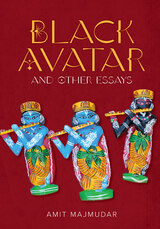
The eight pieces in this deeply engaging volume reflect author Amit Majmudar’s comprehensive studies of American, European, and Indian traditions, as well as his experiences in both suburban Ohio and the western Indian state of Gujarat. The volume begins with the title piece, a fifteen-part examination of “How Colorism Came to India.” Tracing the evolution of India’s bias in favor of light skin, Majmudar reflects on the effects of colonialism, drawing upon sources ranging from early Sanskrit texts to contemporary film and television.
Other essays illuminate subjects both timely and timeless. “The Ramayana and the Birth of Poetry” discusses how suffering is portrayed in art and literature (“The spectrum of suffering: slapstick on one end, scripture on the other, with fiction and poetry . . . in the vastness between them”), while in “Five Famous Asian War Photographs”—a 2018 Best American Essays selection—Majmudar analyzes why these iconic images of atrocity have such emotional resonance. In “Nature/Worship,” another multi-part piece, the author turns his attention to climate change, linking notions of environmentalism to his ancestral tradition of finding divinity within the natural world, connections that form the basis of religious belief.
Perhaps the greatest achievement of these wide-ranging essays is the prose itself—learned yet lively, erudite yet accessible—nimbly revealing the workings of a wonderfully original mind.
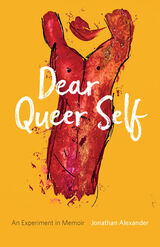
In this unconventional memoir, Jonathan Alexander addresses wry and affecting missives to a conflicted younger self. Focusing on three years—1989, 1993, and 1996—Dear Queer Self follows the author through the homophobic heights of the AIDS epidemic, the fall of the Berlin Wall, the election of Bill Clinton, and the steady advancements in gay rights that followed. With humor and wit afforded by hindsight, Alexander relives his closeted college years, his experiments with his sexuality in graduate school, his first marriage to a woman, and his budding career as a college professor.
As he moves from tortured self-denial to hard-won self-acceptance, the author confronts the deeply uncomfortable ways he is implicated in his own story. More than just a coming-out narrative, Dear Queer Self is both an intimate psychological exploration and a cultural examination—a meshing of inner and outer realities and a personal reckoning with how we sometimes torture the truth to make a life. It is also a love letter, an homage to a decade of rapid change, and a playlist of the sounds, sights, and feelings of a difficult, but ultimately transformative, time.
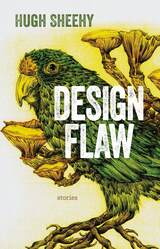
These are tales of seekers, often damaged, who find themselves caught up in skewed realities, facing lurking threats, violent deaths, strange entities, and alienating technologies. Confronted with unsettling, escalating, circumstances, the disparate cast of characters are driven toward self-revelation and perverse moments of poignancy.
A troubled high schooler traps a peer in an underground storage space. A traumatized felon returns home to rob the man who molested him as a child. A videogame help-line operator suspects a regular caller, obsessed with a disturbing role-playing game, of real-life misdeeds. In the title story, an unhappy couple adopts a “designer animal,” a genetic hybrid created to be the perfect pet. But the “grot” makes trouble in the neighborhood, becoming emblematic of a deeper problem. “Something is wrong with the world,” the narrator’s husband explains. “A design flaw. It’s so thoroughly corrupted, I’m not sure how to fix it.”
Inventive and unpredictable, these thirteen stories are wholly immersive, showing Sheehy at his captivating best.
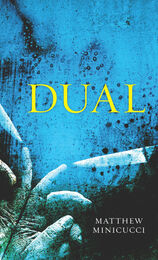
In his fourth poetry collection, Matthew Minicucci examines masculinity and gun violence as he brings to life the grammatical concept of the dual, a number that is neither singular nor plural. Though now lost in English, the concept is present in other languages both extant and ancient. The poems’ forms fittingly include the elegy, palinode, and contrapuntal, which is both a single poem and two poems intertwined. They align contemporary moments with key texts from Western literature, including ancient Greek epics, in a way that helps us reconsider the aggression of young men. “The world kills kind boys,” Minicucci writes, and “we bury the bodies inside men.”
Minicucci recategorizes our idea of “West,” the Western canon, and the Old West and its bullets, comparing them to modern-day landscapes in Utah, Oregon, Washington, California, and Hawai’i. Whether memorializing a woodworking grandfather or poets Brigit Pegeen Kelly and James Longenbach, Dual notes that loss has a double vision. While weighty in their subjects, Dual’s poems make room for unexpected moments of lightness, such as when the speaker compares the complications of love to “reading the Iliad and realizing, sure, there's anger, // but before that there’s just a lot of camping.”
The book argues, in the end, that there is an unalienable dual between the observer and the observed, the self and the self as confessed to another.
In his fourth poetry collection, Matthew Minicucci examines masculinity and gun violence as he brings to life the grammatical concept of the dual, a number that is neither singular nor plural. Though now lost in English, the concept is present in other languages both extant and ancient. The poems’ forms fittingly include the elegy, palinode, and contrapuntal, which is both a single poem and two poems intertwined. They align contemporary moments with key texts from Western literature, including ancient Greek epics, in a way that helps us reconsider the aggression of young men. “The world kills kind boys,” Minicucci writes, and “we bury the bodies inside men.”
Minicucci recategorizes our idea of “West,” the Western canon, and the Old West and its bullets, comparing them to modern-day landscapes in Utah, Oregon, Washington, California, and Hawai’i. Whether memorializing a woodworking grandfather or poets Brigit Pegeen Kelly and James Longenbach, Dual notes that loss has a double vision. While weighty in their subjects, Dual’s poems make room for unexpected moments of lightness, such as when the speaker compares the complications of love to “reading the Iliad and realizing, sure, there's anger, // but before that there’s just a lot of camping.”
The book argues, in the end, that there is an unalienable dual between the observer and the observed, the self and the self as confessed to another.
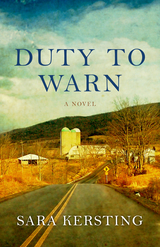
To aid him in the chase, Malden calls on his colleague, the awkward, remote, intimidatingly tall Sonja Nielsen. She reluctantly agrees to help, either because of or despite her previous entanglements with Malden.
Told from the perspectives of these three characters, the story swerves and jolts and switches back, much like Percy’s recollections of his upbringing. Kersting presents the interior struggles of her characters in a searingly spare style, all the while drawing the reader through an escalating series of events as Percy hitches rides and takes buses, searching the small towns of central Michigan, alternately helped and hindered by both old and new acquaintances.
While following disparate leads toward Percy’s final, surprising destination, all three conflicted souls are compelled to examine their loyalties, test their convictions, admit their frailties, and confront the ghosts lurking in their pasts, resulting in a revelatory climax.
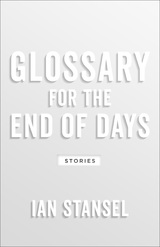
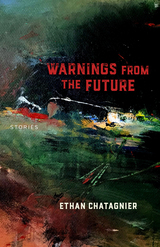
In Boulder, a man calls into a radio program with an altered tale of his brother’s murder—and faces the consequences when the story goes viral. In Tampa, a woman attends a convention of people believing themselves to be targets of clandestine government agencies. In Houston, a family with many secrets attempts to escape an oncoming tropical storm. In an East Coast college town, a professor has a charged run-in with a young woman from the radical right. And in Iowa, a cult suicide spurs the lone survivor to create a “glossary” in an effort to come to terms with his experience.
Simultaneously gritty and lyrical, grounded and visionary, Glossary for the End of Days gives us characters grappling with how to push on through dark days and dark times. This arresting, relevant collection tunes into and seeks to illuminate shared anxieties about the present—and future—of our world.
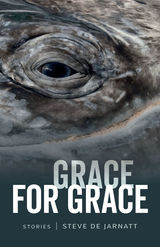
“Rubiaux Rising” (a Best American Short Stories selection) is a tale of triumph amid calamity during Hurricane Katrina, while “Her Great Blue” a surreal interspecies love story. “Mulligan” reveals the private pain of parents traveling across the country to give away their children, and “Wraiths in a Swelter” is both a ghost story and a confessional memoir—following a deliriously exhausted EMT through a deadly Chicago heat wave.
Many of the stories in Grace for Grace are set against the backdrop of natural or manmade catastrophes. These disasters test the characters’ limits as they confront sudden changes and extremes, discovering through their unexpected resourcefulness and endurance something beyond suffering. . . something that approaches the sublime.
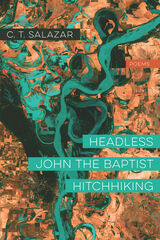
In C. T. Salazar’s striking debut poetry collection, the speaker is situated in the tradition of Southern literature but reimagines its terrain with an eye on the South’s historic and ongoing violence. His restless relationship with religion (“a child told me there was a god / and because he was smiling, I believed him”) eventually includes a reclamation of the language of belief in the name of desire. “I felt myself become gospel in your hands,” the speaker tells his beloved. And, as the title poem asserts, a headless body “leaves more room for salvation.”
Though Salazar’s South is not a tender place, the book is a petition for tenderness, revealing in both place and people the possibilities for mercy, vulnerability, and wonder. The lyric I, as it creates an archive of experience, is not distanced from the poems’ subjects or settings, but deeply enmeshed in a tangled world. In poems with lush diction, ranging from a sonnet crown to those that explore the full field of the page, Headless John the Baptist Hitchhiking seeks—and finds—where the divine resides: “Praise our hollow-bell bodies still ringing.”
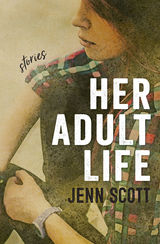
“The beauty of being young was, in fact, the ability to project all that might happen. She recognizes, suddenly, how less grandiose the projection of her plans has become. It’s like she was once standing looking an expanse of field, but now she’s trapped in a hallway hung with too many pastel prints of landscapes that refuse to interest her. It’s as if she’s moved her entire life inside a dental office, minus the gas that sings a person to sleep while their cavities are filled, their roots fixed.”
Assumed identities, Russian mail-order brides, pie theft, lost (and found) cleavers, coworkers who commit murder, the sudden ballooning of breasts, conversations with the (surprisingly opinionated) vegetables in a restaurant’s walk-in cooler: in stories sharply funny and deeply poignant, situations that delight and discomfit, Scott explores “the complicated, or simple, ways in which we settle.”
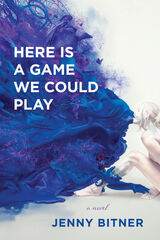
In each fantasy, her lover takes a different form, ranging from a prison guard in a world where metaphor is forbidden, to a more-than-brotherly Hansel from the Grimms’ fairy tale, to a tentacled mind-reading space alien. All share a desire for a deep intimacy that eludes Claudia, even as she forms new real-life relationships and reconsiders her sexual identity—building a rapport with an elderly volunteer at the library, striking up a friendship with a wily temp at her dead-end job, and embarking on a passionate affair with Rose, the town’s new librarian. When paranoia threatens to ruin her relationship with Rose, Claudia is forced not only to combat her anxiety but to face the unresolved trauma in her past—the disappearance of her father on a night she has long repressed.
Funny, dark, inventive, and moving, Here Is a Game We Could Play is an original debut novel recalling the work of Aimee Bender, Angela Carter, Rebecca Brown, and Margaret Atwood.
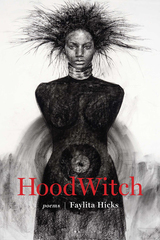
In this collection about resilience, Hicks speaks about placing her child for adoption, mourning the death of her fiancé, and embracing the nonbinary femme body—persevering in the face of medical malpractice, domestic abuse, and police violence. The poems find people transformed, “remade out of smoke & iron” into cyborgs and wolves, machines and witches—beings capable of seeking justice in a world that refuses them the option.
Exploring the intersections of Christianity, modern mysticism, and Afrofuturism in a sometimes urban, sometimes natural setting, Hicks finds a place where “everyone everywhere is hands in the air,” where “you know they gonna push & pull it together. / Just like they learned to.” It is a place of natural magick—where someone like Hicks can have more than one name: where they can be both dead and alive, both a mortal and a god.
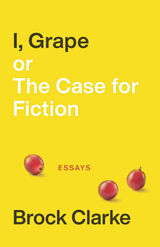
Clarke supports his case with passages by and about writers who have both influenced and irritated him. Pieces such as “What the Cold Can Teach Us,” “The Case for Meanness,” “Why Good Literature Makes Us Bad People,” and “The Novel is Dead; Long Live the Novel” celebrate the achievements of master practitioners such as Muriel Spark, Joy Williams, Donald Barthelme, Flannery O’Connor, Paul Beatty, George Saunders, John Cheever, and Colson Whitehead. Of particular interest to Clarke is the contentious divide between fiction and memoir, which he investigates using recent and relevant critical arguments, also tackling ancillary forms such as “fictional memoir” and the autobiographical novel.
Anecdotal and unabashed, rigorous and piercingly perceptive—not to mention flat-out funny—I, Grape; or The Case for Fiction is a love letter to and a passionate defense of the discipline to which its author has devoted his life and mind. It is also an attempt to eff the ineffable: “That is one of the basic tenets of this book: when we write fiction, surprising things sometimes happen, especially when fiction writers take advantage of their chosen form’s contrarian ability to surprise.”
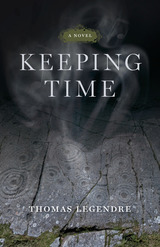
When archaeologist Aaron Keeler finds himself transported eighteen years backward in time, he becomes swept up in a strangely illicit liaison with his younger wife. A brilliant musician, Violet is captivated by the attentive, “weathered” version of her husband. The Aaron she recently married—an American expat—has become distant, absorbed by his excavation of a prehistoric site at Kilmartin Glen on Scotland’s west coast, where he will soon make the discovery that launches his career. As Aaron travels back and forth across the span of nearly two decades, with time passing in both worlds, he faces a threat to his revelatory dig, a crisis with the older Violet—mother of his two young children—and a sudden deterioration of his health. Meanwhile, Violet’s musical performances take on a resonance related to the secrets the two are uncovering in both time frames. With their children and Aaron’s lives at risk, he and Violet try to repair the damage before it’s too late.
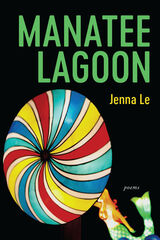
In Manatee Lagoon, sonnets, ghazals, pantoums, villanelles, and a “failed georgic” weave in contemporary subject matter, including social-media comment threads, Pap smears, eclipse glasses, and gun violence. A recurring motif throughout the collection, manatees become a symbol with meanings as wide-ranging as the book itself. Le aligns the genial but vulnerable sea cow with mermaids, neurologists, the month of November, harmful political speech, and even a family photo at the titular lagoon.
In these poems, Le also reflects on the experience of being the daughter of Vietnamese refugees in today’s sometimes tense and hostile America. The morning after the 2016 election, as three women of color wait for the bus, one says, “In this new world, we must protect each other.”
Manatee Lagoon is a treasury of voices, bringing together the personal and the persona, with poems dedicated to Kate Spade, John Ashbery, and Uruguayan poet Delmira Agustini. With this book, Le establishes herself as a talented transcriber of the human condition—and as one of the finest writers of formal verse today.
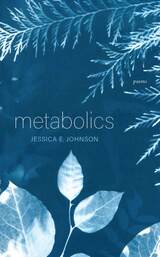
Metabolics, a book-length poem, borrows the movements of metabolic pathways to consider how nature accomplishes both balance and deep transformation. In visual figures and prose blocks that bridge the divide between poetry and nonfiction, Jessica E. Johnson employs scientific idioms to construct an allegory about a family in the Pacific Northwest. The region becomes a character in its own right, with cedars, moss, and heavy cloud knitting the mother, father, boy, and girl into their setting.
This far-reaching volume also serves as a study of the ecologies of contemporary parenting, with adults and children affected by “feeds” both on screen and off as their bodies metabolize food, the environment, and excess feelings such as rage. From climate change to kombucha to smartphones and curated produce, the smallest details of daily life in “Plasticland” catalyze a larger examination of selfhood: “Despite so many attempts to resolve this tension, sometimes you are you and also sometimes mother just as light can be both particle and wave.”
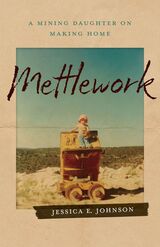
In the weeks after her first child is born, Jessica E. Johnson receives an email from her mother that contains artifacts of the author’s early childhood: scans of Polaroids and letters her mother wrote in mountain west mining camps and ghost towns—places without running water, companions, or help. Awash in love and restlessness, Johnson begins to see how the bedrock images of her isolated upbringing have stayed with her, even when she believed she was removing herself from their logic.
As she copes with the swirling pressures of parenting, teaching at an urban community college, and a partnership shaped by chronic illness, Johnson starts digging through her mother’s keepsakes and the histories of the places her family passed through, uncovering the linked misogyny and disconnection that characterized her childhood world—a world with uncomfortable echoes in the present and even in the act of writing itself. The resulting journey encompasses Johnson’s early memories, the story of the earth told in the language of geology, bits of vivid correspondence, a mothering manual from the early twentieth century, and the daily challenges of personal and collective care in a lonesome-crowded Pacific wonderland. Mettlework traces intergenerational failures of homemaking, traveling toward presence and relationship amid the remains of extractive industry and unsustainable notions of family.
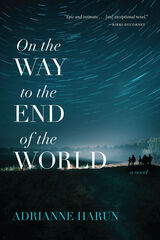
As the Cuban Missile Crisis eases, President Kennedy is casting around for a demonstration of American prowess when one of his Cabinet unearths an old mandate that US Marines be fit enough to walk fifty miles in twenty hours. Perfect! Kennedy decides to throw down the gauntlet to “today’s Marines,” but before he knows it, he’s sparked a wild fad. The entire country has answered the call, it seems, and for a few crazed winter weeks, masses of Americans will embark on their own arduous Big Walks—the “JFK 50-Milers.”
Yet in tiny Humtown—an isolated mill town in the Pacific Northwest—not everyone who shows up for a hastily organized Big Walk is motivated by patriotism. Not Helen Hubka, an inveterate gossip; not the suicidal Caroline, who months earlier lost her beloved husband during the Storm of the Century. Not ex-soldier/fisherman Jaspar Goode, nor the unknown man in their midst, a collared priest who seems to shift identities at will. Certainly not Avis, a battered teenager running from her terrifying brother . . . with a stolen town treasure. And when the walkers stumble upon the abandoned car of a missing young mother, they rekindle a mystery that soon reverberates among them, exposing hidden truths, talents, and alliances.
Splendidly imagined, with prose that sings on the page, On the Way to the End of the World is an adventure story riven with secrets, a national fairy tale twisted into a whodunit.
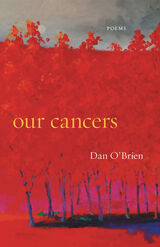
On the fourteenth anniversary of 9/11—an event that caused their downtown apartment to become “suffused with the World Trade Center’s carcinogenic dust”—Dan O’Brien’s wife discovers a lump in her breast. Surgery and chemotherapy soon follow, and on the day of his wife’s final infusion, O’Brien learns of his own diagnosis. He has colon cancer and will need to undergo his own intensive treatment over the next nine months.
Our Cancers is a compelling account of illness and commitment, of parenthood and partnership. This spare and powerful sequence creates an intimate mythology that seeks meaning in illness while also celebrating the resilience of sufferers, caregivers, and survivors.
As O’Brien explains in an introduction, “The consecutiveness of our personal disasters, with a daughter not yet two years old at the start of it, was shattering and nearly silencing. At hospital bedsides, in hospital beds myself, and at home through the cyclical assaults of our therapies, these poems came to me in fragments, as if my unconscious were attempting to reassemble our lives, our identities and memories . . . as if I were in some sense learning how to speak again.”
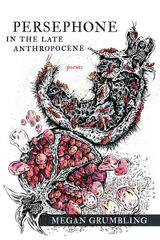
This ecopoetic collection interweaves the voices of Persephone, Demeter, and a human chorus with a range of texts, including speculative cryptostudies that shed light on the culture of the “Late Anthropocene.” These voices speak of decadence and blame, green crabs and neonicotinoids, mysteries and effigies. They reckon with extreme weather, industrialized plenty, and their own roles in ecological collapse.
Tonally, the poems of this book range between the sublime and the profane; formally, from lyric verse and modern magical-realist prose poems to New Farmer’s Almanac riddles and pop-anthropology texts. At the heart of this varied and inventive collection is story itself, as Demeter deconstructs “whodunits,” as the chorus grasps that mythmaking is an act of “throwing their voices,” and as their very language mirrors the downward spiral of destruction. Together, the collected pieces of Persephone in the Late Anthropocene form a narrative prism, exploring both environmental crisis and the question of how we tell it.
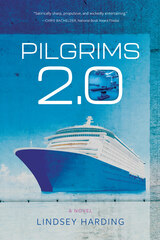
PILGRIM, Canterbury Cruise Line’s flagship, promises its passengers not just a luxurious fortnight away but the opportunity for reinvention. This extraordinary journey is made possible by the captain and visionary plastic surgeon Dr. Walter Heston, by the vessel’s self-learning artificial intelligence called BECCA, and an all-male crew of room stewards, deck hands, technicians, and cosmetic practitioners.
Pilgrims 2.0 begins on the eve of Cruise #52 and follows four women eager for transformation. Meet Bianca, the aging athlete determined to resume the competitive tennis career that motherhood sidelined. Meet Nicole, whose mommy makeover will mean she can stop hiding herself, and her debt, from her husband. Meet Lyla, an infertile maternity-ward nurse desperate to experience pregnancy, and Annalie, who wants only to stop seeing her dead twin every time she looks in the mirror. At the center of the story is Dr. Heston himself, driven to do with bodies what his late wife, Rebecca, could do with computer code—make the impossible, possible.
But “excursions” like these aren’t always smooth sailing—especially on this voyage, where the hopes, histories, and obsessions of clients and crew members collide. When a disruptive crewman’s pranks turn dangerous, it becomes clear that some of those who embarked won’t return to the Port of Los Angeles—at least not fully, at least not as themselves, and maybe not with their lives.
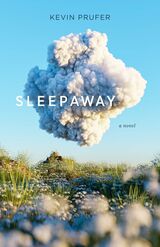
It’s 1984, and the invisible mists are falling, mists that cause people to slip into dreamless slumber—sleeps from which most, but not all, awaken. Those who do wake live in fear of the next mist, and the next, each a little longer and more dangerous than the last.
Alternating between the perspectives of a kleptomaniac waitress named Cora and her twelve-year-old friend Glass, Sleepaway depicts a small-town America turned alarming. This is a place where loved ones are lost to a state between life and death; where denial, delusion, and desperation take hold of those remaining; where dealers of the antisleep drug Eight Track disappear into shadows, and a murderous wannabe kingpin hunts for victims.
As civilization is shaved away one sleep storm at a time, people struggle to go on, making and losing allies and discovering new strengths and weaknesses. Cora sets out on an ill-fated road trip hoping to reclaim her sister’s love, only to discover a more powerful bond than blood. Glass, having lost his only parent to one of the first mists, searches for a stability he has never had and may never achieve. All the while, buildings rise outside town to cope with the mounting number of sleepers. Some see them as hospitals, others as repositories, and yet soon the air around them fills with ash.
An allegory for post-pandemic America, Sleepaway grapples with questions concerning friendship, race, and family amid the horror of inexplicable, arbitrary annihilation.
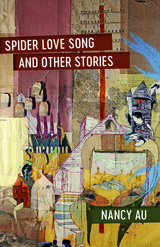
Au excels at inhabiting the minds and hearts of children and the elderly. In the title story, Sophie Chu dresses daily in her increasingly shabby elephant costume to ensure her missing parents recognize her upon their return. In “The Unfed,” a village elder seeks to revive, with her dimming magic, a mountain community struck by tragedy. “Louise” follows, with deceptive hilarity (involving a one-eyed duck), the nuanced give and take between May Zhou and Lai, dissimilar yet passionate partners considering parenthood. The volume also offers sparkling speculative work that taps into the strength of nature—fox spirits and fire beetles, swollen rivers and rippling clouds—to showcase the sometimes surreal transformations of Au’s protagonists.
Spider Love Song and Other Stories treads the fault line that forms between lovers, families, friends, cultures—exposing injuries and vulnerabilities, but also the strength and courage necessary to recast resentment and anger into wonder and power. Au’s lyrical style, humor, and tender attention to her characters’ fancies and failings make this powerful debut a delight to read.
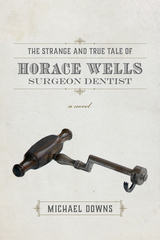
But that discovery would also thrust Wells into scandals that threatened his reputation, his family, and his sanity—hardships and triumphs that resonate in today’s struggles with what hurts us and what we take to stop the hurt.
In this novel, Michael Downs mines the gaps in the historical record and imagines the motivations and mysteries behind Wells’s morbid fascination with pain, as well as the price he and his wife, Elizabeth, paid—first through his obsession, then his addiction.
The book is a love story, but also a story of what love can’t redeem; of narcotic dreams and waking insanity; of humbug and miracle; of pain’s destruction and what pains can never be eased. Following Wells throughout New England and across the ocean to Paris, the novel immerses the reader in the nineteenth century, conveying through rich physical description and telling dialogue the tragic life of a dentist who gave everything to rid the world of suffering.
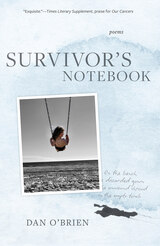
Dan O’Brien’s powerful companion to Our Cancers catalogs the recovery of a cancer survivor, whose wife has recently survived her own cancer, as he returns to his daily life while raising a young daughter. This prose-poem sequence is a true survivor’s notebook, using photos and the tools of memoir to evoke how disaster can constellate our past, present, and future.
In his poems, plays, and nonfiction, Dan O’Brien has explored, as he says in a 2023 interview, “how trauma shatters identity, and in its aftermath we reconfigure and rewrite, as it were, the story of who we were and are and maybe will be.” In highly personal poems reminiscent of dramatic monologues, as well as shorter lyric fragments, the protagonist reconsiders the people and places he knew before his illness, including his estranged family and others with cancer. While looking back he moves forward again, resuming his career as a writer and teacher, revisiting Ireland, and making a kind of pilgrimage to the Holy Land. There is a confiding and at times comical tone in these poems as O’Brien awakens to the delights, absurdities, and wonders of existence, and as he and his wife work through the aftershocks of their trauma toward a deeper love.
With text and image, Survivor’s Notebook shows how we go on, with resilience, gratitude, and joy, when “the emergency’s elsewhere” now.
In his poems, plays, and nonfiction, Dan O’Brien has explored, as he says in a 2023 interview, “how trauma shatters identity, and in its aftermath we reconfigure and rewrite, as it were, the story of who we were and are and maybe will be.” In highly personal poems reminiscent of dramatic monologues, as well as shorter lyric fragments, the protagonist reconsiders the people and places he knew before his illness, including his estranged family and others with cancer. While looking back he moves forward again, revisiting Ireland, resuming his career as a writer and teacher, and making a kind of pilgrimage to the Holy Land. There is a confiding and at times comical tone in these poems, as he awakens to the delights, absurdities, and wonders of existence, and as he and his wife work through the aftershocks of their trauma toward a deeper love.
Survivor’s Notebook shows how we go on, with resilience, gratitude, and joy, when “the emergency’s elsewhere” now.
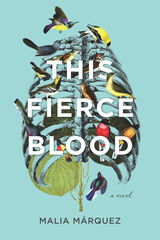
In rural late-nineteenth-century New England, Wilhelmina Sylte is a settler starting a family with her Norwegian immigrant husband. When she forms an inexplicable connection with a mountain lion and her cubs living near their farm, Mina grapples with divided loyalties and the mysterious bond she shares with the animals.
In 1927 in southern Colorado, Josepa is accused of witchcraft by a local priest for using the healing practices passed down from her Native mother. Fighting for her family’s reputation and way of life, Sepa finds strength in worldly and otherworldly sources.
When Magdalena, an ecologist, inherits her great-grandmother Wilhelmina’s Vermont property, she and her astrophysicist husband decide to turn the old farm into a summer science camp for teens. As Magda struggles with both personal and professional responsibilities, the boundary between science and myth begins to blur.
Rich in historical and cultural detail, This Fierce Blood combines magical realism with themes of maternal ancestral inheritance, and also explores the ways Hispano/Indigenous traditions both conflicted and wove together, shaping the distinctive character of the American Southwest. Readers of Téa Obreht and Ruth Ozeki will find much to admire in this debut novel.
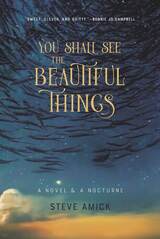
In the fishing village of Scheveningen in 1889, three men build and secretly launch an unorthodox fishing vessel, departing from the long tradition of netting herring using massive boats and large crews. Collaborating in this venture are Wyn van Winkel, a cavalier joker and opium addict currently AWOL from the Aceh War in Sumatra; Ned Nodder, a seasoned fisherman trying to support his family while plagued by narcolepsy and prophetic dreams; and Luuk Blenkin, a scattered young troubadour failing at love and searching for his place in the world.
As formally innovative as the “picarooner” this mismatched trio construct, the narrative lifts off into the fantastical, flitting between reality and irreality. Sparked by lines of the “Dutch lullaby,” the inexplicable adventure unfolds—and along the way, we learn of Wyn’s romantic recklessness, his broken relationship with his father, and the tragedies of war that scarred and changed him. We witness Ned’s unconventional path toward matrimony, as well as the painful loss that made his marriage a true union. We follow Luuk’s fumblings for purpose and fulfillment beyond the disgrace that befell his family and marred both his outlook and his prospects.
In the spirit of a nocturne, Steve Amick envelops his characters in the world of night and dreams. Lyrical, historical, surprising, magical, heartwarming, and heartbreaking, You Shall See the Beautiful Things will make readers look at the stars—and herring—in a new light.
READERS
Browse our collection.
PUBLISHERS
See BiblioVault's publisher services.
STUDENT SERVICES
Files for college accessibility offices.
RECENTLY PUBLISHED



UChicago Accessibility Resources
home | accessibility | search | about | contact us
BiblioVault ® 2001 - 2024
The University of Chicago Press