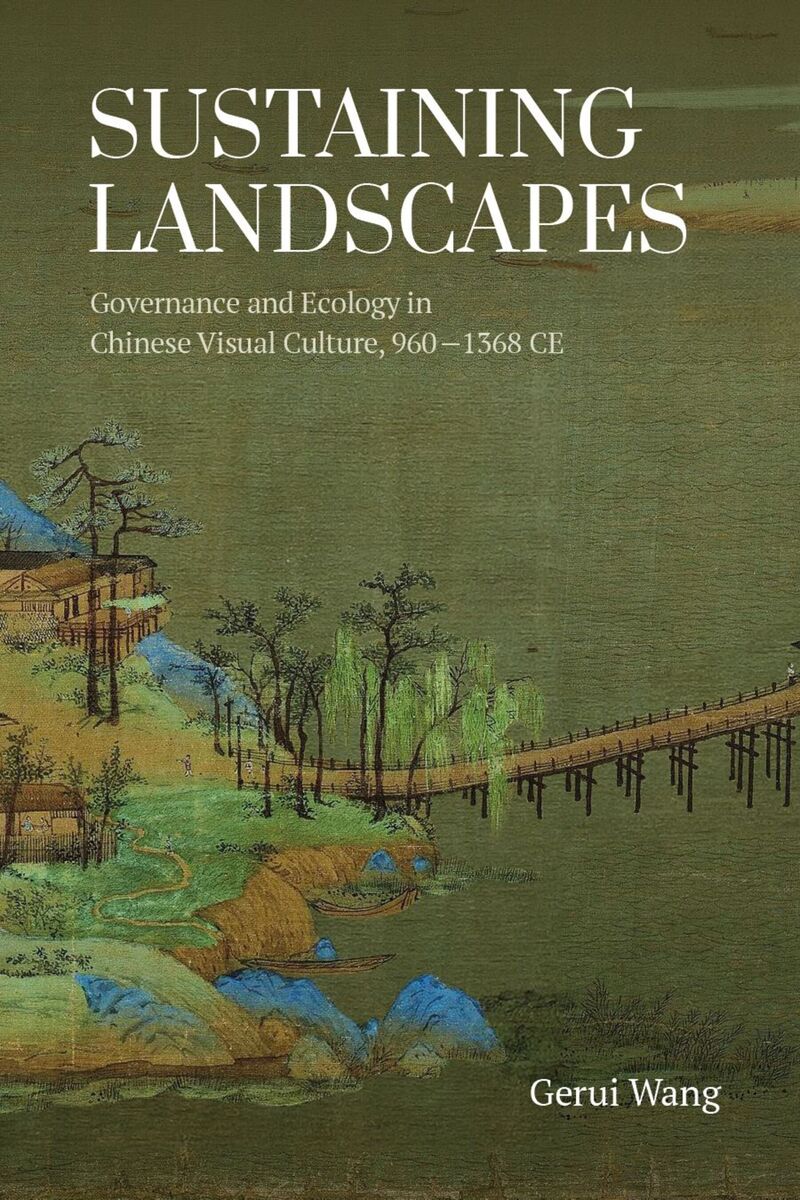
Sustaining Landscapes: Governance and Ecology in Chinese Visual Culture, 960–1368 CE
Hong Kong University Press, 2025
Cloth: 978-988-8876-93-8
See other books on: Asian | Chinese Visual Culture | Ecology | Governance | Human Geography
See other titles from Hong Kong University Press
Cloth: 978-988-8876-93-8
ABOUT THIS BOOK | AUTHOR BIOGRAPHY | REVIEWS
ABOUT THIS BOOK
Before climate policy, there was landscape painting—how visual culture illustrated ecological concerns in imperial China.
Sustaining Landscapes: Governance and Ecology in Chinese Visual Culture, 960–1368 CE examines ecological thought contested amid the rise of the Chinese landscape genre, tracing its intersections with infrastructure governance, natural resource management, and geospatial knowledge. It traces the pre-industrial notion of “sustainability” in policy debates, legal regulations, and arts. Landscape imagery on paintings, maps, as well as mass-produced artifacts such as fans and ceramic pillows documented both appropriate and exploitative use of natural resources, and critiqued on social inequity and political turmoil. This book breaks new ground by bringing together research on visual and material culture with analysis of politics and ecology. Wang argues that the Chinese landscape genre embodied a holistic approach to negotiating debates on human-nature interdependence and people-state relationships. It joins the increasing literature on ecocriticism and offers alternative perspectives to address contemporary challenges, ranging from environmental crisis to global governance.
Sustaining Landscapes: Governance and Ecology in Chinese Visual Culture, 960–1368 CE examines ecological thought contested amid the rise of the Chinese landscape genre, tracing its intersections with infrastructure governance, natural resource management, and geospatial knowledge. It traces the pre-industrial notion of “sustainability” in policy debates, legal regulations, and arts. Landscape imagery on paintings, maps, as well as mass-produced artifacts such as fans and ceramic pillows documented both appropriate and exploitative use of natural resources, and critiqued on social inequity and political turmoil. This book breaks new ground by bringing together research on visual and material culture with analysis of politics and ecology. Wang argues that the Chinese landscape genre embodied a holistic approach to negotiating debates on human-nature interdependence and people-state relationships. It joins the increasing literature on ecocriticism and offers alternative perspectives to address contemporary challenges, ranging from environmental crisis to global governance.
See other books on: Asian | Chinese Visual Culture | Ecology | Governance | Human Geography
See other titles from Hong Kong University Press