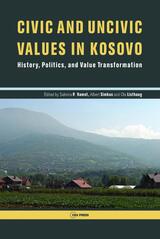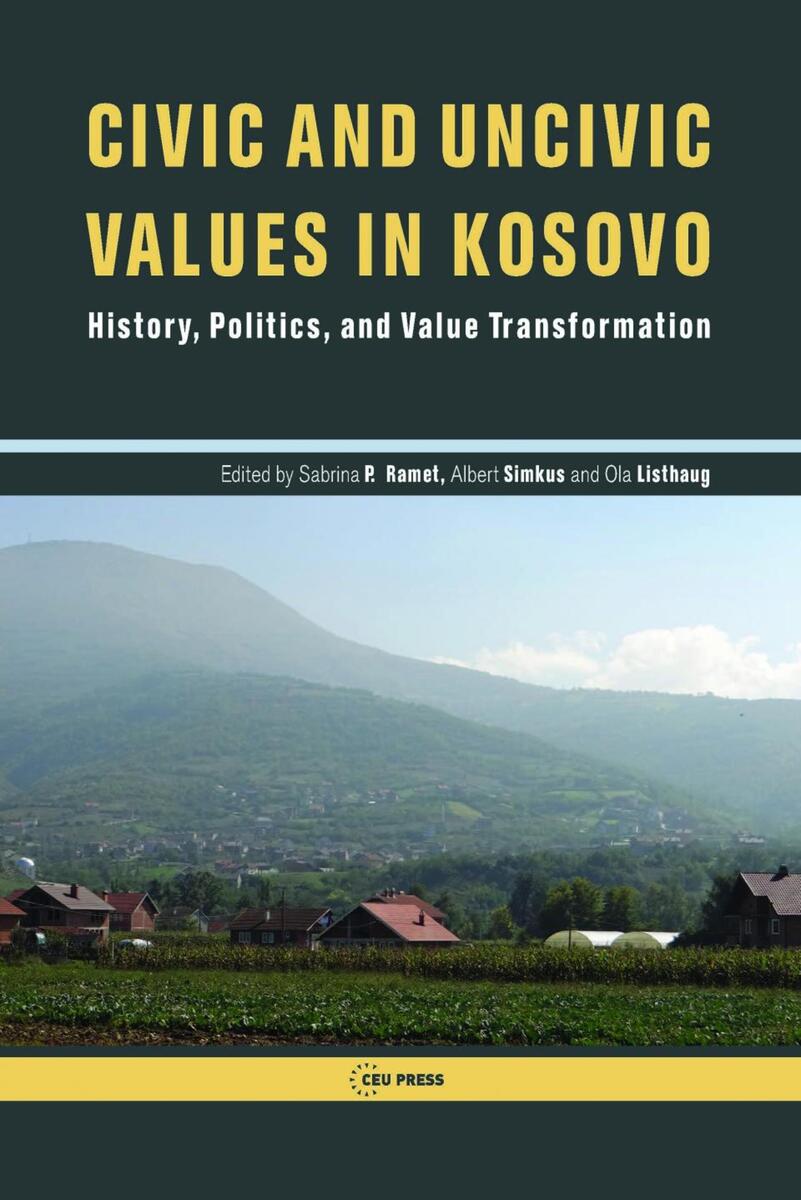
Civic and Uncivic Values in Kosovo: History, Politics, and Value Transformation
Central European University Press, 2015
Cloth: 978-963-386-073-1 | Paper: 978-963-386-098-4 | eISBN: 978-963-386-074-8 (PDF)
Library of Congress Classification HN634.K6C58 2015
Dewey Decimal Classification 303.372094971
Cloth: 978-963-386-073-1 | Paper: 978-963-386-098-4 | eISBN: 978-963-386-074-8 (PDF)
Library of Congress Classification HN634.K6C58 2015
Dewey Decimal Classification 303.372094971
ABOUT THIS BOOK | AUTHOR BIOGRAPHY | REVIEWS | TOC
ABOUT THIS BOOK
This volume is driven by the conviction that the key to the establishment of stable liberal democracy anywhere in the world and, in this case, in Kosovo lies in the completion of three interrelated tasks: first, the creation of effective political institutions, based on the principle of the separation of powers (including the independence of the judiciary); second, the promotion of the rule of law; and, third, the promotion of civic values, including tolerance or ethnic/religious/sexual minorities, trust, and respect for the harm principle. In fact, there are problems across all three measures, including with judicial independence, with the rule of law, and with civic values. On the last of these, research findings show that the citizens of Kosovo rank extremely low on trust of other citizens, low on engagement in social organizations, and tolerance of gays, lesbians, and atheists, but high on trust in the political institutions of their country and in pride of their newly independent state.
See other books on: Civic | Civics & Citizenship | Kosovo (Republic) | Liberalism | Social values
See other titles from Central European University Press