Cloth: 978-1-9788-4165-9 | Paper: 978-1-9788-4164-2 | eISBN: 978-1-9788-4166-6 (ePub) | eISBN: 978-1-9788-4167-3 (PDF)
Library of Congress Classification P96.L342G43 2025
Dewey Decimal Classification 302.2309667
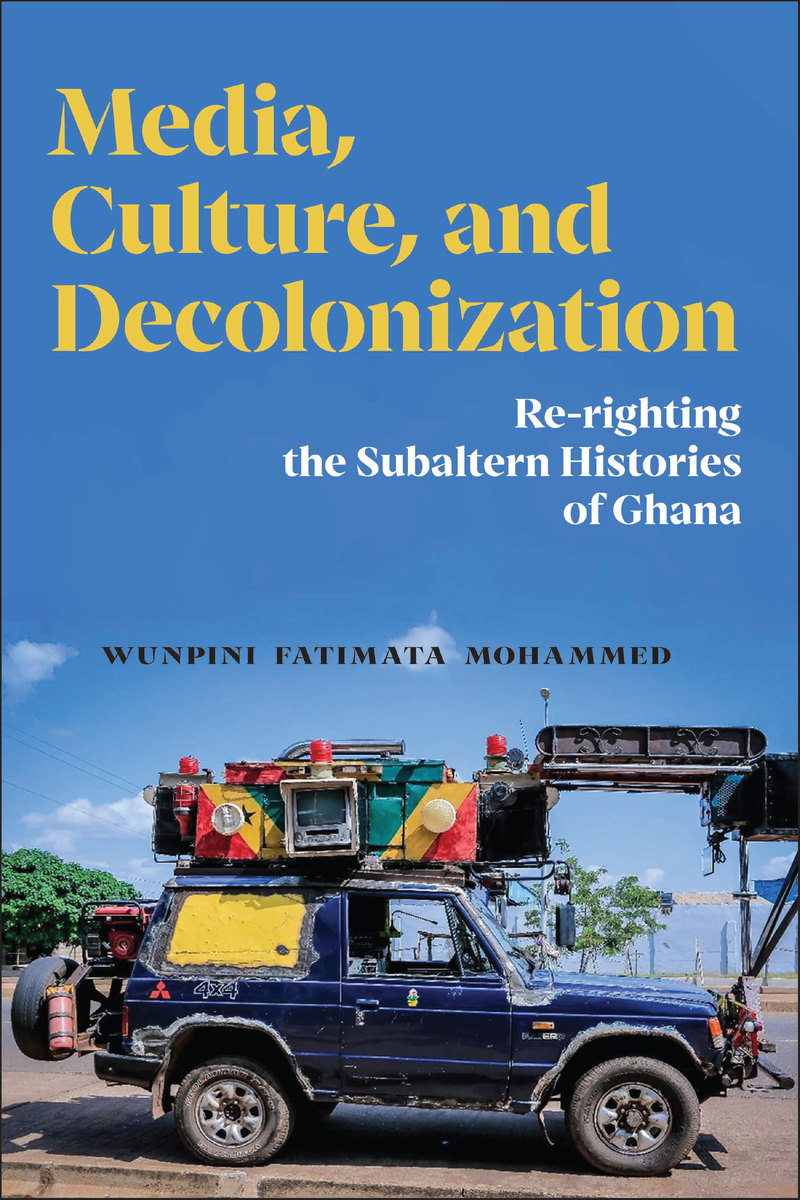
Media, Culture, and Decolonization: Re-righting the Subaltern Histories of Ghana invites us to look at media and culture from a decolonial perspective. Through Dagbaŋ epistemologies and knowledge systems, this book examines media by highlighting how African languages, cultures, and traditions can shift how we think of knowledge. It is an offering to anyone curious about the relationship between culture, language, and media. By focusing on African language media in Ghana such as film, television, and radio, the book emphasizes the importance of espousing a decolonial politic and praxis in the process of co-creating knowledge with Indigenous communities. It connects the struggles of global majority countries and demonstrates the ways in which (neo)colonialism and imperialism impede the work toward liberatory futures. This book demonstrates the potential that African language media hold as tools of cultural and epistemological decolonization.
See other books on: African Studies | Decolonization | Languages | Mass media and culture | Media
See other titles from Rutgers University Press