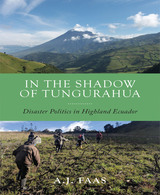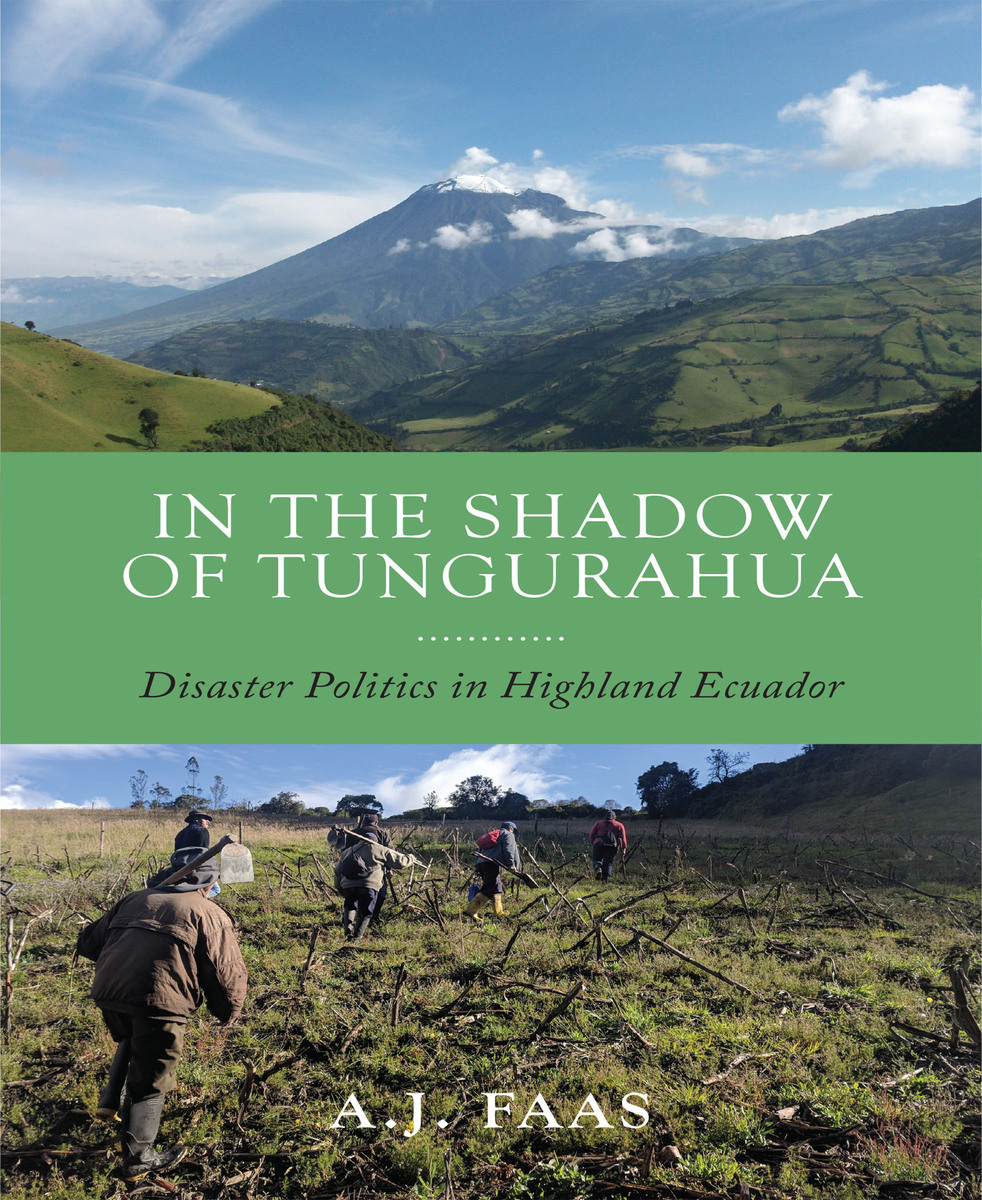
In the Shadow of Tungurahua: Disaster Politics in Highland Ecuador
Rutgers University Press, 2023
eISBN: 978-1-9788-3160-5 | Paper: 978-1-9788-3156-8 | Cloth: 978-1-9788-3157-5
Library of Congress Classification HV551.5.E2F33 2023
Dewey Decimal Classification 363.340986617
eISBN: 978-1-9788-3160-5 | Paper: 978-1-9788-3156-8 | Cloth: 978-1-9788-3157-5
Library of Congress Classification HV551.5.E2F33 2023
Dewey Decimal Classification 363.340986617
ABOUT THIS BOOK | AUTHOR BIOGRAPHY | REVIEWS | TOC
ABOUT THIS BOOK
In the Shadow of Tungurahua relates the stories of the people of Penipe, Ecuador living in and between several villages around the volcano Tungurahua and two resettlement communities built for people displaced by government operations following volcanic eruptions in 1999 and 2006. The stories take shape in ways that influence prevailing ideas about how disasters are produced and reproduced, in this case by shifting assemblages of the state first formed during Spanish colonialism attempting to settle (make “legible”) and govern Indigenous and campesino populations and places. The disasters unfolding around Tungurahua at the turn of the 21st century also provide lessons in the humanitarian politics of disaster—questions of deservingness, reproducing inequality, and the reproduction of bare life. But this is also a story of how people responded to confront hardships and craft new futures, about forms of cooperation to cope with and adapt to disaster, and the potential for locally derived disaster recovery projects and politics.
See other books on: Disasters & Disaster Relief | Ecuador | Human beings | Indigenous Studies | Shadow
See other titles from Rutgers University Press