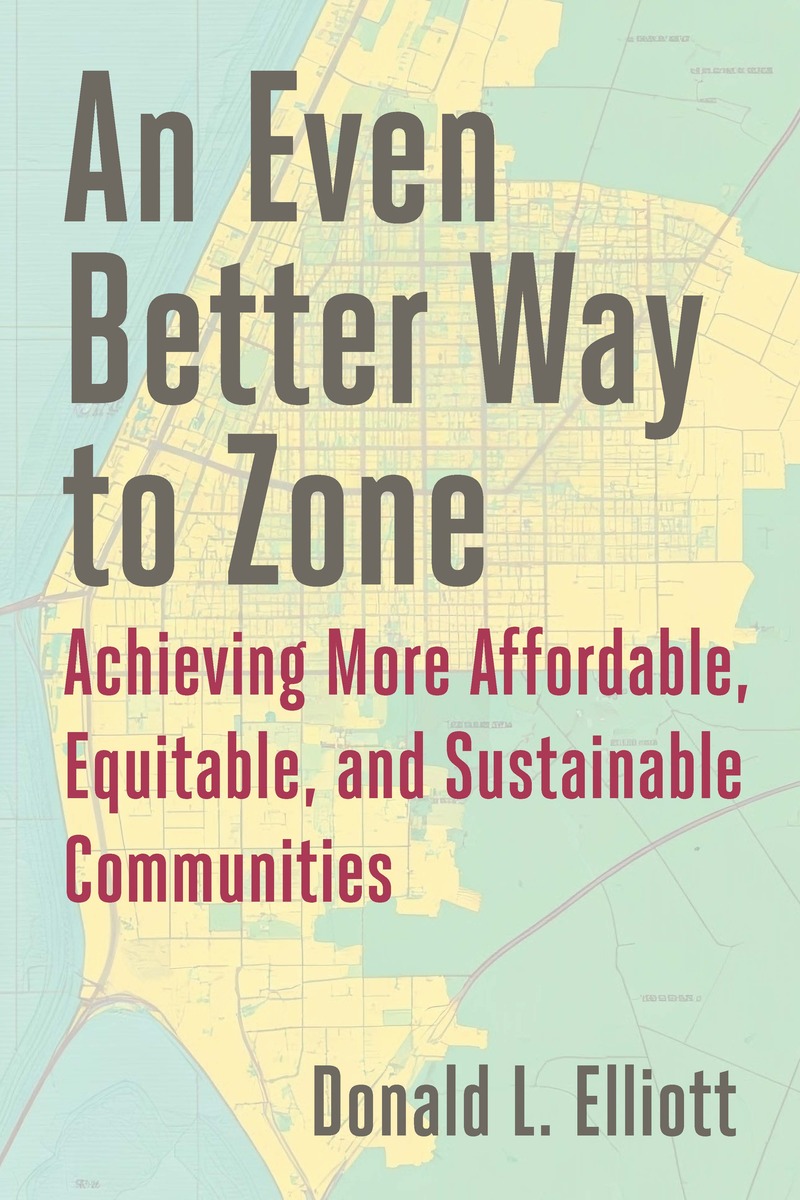
An Even Better Way to Zone: Achieving More Affordable, Equitable, and Sustainable Communities
Island Press, 2025
Paper: 978-1-64283-434-5 | eISBN: 978-1-64283-435-2 (all)
See other books on: Elliott, Donald L. | Equitable | Sustainability & Green Design | Sustainable Communities | Zone
See other titles from Island Press
Paper: 978-1-64283-434-5 | eISBN: 978-1-64283-435-2 (all)
ABOUT THIS BOOK | AUTHOR BIOGRAPHY | TOC | REQUEST ACCESSIBLE FILE
ABOUT THIS BOOK
Zoning is the tool that everyone loves to hate. It may also be the most important and least understood process affecting how US communities shape the lives of their residents. While almost every community comprehensive plan calls for more affordable, equitable, and sustainable development, zoning is often blamed for preventing that from happening. As US communities face an unprecedented housing affordability crisis, a long history of excluding the poor and disadvantaged from key opportunities, and a continuing climate disaster, zoning needs to change – a lot.
In An Even Better Way to Zone, planning expert Donald L. Elliott explains how outdated assumptions about development and unnecessary barriers in our current zoning regulations have contributed to development patterns that are not sustainable, affordable, or equitable to historically disadvantaged populations. It identifies what types of changes to zoning rules, procedures, and maps could improve outcomes in each of those areas. Importantly, it also helps the reader think through what to do when zoning changes that would improve outcomes for one of those challenges would undermine success in the others.
An Even Better Way to Zone also reorients the zoning discussion towards redevelopment and reuse rather than implicitly focusing on raw land development, because already developed areas represent the vast majority of the built environment where meaningful changes will need to be made. Instead of giving lip service to the importance of infill and reuse, zoning needs to actively remove the barriers that prevent innovative, equitable, and sustainable redevelopment.
With engaging, easy-to-understand prose, Elliott briefly explains the challenges of today’s zoning and then breaks down how this key legal tool can be used to reinvent our communities as places where housing is more affordable, everyone is treated fairly, and we do far less damage to the environment. From fixing zoning rules and incentives to fixing the procedures used to draft, implement, and change zoning, Elliott provides practical, sage advice on adapting zoning to address today’s most critical issues.
In An Even Better Way to Zone, planning expert Donald L. Elliott explains how outdated assumptions about development and unnecessary barriers in our current zoning regulations have contributed to development patterns that are not sustainable, affordable, or equitable to historically disadvantaged populations. It identifies what types of changes to zoning rules, procedures, and maps could improve outcomes in each of those areas. Importantly, it also helps the reader think through what to do when zoning changes that would improve outcomes for one of those challenges would undermine success in the others.
An Even Better Way to Zone also reorients the zoning discussion towards redevelopment and reuse rather than implicitly focusing on raw land development, because already developed areas represent the vast majority of the built environment where meaningful changes will need to be made. Instead of giving lip service to the importance of infill and reuse, zoning needs to actively remove the barriers that prevent innovative, equitable, and sustainable redevelopment.
With engaging, easy-to-understand prose, Elliott briefly explains the challenges of today’s zoning and then breaks down how this key legal tool can be used to reinvent our communities as places where housing is more affordable, everyone is treated fairly, and we do far less damage to the environment. From fixing zoning rules and incentives to fixing the procedures used to draft, implement, and change zoning, Elliott provides practical, sage advice on adapting zoning to address today’s most critical issues.
See other books on: Elliott, Donald L. | Equitable | Sustainability & Green Design | Sustainable Communities | Zone
See other titles from Island Press