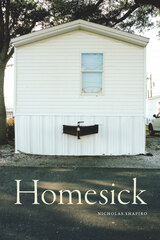
Homesick
Duke University Press, 2025
Cloth: 978-1-4780-2907-6 | Paper: 978-1-4780-3244-1 | eISBN: 978-1-4780-9435-7 (OA) | eISBN: 978-1-4780-6129-8 (standard)
Library of Congress Classification HV555.U62G854 2025
See other books on: Biopolitics | Gulf Coast (U.S.) | Health aspects | Housing and health | Toxicology
See other titles from Duke University Press
Cloth: 978-1-4780-2907-6 | Paper: 978-1-4780-3244-1 | eISBN: 978-1-4780-9435-7 (OA) | eISBN: 978-1-4780-6129-8 (standard)
Library of Congress Classification HV555.U62G854 2025
ABOUT THIS BOOK | AUTHOR BIOGRAPHY | REVIEWS | TOC | REQUEST ACCESSIBLE FILE
ABOUT THIS BOOK
Following Hurricane Katrina, the Federal Emergency Management Agency (FEMA) distributed over 120,000 trailers for emergency housing. Produced from engineered wood containing toxic amounts of formaldehyde, these shelters were vectors of illness and death. Although they were subsequently banned, FEMA trailers were resold and again used for housing, scattering their harm to other people and areas. In Homesick, Nicholas Shapiro draws on almost fifteen years working with impacted community members to trace how the story of toxic emergency housing units expands into a story of how all of our shelters became a seat of exposure and how we can collectively struggle for cleaner indoor air. Throughout, Shapiro questions the efficacy of the fundamental tools used to cultivate accountability, repair, and change, arguing for their reimagining. Detailing health effects as well as community and individual efforts to achieve better life, health, and justice, Shapiro highlights how homesickness for an otherwise future can herald meaningful change.
See other books on: Biopolitics | Gulf Coast (U.S.) | Health aspects | Housing and health | Toxicology
See other titles from Duke University Press