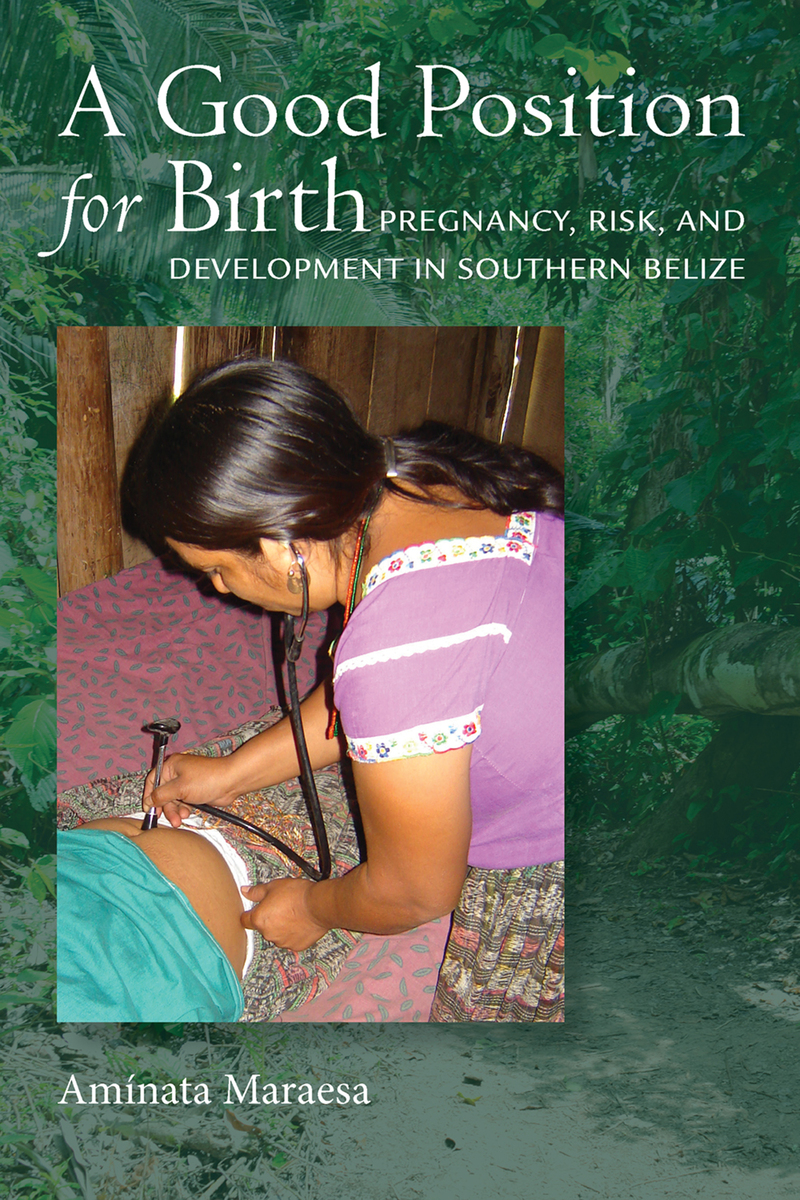
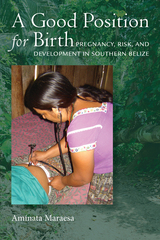
"Maraesa's vivid account of reproductive care practices in the southern region of Belize is a page turner. In what some might characterize as a sleepy and remote Caribbean outpost, removed from the Belizean government and NGOs' numerical goals for improving infant and maternal mortality, pregnant women and their families actively engage a wealth of ideas, practices, and beliefs for navigating pregnancy and childbirth, as well as the social norms governing acceptable and unacceptable uses of sexuality, spiritual practice, biomedical knowledge, and norms of behavior.
With Maraesa as our conflicted, astute, compassionate, and sometimes barefoot guide, we find a path in the forest created by the jumble of underfunded and poorly implemented public health mandates and complicated social relations, and may wind up questioning what we thought we knew about the promotion of maternal and infant health in marginalized communities."
—Alyshia Gálvez, author of Patient Citizens, Immigrant Mothers: Mexican Women, Public Prenatal Care, and the Birth Weight Paradox— -
"Dr. Maraesa presents a highly readable and insightful analysis of the cultural and biomedical factors that interact in women's decisions concerning childbirth in the Toledo district of Belize, a place composed of multiethnic communities that are largely rural and poor. Through vivid case studies she demonstrates how cultural factors such as the private nature of pregnancy and childbirth, shame, fear, belief in spirit-matter, the humors, and practices of "'nointing" and massage, as well as practical factors such as affordability, transportation, and accessibility, influence decisions of pregnant women and their caregivers concerning whether to give birth at home with family members, a traditional birth attendant, or other local healer, at a health center, or at a hospital."
—Sheila Cosminsky, Professor Emerita, Department of Sociology, Anthropology, and Criminal Justice, Rutgers University, Camden— -
"Maraesa provides a fascinating view of the way that local understanding of birth, pregnancy, and birth attendance intertwine with notions of risk and shame among multiple ethnic groups in Belize. She illustrates shame's powerful ability to shape people's perceptions of their reproductive reality. The book is beautifully written, engaging, articulate, and warm."
—Vania Smith-Oka, author of Shaping the Motherhood of Indigenous Mexico— -
"Maraesa's vivid account of reproductive care practices in the southern region of Belize is a page turner. In what some might characterize as a sleepy and remote Caribbean outpost, removed from the Belizean government and NGOs' numerical goals for improving infant and maternal mortality, pregnant women and their families actively engage a wealth of ideas, practices, and beliefs for navigating pregnancy and childbirth, as well as the social norms governing acceptable and unacceptable uses of sexuality, spiritual practice, biomedical knowledge, and norms of behavior.
With Maraesa as our conflicted, astute, compassionate, and sometimes barefoot guide, we find a path in the forest created by the jumble of underfunded and poorly implemented public health mandates and complicated social relations, and may wind up questioning what we thought we knew about the promotion of maternal and infant health in marginalized communities."
—Alyshia Gálvez, author of Patient Citizens, Immigrant Mothers: Mexican Women, Public Prenatal Care, and the Birth Weight Paradox— -
"Dr. Maraesa presents a highly readable and insightful analysis of the cultural and biomedical factors that interact in women's decisions concerning childbirth in the Toledo district of Belize, a place composed of multiethnic communities that are largely rural and poor. Through vivid case studies she demonstrates how cultural factors such as the private nature of pregnancy and childbirth, shame, fear, belief in spirit-matter, the humors, and practices of "'nointing" and massage, as well as practical factors such as affordability, transportation, and accessibility, influence decisions of pregnant women and their caregivers concerning whether to give birth at home with family members, a traditional birth attendant, or other local healer, at a health center, or at a hospital."
—Sheila Cosminsky, Professor Emerita, Department of Sociology, Anthropology, and Criminal Justice, Rutgers University, Camden— -
"Maraesa provides a fascinating view of the way that local understanding of birth, pregnancy, and birth attendance intertwine with notions of risk and shame among multiple ethnic groups in Belize. She illustrates shame's powerful ability to shape people's perceptions of their reproductive reality. The book is beautifully written, engaging, articulate, and warm."
—Vania Smith-Oka, author of Shaping the Motherhood of Indigenous Mexico— -