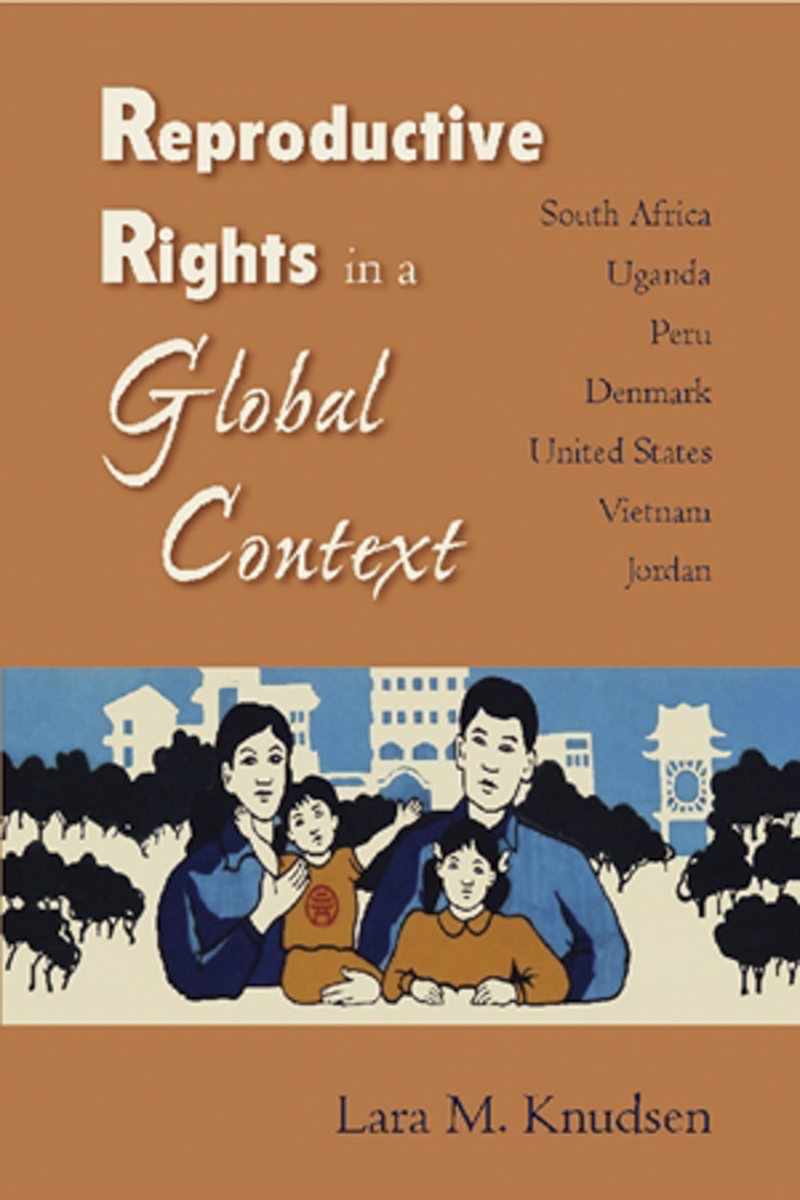
Reproductive Rights in a Global Context: South Africa, Uganda, Peru, Denmark, United States, Vietnam, Jordan
Vanderbilt University Press, 2006
Cloth: 978-0-8265-1527-8 | Paper: 978-0-8265-1528-5 | eISBN: 978-0-8265-9214-9 (PDF)
Library of Congress Classification HQ766.K65 2006
Dewey Decimal Classification 363.96
Cloth: 978-0-8265-1527-8 | Paper: 978-0-8265-1528-5 | eISBN: 978-0-8265-9214-9 (PDF)
Library of Congress Classification HQ766.K65 2006
Dewey Decimal Classification 363.96
ABOUT THIS BOOK | AUTHOR BIOGRAPHY | REVIEWS | TOC
ABOUT THIS BOOK
A Choice Outstanding Academic Book of 2006
Traveling alone when she was between 17 and 22, with no institutional affiliation and no financial assistance, the author visited five developing countries and two developed ones on five continents. Her goal was to extend her own experience in an abortion clinic in Portland, Oregon. Lara Knudsen interviewed over 90 women's rights activists, health professionals, NGO workers, and government officials, gaining a sense of both official policies and the actual delivery of services in local clinics. The book places the experiences of women within the global context of how international population control agendas have influenced women's reproductive rights in the past, and how the changing international discourse on reproductive health continues to influence those rights today.
Traveling alone when she was between 17 and 22, with no institutional affiliation and no financial assistance, the author visited five developing countries and two developed ones on five continents. Her goal was to extend her own experience in an abortion clinic in Portland, Oregon. Lara Knudsen interviewed over 90 women's rights activists, health professionals, NGO workers, and government officials, gaining a sense of both official policies and the actual delivery of services in local clinics. The book places the experiences of women within the global context of how international population control agendas have influenced women's reproductive rights in the past, and how the changing international discourse on reproductive health continues to influence those rights today.
See other books on: Cross-cultural studies | Global Context | Health Policy | Reproductive rights | Women's Health
See other titles from Vanderbilt University Press