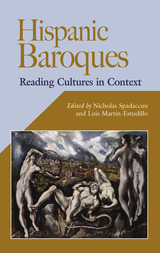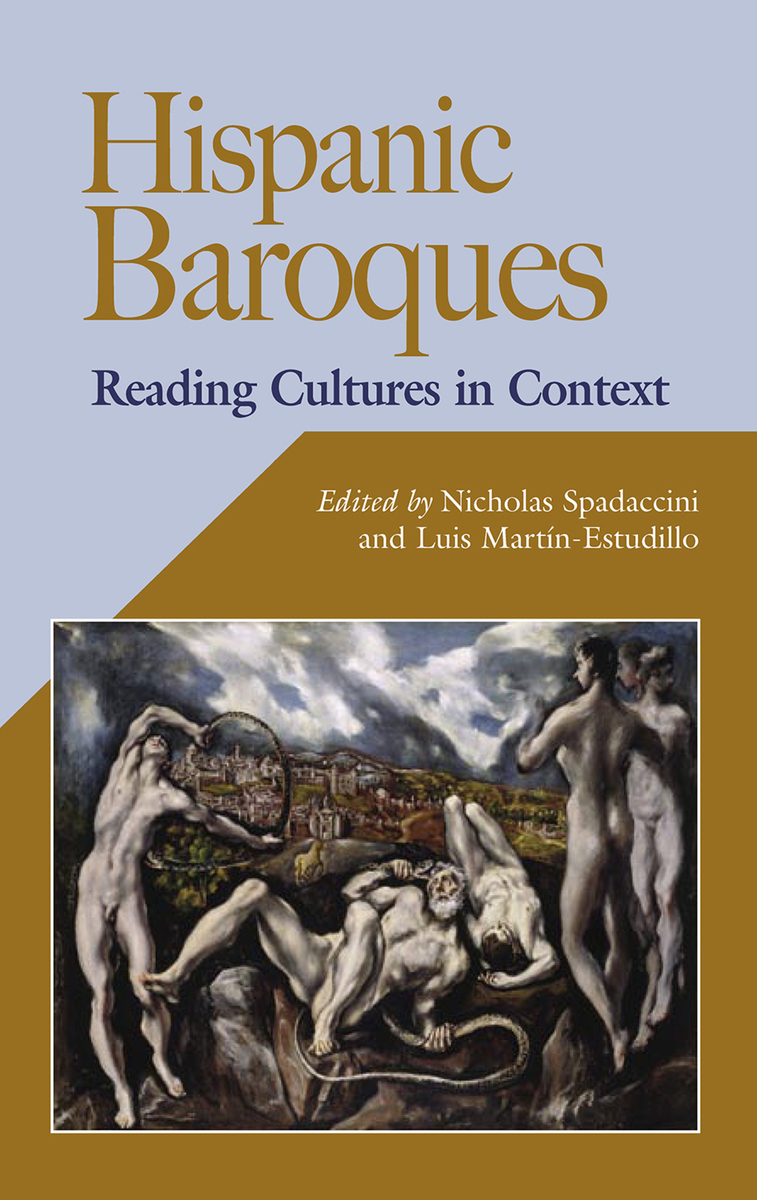
Hispanic Baroques: Reading Cultures in Context
Vanderbilt University Press, 2005
Cloth: 978-0-8265-1498-1 | Paper: 978-0-8265-1499-8 | eISBN: 978-0-8265-9200-2 (PDF)
Library of Congress Classification PQ6064.H57 2005
Dewey Decimal Classification 860.911
Cloth: 978-0-8265-1498-1 | Paper: 978-0-8265-1499-8 | eISBN: 978-0-8265-9200-2 (PDF)
Library of Congress Classification PQ6064.H57 2005
Dewey Decimal Classification 860.911
ABOUT THIS BOOK | AUTHOR BIOGRAPHY | TOC
ABOUT THIS BOOK
Essays focus on Baroque as a concept and category of analysis which has been central to an understanding of Hispanic cultures during the last several hundred years
See other books on: Classical period, 1500-1700 | Context | Martín-Estudillo, Luis | Spanish & Portuguese | Spanish literature
See other titles from Vanderbilt University Press